Maryland Industrial Stormwater General Permit
Circuit Court of Maryland For Baltimore County
Petition of Chesapeake Bay Foundation
In the Matter of the General Permit for Discharges of Stormwater Associated with Industrial Activity
Case No.: C-03-CV-22-005075
Issue:
Water QualityTopic:
Clean Water Act
Updated: 4/15/2026
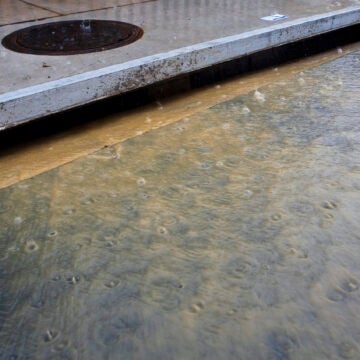
Stormwater runoff is one of the primary causes of pollution in the Chesapeake Bay region. As rainfall events become more frequent and intense, the runoff from impervious surfaces carries harmful pollutants into local waterways and the Chesapeake Bay. With climate change increasing the amount of rainfall, the runoff of toxic stormwater will continue to increase as well. The Maryland Department of the Environment (MDE) issues general permits to ease MDE’s burden of permitting multiple facilities within the same industry, such as the construction and industry sectors that can prevent the release of pollutants by implementing basic requirements in the permit. General permits are necessary to prevent pollution from flowing directly from these facilities into the surrounding neighborhoods before washing through storm drains and eventually into local waterways.
On November 18, 2022, MDE issued the Industrial Stormwater General Permit 20SW authorizing discharges of stormwater associated with industrial activity to the waters of the state of Maryland. The prior permit was issued in 2014 and expired in 2018. This permit covers industrial facilities, including scrap yards, auto yards, coal handing facilities, and landfills.
This permit fails to consider the impacts of climate change, lacks measurable pollution limits that are consistent with the Chesapeake Bay TMDL, and does not require permit holders to conduct sampling and monitoring of pollution levels. Also, many of the facilities the permit will govern are clustered in neighborhoods identified as environmental justice communities that are already threatened by multiple pollution sources.
On December 16, 2022, CBF filed a Petition for Judicial Review in the Circuit Court for Baltimore County, on behalf of itself and its members requesting the Court reverse the decision of MDE and remand the permit back to the agency for further consideration as it is flawed and does not comply with state law or the federal Clean Water Act. Similar, but separate, Petitions were filed by the Chesapeake Legal Alliance and the Environmental Integrity Project. The petitioners’ three cases were consolidated for judicial efficiency. The litigation was temporarily stayed after MDE voluntarily agreed to a limited remand to allow for additional public comments related specifically to (1) the “no exposure” certification, which allows certain facilities to exempt themselves from the permit requirements if they attest that stormwater will not be exposed to pollutants; (2) a requirement for permittees to address climate change by updating their stormwater pollution prevention plans to account for new information and experiences with major storm events; and (3) a reporting provision applicable to facilities located in environmental justice communities that fails to require additional monitoring or compliance.
A public hearing before MDE was held on September 28, 2023, and CBF filed written comments on November 25, 2023. MDE issued a final amended permit, the 20-SW-A, on February 7, 2025. The amended permit failed to include substantive improvements to address the petitioners’ concerns, which included the permit’s reliance on outdated precipitation data, a lack of measurable pollution limits consistent with the Chesapeake Bay TMDL, and the weakening of the “no exposure” certification.
The litigation stay was lifted following issuance of the revised permit and filing of the administrative record with the court. Briefing is completed and an administrative appeal hearing was held on April 28, 2026. A ruling from the court is anticipated within the next several months.
CBF is represented in this matter by Litigation Staff Attorney Sheronda Rose.