Blue Crabs
Blue crabs are iconic Chesapeake Bay residents, vital to our economy, culture, and ecology. Discover what makes them unique, why they matter, and the challenges they face.
About Blue Crabs
Blue crabs are central to Chesapeake Bay life. Learn what makes them unique, why they matter, and how they’re doing.
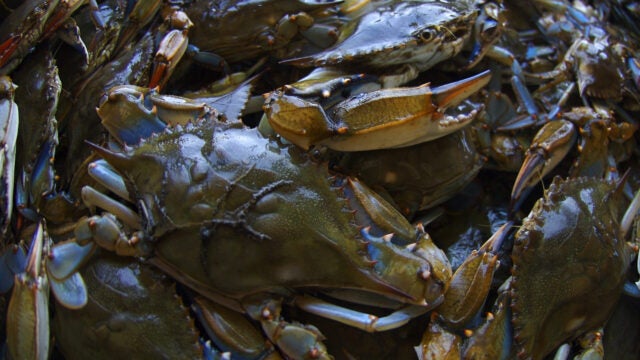
Known as “beautiful swimmers,” blue crabs (Callinectes sapidus) have vivid blue claws and paddle-like rear legs built for gliding through coastal waters. Found from the Atlantic Coast to the Gulf of Mexico—and even as far south as Argentina—these crustaceans thrive in underwater grass beds, where they feed, grow, molt, and mate.
Blue crabs are a cornerstone of Chesapeake Bay life—economically, culturally, and ecologically. They fuel one of the Bay’s most valuable fisheries, generating tens of millions of dollars annually in Maryland and Virginia. In the Bay’s ecosystem, blue crabs play many roles. As larvae, they’re food for critical Bay fish like menhaden. As they grow, they feed on clams and other small bottom-dwellers. Eventually, they become prey for larger fish and birds—including cobia, nicknamed “crabeaters.” (And yes, blue crabs will even eat other blue crabs.)
After record lows in 2022, total Chesapeake Bay blue crab numbers slightly improved in 2023, remained almost steady in 2024, and dropped closer to 2022 levels in 2025, but rebounded in 2026. These ups and downs are tracked through a long-running winter dredge survey led by Maryland and Virginia—one of the Bay’s longest running and most comprehensive tools for monitoring crab health. Crab populations shift yearly due to weather, reproduction, fishing pressure, and predators like invasive blue catfish, but reasons behind the recent declines remain unclear.
The latest Chesapeake Bay blue crab stock assessment, which looked at over 20 years of blue crab data, was released in June 2026 by the Chesapeake Bay Program. Unfortunately, the assessment showed a concerning trend. There were roughly 50 percent fewer blue crabs in the Bay in 2023 than there were in 2011. Overall, the Bay is experiencing long-term declines in female, male, and juvenile crab populations.
The assessment looked at potential causes for the decline, including blue catfish predation, low-oxygen dead zones, and habitat loss. While no single culprit was determined, it’s clear the Bay’s most iconic species is under immense stress.
Blue crabs are most active from spring to fall, then burrow into the Bay’s muddy bottom to rest through winter. Mating happens in shallow grassy areas, after which females travel to saltier waters to release their eggs. The young begin life in the ocean, molting and growing before returning to the Bay. It takes about 12 to 18 months to reach adulthood.
Challenges Facing Chesapeake Bay Blue Crabs
From climate change and pollution to predators and shoreline development, a range of challenges are reshaping blue crab habitat and threatening their future in the Chesapeake Bay.
Young and female crabs depend on underwater grasses for food and shelter, but these habitats are under stress from rising temperatures, especially sensitive species like eelgrass. Crab larvae spend their first month drifting in the ocean, relying on favorable winds and currents to return to the Bay’s nursery areas. Shifting weather patterns may be disrupting this journey, making survival harder for young crabs.
One of the most concerning predators is invasive blue catfish, introduced in the 1970s. Their population has exploded across the Bay, and they now consume millions of crabs annually. Young crabs are especially vulnerable. Red drum, another crab-eating fish, are also appearing in greater numbers—likely due to warming waters.
Excess nitrogen and phosphorus pollution from runoff fuel massive algal blooms. When algae die and sink, bacteria break them down, stripping oxygen from the water and creating “dead zones”—areas where life struggles to survive. These zones deprive crabs of food and shelter, especially in deeper waters used for migration. Dense algae also block sunlight, preventing underwater grasses from growing and shrinking safe havens for young crabs.
After oyster stocks collapsed in the 1980s, watermen extended crabbing season deeper into fall—just as crabs prepare to spawn. Within a decade, the population was cut in half. Science-based regulations introduced in 2008 helped protect female crabs and support future generations. But fishing isn’t the only pressure. Shoreline development is quietly erasing vital crab habitat. Natural salt marshes are being replaced with hardened barriers like sea walls and riprap, disrupting shallow-water ecosystems where crabs feed and shelter.
What CBF Is Doing
CBF is restoring blue crab habitat and protecting water quality through pollution reduction, climate resilience, advocacy, and hands-on restoration.
The Chesapeake Bay Foundation is tackling runoff pollution at its source—on land. By promoting better stormwater management, planting native trees, and building rain gardens, CBF is working to improve water quality. These nature-based solutions not only filter pollutants but also help communities adapt to extreme weather.
CBF implements on-the-ground practices to mitigate and adapt to climate change. From expanding green infrastructure and promoting climate-smart land use to restoring natural habitats and educating future environmental leaders, CBF builds resilience across the Bay region.
CBF leads targeted advocacy to protect blue crabs in Maryland and Virginia. In Maryland, CBF supports stronger protections for female blue crabs, restrictions on importing egg-bearing “sponge” crabs, and continued enforcement of male crab regulations introduced in 2023. In Virginia, CBF is calling for reduced harvests and new safeguards for male crabs, which have reached historic lows. CBF also advocates for full federal funding of clean water programs and agencies like NOAA and EPA to preserve critical blue crab habitat and support long-term conservation.
CBF’s restoration efforts—from land-use planning and stormwater management to wetland protection and tree plantings—help revive underwater Bay grasses, essential nursery grounds for blue crabs. CBF also partners with communities to build living shorelines, a sustainable alternative to hardened structures like bulkheads and concrete. These nature-based solutions reduce erosion and enhance shallow-water habitat for crabs.
What You Can Do
Protect blue crabs and the Bay by volunteering, making sustainable choices, and advocating for clean water. From planting trees and restoring shorelines to catching invasive blue catfish and contacting elected officials, your actions make a lasting impact.
Help restore the Bay by planting native trees and shrubs along stream banks to prevent runoff, or by building living shorelines to reduce erosion and filter pollution. During the growing season, volunteers can also support CBF’s Clagett Farm in Maryland—maintaining organic crops and potting thousands of native trees used in restoration. Explore opportunities through our volunteer calendar.
Blue catfish are a non-native predator of blue crabs—and they’re delicious. Catching and eating blue catfish helps reduce their impact on local waterways while building demand for a responsible fishery.
Join CBF’s advocacy network to protect blue crab habitat and restore clean water. Through CBF’s Action Network, Volunteers as Chesapeake Stewards (VoiCeS) program, and Clean Water Captains initiative, volunteers engage their communities, attend rallies, contact elected officials, and promote practical solutions for restoring clean water. Whether gathering petition signatures or educating neighbors, your voice matters.
Simple lifestyle changes can help protect blue crab habitat. Reduce lawn fertilizer, plant native vegetation, and limit runoff that contributes to dead zones. Lower your carbon footprint by using public transit, buying local goods, and conserving energy—all of which support a healthier Bay.
Related Programs
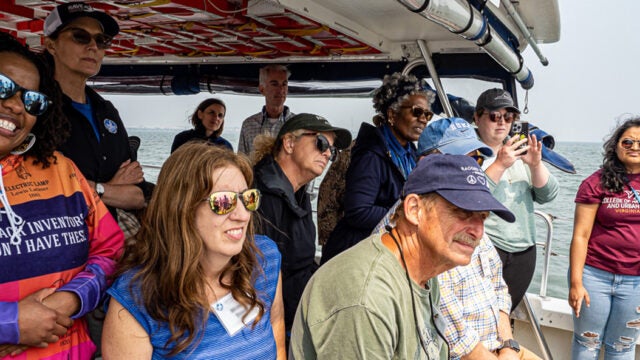
CBF's Volunteers as Chesapeake Stewards, or VoiCeS, program engages local volunteers and their communities and fosters a deeper understanding of the Bay watershed and the efforts to restore it.

Do you enjoy working with others to help restore the Chesapeake Bay and its rivers and streams? Whether growing oysters, planting trees, or helping in our offices, there are plenty of ways you can contribute.
Related Resources
Related Stories
-
 Blog Story
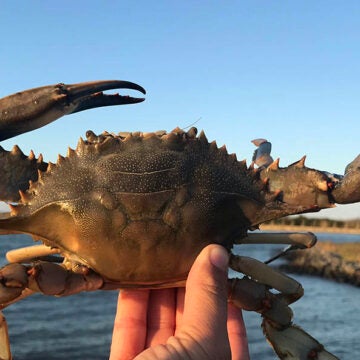
Why Is the Chesapeake Bay Blue Crab Population Crashing?
Blue crab numbers have reached the second-lowest level in 35 years. Here’s what we know, and what we don’t.
How to Get Involved
From signing up for an event to shopping our CBF Store, there are so many ways you can get involved in the Save the Bay movement.
