Ozone and Good Neighbor Obligations
United States Court of Appeals for the District of Columbia Circuit
State of New York, et. al. v. United States Environmental Protection Agency
Case No.: 19-1020
Issue:
Air PollutionTopic:
Clean Air Act
Updated: 11/15/2019
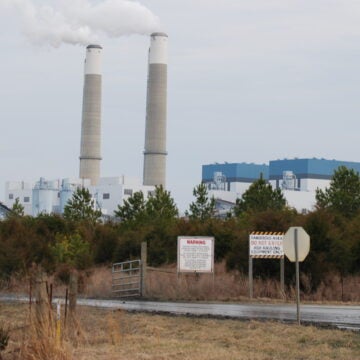
Nitrogen oxide air pollution transported from upwind states combines with emissions from local sources and produces ground-level ozone, or “smog.” Breathing ozone can cause respiratory illness and even early death for those at risk, including people with asthma, children, older adults, and people who spend time outdoors.
In 2016, EPA issued the Cross-State Air Pollution Rule (CSAPR) Update, for the 2008 ozone air quality standard, which partially address interstate pollution that significantly contributes to ground-level ozone in neighboring, downwind states. The 2016 CSAPR Update did not fully eliminate the upwind emissions. Then in 2018, EPA issued the “Bad Neighbor Rule,” or CSAPR Close-Out, proposing that no further work was required to meet the 2018 standards.
To compel EPA to address interstate ozone pollution, CBF and our partners, Downwinders at Risk, Appalachian Mountain Club, and Sierra Club, filed a Petition for Review with the D.C. Circuit in January 2019. Our case was consolidated with similar appeals filed by downwind states, including Maryland, Delaware, and New York. After briefing was completed, and prior to oral arguments, the Court issued a Final Judgement on October 1, 2019 vacating the Bad Neighbor Rule for failing to eliminate interstate emissions contributing to downwind air pollution within the statutory deadlines required by the Clean Air Act. The Court’s decision relied on a September 2019 ruling in Wisconsin v. EPA, Nos. 16-1406, et. al. (D.C. Cir. Sept. 13, 2019), that struck down part of the CSAPR Update for the same reason.
The Close-Out Rule did not protect human health or the environment, so now in accordance with the Court’s decision, EPA must modify the Rule so upwind emissions will not contribute to violations of air quality downwind beyond the statutory deadlines. CBF will continue to monitor EPA’s actions related to interstate transport of nitrogen oxide pollution and take appropriate action, if necessary.
This case is being handled by current Director of Litigation Ariel Solaski and counsel for partner environmental groups.

