Press Release
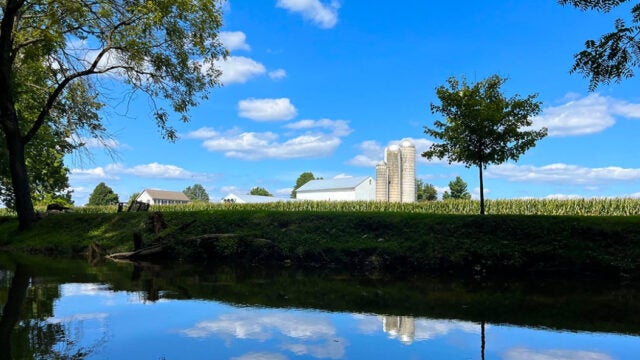
A free field day in Lancaster County on Saturday, May 13, is an opportunity to learn about the Upper Conestoga River and a restoration plan to clean and protect it.
“Experience the Upper Conestoga: Connecting with our river,” will take place from 11 a.m. to 3 p.m. at the Historic Poole Forge at 1940 Main St., in Narvon. Along with details about a restoration plan being written to improve waters within the 61 square-mile watershed there will be activities for the whole family.
Demonstrations at the event will include stream restoration projects (Stroud Water Research Center), pollinator gardens (Alliance for the Chesapeake Bay), stream ecology (Susquehanna River Basin Commission), fly casting (Donegal Trout Unlimited), kayaking (Conestoga River Club), tree giveaways (Keystone 10 Million Trees Partnership), and raptor rehabilitation (Raven Ridge Rescue).
“For a lot of people, the Upper Conestoga River is there, but not something they engage or interact with,” said Brian Gish, Chesapeake Bay Foundation (CBF) Watershed Coordinator. “This event is to give the river more of a real presence in their lives.”
The Upper Conestoga River does not meet water quality standards and Gish said the goal of the restoration plan is incremental progress toward cleaner waters that people can enjoy. “The plan focuses on aquatic life, as it really struggles there,” Gish said. “The goal is to make the waterways and farms work in harmony.”
The watershed restoration plan is being coordinated by Gish and partners. Gish coordinated a restoration plan for the Pequea Creek Watershed that last year became eligible for federal funding.
Gish said that community understanding and input to the restoration plan are key to a healthier river and the reason for the field day on May 13. “For us at CBF we could say a million things should be done. But at the end of the day, this is their river, and the choices are theirs to make,” Gish said. “We need to find solutions that work for them and ways that serve their broader needs, not just those of the river. No plan is going to work unless the community feels a sense of ownership.”
Parking is available on-site. Limited shuttle service will be available within the watershed on a first-come, first-served basis. Shuttle service must be scheduled prior to the day of the event and can be done by calling 717-200-4529.
Chesapeake Bay Foundation staff and volunteers worked with several different farmers and organizations this spring to plant about 6,400 trees at four sites along headwater streams in Maryland.
Each planting was designed to add tree and shrub buffers along waterways to improve downstream water quality, filter air, and improve fish and wildlife habitat. As the riparian buffers grow, their roots and stems will also sequester carbon while their canopies shade the streambed, which helps mitigate the harmful effects of climate change.
In Maryland, runoff from agricultural activities is the leading source of nitrogen and phosphorus in waterways. These primary Chesapeake Bay pollutants fuel harmful algal blooms. Tree plantings along streams are among the most cost-effective natural solutions to reduce this pollution and restore the Bay.
“We had another great planting season this spring,” said Rob Schnabel, CBF’s Maryland Restoration Scientist. “The new trees and shrubs along these tributary streams will help build a defensive barrier against pollution from entering fragile headwaters. Downstream water quality will improve by filtering out pollutants upstream. We’re grateful to the farmers and hundreds of volunteers who helped us plant this spring and we’re already starting to gear up for our fall planting schedule.”
The largest planting this spring took place at the REED Center for Ecosystem Reintegration in Frederick County where volunteers planted about 3,000 trees and plants to create a food forest on April 21 and 22 in honor of Earth Day. Almost all of these trees and plants will produce seeds, fruit, or nuts for people and wildlife. Varieties included grape vines, hazelnut trees, blueberry shrubs, black locust trees, mulberries, and persimmons. More than 200 volunteers planted the trees along a tributary to Catoctin Creek, which flows to the Potomac River, during the two-day event. The largest volunteer group that day was from ReNew White Marsh in Nottingham, which had about 50 people attend to help complete the work.
“This was the most volunteers we’ve ever had come out to help us,” said REED Center Director Benjamin Friton at the planting on April 21. “We’re transitioning a 150-acre farm into a diverse food forest. We estimate we can produce about 40 times the food per acre than a standard monoculture field. That helps us diversify our farm products and protects our business from inclement events such as poor weather years or disease. We also don’t need to irrigate or use pesticides to produce crops, which is an additional environmental benefit that helps us reduce costs. Thanks to all the volunteers who have helped us plant the seedlings to turn our vision into a reality.”
In Washington County, CBF organized a March 26 planting at Pathfinder Farm Distillery in Rohrsville where approximately 50 volunteers planted about 630 trees along a tributary to Antietam Creek. The distillery grows many of the ingredients used in its products on-site.
For this planting, the farmer was among the first to take advantage of Maryland Department of Agriculture’s conservation buffer initiative to plant trees. Farmers can enroll in the program to receive $5,000 per acre of new forest buffer plus maintenance fees for five years. This planting was completed in partnership with the Maryland Forest Service. It continued CBF’s long history of adding trees in the Antietam watershed, where CBF has worked since 2002 to improve streams and fish and wildlife habitat.
On April 1, CBF and volunteers partnered with the state’s Department of Natural Resources to add 1,400 trees across seven acres of land at the Merkle Wildlife Sanctuary in Upper Marlboro. About 80 volunteers worked through rainy conditions to plant the new forest buffer near the Patuxent River. Maryland’s Veteran Conservation Corps pitched in by pre-augering holes to make the planting more efficient. The new trees will help DNR reduce the amount of mowing maintenance at the sanctuary while also providing soil and water quality benefits.
The fourth planting took place April 15 in Frederick County, where CBF and about 90 volunteers planted about 1,400 trees and shrubs along a tributary to Catoctin Creek in the Potomac River watershed. In total, volunteers added two miles of hedge rows, six acres of forest buffer, and two acres of wetlands on a farm near Jefferson, Maryland. The planting helped extend the forest buffer along the stream that CBF planted at an adjoining farm last year. The stream buffer is now about a mile and a half long.
“It’s ideal when you can get a long stretch of contiguous forest buffer like this one,” said Schnabel. “In this case, the farmer talked to his neighbor about our previous work next door and then we worked with them to extend the buffer. The hedge rows are also a great regenerative agriculture practice to help reduce agricultural runoff because they can catch water as it flows off farm fields, improve the soil’s ability to soak up water and reducing flooding, as well as create wildlife and pollinator habitat.”
Most of the trees planted this spring were grown from seedlings at CBF’s Clagett Farm in Prince George’s County. The volunteer plantings were supported by funding from the National Fish and Wildlife Foundation and WGL Energy, which offers customers the ability to offset their natural gas use with tree plantings through its carbon offset programs.
5-Million Milestone Reached Last Fall
The 2023 planting seasons will be the most ambitious yet for the Keystone 10 Million Trees Partnership, to directly fund and plant over 300,000 new trees for Pennsylvania this spring and add another 200,000 in the fall.
The effort reached its midpoint milestone last October when the 5 millionth tree was planted at Furnace Run Park in Franklin County.
Since it launched 2018, the partnership, coordinated by the Chesapeake Bay Foundation, has grown to nearly 300 partners. New partnership manager Joe Hallinan is confident that reaching the 10-million tree goal by 2025 is achievable. “With the commitment shown by our partners, both new and old, I’d like to believe we can exceed that,” Hallinan said.
The 2023 campaign got into full swing in late March, with a massive delivery of trees and shrubs at Lancaster Farm and Home. In mid-April, approximately 14,000 trees were planted at the former sand quarries at Furnace Run Park. Earth Day and Arbor Day observances in April are also prime times for tree plantings throughout the Commonwealth.
Roughly 28,000 miles of Pennsylvania’s rivers and streams are damaged by polluted runoff and the legacy of coal mining. Trees are the most cost-effective tools for cleaning and protecting waterways. Trees filter and absorb polluted runoff, stabilize streambanks, and improve soil quality. Trees also help address climate change by cooling the air and sequestering carbon.
“We often don’t think about the positive effects that trees have on a community, local economies, and the physical and mental health of our residents,” Hallinan said. “Students learn better, patients heal faster, and our minds are less anxious when we have access to outdoor green space.”
The Commonwealth’s Clean Water Blueprint calls for about 95,000 acres of forested buffers to be planted in Pennsylvania’s portion of the Chesapeake Bay watershed. Adding 10 million new trees alongside streams, streets, and other priority landscapes would accelerate the Keystone State toward its clean water goals, achieving as much as two-thirds of the forested buffer goal.
The partnership is placing special emphasis on plantings in Lancaster County and four other counties in southcentral Pennsylvania. Those counties are critical because of the amount of nitrogen pollution generated. Those counties are also where the greatest need meets greatest opportunity, both to improve local stream health and reverse the overall loss of trees.
“The trees are one of the biggest bangs for the buck for cleaning water, but I think they are even bigger in a sense of how we can look at how we interact with our natural world,” Hallinan said. “By planting trees today, we can leave our communities a better place for our children and grandchildren.”
To learn more about the Keystone 10 Million Trees Partnership visit www.TenMillionTrees.org.
Julia Krall is the new Executive Director of the Chesapeake Bay Foundation (CBF) in Pennsylvania. She succeeds CBF Staff Attorney Trisha Salvia, who had been serving as Interim Director.
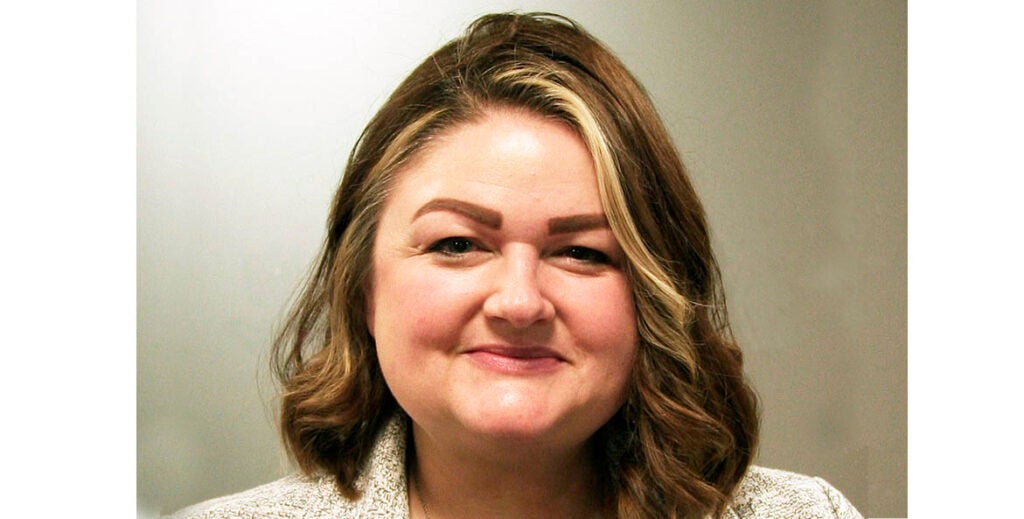 Julia Krall
Prior to taking the helm at CBF’s Harrisburg office, Krall was Executive Director of the United Way of Lebanon County since 2021.
“As a native of Central Pennsylvania, the Chesapeake Bay watershed is my home,” Krall said. “I am eager to join the CBF team in the Commonwealth, and work alongside our partners and stakeholders, to advocate for increased funding and conservation efforts. Together we can reduce pollution and restore water quality in our state’s waterways, which will also improve the health of the Bay.”
Krall joins CBF as a strategic and collaborative leader with more than 20 years of experience in the nonprofit sector. She developed a broad range of resources that produce strategies that effectively grow programs that make a difference.
“Julia brings considerable non-profit management skills to the Pennsylvania Executive Director position, along with a proven track record of amplifying and leveraging the work of team members to succeed,” said Alison Prost, CBF’s Vice President of Environmental Protection and Restoration.
“Julia joins CBF at a time when we are looking to accelerate progress throughout the watershed so that communities in Pennsylvania and beyond have cleaner streams and rivers,” Prost added. “I look forward to Julia’s efforts to help improve local streams, rivers and ultimately the Bay.”
Under Krall’s leadership, the CBF staff in Pennsylvania will continue to work to improve water quality by collaborating with a broad range of stakeholders, and implementing projects, policies, and programs that address pollution.
“This is truly an exciting and transformational time to be joining the CBF team in Pennsylvania, where there is optimism and momentum at both the state and local levels,” Krall said.
She added that she believes her background as an executive director, combined with a deep passion for environmental protection, advocacy, and partnership building, will help to further advance CBF’s mission in Pennsylvania.
Krall lives in Enola and has a Master of Business Administration degree from Shepherd University and a Bachelor of Arts degree in Environmental Politics from Juniata College.
CBF, founded in 1967, is the largest independent conservation organization dedicated to reducing pollution and restoring waterways for the benefit of local communities and the Bay. For almost 35 years, CBF has been working in Pennsylvania to clean and protect Commonwealth rivers and streams.
The Chesapeake Bay Foundation (CBF) has named Dr. Allison Colden as its new Maryland Executive Director. Colden enters the new role after six years at CBF as Maryland Fisheries Scientist. She is among the leading advocates for sustainable fisheries policies to protect important Chesapeake Bay species such as rockfish, oysters, and blue crabs. Her first day in the new role is today.
Josh Kurtz, CBF’s previous Maryland Executive Director, was appointed Secretary of Maryland’s Department of Natural Resources by Gov. Wes Moore in January.
Colden has led advocacy efforts to pass state bills such as 2019 legislation that permanently protected Maryland’s five large-scale oyster restoration sanctuaries. For the past two years, Colden has overseen CBF’s Maryland oyster restoration program, which adds tens of millions of oysters to the Bay each year to sanctuary reefs. She also serves as Maryland’s legislative representative to the Atlantic States Marine Fisheries Commission and as an appointed member of Maryland’s Oyster Advisory Commission, where she advances sustainability through regulation and cooperative fisheries management. Her work on fishery issues has given her a broad understanding of the water quality problems that affect the Bay as well as the need for clean water.
“It’s my pleasure to announce Allison Colden as the new leader of CBF’s Maryland team,” said Alison Prost, CBF’s Vice President for Environmental Protection and Restoration. “Since joining CBF, Allison has proven she can use her scientific expertise to work through controversial issues with grace. Allison has earned the respect of partners and decision-makers alike through a cooperative approach and thoughtful policy recommendations. Colden’s advocacy efforts in Maryland have helped the state begin to reverse its long-term oyster population decline. In her new role, Allison will oversee the Maryland office’s efforts to reduce water pollution, educate policymakers, and strengthen the state’s environmental policy.”
Colden, an Annapolis resident, received a doctorate in marine sciences from the Virginia Institute of Marine Science in 2015. Before coming to CBF, she worked in the U.S House of Representatives as a Knauss Marine Policy Fellow and later as the senior manager of external affairs at Restore America’s Estuaries.
“We’re in a time of change for the Chesapeake Bay cleanup as several states in the watershed struggle to meet their pollution reduction requirements,” said Colden. “In Maryland, we must do more to address agricultural and stormwater pollution. As we approach the 2025 deadline, there is an opportunity to reflect on what has worked, what hasn’t, and to advance proven and innovative solutions to restore the Bay’s health. We must ensure the next phase of the cleanup supports communities harmed by water and air quality issues, mitigates climate change, and furthers pollution reductions. I’m excited for this opportunity and look forward to advancing the important work of the Maryland team.”
Hampton Roads students today celebrated the 50th anniversary of the Chesapeake Bay Foundation’s (CBF) award-winning environmental education program with a hands-on learning experience aboard a boat with Virginia Beach high school students.
About 20 students from the Ocean Lakes High School Biology Club joined CBF educators on a field investigation on the Lynnhaven River to perform water quality testing, explore local environmental issues, and pull a net to sample fish, crabs, and other aquatic life.
Since 1973, CBF has led more than 1.5 million people in field investigations. Today, CBF reaches more than 10,000 Virginia students and teachers each year through field trips, teacher training, and restoration programs.
CBF collaborates closely with teachers and school administrators to integrate state learning standards with explorations of local waterways, ensuring environmental education programs complement classroom learning.
“Over the past 50 years we’ve seen time and again how hands-on experiences bring alive what students learn in the classroom. Whether paddling a canoe, pulling up a crab pot, or investigating the health of a nearby creek, we’re preparing students to solve the complex problems facing our society,” said CBF Vice President for Education Tom Ackerman.
CBF’s outdoor education programs benefit both the environment and educational outcomes. Research shows that outdoor learning helps students improve resilience, problem solving, critical thinking, leadership, and teamwork, and leads to higher test scores and stronger engagement in school.
“In the next 50 years, we’ll continue to work towards our goal of ensuring all students have access to high-quality environmental education,” Ackerman said.
CBF offers many different types of environmental education experiences. Schools can sign up to take students on a CBF field experience at www.cbf.org/education.
For high schoolers interested in learning about Virginia’s environment and how to protect it, CBF offers student leadership week-long overnight expeditions in the summer. In Virginia this summer that includes a course along the length of the Rappahannock River and a separate expedition to islands in the middle of the Bay.
For teachers and school administrators, summer professional development courses through the Chesapeake Classrooms program provide on-the-water experiences that inspire lessons in schools across the region. Those include courses this summer exploring waters in Virginia Beach, Newport News, Richmond, and Hopewell.
The Chesapeake Bay Foundation (CBF) announced its endorsement of legislation to expand and strengthen hands-on, outdoor learning opportunities for elementary and secondary school students around the country.
The No Child Left Inside Act, which Rep. John Sarbanes (D-Md.) reintroduced for the 118th Congress today, would provide grants to states to integrate environmental education and field experiences into public schools’ core academic program and provide the necessary training to teachers.
The bill calls for the Department of Education to set up an environmental literacy advisory panel and coordinate environmental education activities across federal agencies. It also charges the department with posting information about federal environmental education resources on its website.
Studies have shown that outdoor learning engages students more than classroom instruction. Field experiences also help them develop important skills such as perseverance, self-confidence, and leadership. Students also report feeling more connected to nature.
Now in its 50th year, CBF’s award-winning environmental education program has been a cornerstone of our efforts to save the Bay and inspire future generations of Bay savers.
CBF educates tens of thousands of students, teachers, and school administrators a year—25 percent from under-resourced schools—through immersive field experiences and professional development courses that foster a lifelong connection to the watershed and its stewardship.
Original co-sponsors of Sarbanes’ bill include House Bay delegation members Dutch Ruppersberger (D-Md.) and Eleanor Holmes Norton (D-DC), and Reps. Shontel Brown (D-Ohio), Chellie Pingree (D-Maine), and Bonnie Watson Coleman (D-N.J.). Sens. Jack Reed (D-R.I.) and Susan Collins (R-Maine) introduced the Senate version of the No Child Left Inside Act today as well.
CBF Vice President for Environmental Education Tom Ackerman issued the following statement:
“Today’s students live in a world dominated by technology and challenged by disinformation about climate change. They rarely learn about, much less experience, how important a clean, healthy environment is to their future and the future of this planet.
“No Child Left Inside would make a desperately needed down payment to help students develop the connection to nature and the critical thinking skills necessary to be creative environmental problem-solvers.
“CBF appreciates Rep. Sarbanes’ unwavering commitment to promoting environmental literacy in the Bay watershed and around the country. We are proud to endorse his legislation and urge Congress to give environmental education the priority it deserves.”
A proposed settlement has been reached in the 2020 lawsuit against the Environmental Protection Agency (EPA) for its failure to require Pennsylvania to develop and implement a plan to meet its commitments to reduce pollution under the Chesapeake Clean Water Blueprint. The settlement is a significant step toward reducing pollution in Pennsylvania. It is the result of lawsuits filed against EPA during the Trump Administration by the Chesapeake Bay Foundation (CBF) and its partners including Anne Arundel County, the Maryland Watermen’s Association, and Robert Whitescarver and Jeanne Hoffman. The Attorneys General for Delaware, Maryland, the District of Columbia, and Virginia filed a separate similar suit. The courts combined the cases. The public will now have 30 days to comment on the proposed settlement before it can be finalized.
“This proposed settlement is a win for local waterways, healthy communities, and the Chesapeake Bay. EPA focusing on concerted remedial action to address some of the most severe problems in Pennsylvania provides accountability and reasonable assurance that Bay restoration will succeed,” said CBF President Hilary Harp Falk. “This is a welcome change. The Trump Administration did not use its Clean Water Act tools to hold all Bay partners accountable. This proposed settlement shows that the Biden Administration has taken a significant step forward in meeting that obligation.”
EPA previously failed to require Pennsylvania to develop a plan to fully meet the pollution reduction goals, including identifying the necessary funding, or impose consequences. The settlement requires EPA to, among other things, look for ways to reduce pollution from agriculture–the state’s biggest polluting source–and stormwater runoff from urban and suburban land. As part of the settlement, EPA also commits to increase compliance and enforcement efforts.
“Every state in the Bay watershed relies on the Chesapeake and its tributaries, economically, environmentally, recreationally, and culturally. We all have a stake in its restoration—and, despite budget constraints and the scope of the challenge, Delaware and most of our region have not backed down from our duty to the Bay and to future generations,” said Delaware Attorney General Kathy Jennings. “There’s work left to do, and this settlement is not the final step—but this work matters, and this agreement represents a huge step forward for the millions of people who depend on the Bay.”
Under the settlement, EPA will prioritize its efforts in Pennsylvania on the counties that contribute the most pollution to, or have the largest impact on, local rivers and streams. Those are Lancaster, York, Bedford, Cumberland, Centre, Franklin, and Lebanon counties.
In the agriculture sector, EPA will take a close look at farms not currently required to have federal permits that have proximity to rivers and streams to see if there is significant damage to water quality from manure generation, manure management practices and/or available storage capacity, and compliance history. If EPA determines that a farm is a significant contributor of pollution, EPA will confer with Pennsylvania about designating the farm as a point source subject to permitting.
In urban and suburban areas, EPA will begin to evaluate whether pollution from sources of stormwater that are not currently subject to federal regulations are adding to the damage to local rivers and streams. If EPA determines that a particular source, or sector of sources, contributes to a violation EPA will, at a minimum, confer with the Pennsylvania Department of Environmental Protection (PA DEP). EPA and PA DEP will examine the possibility of designating the sources as needing to obtain a point source permit that limits pollution by requiring the removal of impervious surfaces, the installation of BMPs or both.
In enforcement, EPA will increase compliance-assurance activities in the priority counties to assess whether federally-permitted sources are complying with existing permit requirements. EPA will also determine whether there are any PA DEP-issued general permits or individual permits within the Pennsylvania portion of the Bay watershed that have been administratively extended. EPA will work with the Commonwealth to develop a permit reissuance strategy designed to bring permits up to date and significantly reduce the number of administratively extended permits.
“Marylanders deserve a clean and healthy Chesapeake Bay. The Bay and its local waterways are vital social, economic, and cultural resources to communities across Maryland, but keeping them healthy is difficult when pollution from Pennsylvania washes downstream,” said Maryland Attorney General Anthony G. Brown. “The Chesapeake Bay Watershed Agreement only works if all the states that signed it maintain their commitment to restoring and protecting the Bay.”
“Ensuring DC’s waterways and natural resources are clean, safe, and accessible for all DC residents is a top priority for the Office of Attorney General,” said District of Columbia Attorney General Brian Schwalb. “Every state in the Chesapeake Bay watershed shares a responsibility to clean up our local waterways, and the EPA must ensure that states fulfill those obligations. This settlement is an important step to ensure that the Chesapeake Bay’s pollution reduction goals continue to progress on track.”
Reducing pollution remains the single most urgent priority to restore the Chesapeake Bay, and the Blueprint has proven to be the best way yet to do so. Since 2009, the partnership has put practices in place to reduce the nitrogen pollution flowing into the Bay each year by 30 million pounds—roughly 42 percent of the required reduction. Reducing pollution from agriculture and stormwater runoff is significantly behind.
Both CBF’s and EPA’s most recent evaluations of the watershed jurisdictions’ plans to meet the Blueprint requirements found that most states were not on track to meet Blueprint obligations by 2025, while noting that recent successes at the state level will accelerate pollution-reduction efforts.
“While 2025 will be yet another missed deadline, the Blueprint’s goal remains achievable and should remain our north star. At the same time, we must also recognize that our challenges have grown. Together, we must build on lessons learned and accelerate progress toward a new deadline measured in years – not decades,” Falk said. “As we celebrate the 40th anniversary of the Chesapeake Bay Program, this is a critical time to keep the pressure on. The states and District of Columbia must accelerate efforts to reduce pollution. EPA’s recent actions in Pennsylvania have signaled it will accept nothing less than full achievement of the Blueprint commitments. With leadership from EPA and Pennsylvania, I believe success is within reach.”
Quotes from CBF’s partners
CBF’s partners in its original suit are Anne Arundel County, Maryland, the Maryland Watermen’s Association, and Robert Whitescarver and Jeanne Hoffman, who operate a livestock farm in Virginia.
Anne Arundel County, Maryland—Anne Arundel County’s 588 square miles of land includes more than 500 miles of shoreline on the Chesapeake Bay and its tributaries. Its 580,000 residents and countless tourists are drawn to the county to enjoy the Bay, fresh seafood, and numerous water-based recreational opportunities. Travel and tourism spending in the county are estimated at over $3.5 billion annually, providing support for over 30,000 workers. The county has invested more than $500 million over the last decade to protect this vital natural, economic, and cultural resource.
“Protecting our waterways is only possible if we all work together,” said Anne Arundel County Executive Steuart Pittman. “Anne Arundel County is doing our part to protect and restore the Chesapeake Bay, and we need all of our regional partners to do the same to keep the Bay and our waterways healthy for all who depend on them.”
The Maryland Watermen’s Association—Robert T Brown, Sr. is the President of the Maryland Watermen’s Association. He observed that Maryland watermen and the Chesapeake Bay and its tributaries have suffered for many years due to EPA’s failure to enforce the Clean Water Act. The pollution of waste and debris flowing from upstream states, through the Susquehanna River feeding into the Chesapeake Bay creates red tides, low oxygen levels and dead zones. This affects the survival of oyster larvae, crabs, clams, and fish.
“This is a great step toward correcting the influence of phosphates and nitrogen entering the Chesapeake Bay from the Susquehanna River. This will help reduce the pollution that affects reproduction of aquatic vegetation and all Bay fisheries,” said Maryland Watermen’s Association President Robert T. Brown. “The Maryland Watermen’s Association is thankful as this will improve the quality of the water in the Bay and will improve the seafood industry harvest.”
Robert Whitescarver and Jeanne Hoffman operate a farm in Virginia, raising livestock. He is a former Natural Resource Conservation Service representative, who spent his career educating farmers on the benefits of protecting farmland and improving water quality in local streams and rivers.
“Animal feeding operations, large or small, can contribute significant pollution to nearby streams. In addition, continuously applying animal manure to the same land can harm groundwater resources,” Robert Whitescarver said. “Monitoring these practices and making sure Best Management Practices are applied assures water quality improvement for the Bay and for people. We welcome EPA’s input to help Pennsylvania farmers do their part to save the Bay, its tributaries, and the water where they live.”
The bill represents the most significant changes to the state’s Forest Conservation Act since it passed in 1991
The Chesapeake Bay Foundation (CBF) is celebrating the General Assembly’s formal approval today of legislation that will protect more forested land in Maryland.
SB 526 includes the most significant changes to Maryland’s landmark Forest Conservation Act since the law was passed more than 30 years ago. The new forest protections, among the strongest in the country, received strong bipartisan approval in both the Senate and House of Delegates.
CBF is now asking Gov. Wes Moore to sign the bill into law.
CBF and partner environmental organizations have been working for nearly a decade to update Maryland’s outdated forest protection requirements. The aging 1991 law was allowing consistent forest and tree canopy loss, contributing to a reduction of about 19,000 acres from 2013 to 2018, according to a study released last year by the Harry R. Hughes Center for Agro-Ecology. New construction was causing most of the forest and tree loss, according to the study.
The legislation approved by lawmakers this year simplifies the arcane formulas used to determine replanting requirements after construction crews clear trees, while also providing flexibility to jurisdictions to address growth needs such as affordable housing and transit-oriented development. Del. Sara Love and Sen. Sarah Elfreth were the lead sponsors of the legislation.
“We’re extending a hearty thanks to Maryland lawmakers today for their conscientious work to pass forest protection legislation,” said Matt Stegman, CBF’s Maryland Staff Attorney. “This bill is the culmination of years of effort to improve the state’s outdated 1991 Forest Conservation Act. The new protections in this bill will chart Maryland on a path toward forest growth rather than continue the state’s long history of forest loss. We look forward to Gov. Moore signing SB526 into law.”
The most significant changes in the legislation include:
- Setting a statewide goal to increase the acreage of forested land and tree canopy.
- Increasing replanting requirements for developers who clear forest by requiring them to replant each acre of forest cleared in most cases. Previously, developers were only required to replace a fraction, if any, of the forested land cleared for new construction.
- Providing local governments flexible options to stop net forest loss. These alternatives are coupled with regular reviews by the state’s Department of Natural Resources to ensure the local plans align with state forest protection goals.
The forest protection legislation comes as Maryland prepares for rising sea levels, stronger storms, and other harm caused by climate change. The National Oceanic and Atmospheric Administration predicts Chesapeake Bay sea levels to rise between 1.3 and 5.2 feet during the next century, which threatens coastal communities. Warming Bay temperatures threaten important species such as eelgrass, which forms critical habitat for blue crabs and fish.
Last year, the General Assembly passed the landmark Climate Solutions Now Act to lower statewide greenhouse gas emissions that are fueling climate change. In 2021, legislators approved a measure to plant 5 million trees in the state during the next decade.
“Protecting forests is an imperative step for Maryland to mitigate climate change,” said Doug Myers, CBF’s Maryland Senior Scientist. “The state is making a major investment to plant 5 million new trees, so it just makes sense to protect the ones we have and ensure private developers plant new trees after land is cleared.”
Myers added, “Trees are among our best natural defenses against climate change. Trees significantly cool the water when planted along streams and coasts; reduce flooding by soaking up water; sequester carbon in their branches, roots, and trunks; as well as filter air and water. Forests and tree canopies also serve as habitat for animals, provide recreation for residents and visitors, and beautify communities.”
Despite this, new construction projects such as mega warehouses and ongoing sprawl development continue to threaten large swaths of forested land in Maryland. Local jurisdictions have seen the need and have updated their policies to address ongoing forest loss in their communities. Since 2019, Anne Arundel, Howard, Frederick, and Montgomery counties have bolstered their local forest protections, underscoring the need for more robust statewide changes.
Organizations Hiring Experts for Hub to Support Communities Facing Flooding and Climate Change
Marking an important step in Virginia’s efforts to adapt to climate change and sea level rise, the Chesapeake Bay Foundation (CBF) and Old Dominion University (ODU) launched a new Resilient and Adaptable Communities Partnership this week. The partnership will help communities threatened by flooding, train the workforce needed to take action, and promote flood-protection projects that also lead to a healthier Chesapeake Bay. ODU is hiring four new research faculty positions and a program manager.
“Action on climate change is essential to saving the Bay, and many nature-based practices both combat flooding and lead to cleaner waterways. As flooding and more intense storms increasingly upend the lives of people across Virginia, many academic, nonprofit, and government organizations are working to make communities and the Chesapeake Bay more resilient to climate change,” said CBF Virginia Policy and Grassroots Advisor Jay Ford.
“Complementing this work, our new partnership will help connect communities with resources and technical assistance to put resiliency projects on the ground that also support cleaner waterways,” Ford said. “Together, we will create a more resilient Virginia and healthier Chesapeake Bay for future generations.”
The partnership will cover three key areas:
- Connecting cities and counties with funding from federal and state grants and other sources, as well as offering technical support and outreach to communities across Virginia. That includes designing and planning projects that address threats from flooding and storms and prioritizing nature-based practices like living shorelines. Because these practices rely on natural processes to absorb floodwaters and fight erosion, they also filter pollution and create habitat;
- Training the workforce needed to design and build projects that protect homes and businesses from extreme weather and flooding while benefitting the Chesapeake Bay. ODU will offer professional credentialing and academic degree programs, and;
- Providing expertise and guidance to state and local governments in developing and implementing Virginia’s roadmap to a resilient future. That includes having a seat at the table at the Resilience Authority Workgroup under Virginia’s Department of Conservation and Recreation and supporting implementation of the Coastal Resilience Master Plan and Virginia Flood Protection Master Plan.
“This unique partnership furthers Old Dominion University’s commitment to building climate change resilience in Hampton Roads and beyond,” said ODU President Brian O. Hemphill, Ph.D. “Our faculty are on the frontline of sea level rise research, and together with CBF, we will help localities, nonprofits and businesses develop effective resilience solutions.”
The partnership stems from the 2022 legislative session, when Virginia legislators established a collaboration between ODU and CBF on resiliency issues for an initial two-year period. This week marks the launch of the program following a year-long planning process involving CBF, ODU’s Institute for Coastal Adaptation and Resilience (ICAR), state and local governments, and other stakeholders.
Virginia Delegate Barry Knight, who is Chairman of the Virginia House Appropriations Committee, was indispensable in supporting this partnership. “Flooding and sea level rise are already creating challenges for homes and businesses in Hampton Roads and across Virginia,” Knight said. “I’m proud of my work in the General Assembly to bring together ODU and CBF, two recognized Virginia experts in resiliency. This partnership creates an important hub that will provide communities with practical solutions to threats from flooding and extreme weather.”
The work of Virginia Senator George Barker, who is Co-Chair of the Senate Finance and Appropriations Committee, was also indispensable in establishing the ODU-CBF effort. “As we continue to feel the detrimental effects of climate change, we need to build community resilience,” Baker said. “I want to enable communities to address the threats and challenges climate change poses in their backyard. That is why I worked to ensure our state budget invests in this partnership between CBF and ICAR, which will directly help communities during this climate crisis.”
Jessica Whitehead, the Joan P. Brock Endowed Executive Director of ICAR, said: “We are so excited to work with the Chesapeake Bay Foundation to build out this partnership. There is a lot of work to be done, and we are glad to help add capacity for turning science into action.”
ODU is hiring a program manager and four new research faculty positions as Chesapeake Bay Foundation Resilience Fellows specializing in geospatial analysis, resilience planning, resilient engineering and design, and natural resource economics. Job postings for the research faculty can be found here, and the positions remain open until filled.
CBF works to protect and restore the Chesapeake Bay and its rivers and streams, including addressing the causes and mitigating the effects of climate change. That effort encompasses the promotion of nature-based solutions to climate change, which also create habitat for wildlife and reduce pollution to waterways.
ODU’s Institute for Coastal Adaptation and Resilience is a national center focused on the science and practice of coastal resilience, leading research, education, and community partnerships to develop practical solutions to challenges faced by communities.
