Four Ways to Enjoy Winter in Chesapeake Bay Country
The days are brief, the temperatures are brisk, but outdoors and in, there’s no shortage of things to do. CBF staff share some of their favorites.
I had been at CBF only a few months when Senior Naturalist John Page Williams (since retired) stopped by my desk with a recipe for white perch cakes and a recommendation for passing a winter morning. Go out to the dock early, he said. Drop a line around the pilings, where the perch like to hang out. If you’re lucky, the fish will be biting. If they’re not, you’re still lucky; watching the water on a still, cold morning (coffee and maybe an oatmeal cookie in hand) is one of life’s rare pleasures.
There are many more to be found throughout the Bay region in winter. Below are a few CBF staff favorites—enjoy!
1. Winter Birdwatching in Maryland
“Winter is for waterfowl!” says Shayla Keller, manager and educator at CBF’s Karen Noonan Memorial Environmental Education Center in Dorchester County, Maryland.
From small, showy bufflehead ducks to ethereal tundra swans, nearly 1 million of these birds find food and refuge along the Chesapeake Bay during the winter. Some travel from as far away as Greenland and northern Canada.
“Winter brings in a whole new cast of characters,” says JC Lowery, who leads walks for the Talbot Bird Club, a chapter of the Maryland Ornithological Society in Talbot and Dorchester counties. You can spot “dabblers” like mallards, black ducks, pintails, widgeons, and gadwalls, as well as “divers” like the greater and lesser scaup, ringneck duck, redheads, canvasbacks, long-tailed ducks, ruddy ducks, buffleheads, mergansers, and black and surf scoters, he says.
Both Keller and Lowery recommend checking out Blackwater National Wildlife Refuge near Cambridge, Maryland. “My first stop to their visitor’s center my first winter with CBF, I got out of my car at the same time hundreds of snow geese were migrating overhead. So vocal, so magical!” Keller says.
The Maryland Ornithological Society organizes walks throughout the state (their website has a calendar) and most walks are open to visitors, Lowery says. The Middle Creek Wildlife Management Area in Pennsylvania is also an incredible place to see and hear thousands of snow geese, says Keller. For inspiration before you go, take a listen to John Page Williams reading passages about tundra swans and sea ducks from his book, Chesapeake Almanac.
2. Finding the Perfect Tree in Pennsylvania
Pennsylvania is famed for its forests—and, it turns out, Christmas trees.
“Beyond it being a tradition to pick out a tree with my children, I love going to tree farms because the feeling is festive,” says Kristen Heberlig, CBF’s Pennsylvania Watershed Resiliency Program Manager. “There’s often hot chocolate, candy canes, and fire pits to enjoy. And since my community is small, I often run into people I know and/or haven’t seen in a while. Purchasing real and local is the true start of the holiday season for me!”
The Commonwealth has the third largest number of Christmas tree farms in the country, and York County, which lies within the Chesapeake Bay watershed, grows more than anywhere else in the state. Why? No one really knows, says Gerrit Strathmeyer, president of Strathmeyer Christmas Trees, which has locations in York and Lancaster counties. But he and his son, Gerrit Strathmeyer II, are the fourth and fifth generation to carry on the family business.
Buying a local tree helps support small businesses, the Strathmeyers say. Trees are also some of the best natural filters on the landscape, helping to keep streams and rivers clean. When Christmas trees are harvested from a farm, three seedlings are typically planted for every tree that is cut, says Strathmeyer. Beyond the benefits, wandering through fragrant stands of Douglas and Fraser firs is its own reward.
You can find local farms and real tree lots through the Pennsylvania Christmas Tree Growers Association website, and similar association websites in Maryland and Virginia. Just remember to wear appropriate outdoor clothing, and keep your tree watered when you get it home! Strathmeyer recommends watering with hot water the first time, to loosen the sap and allow the water to flow up into the tree.
3. An Oyster-Tasting Adventure in Virginia
Winter without oysters wouldn’t really be winter at all. Luckily, there are many places to enjoy—on the half shell, fried, and any other way you can think of—while also supporting oyster farmers and restaurants that are helping to restore oyster populations in the Bay. Jackie Shannon, CBF’s Virginia’s Oyster Restoration Manager, and Jessica Lutzow, CBF’s Virginia Oyster Restoration Specialist, offer this start to your journey in the Commonwealth:
Merroir Tasting Room. “Waterfront views (limited boat slips) and seasonal/ever-changing selections.”
Casa Pearl. “Oysters and tacos—woo hoo! Sited in a renovated Texaco gas station along the Merrimac Trail corridor at the edge of York and James City County.”
Fuller’s Raw Bar. “Located in charming, historic Phoebus, it’s CBF’s number one shell recycling account in Virginia—enough said!”
- The Atlantic on Pacific. “A hop/skip from the boardwalk in Virginia Beach.”
- AW Shucks Raw Bar & Grill. “The atmosphere is so laid back, and you can definitely tell it’s a local’s favorite!” says Lutzow. “Not only do they offer amazing options when it comes to oyster variety, but they also recycle every single shell that they shuck. Their kitchen team works closely with CBF volunteers to ensure that the shells make it back to the CBF oyster team for restoration projects, instead of landing in the landfill!”
“Don’t forget Richmond!” says Liz Ronston, CBF’s Virginia Financial Analyst Manager. She suggests Rappahannock, Acacia Midtown (which coordinates the annual Richmond Oyster Week in October), The Hard Shell, Alewife, and Beaucoup.
Check out more info on where you can buy Chesapeake Bay-farmed oysters in Maryland and Virginia (and how to recycle your shells ).
4. Chasing (Frozen) Waterfalls and Other Outdoor Delights
While not for the faint of heart, and requiring proper gear and preparation, outdoor adventures are definitely still alive and well when the weather turns cold.
“I hike, hunt, and fish all throughout winter,” says Brian Gish, CBF’s Pennsylvania Senior Watershed Planner. Most streams only freeze over in the “hardiest of cold snaps,” he says of the fishing spots in central Pennsylvania near Lancaster, due in large part to much of their flow coming from groundwater.
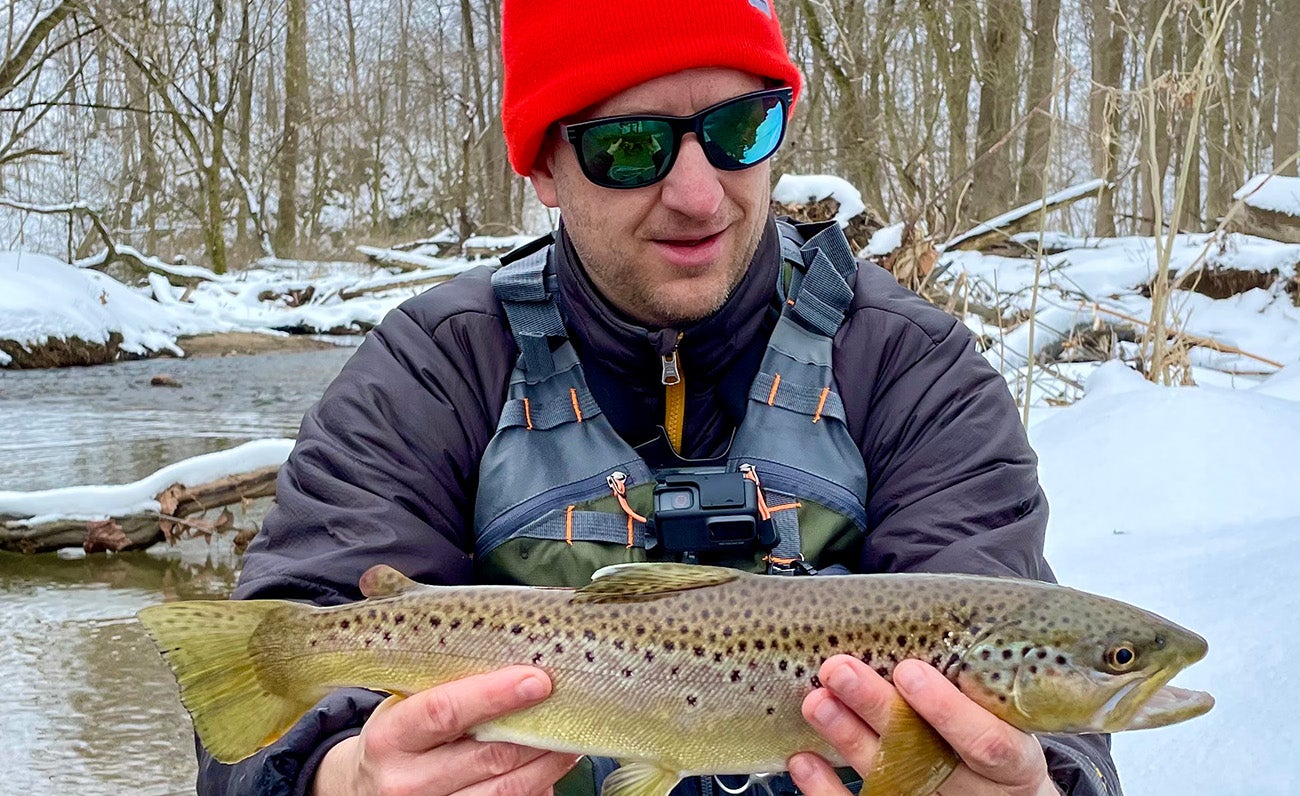 Brian Gish/CBF Staff
In the right conditions, though, waterfalls throughout the Appalachian Mountains that make up the Bay watershed’s western edge can freeze. For those who are experienced and have the proper equipment, the frozen falls at Ricketts Glen State Park near Benton, Pennsylvania are a popular winter draw, Gish says. The park’s Falls Trail is closed in winter except for “properly equipped ice climbers and hikers,” according to the Pennsylvania Department of Conservation and Natural Resources. Climbers have to sign in and out at the park office. However, other trails in the park are open for cross-country skiing and snowshoeing.
In Virginia, the Virginia is for Lovers website, run by the Virginia Tourism Corporation, also lists a number of noteworthy winter hikes throughout the Commonwealth. It includes a hike to Dark Hollow Falls in Shenandoah National Park near Luray, which sometimes freeze.
Related Stories
-
 Blog Story
In Search of Spring (Peepers)
They are the voice of the season. But how do you find a frog that’s the size of a thumbnail, lives on the edge of vanishing pools, and sings under the cover of night?
-
 Blog Story
Quest to Save the Bog Turtle
Much like brook trout and the Eastern hellbender, bog turtles are an indicator species of water quality. Follow some official surveyors on their quest to research this tiny reptile.
