More Than Just Planting Trees
Reflections on My CBF Internship: How a Silvopasture Project Changed the Way I See Restoration
When I began my CBF internship, I knew I’d be contributing to meaningful restoration work. What I didn’t expect was how one project in Harford County, Maryland would reshape the way I understand the connection between agriculture, clean water, and community action.
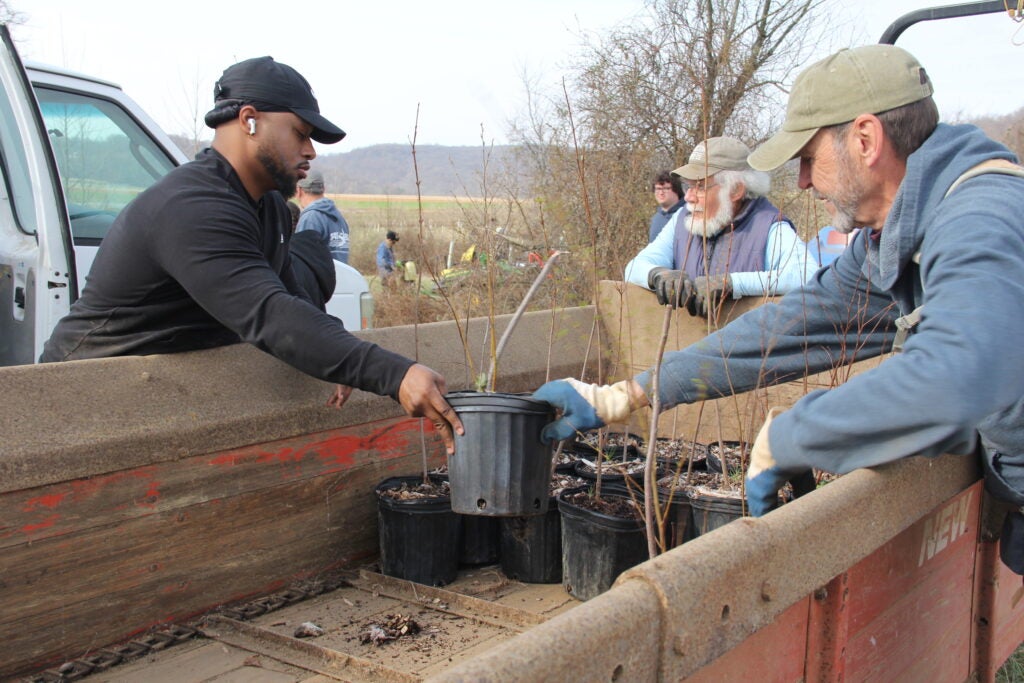
That project took place at Woolsey Farm in the Deer Creek watershed. Last year, the farmer made a major shift—converting 100 acres of soybeans into permanent pasture. This year, CBF helped take the next step by planting 20 acres of silvopasture, adding 400 native trees across the grazing landscape. Because the farm raises sheep and sells directly to consumers, this wasn’t just a tree‑planting effort. It was a chance to support a working farm while improving soil health, habitat, and water quality.
 Valerie DiMarzio/CBF Staff
Before this internship, I thought of tree planting as a straightforward restoration practice. But working on this project showed me how trees function as part of a larger land‑management system. Silvopasture blends trees, forage, and livestock in the same space. The trees provide shade for animals, stabilize soil, support wildlife, and slow runoff before it reaches Deer Creek. Seeing those benefits firsthand made the connection between regenerative agriculture and clean water feel real.
A major part of my internship has taken place at CBF’s Clagett Farm Tree Nursery, where I helped maintain thousands of saplings destined for restoration sites across Maryland. Sorting, bundling, watering, and preparing young trees requires precision and consistency. I quickly learned that successful restoration starts long before a tree reaches the field. How a sapling is handled in the nursery can determine whether it survives its first season in the ground.
Working alongside CBF’s Maryland Restoration Scientist, Rob Schnabel, I began to understand how soil health, native vegetation, livestock rotation, and water quality all influence one another. At Woolsey Farm, those connections are visible everywhere—from healthier pastures to reduced erosion flowing toward the Chesapeake Bay.
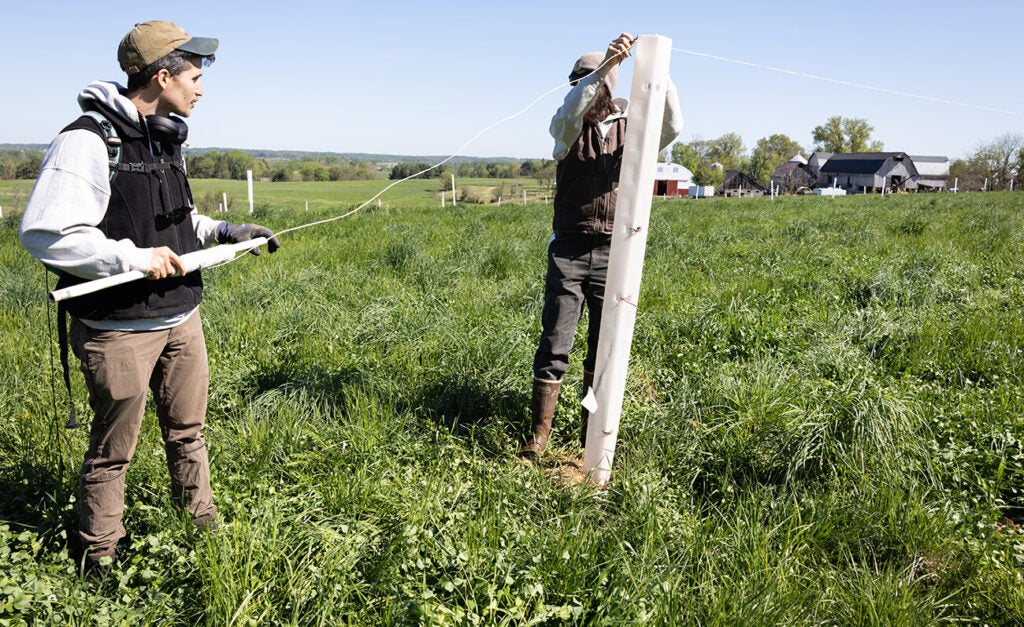
I also worked with partners from Trees for Graziers, who installed electric fencing around each tree cage to protect the young saplings from grazing sheep. Their work showed me how technical support, farmer collaboration, and long‑term planning all contribute to healthier working landscapes.
 Tyler Walker/CBF Staff
Even the funding behind the project reflected this collaboration. The trees were uniquely funded through CBF’s annual Bands in the Sand fundraising event, while the grazing infrastructure came through the Maryland Department of Agriculture’s Cost Share Program. Restoration, I learned, depends as much on partnerships and resources as it does on fieldwork.
One of the most meaningful parts of my internship was helping run the volunteer planting day at Woolsey Farm. I checked in volunteers, demonstrated planting techniques, and supported them in the field. Many had never planted a tree or visited a working farm, but they arrived eager to help. Guiding them through the process strengthened my communication skills and reminded me how essential public engagement is to environmental stewardship.
Standing at the edge of those 20 newly planted acres, I could see exactly what we had built: shade for sheep, stronger soils, improved habitat, reduced runoff, and a more resilient farm. It was a clear example of how one project can serve multiple purposes while supporting the health of the Chesapeake Bay.
My time as CBF’s Maryland Restoration Intern has given me hands‑on experience in restoration, nursery management, field logistics, volunteer coordination, and regenerative agriculture. More importantly, it showed me how restoration connects people, farms, and ecosystems. Projects like the Woolsey Farm silvopasture planting prove that with patience, preparation, and partnership, restoration can create lasting change far beyond the planting site.
Tyler Walker is CBF’s 2026 Maryland Restoration Intern and a Master of Science candidate in Environmental Management at the University of Maryland Global Campus.
