Sea Level Rise
Cities and towns near the Chesapeake Bay are facing a major threat from sea level rise. The good news is that nature-based solutions can help us adapt to recurrent flooding.
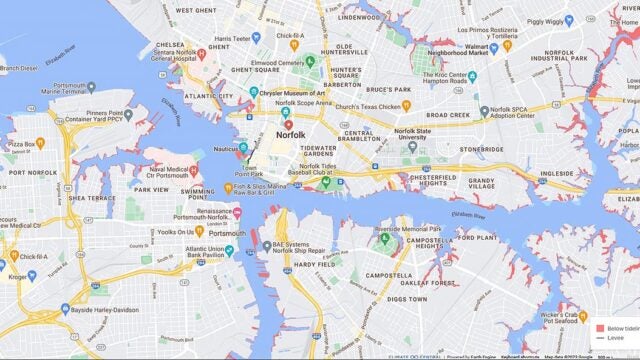
The good news is that there are ways to adapt to recurrent flooding, as well as address rising waters, using nature-based solutions. Learn about successful Virginia projects that use these practices.
Large scale shoreline protection techniques like living shorelines, living breakwaters, and oyster reefs, all stabilize the waterfront against the force of waves and storms.
Smaller scale techniques, like rain gardens, tree boxes, vegetated swales, permeable pavers, rain barrels, and downspout disconnections, hold and filter rainwater into the ground rather than letting it wash off hard streets and buildings and into creeks and rivers. This relieves pressure on overwhelmed city systems that struggle to address this regular deluge of polluted runoff.
Natural Approaches Improve Water Quality
These approaches based on natural systems have so many benefits. In addition helping us adapt to sea-level rise, many of these techniques also lead to cleaner water in rivers, creeks, and the Chesapeake Bay.
Living shorelines and living breakwaters reduce the impact of storm waves and provide critical habitat, in turn creating homes for wildlife and improving fisheries. Small scale infiltration projects absorb flood waters, remove water pollution, and increase the ability to hold polluted runoff from rainfall. Ultimately, these projects also create beautiful green spaces for people to enjoy, making communities more livable and economically attractive.
Success Stories
These case studies outline successful nature-based solutions to recurrent flooding and sea-level rise in Hampton Roads, Virginia.
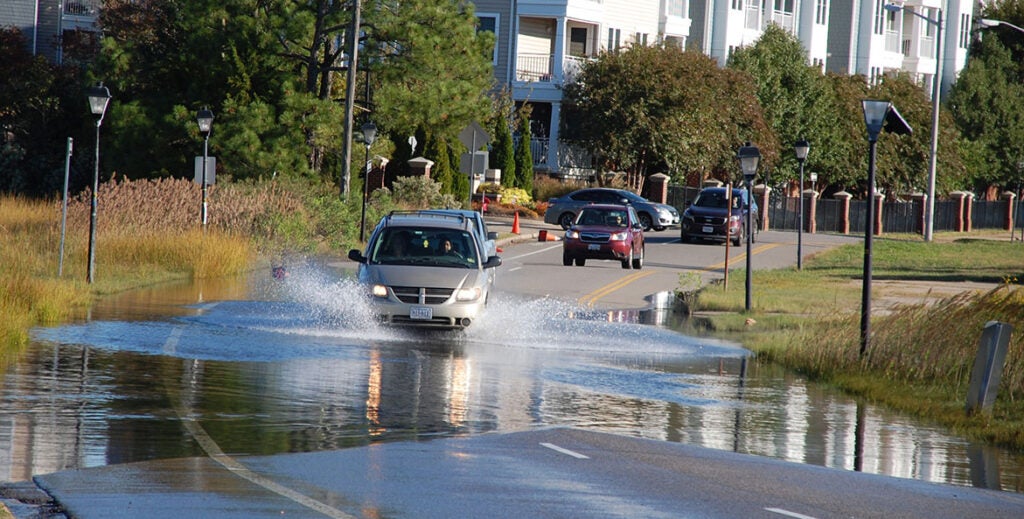 Kenny Fletcher/CBF Staff
Birdsong Wetlands
Norfolk’s first living shoreline withstands storms and hurricanes (Birdsong Wetlands, Norfolk, Va.)
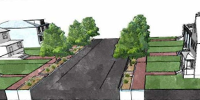
Chesterfield Heights
Preserving history by preparing for sea-level rise (Chesterfield Heights, Norfolk, Va.)
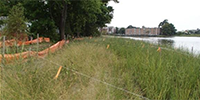
Colley Bay
Replacing concrete and debris with native wetlands (Colley Bay, Norfolk, Va.)
Homeowner’s Guide to Flooding
Once in place, the steps in this guide can help alleviate flooding problems and keep pollutants out of local waterways. They are just some of the many practices that you can use to accomplish this and also beautify your neighborhood, save money, attract wildlife, and provide other benefits.
