Oyster Reefs
Oyster reefs provide food and shelter for many other animals and are an important piece in the natural mosaic of underwater grasses, marshes, and forests that protect life along the Chesapeake Bay’s shorelines.
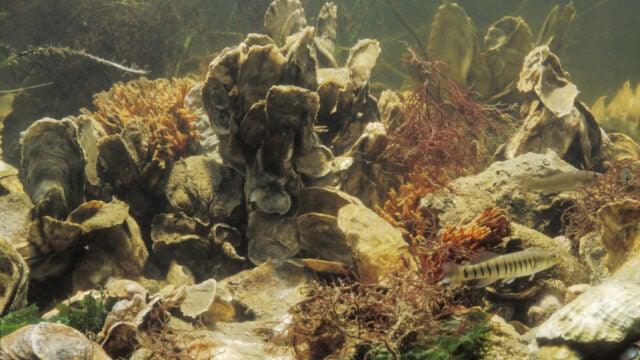
The loss of oysters and their reefs to pollution, overfishing, and disease has greatly diminished the benefits they can provide. Without healthy reefs, local economies suffer, as do other critical habitats like marshes and underwater grasses.
However, concentrated and coordinated restoration work can bring back oyster reefs to the benefit of fish, wildlife, and communities.
What Are Oyster Sanctuaries?
Oyster sanctuaries are portions of the Bay bottom that are protected from harvest. They allow oysters to grow to large sizes and reproduce. Sanctuaries are protected so oysters can help filter the water, provide habitat for fish and crabs, and support recreational and commercial fisheries. They also produce baby oysters that spread and build oyster habitat outside of the sanctuary. That’s good news for watermen because as baby oysters move beyond the sanctuary, they contribute to larger oyster populations on nearby reefs that are open to harvest. Maryland’s oyster population has tripled since the state expanded its oyster sanctuary network. Before this year’s oyster market collapse, harvests over the past five years rivaled numbers not seen since the late 1980s.
Why are oyster reefs important to the Chesapeake Bay?
Serving as natural water filters and homes for fish and shellfish that support both the ecosystem and coastal economies, oyster reefs are an essential part of the Bay.
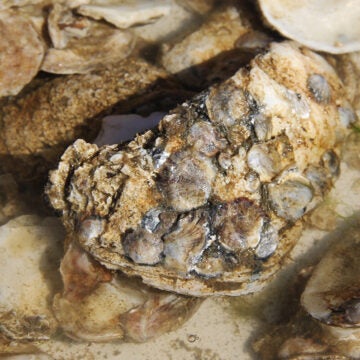
Oyster reefs are home to many species of fish and wildlife. Small fish and invertebrates, like sea squirts, worms, shrimp, and crabs, use oyster reefs as a place to grow and find shelter from predators. Larger fish, like striped bass, feed on this abundance of marine life and may also seek shelter among the oyster “rocks”—this is how striped bass earned their local name “rockfish.” Similarly, the oyster catcher is a bird that earned its name as a shellfish eater.
Oyster reefs served an integral role in the natural system that historically buffered the Chesapeake Bay’s shorelines from storms. Working together with other natural infrastructure like marshes and living shorelines, oysters can further reduce vulnerability to waves and protect adjacent marshes from erosion. This is an increasingly important service as climate change and rising sea levels put both communities and coastal habitats at risk.
As filter feeders, oysters help remove excess nutrients from the water, including nitrogen and phosphorus, the two primary pollutants degrading the Bay’s water quality. Each adult oyster is capable of filtering up to 50 gallons of water per day, and historically the Chesapeake’s oyster population could filter an equivalent of the entire volume of the Bay in a matter of days.
The Chesapeake Bay was at one time the world’s largest producer of oysters, and oysters are still an important part of the seafood industry, bringing in tens of millions of dollars each year to Maryland and Virginia. Oysters and their reefs are also the foundation of many other commercially and recreationally important fisheries in the Bay region. For example, oyster reefs support American eel, Atlantic croaker, Atlantic menhaden, bluefish, red drum, spot, striped bass, and weakfish.
Threats to Oyster Reefs
Centuries of degradation have diminished oyster reefs and oyster populations in the Chesapeake Bay to just a fraction of their historical size.
After European colonists arrived in the 17th and 18th centuries, the conversion of large areas of forest to farmland contributed significant amounts of sediment flowing into the Chesapeake Bay that silted over oyster reefs and river bottoms. Pollution from upstream sources, including wastewater treatment plants and runoff from agricultural, urban, and suburban lands, continues to threaten oysters today by fueling algal blooms and low-oxygen dead zones that can suffocate reefs.
By the end of the 19th century Maryland was the world’s largest oyster producing region, but even during the 1800s, scientists including W.K. Brooks were already recording overfishing and depletion of oyster populations. The overexploitation of oyster fisheries in New England pushed additional fishing pressure into the Chesapeake Bay. While disease and pollution also contributed to the decline of oysters throughout the 20th century, the decimation of oysters and their reefs by overfishing has been identified as the primary cause of the population’s initial collapse.
Two parasitic diseases, Dermo and MSX, contributed to significant die-offs of oysters in the Chesapeake Bay that intensified during the 1980s. Dermo reduces an oyster’s ability to grow and reproduce, eventually killing it if the infection is severe. MSX can quickly infect oysters and lead to their death. The disease die-offs in the 1980s were initially linked to droughts that drove higher salinity in the Bay, but more recent scientific findings suggest the Dermo disease itself became more virulent. Over time, however, scientists have found that surviving oyster populations in the Bay are becoming more resistant to both diseases.
Climate change is an additional threat to the Bay’s oyster reefs. Ocean acidification makes it increasingly difficult for shellfish, like oysters, to create the shells they need to survive and grow. More frequent, intense storms caused by climate change also wash more sediment and pollution into waterways, fueling algal blooms and low-oxygen “dead zones” that oysters cannot move from to escape. Rising water temperatures also make dead zones worse because warmer water holds less oxygen and increases stratification—a layering of warm water atop cold water that prevents oxygen from mixing down into the bottom waters where oysters live.
In 2026, we’ve seen attacks on oyster sanctuaries at both the federal and state levels, including:
- A bill in Maryland’s General Assembly (HB1388) attempted to open five sanctuaries to harvest;
- Maryland’s Oyster Advisory Commission has been tasked to assess harvest options in underinvested sanctuaries, and;
- the U.S. House’s FY27 Appropriations Bill is attempting to strip National Oceanic and Atmospheric Administration (NOAA) funding for oyster sanctuaries unless they’re opened to harvest.
According to polling data, more than three in four voters support keeping Maryland’s oyster sanctuaries protected.
Tell Congress to Keep the Bay’s Oyster Sanctuaries Protected!
Email or call your representative today and tell them to reject the devastating provisions including in the Fiscal Year 2027 National Oceanic and Atmospheric Administration (NOAA) funding bill!

How CBF Helps Oyster Reefs
Through restoration and advocacy, we are supporting the return of oysters and all of the many benefits they provide to the Chesapeake Bay.
The Chesapeake Bay is home to some of the largest oyster reef restoration projects in the world. CBF has contributed directly to these projects by adding oysters to the Bay through our restoration programs in both Maryland and Virginia. We have also advocated extensively for the resources and policies needed to achieve and sustain large-scale reef restoration through initiatives like the Chesapeake Oyster Alliance. With oyster restoration expertise and experience now in place and significant resources available, we are calling for Maryland and Virginia to build on the success of the 10 Tributaries Strategy to accelerate the pace and scale of Chesapeake Bay oyster restoration.
Management of the Bay’s oyster fishery is critical to restoring the oyster population, but it has long been fraught with deep divisions. We advocate for science that gives decisionmakers the information they need to bring oyster management into the 21st century, as well as policies and management structures that build collaboration and trust between industry, government, and scientists. We believe a holistic approach to oyster restoration and management can revive our coastal ecosystems in a way that reduces the impacts of climate change, improves water quality, and expands economic opportunities in the region while ensuring these resources and opportunities are managed sustainably, transparently, and equitably.
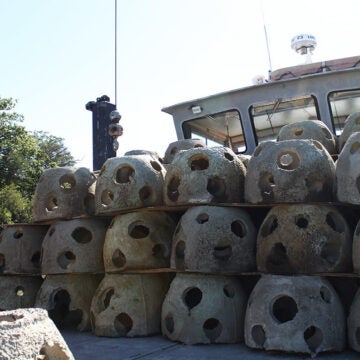
Through our restoration and oyster gardening programs, we are engaging community members in both Maryland and Virginia in the effort to bring back the Bay’s oysters. Volunteers help us build reef balls, grow oysters, and recycle shells to boost restoration on sanctuary reefs. We also work with many partners through the Chesapeake Oyster Alliance, connecting and supporting businesses, researchers, and communities to drive innovation and accelerate oyster recovery.
How can you help oyster reefs in the Bay?
There are many ways to support oyster restoration in the Chesapeake Bay, no matter where you live!
Oyster restoration in the Chesapeake Bay depends on many partners working together at all levels of government. Help us stand up for oysters by contacting your elected officials—whether locally or nationally, depending on where you live—to let them know that you support large-scale oyster restoration in the Bay. You can also help spread the word in your community about the importance of oyster reefs to the Chesapeake Bay and the need to restore them.
Our oyster restoration programs in Maryland and Virginia provide a hands-on way to help oysters return to the Chesapeake Bay. We host volunteers to help with tasks such as building reef balls and “shaking” oyster shells to prepare them for use in restoration projects. You can also become an oyster gardener to help raise baby oysters until they are ready to be planted on restoration reefs.
Oyster shells are the foundation on which baby oysters attach and grow, making them a critical part of sustaining oyster populations and their reef habitat. You can help restoration efforts by recycling the shells of oysters that you eat. In Maryland and Virginia, you can dispose of your shells at a local shell recycling location, eat at a restaurant that recycles their shells, sponsor a shell recycling bin at your location, or contact us if you are planning an oyster roast or seafood festival. Find out more about our local Save Oyster Shells program.
Related Programs
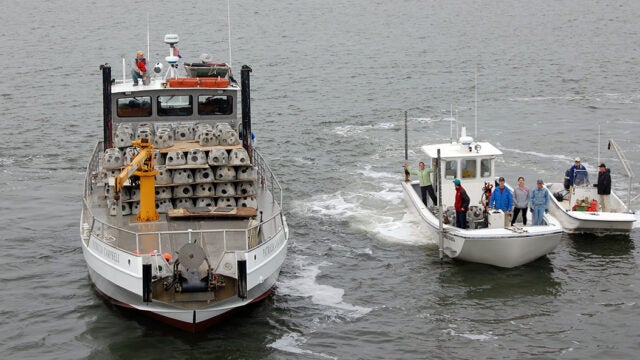
In support of re-establishing this keystone species, CBF has established facilities and programs in Maryland and Virginia devoted to restoration of the Eastern oyster, Crassostrea virginica.
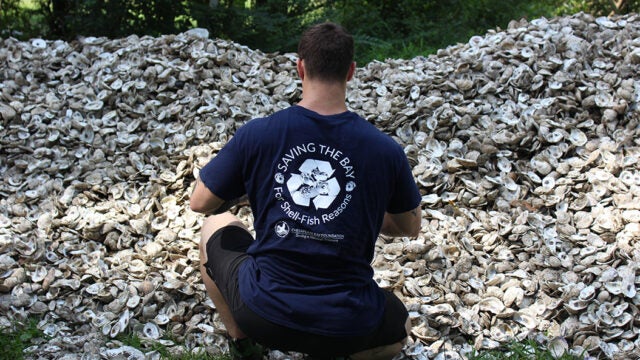
Find out about oyster shell recycling then get involved. Drop off your empty oyster shells, volunteer to pickup shells and deliver them to CBF, host a recycling pickup, or encourage your local seafood restaurant to participate.
Related Resources
Related Stories
-
 Blog Story
Field Notes: Building an Oyster Reef
Over the course of the summer, CBF built an oyster reef as part of a larger project to restore and protect an eroding shoreline along Maryland's South River.
-
 Blog Story
Save Maryland’s Oyster Sanctuaries!
Recent efforts threaten to open up protected oyster sanctuaries to harvest. CBF's Maryland Coastal Resources Scientist Julie Luecke helps us unpack this challenging issue in the following Q&A.
How to Get Involved
From signing up for an event to shopping our CBF Store, there are so many ways you can get involved in the Save the Bay movement.