Press Release
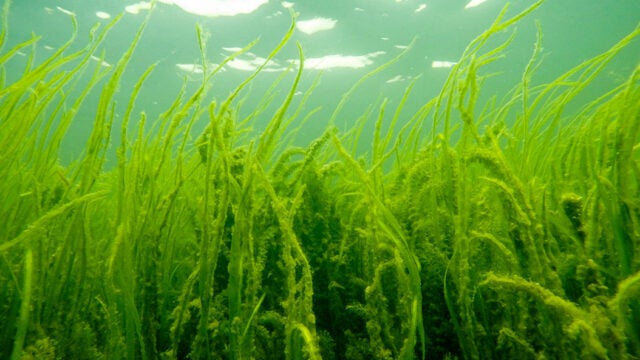
AquaCon’s Cecil County Facility Could Further Damage Susquehanna River Aquatic Habitat
To stop new pollution from entering the already-impaired Susquehanna River, the Chesapeake Bay Foundation (CBF) filed a court petition raising major concerns about a key permit for the proposed AquaCon salmon farm in Cecil County. CBF believes this permit will not adequately protect water quality, underwater grasses, and spawning areas for striped bass, perch, and other key species in the Susquehanna River and Chesapeake Bay.
The petition for judicial review, filed in Circuit Court for Cecil County, challenges Maryland Department of the Environment’s (MDE) permit for purge water discharge. Purge water is generated when fish are held for several days prior to harvest to rid them of an off-taste.
MDE’s current permit would allow AquaCon to discharge 1.9 million gallons of purge water per day directly into the Susquehanna—one of the Bay’s largest tributaries that contributes 50 percent of the total freshwater input to the Bay. The property is roughly five miles upriver from the famed Susquehanna Flats underwater grass beds, which provide habitat for many iconic species including American and hickory shad, blueback herring, and alewife.
Not only do land-based salmon farms use copious amounts of water, but they also have a troubling track record. Similar companies have reported mass fish die offs in Florida and Canada, as well as fires and potential water contamination in Denmark.
“Land-based salmon farms are relatively new and unpredictable,” said Paul Smail, CBF Vice President for Litigation. “Knowing the prior failures of these types of plants, and that the Susquehanna River is already overloaded with nutrient pollution, MDE’s permit must protect against these risks.”
In 2022, AquaCon attempted to build a similar facility in Federalsburg, Maryland near Marshyhope Creek, a spawning ground for Atlantic sturgeon. The project spurred tremendous community pushback and was abandoned by the company. In September 2024, AquaCon decided to relocate the proposed facility and purchased roughly 160 acres at Port Deposit’s Bainbridge development, a former naval training camp in Cecil County.
Discharge from AquaCon’s facility would contribute to nitrogen, phosphorus, and sediment pollution coming down the Susquehanna River. Too much pollution can promote algae growth and create low-oxygen dead zones, reducing water clarity that underwater grasses in the Susquehanna Flats need to survive. The degradation of these underwater grass beds would be detrimental not only to recreational and commercial fishermen, but also to hunters since many species of waterfowl frequent the area for rest and feeding during their annual migrations.
“The Susquehanna River is already overloaded with nitrogen and sediment pollution that runs off of farms and suburban developments,” said Gussie Maguire, CBF Maryland Staff Scientist. “While we have made tremendous progress reducing that pollution, development pressure continues to strain the health of our waterways. MDE must adequately consider this risk for new, experimental projects like AquaCon.”
The discharge permit for purge water is just one of several permits AquaCon will need to complete this project. Purge water is generated when the fish are held for several days prior to harvest. This process is required to remove geosmin, a protein that gives farm-raised salmon a musty, unpalatable flavor if not removed through the purging process. This purge water, and any nutrients and sediment it contains, will be dumped directly into the Susquehanna River, restricted only by the terms of the discharge permit.
The permit does require AquaCon to achieve net zero discharge of nitrogen, phosphorus, and sediment pollution entering the Susquehanna, meaning that any release of nutrients must be offset by other reductions elsewhere. However, the facility is expected to meet that requirement by purchasing nutrient offsets from currently unidentified sources, not by improving the water quality of its purge water discharge.
Additionally, the existing permits that MDE used as reference for AquaCon’s permit—which were issued to facilities in Maine—have yet to actually operate or have since expired. A final permit must also include AquaCon’s plans for potential catastrophic failure of the plant, which have yet to be made or presented to MDE.
CBF will be working to ensure MDE’s permit is strengthened to adequately consider the imminent threats to the Susquehanna Flats and nearby aquatic habitats.
Statement from Chesapeake Bay Foundation fisheries experts
As striped bass prepare to spawn in Maryland and Virginia rivers this month, experts believe the species may benefit from the Chesapeake Bay region’s snowier and colder winter. Historically, cold weather conditions have produced strong year classes of striped bass—when reproduction levels are high and young fish can grow into the large, iconic rockfish targeted by anglers.
Experts with the Chesapeake Bay Foundation (CBF) expect a colder winter could support striped bass spawning success this spring. However, winter temperatures are just one factor among many. Maryland and other Bay states are also now experiencing drought conditions, which reduces viable spawning habitat and could negate the positive effects of a colder winter.
Striped bass recruitment, or breeding success, in Maryland has been far below average for six consecutive years. Several conditions including water quality, overfishing, invasive predators like blue catfish, and warming water temperatures due to climate change, could be causing these tragically low numbers. These results are especially alarming considering the Chesapeake Bay produces between 70 to 90 percent of all striped bass on the East Coast.
Each year, the Department of Natural Resources (DNR) conducts a juvenile index survey to measure striped bass recruitment in Maryland. DNR scientists agreed that this year’s cold and snowy winter could result in above-average success.
Striped bass prefer cooler water temperatures. For one, cold winters are better for tiny crustaceans called copepods that juvenile striped bass eat. Additionally, when water temperatures get too warm in the summer months, striped bass are easily stressed and more likely to die when caught by anglers, even if promptly released.
A year of cooler weather could help produce a stronger year of reproduction and could also help scientists indicate whether environmental conditions are the main driver of low recruitment, or if other challenges like invasive species and fisheries management should be more closely considered.
The Atlantic States Marine Fisheries Commission (ASMFC) will convene in May to discuss potential management changes for striped bass fishing, including changing size limits and seasonal closures. It is critical that we consider every possible action to optimize striped bass recruitment and secure the iconic species’ future.
Allison Colden, Chesapeake Bay Foundation Maryland Executive Director, issued the following statement:
“While we were shivering and shoveling this past winter, striped bass were cheering. We are hopeful that last winter’s cold weather might lead to more juvenile striped bass this spring, as we’ve seen in the past. But with a drier and warmer spring, and less predictable weather patterns, we should also use these conditions as a benchmark to reassess why striped bass are struggling and where we need to focus our efforts.
“Many factors that threaten striped bass are near impossible to control—warmer and less predictable temperatures from climate change, and pervasive predators like blue catfish. But there are things we can control, such as when and how we fish for striped bass, and how the fishery is managed.
“We hope that this year’s chilly winter days and frequent snow flurries result in a stronger year class of striped bass. But we also hope ASMFC and fisheries managers are ready and willing to do whatever it takes to save this species before it’s too late.”
Chris Moore, Chesapeake Bay Foundation Virginia Executive Director, issued the following statement:
“While we are all hopeful that nature may offer a temporary boost to striped bass spawning with a colder winter, it is obvious the species is now dealing with a host of stressors that are negatively affecting reproduction. This winter’s weather may lead to more young striped bass this spring, but the long-term climate trends remind us of the likely need for practices to increase the sustainability of the striped bass population.
“The threats of climate change, invasive species, and habitat availability have made striped bass news feel like a rollercoaster. For a species this culturally and economically important, we should seize this moment not just to be hopeful about a possible increase in young fish, but to implement robust management strategies that ensure the long-term health and resilience of striped bass in Chesapeake Bay.”
Committee to develop policy solutions to costly damaging weather driven by climate change
The Virginia Senate on Tuesday announced the appointment of Chesapeake Bay Foundation’s Virginia Policy Manager Jay Ford to the legislative committee dedicated to addressing recurrent flooding across the Commonwealth.
The Joint Subcommittee on Recurrent Flooding, comprised of members of the Virginia Senate, House of Delegates, and citizen representatives, will focus on developing comprehensive legislative solutions to aid communities in persistent problems related to Virginia’s most costly natural hazard: flooding.
The committee is charged with developing and recommending short- and long-term strategies to address the growing challenges posed by rising sea levels and increased rainfall, driven largely by climate change. Their work will directly impact the resilience and sustainability of communities throughout the state.
The Commonwealth has experienced a temperature increase of more than 1.5°F since the beginning of the 20th century, according to NOAA. Projections indicate further significant warming throughout this century, especially under higher air pollutant emissions scenarios.
Sea levels along Virginia’s coastline are rising at an accelerating rate, exacerbating flood risks. Hampton Roads and the Eastern Shore are particularly vulnerable, ranking among the most at-risk areas in the nation. Recent estimates show that 250,000 acres of land, 1,469 miles of roads, and property valued at $17.4 billion lie less than five feet above the high-tide line in Virginia.
Additionally, Virginia has seen an increase in heavy precipitation events, leading to more frequent and intense flooding, and an increase in the number of billion-dollar weather disaster events. These factors underscore the urgency of the committee’s work.
Jay Ford, Virginia Policy Manager for the Chesapeake Bay Foundation and Managing Partner with the Old Dominion University (ODU) Institute for Coastal Adaptation and Resilience and CBF partnership, brings an extensive background in natural resource policy and resilience planning to the committee.
Ford released the following statement:
“I am deeply honored to join this vital committee and contribute to the development of solutions that will help Virginia communities navigate the increasing challenges of rising waters and intensified rainfall.
“The impacts of climate change are undeniable on our communities, coastlines, and economy. It is imperative that we work collaboratively to ensure our communities are prepared and resilient for the future.
“The committee’s efforts will help safeguard Virginia’s communities and natural resources for the next generation by emphasizing proactive, science-based approaches to mitigate flood risks and enhance community preparedness.”
The nonprofit now urges the budget conference committee to maintain key environmental investments in the final budget
Over the past week, members of the Maryland House of Delegates and Senate each approved versions of the State Fiscal Year 2026 operating budget, which preserve funding for key agencies and programs that support restoration of the Chesapeake Bay. The Chesapeake Bay Foundation (CBF) thanks legislators for preserving these clean water programs and calls on General Assembly leaders to maintain Bay-focused funding as the Fiscal Year 2026 budget goes to conference committee.
Although significant funding cuts were made to environmental agencies, CBF believes this proposed budget will still allow Maryland to maintain momentum on Chesapeake Bay restoration despite the historic budget deficit. Earlier this session, the Department of Legislative Services (DLS) proposed steep, blanket cuts for many clean water programs that Marylanders, businesses, and ecosystems rely on. Legislators ultimately decided that these investments could not be jeopardized.
DLS had initially recommended zeroing out the 2010 Chesapeake and Atlantic Coastal Bays Trust Fund, the Waterways Improvement Fund, and the Clean Water Commerce account—dollars that go directly to farmers, oyster growers, and restoration specialists who are improving Bay health and leveraging additional private and local government investments. Thanks to leadership in the House and Senate, these programs remain fully or near-fully funded in the current budget. Other programs, including Program Open Space and Tree Solutions Now, will receive targeted, short-term diversions.
Funding was also secured for new initiatives such as the Whole Watershed Act and the Department of Agriculture’s Leaders in Environmentally Engaged Farming (LEEF) program—a key component of Governor Moore’s Bay Legacy Act (SB428/HB506).
Allison Colden, CBF Maryland Executive Director, issued the following statement:
“Thankfully, General Assembly members came to the same conclusion we did: that investments in clean water and air are investments in Marylanders—our health, our jobs, and our ways of life.
“In light of the immense deficit challenges and prior recommendations that would have effectively ended several clean water programs, we commend the House and Senate for prioritizing the environment. While it’s not everything we hoped for, we believe this budget will allow agencies, nonprofit partners, businesses, and community members to progress toward a healthier Chesapeake Bay.
“As final details are hashed out, we urge the budget conference committee to maintain environmental program funding at the levels passed by each chamber.”
Governor Youngkin’s cuts to environmental education from the state budget this week casts doubt on whether Virginia students can adequately meet state education standards, remain competitive with neighboring states, and solve complex challenges facing the future of the state.
Governor Youngkin cut $500,000 in environmental literacy funding from the state budget Monday. The existing limited funding in the budget fails to address the critical need for robust environmental literacy among Virginia’s youth. The state’s current allocation of just 30 cents per student for environmental education is alarmingly inadequate.
This figure places Virginia far behind neighboring states, falling 89.2% below Maryland’s investment of $2.78 per student and 48.3% below Pennsylvania’s 58 cents per student.
This disparity is particularly troubling given that environmental education principles are integral to Virginia’s state education standards, inspire stewardship and reconnect young people to Virginia’s local rivers, streams, and other natural resources. According to Stanford research, environmental education has a positive impact on student achievement not only in science but in math, reading, and social studies.
Del. Alex Askew released the following statement:
“This funding cut is a disservice to our students and a step backward for environmental stewardship and STEM education. It is imperative that we equip our young people with the tools and hands on learning to understand and protect our natural resources. Research shows environmental education improves critical thinking as well as student achievement across core subjects. We must urge the legislature to reinstate this crucial funding and prioritize environmental education.”
Jay Ford, CBF Virginia Policy Manager, released the following statement:
“Investing in environmental education is investing in the future of Virginia. By neglecting to adequately fund these programs, we are depriving our students of the knowledge and skills necessary to address the complex challenges facing our Commonwealth. This shortsighted decision compromises our ability to cultivate informed and responsible citizens who can safeguard the Chesapeake Bay and its watershed.”
“CBF strongly urges legislators in the Virginia General Assembly to reconsider this decision and reinstate adequate funding for environmental education during the veto session on April 2.”
Plaintiffs argue inadequate environmental sediment and erosion controls could jeopardize the health of nearby communities and waterways
To protect communities and waterways from toxic polluted runoff in Baltimore County, the Chesapeake Bay Foundation (CBF) and several concerned residents filed a legal challenge against developers of the 53-acre Middle River Depot property. The lawsuit was filed against developers Eastern Boulevard LLC and TKG III Middle River LLC in the Circuit Court of Maryland for Baltimore County on March 20.
Developers have already graded the site with heavy equipment and are preparing for further work. However, neighbors have observed continuous pollution running off from the site into a nearby creek and Middle River, which has experienced a major die-off of underwater grasses in recent years.
In the complaint, residents allege developers are violating sediment and erosion control rules, and operating without an adequate stormwater management plan. Residents of the adjacent trailer parks and neighborhoods are seeking relief against these violations, as they raise concerns for environmental health, public safety, environmental justice, stormwater management, and potential release of hazardous materials.
“Progress shouldn’t require destroying something to make it better,” said Paul Treash, a plaintiff in the complaint and Middle River resident of 20 years. “The pollution and runoff this development has caused, and lack of oversight and transparency, needs a solution for the sake of our community, our environment, and our wildlife.”
The Middle River Depot property, formerly the Martin Aircraft plant, could contain harmful toxic chemicals from its industrial history. During World War II, the site was a B-26 bomber production site. Additionally, the former Navy Reserve Industrial Aircraft Plant reported use of polyfluoroalkyl substances (PFAS, or forever chemicals) on the site throughout the 1950s and 60s.
“This site has a long history of toxic uses, yet there is no evidence based on the approvals the developer has received thus far that potential contamination has even been considered,” said Kathleen Gagnon, CBF Litigation Fellow. “Given the close proximity to residents and tributaries of the Chesapeake Bay, this project should not move forward without appropriate controls and relief for nearby communities.”
Various developers have bought and sold the property in recent years. Proposals for the space have included office buildings, a sports complex called “Aviation Station,” and a Walmart Superstore, which faced substantial community push-back in 2017.
Most recently, in 2024 Baltimore County issued a grading permit for the project, and shortly after the Maryland Department of the Environment authorized a general permit for the project’s sediment and erosion control for polluted runoff that could run off the site into Middle River and its tributaries when it rains. CBF and residents fear that these approvals do not adequately protect communities and rivers and streams from toxic pollution.
Portions of the property lie within a Critical Area Buffer and a 100-year floodplain, both of which should require additional development provisions that have yet to be considered. The site is located within hundreds of feet from Frog Mortar Creek, a tributary to the Middle River which flows into the Chesapeake Bay.
Middle River has been historically impaired with metals, nutrients, and sediments. Since 2022, Middle and Gunpowder Rivers lost roughly 1,500 acres of underwater grasses that provide shallow water habitat for fish and crustaceans. Increased pollution, sediment, and turbidity from the development could threaten this ecosystem even further.
“The ongoing grading of this property that is disturbing an area of more than 1 million square of earth is of particular concern given the nearby proximity of the tributaries of the Bay,” said Stuart Kaplow, an attorney for residents. “Without adequate sediment and erosion control, the grading is having an adverse impact including deleterious effects on water quality.”
The plaintiffs are seeking a declaratory judgment and injunctive relief from the developers to address their many concerns. Allowing the development to continue in violation of local and state laws and regulations sets a dangerous precedent for water quality and the Critical Area Program. Approximately 30 percent of the nearby community is below the federal poverty line and has been disproportionately impacted by environmental hazards due to the industrial history of the area.
Event highlighted agency funding, programs, and legislation critical for oyster restoration, local economies, and Chesapeake Bay cleanup
In the face of looming state budget cuts, Maryland advocates and oyster growers demonstrated the critical importance of restoration and natural resource funding by serving fresh, local oysters to legislators on Lawyer’s Mall in Annapolis on March 18.
Dozens of lawmakers and members of the Moore administration attended and enjoyed raw and roasted oysters grown by Maryland aquaculture businesses from various parts of the state, including Dorchester and St. Mary’s Counties. The event was hosted by the Chesapeake Bay Foundation (CBF) and Chesapeake Oyster Alliance (COA), a coalition of more than 100 non-profits, academic institutions, oyster growers, and other businesses, with a goal to add 10 billion oysters to the Chesapeake Bay by the end of 2025.
Oysters are the bedrock of the Chesapeake Bay and a natural water filter. A single adult oyster can filter up to 50 gallons of water a day. However, as Maryland faces a historic $3 billion budget deficit, critical funding sources for oyster restoration, the aquaculture industry, and Chesapeake Bay recovery are at risk.
In early March, the Department of Legislative Services recommended significant cuts to environmental programs including the Chesapeake and Atlantic Coastal Bays 2010 Trust Fund and Clean Water Commerce program. These programs inject money directly into communities and businesses that help get more oysters in the water, reduce pollution, and create more resilient communities.
“Despite current budget challenges, we cannot risk backsliding on Maryland’s promise to clean up the Bay and its tributaries,” said Allison Colden, CBF Maryland Executive Director. “Steep funding cuts to key environmental programs could jeopardize water quality progress, as well as jobs and investments in our Chesapeake economy.”
For example, the Clean Water Commerce program is a funding source that many aquaculture growers rely on. This program compensates businesses that demonstrate tangible water quality results, such as growing oysters in local waterways.
“Protecting the Chesapeake Bay’s health is of paramount importance. We have made significant progress, and it is crucial that we continue to safeguard our state’s future by maintaining funding for vital programs such as the Clean Water Commerce Fund,” said Johnny Shockley, founder of Blue Oyster Environmental aquaculture company, who participated in the Oyster Lobby Day event.
Other participating growers included Madhouse Oysters, Double “T” Oyster Ranch, and Shore Thing Shellfish.
“Aquaculture growers are a critical part of the oyster restoration process,” said Tanner Council, COA Senior Manager. “These businesses put more oysters into the water, supply recycled oyster shells that help us grow new oysters, and amplify the economic and environmental benefits of local, fresh seafood.”
The oyster aquaculture industry is rapidly growing in Maryland, with more than $13.3 million in economic output in 2023 alone. But this progress is at risk if the General Assembly decides to accept the recommended environmental budget cuts.
In addition to fighting for these programs, event attendees advocated for various oyster-related bills currently under consideration in the General Assembly. They include:
- Support for Governor Moore’s Chesapeake Bay Legacy Act (HB506/SB428), which modernizes fisheries management and streamlines aquaculture leasing;
- Opposition for bills which would weaken penalties for oyster poachers (HB893/SB76), limit expansion of the aquaculture industry (HB1263/SB841), and would prohibit the state from accepting federal funding for oyster sanctuary restoration (HB1022/SB827).
CBF urges legislators to reject further environmental cuts and support Governor Moore’s original budget proposal for the environment. Learn more about what CBF is advocating for in the Maryland state budget here.
(WASHINGTON, D.C.)—House members and senators from the Chesapeake Bay region yesterday reintroduced bipartisan legislation to help accelerate farmers’ progress reducing agricultural runoff into the Bay and its rivers and streams.
Titled the Chesapeake Bay Conservation Acceleration Act, the bill was introduced in the House by Chesapeake Bay Task Force Co-chairs Rob Wittman (R-Va.), Bobby Scott (D-Va.) and Sarah Elfreth (D-Md.) and Rep. Jennifer Kiggans (R-Va.).
It was introduced in the Senate by Sens. Chris Van Hollen (D-Md.) Angela Alsobrooks (D-Md.), Lisa Blunt-Rochester, John Fetterman (D-Pa.), Tim Kaine (D-Va.), and Mark Warner (D-Va.).
The Chesapeake Bay Conservation and Acceleration Act proposes five changes to make in the next Farm Bill to support Bay region farmers who adopt voluntary conservation practices, like planting streamside forested buffers, that lead to cleaner rivers and streams.
The Farm Bill was last reauthorized in 2018 and initially set to expire September 30, 2023. It has been extended twice, most recently until September 30, 2025. The Chesapeake Bay Conservation Acceleration Act was first introduced during the last Congress, in July 2023.
The bill would:
- Incorporate the Chesapeake Bay States’ Partnership Initiative, known as “C-SPI,” into the Farm Bill. The U.S. Department of Agriculture (USDA) created C-SPI in May 2022 to steer an extra $22.5 million in conservation assistance to Bay region farmers that year.
- Make it easier for states to increase incentives for farmers to participate in the Conservation Reserve Enhancement Program (CREP). CREP is a USDA cost-share program that provides funding and technical assistance to farmers who implement high-priority conservation practices.
- Create a “turnkey” program, operated by a third party, to cover the up-front costs of designing, installing, and maintaining forested buffers for interested landowners. These buffers of trees along rivers and streams are among the most cost-effective ways to reduce agricultural runoff into nearby waterways.
- Expand the number of people trained to provide technical assistance to farmers. Even before the staffing turmoil at USDA, including in field offices that directly serve farmers, the department faced a shortage of trained personnel to help farmers make their conservation work successful.
- Reduce bureaucratic barriers to creating a commercial blue catfish fishery. The proposal would transfer responsibility for inspecting wild-caught blue catfish from USDA to the Food and Drug Administration. Blue catfish are a voracious, fast-growing invasive species in the Chesapeake Bay that prey on native species such as blue crabs, striped bass, and menhaden.
Chesapeake Bay Foundation (CBF) Federal Director Keisha Sedlacek issued the following statement:
“Farmers are essential to restoring the Bay and its waterways. The Chesapeake Bay Conservation Acceleration Act would encourage more farmers to adopt conservation practices that reduce fertilizer and sediment runoff, the largest source of water pollution to the Bay.
“The bill would also enable more watermen to improve their bottom line by harvesting invasive blue catfish. This would help protect native Bay species and the seafood industry from this voracious predator while supporting the region’s economy.
“With the staffing turmoil at USDA, the proposals for increasing the number of trained professionals on the ground helping farmers improve water and soil quality are more important than ever.
“The Chesapeake Bay Foundation thanks Reps. Wittman, Scott, Elfreth, and Kiggans and Sens. Van Hollen, Alsobrooks, Fetterman, Kaine, and Warner for reintroducing this bipartisan legislation. We urge Congress to quickly pass a new, more Bay-friendly Farm Bill that includes the smart policy changes outlined in this bill.”
(WASHINGTON, D.C.)—In what EPA called “the biggest deregulatory action in U.S. history,” EPA Administrator Lee Zeldin yesterday unveiled its intent to unleash an unprecedented assault on dozens of science-based standards that safeguard the environment, protect public health, and ensure the federal government does its part to restore the Chesapeake Bay.
Targets of the Trump administration’s sweeping deregulatory push include limits on pollution and greenhouse gas emissions from dirty power plants and vehicle exhaust, tougher standards for reducing soot and curbing interstate air pollution, the legal foundation for fighting climate change, and EPA’s environmental justice and diversity, equity, and inclusion work. The regulatory rollbacks are proposals that must still undergo a rigorous process before being finalized.
Yesterday EPA also unveiled plans to rewrite the definition of wetlands and other waters protected by the Clean Water Act. This could exclude more wetlands from federal protection, leaving them vulnerable to destruction.
This threat of a deregulatory blitz comes following weeks of crushing blows to the federal government’s leadership on Chesapeake Bay restoration, including:
- The Trump Administration’s proposal to slash EPA’s budget by at least 65 percent;
- The termination of $20 billion in climate and clean energy grants;
- Destabilizing mass layoffs;
- Freezing, canceling, or withholding grant funds that clean up streams, plant tree buffers, expand brook trout habitat, restore oyster populations, and other projects vital to Chesapeake Bay restoration.
Chesapeake Bay Foundation President and CEO Hilary Harp Falk issued the following statement:
“This barrage of deregulatory declarations essentially removes the word protection from the Environmental Protection Agency and undermines the federal/state effort to save the Bay.
“For example, rolling back federal protections for wetlands and waterways removes accountability for water pollution crossing state lines while further jeopardizing restoration efforts.
“Clean air and clean water are rights that cannot be taken for granted. We must stand up for the health and wellbeing of our region’s people, the Chesapeake Bay, and its rivers and streams.”
Survey reveals concerns and priorities of MD, PA, VA, and DC residents as leaders update federal-state Chesapeake Bay Agreement
As the federal-state partnership to restore the Chesapeake Bay faces unprecedented federal upheaval, more than half (52%) of surveyed Chesapeake Bay-area residents believe challenges to the Bay will become more serious over the next five years, according to a new poll by the Chesapeake Bay Foundation (CBF). Only 12 percent expect challenges to become less serious.
Most poll respondents (55%) think restoring the Chesapeake Bay has become more of a priority over the last 10 years. CBF commissioned the poll of 2,000 residents of Chesapeake Bay watershed counties in Maryland, Virginia, Pennsylvania, and Washington, D.C.
When asked how to address the challenges facing the Bay, respondents indicated a range of actions are necessary. Some of those include:
- Ensuring the Bay is free of toxic contaminants (86%);
- Protecting and enhancing living resources such as fish and oysters (84%);
- Restoring, protecting, and enhancing vital habitats (84%);
- Reducing pollutants and improving water quality (84%);
- Increasing environmental literacy (79%); and,
- Increasing climate resiliency (76%)
Bay restoration success should be measured comprehensively, the polling results suggest, with the top three indicators being pollution reductions (82%), water quality and clarity (77%), and habitat improvements (59%).
This comes as recent actions by the Trump Administration threaten to wreak havoc on the decades-long Bay restoration effort. Those include planned budget cuts, including at least a 65 percent cut proposed for the Environmental Protection Agency, mass layoffs at government agencies supporting Chesapeake Bay restoration, and suspended grant programs.
This upheaval coincides with efforts by the federal-state Bay restoration partnership to update the Chesapeake Bay Watershed Agreement in 2025. This historic long-term collaborative plan to restore the Bay must continue to address the many complex issues facing the Chesapeake and not be stripped down to a narrow focus.
“Nearly 19 million people in our region rely on the Chesapeake Bay for their wellbeing, livelihoods, and quality of life,” said CBF President and CEO Hilary Harp Falk. “Federal rollbacks risk upending decades of progress toward a healthy Bay. States in this region must step up and do more, not less, in the face of setbacks.”
“The Chesapeake Bay Agreement has guided restoration work for decades, remaining a constant through changes in federal and state administrations,” Falk said. “We need a comprehensive Chesapeake Bay Agreement where success is focused not only on reducing pollution, but also ensures thriving people, plants, and animals.”
Chesapeake Bay Agreement to be Revised in 2025
The Bay restoration effort is built on a partnership between the federal government, the six states in the Bay watershed, Washington, D.C., and the Chesapeake Bay Commission. The federal government is vital to Chesapeake Bay restoration, providing science, accountability, and technical and financial resources.
The 2014 Chesapeake Bay Watershed Agreement is the guiding force in this effort, with a stated vision of “an environmentally and economically sustainable Chesapeake Bay watershed with clean water, abundant life, conserved lands and access to the water, a vibrant cultural heritage, and a diversity of engaged stakeholders.”
To realize this vision, the agreement focuses on 10 comprehensive goals related to reducing pollution, toxics, sustainable fisheries and habitats, climate change, environmental education, and more. State and federal leaders have pledged to update this agreement in 2025.
At a March 28 meeting organized by the Chesapeake Bay Program, federal and state leaders will take the first steps toward making recommendations on the scope of the Chesapeake Bay Agreement. The revised Agreement is expected to be finalized by the leaders in December at a Chesapeake Executive Council meeting.
“Strong federal support, combined with leadership from the states, has been key to every Bay restoration success so far—from bringing back oyster reefs to reducing pollution from sewage treatment plants,” Falk said. “The Chesapeake Bay Agreement brings everyone together and provides accountability to the federal-state partnership.”
Environmental Education, Toxics, and Bay Life
Reducing nitrogen, phosphorus, and sediment will always be a central element to improving water quality and shrinking the Bay’s oxygen-starved dead zone. But focusing solely on reducing pollution will not save the Bay.
“The cleanest water in the world means little if we don’t have the Bay’s beautiful marshes, clean streams, sustainable fisheries, and flourishing communities,” Falk said.
New science shows that Chesapeake Bay restoration can be done more efficiently and effectively, as summarized in the 2023 report by dozens of leading Bay scientists called Comprehensive Evaluation of System Response (CESR). However, that means looking at the Bay watershed holistically, not slashing important work already underway.
Toxic contaminants such as PFAS are dangerous chemicals that can persist in waterways for generations, compounding health risks to people and animals. The 2014 Bay Agreement includes an overarching goal to ensure the people and animals around the Bay are not harmed by toxic contaminants. That includes research into toxic contaminants, as well as supporting policy to prevent toxics.
“PFAS are yet another example of why we should approach watersheds as systems,” said David B. Arscott, Ph.D., executive director, president, and research scientist at Stroud Water Research Center. “These cancer-causing chemicals contaminate not just farm fields and groundwater, but surface waters too. If PFAS are not included in the Bay Agreement, then where will this complex issue receive the attention it needs to improve the health and safety of our waters?”
Environmental education connects students with the world around them and builds the next generation of leaders. Studies show that this type of hands-on learning fosters critical thinking, collaboration, communication, and creativity. The 2014 Bay Agreement has an overarching goal to ensure students around the watershed know how to protect and restore their local waters.
“Our children are inheriting a world where environmental challenges are becoming increasingly urgent,” said Tonya Humphrey, a teacher with Prince George County Public Schools in Virginia who has led students on environmental education experiences for 20 years.
“Through environmental education, we empower our students to become problem solvers, advocates, and stewards of our natural world,” Humphrey said. “They will carry these lessons forward in their careers and communities. This kind of learning is only possible through strong partnerships between schools, local and state governments, and environmental organizations.”
The 2014 Bay Agreement includes a goal to protect and restore the Bay’s fisheries, as well as a separate goal to protect and restore vital land and water habitats.
One of the Bay’s recent success stories is the coordinated effort to restore the Chesapeake’s historic oyster reefs in 11 Bay tributaries—the world’s largest and most successful oyster restoration effort so far. Work on healthy habitats helps children have clean streams to splash in, wetlands absorb floodwaters and filter pollutants, and urban trees shade hot city streets on baking summer days.
“Recreational and commercial fisheries support local businesses and people that depend on the Bay. Protecting those fisheries by improving water quality and Bay habitats will make sure our children and grandchildren can feel the joy of reeling in a striped bass, or savoring a Maryland crab cake, for generations to come,” said Dave Sikorski, the Coastal Conservation Association’s Maryland Executive Director
The Chesapeake Bay is facing mounting challenges from climate change, increasing development, and population growth. Now, more than ever, is the time for a comprehensive Chesapeake Bay Agreement to guide work across states toward a common goal. Success is not only about reducing pollution, but also ensuring thriving people, plants, and animals.
Additional Polling Results
• 72% of survey respondents living in or near the watershed agree that efforts to Save the Bay also address climate change.
• Top five issues negatively affecting the Chesapeake Bay watershed: Plastic waste (51%), Toxic pollution (47%), stormwater runoff (36%), climate change (35%), residential and commercial development (34%)
• 50% of these watershed residents spend at least a few days per year at or on the Chesapeake Bay
• What is the best crab seasoning? Old Bay (79%), J.O. (5%)
• What is the Bay animal most in need of protection? Blue crab (70%), bald eagle (68%), oyster (49%), striped bass (36%)
About the Survey
Commissioned by CBF, the poll was conducted in October 2024 by Ipsos utilizing the Ipsos Online Panel system and partner online panel sources among 2000 adults aged 18-99 within watershed counties in Maryland, Pennsylvania (plus Philadelphia), and Virginia. Surveys were also collected in Washington D.C. The sample consists of approximately 600 respondents from Maryland, Pennsylvania, and Virginia, and 200 from Washington D.C. The sample is reflective of these states’ populations’ age and gender. No other demographic weights, beyond age and gender, have been applied. Where results do not sum to 100 or the ‘difference’ appears to be +/-1 more/less than the actual, this may be due to rounding, multiple responses, or the exclusion of don’t know or not stated responses.
See CBF 2024 Perceptions and Public Research—Public Release Questionnaire
For more information on survey methodology, please contact the Ipsos team:
Moriya Bobev – Moriya.Bobev@ipsos.com
Kimberly Liedel – Kimberly.Liedel@ipsos.com
