Oyster Innovation on Living Shoreline
A Virginia project doubles as a testing ground for the latest innovations in oyster restoration technology
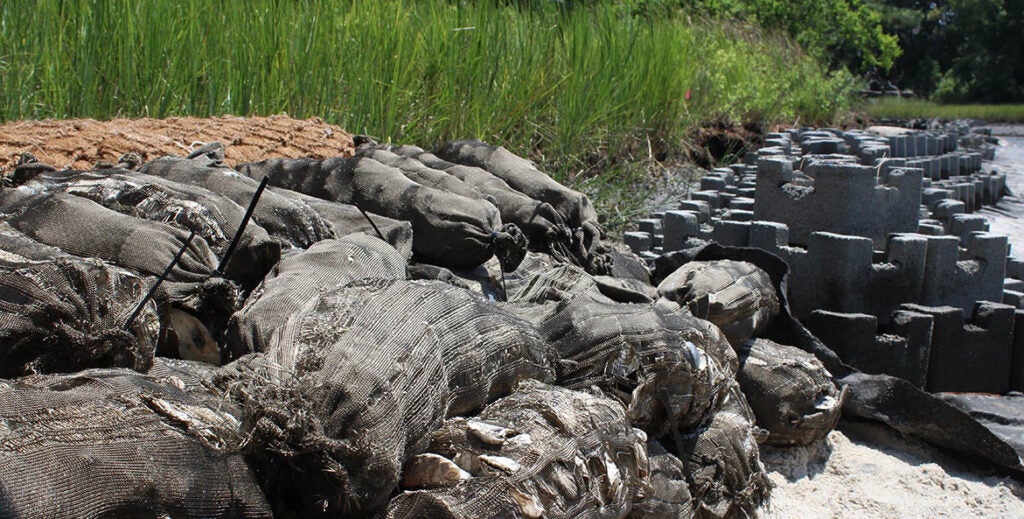
In partnership with the Chesapeake Oyster Alliance (COA) and Natrx, CBF made waves in oyster restoration last month. Together partners piloted a new innovation in oyster restoration technology—the first oyster shell bag made of basalt rock. CBF worked with Natrx, a company that applies nature-based solutions to coastal resilience and protection challenges using advanced technology and practical, sustainable products, to develop the basalt bag prototypes with funding from COA.
 Ryan Westpfahl
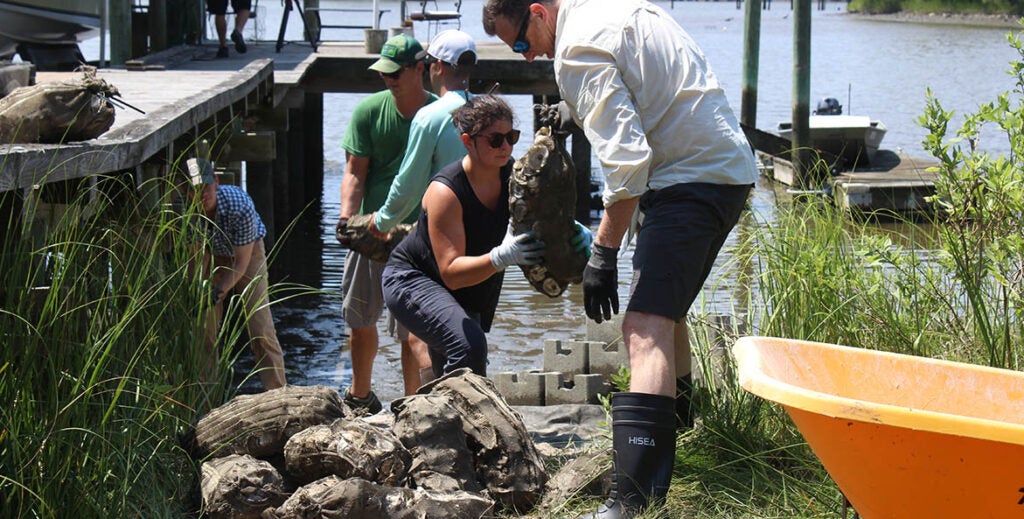
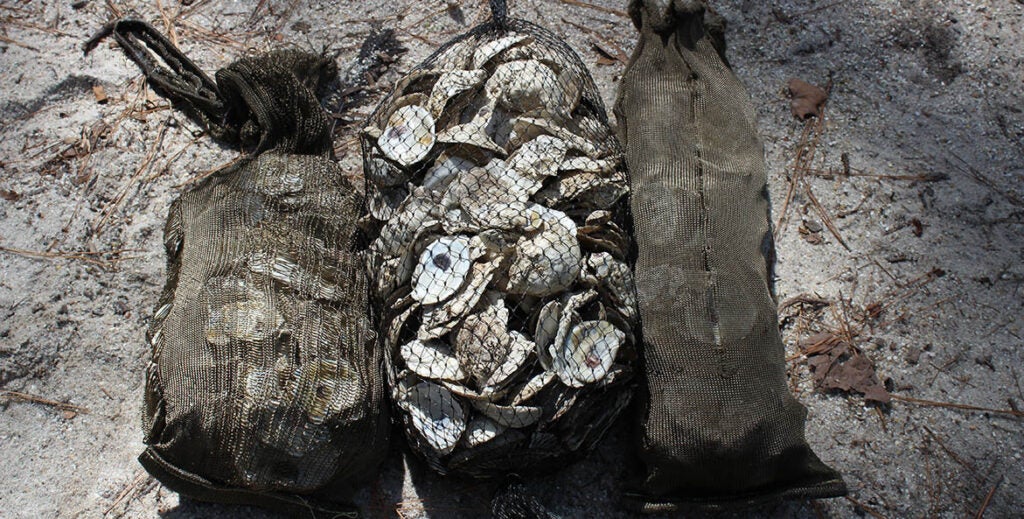
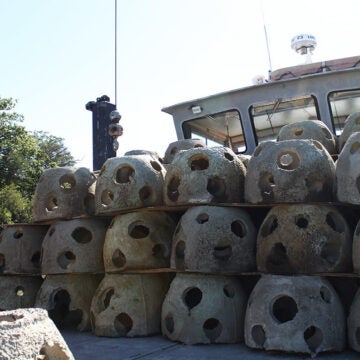
With the help of volunteers and staff from CBF, COA, and Natrx, 100 basalt rock shell bag prototypes were each filled with hundreds of recycled oyster shells from CBF’s shell recycling program. The bags were placed on the Berner Living Shoreline under construction at a home in Portsmouth, Virginia, along with 2,400 oyster castles, more than 600+ bushels of oyster shell, and 3,000 wetland plants. Oyster larvae will attach to these shells, growing into a reef that will protect this vulnerable shoreline from erosion. CBF and Natrx are piloting the 100 shell bags on the Berner Living Shoreline to test their integrity in a marine environment.
 Ryan Westpfahl
Oyster shells have been at the heart of Bay oyster reef restoration projects—and the Berner Living Shoreline project in Portsmouth, Virginia is no exception. While loose shell is commonly added to established restoration reefs throughout the Bay, bagged shell can provide a plethora of benefits to a reef, especially during its establishment. The filled basalt shell bags have been strategically placed on the Berner project by CBF Virginia Restoration Specialist Kati Grigsby, adding vertical height that mimics the structure of a naturally established oyster reef, creating habitat for native species and mass that can absorb wave energy, protecting the shoreline from erosion.
Basalt is a naturally occurring, common igneous rock formed from the rapid cooling of lava at or near the Earth’s surface. More than 90 percent of all volcanic rock on Earth is basalt. In the realm of oyster restoration, using natural basalt fibers presents a unique opportunity to combine strength and stability with an inert and environmentally safe input material. Basalt shell bags, with the right engineering and supportive partnerships, may be the next pivotal technology in keeping oyster shell securely deposited on reefs, increasing habitat and defending against erosion by absorbing wave energy.
The basalt shell bags will be monitored over the coming months to determine their ability to stay intact in the water and outside elements. With other shell bag materials, especially biodegradable options like coconut fibers, bags typically disintegrate shortly after installation, threatening the vertical height and overall mass of the oyster reef and making it less appealing as habitat for oysters and other animals. With that in mind, the first basalt shell bag prototype is focused on testing the material’s viability. The second prototype includes design improvements, such as a much looser weave that enables for more natural action and habitat integration through the fibers (water flow, oyster spat, minnows, etc.).
 Ryan Westpfahl
As emphasized by CBF’s Chesapeake Oyster Alliance and their Oyster Innovation Award Program, there is always room for innovations in oyster restoration. Many thanks to the wide array of partners who have contributed to this project, from CBF oyster gardeners to the Chesapeake Oyster Alliance. Special appreciation goes out to the Audi Environmental Foundation who supported the Berner Living Shoreline project.
Related Stories
-
 Blog Story
To Save the Chesapeake Bay, Save This Fish
Saving menhaden helps save the bay. Now, evidence of a crisis is impossible to ignore.
-
 Blog Story
Field Notes: Building an Oyster Reef
Over the course of the summer, CBF built an oyster reef as part of a larger project to restore and protect an eroding shoreline along Maryland's South River.
