When It Rains It Pours
It’s time for Maryland to step up on stormwater pollution.
This is the first blog in a series of stories that will highlight Maryland’s growing stormwater pollution challenges and what we can do about it.
For many Marylanders, checking your weather app can have high stakes. Instead of asking, “Should I pack an umbrella?” some residents ponder, “Do I need to get out the sandbags? Or move my car?”
When buying their first home in Baltimore, Jonah Hessels and his family knew there’d be risks. They were less than two blocks from the Inner Harbor in Fells Point, and flood insurance was substantial. But knowing the risks didn’t make it any easier when that first storm hit.
“The first flood was really scary,” Hessels said. “Watching the water on the streets get higher and higher. It was incredibly scary.”
Now about three years later, a wall of sandbags protects their front door to block potential floodwater from getting inside. Neighbors send texts before a big storm to make sure everyone is adequately prepared.
“Luckily we haven’t had any damage yet,” Hessels said. “But looking at the writing on the wall and climate change, I’m not sure what kind of future issues we’re looking at.”
What the Hessels and their neighbors are dealing with is called stormwater runoff, and it’s the fastest growing source of pollution in Maryland. Not only is it threatening the health of our waterways and Chesapeake Bay, but it can pose serious safety and health concerns for people, too.
What is stormwater pollution?
Think of what’s lying on Maryland’s streets right now: oil, gasoline, chemicals, salt, trash. When a big rainfall comes, all those toxic chemicals and nasty spills are washed off the streets and into our streams, rivers, and ultimately the Chesapeake Bay.
Repeated stormwater flooding can expose people and property to those harmful pollutants. Hessels described that after a quick, heavy summer rain, his streets get covered by more than a foot of stormwater. Police will close roads, and cars will be trapped for days, sometimes fully submerged.
Baltimore residents have described nauseating sewer back-ups caused by flooding of their homes. These repeated incidents not only damage property but expose people to harmful germs found in raw sewage.
“Since our flooding is mostly stormwater issues, we’re getting overflows from everything left out on the street. Oil from cars, and the trash you see around,” he added.
Worsening woes: How climate change and other factors exacerbate stormwater pollution
These challenges are only getting worse for Marylanders for two main reasons:
- Climate change is causing more frequent, intense rainstorms that our current infrastructure simply cannot handle. Flash floods and severe weather, paired with our current long-term drought conditions, greatly enhance runoff challenges.
- Rapid development across the region can increase sediment pollution in the near-term and create more “impervious surface” in the long-term. These hard surfaces like buildings and pavement repel and carry stormwater rather than absorb it, leading to more flooding.
Baltimore’s in a race against climate change, and clean water is the prize.
CBF Maryland Staff Scientist Gussie Maguire
And these threats are only getting worse. Projections done by the National Oceanic Atmospheric Administration (NOAA) estimated an average of 18 flood days in Baltimore in 2025, compared to 68 flood days projected for 2040 — a nearly 277 percent increase.
In May, Blue Water Baltimore reported that much of the Inner Harbor and Patapsco River have experienced moderate to significant health declines in the last 15 years, likely due to increasing stormwater pollution and aging wastewater infrastructure.
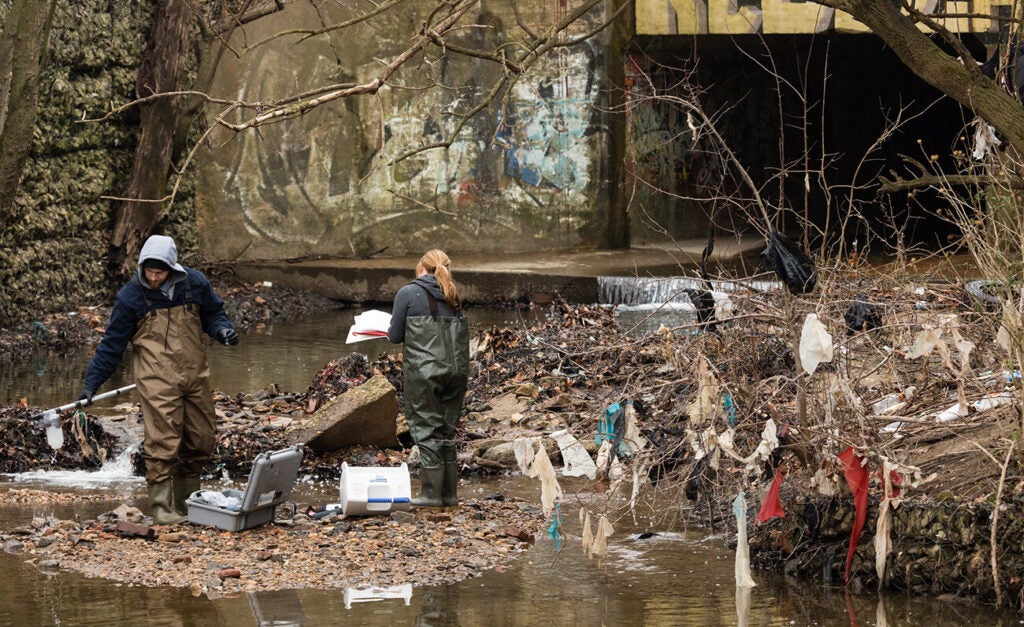 Will Parson/Chesapeake Bay Program
“Baltimore’s in a race against climate change, and clean water is the prize,” said CBF Maryland Staff Scientist Gussie Maguire. “Unfortunately, pollution got a head start, and more intense precipitation is widening the gap. Current efforts have kept us from falling behind but are simply not enough.”
Current solutions aren’t cutting it
According to Chesapeake Bay Program data, between 2009 and 2023, Maryland has made zero percent progress reducing stormwater pollution. That doesn’t mean the state has done nothing. However, their efforts are being outpaced by development and climate change. Maryland’s current efforts to regulate stormwater, including key permits for agencies, developers, and local jurisdictions, are based on outdated data which means they can’t keep pace.
In fact, CBF and several other environmental partners recently went to court against the Maryland Department of the Environment’s general stormwater permit for industrial sites, arguing that the permit fails to consider climate change or environmental justice concerns. CBF also recently voiced concerns with the State Highway Authority’s latest stormwater permit for highways, roads, and bridges. If the state fails to address the deficiencies in these permits, we’re locked into stormwater management for at least another five years that we know doesn’t meet the mark. We’d be losing precious time.
What can we do?
There are solutions to this growing challenge. They just need to be prioritized and scaled.
Not long ago, Maryland was considered a national leader in green infrastructure, which can stop polluted runoff before it harms Maryland’s people, properties, and waterways. Integrating natural filters like trees, native grasses, and healthy soils help absorb rainwater, rather than letting it swiftly wash down pavement.
“When dealing with large volumes of water, we want to try and make the land like a sponge,” said Maguire. “The more rainfall that can be absorbed by the land, the less runoff we’ll see.”
Paul Kaladas, an Annapolis resident of 12 years, has implemented some of these green practices at his own home. “We have a rain garden to take care of runoff, so it doesn’t add sediment to the Bay or the creeks,” Kaladas shared. “If we didn’t have a rain garden, we’d have a washed-out gully.”
Annapolis is another Maryland city plagued by frequent flooding. While it’s often coastal flooding caused by higher tides and sea level rise—exacerbated by stormwater—the challenges are similar. The number of minor flood days in Annapolis has quadrupled between the 1970s and 2025.
The Annapolis Maritime Museum in Eastport, where Mr. Kaladas volunteers and keeps his sailboat, recently made major modifications to address regular flooding. In fact, visitors can still see evidence of the immense flooding caused by Hurricane Isabel in 2003.
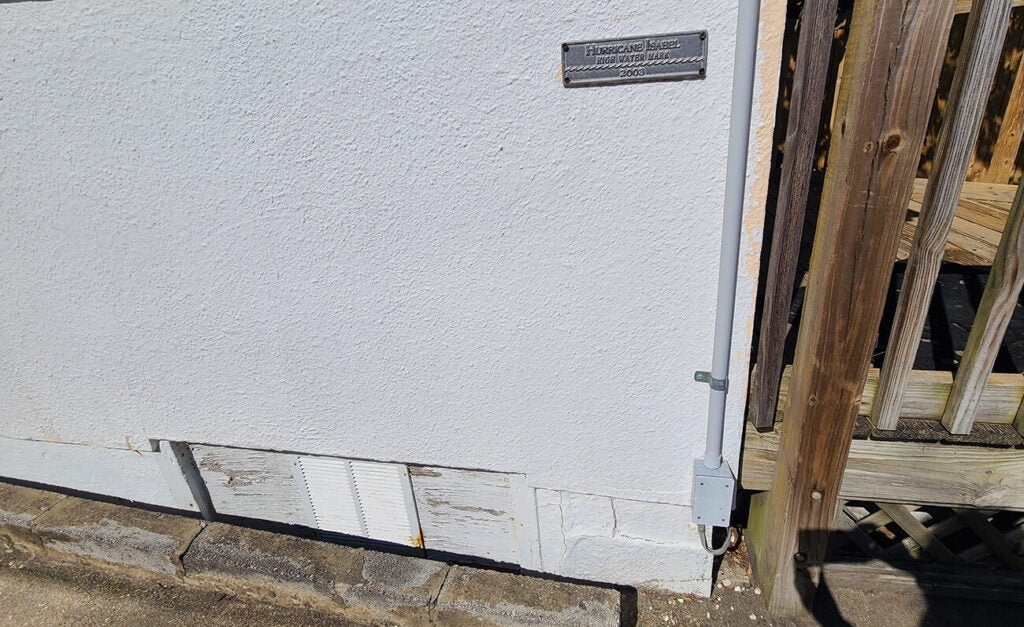 CBF Staff
“All the low-lying roads here are impacted [by flooding]. And people’s houses are impacted,” Kaladas said. “I’ve had two friends move out of Eastport because they were concerned with the water levels.”
It’s time to step up
Sadly, frequent flooding and stormwater issues have become commonplace for many Marylanders. But that doesn’t mean we will stand idly by. Maryland can no longer stay the course on stormwater. The longer the state waits to address this worsening issue, the more dangerous it will become.
“Climate change is not waiting for us to play catchup,” Maguire added. “It’s time for Maryland to step up on stormwater pollution. The health of our people and our Bay depend on it.”
Speak up now to protect Maryland from dangerous flooding and stormwater pollution!
Add your name to the growing list of Marylanders who demand smart stormwater solutions from the Maryland Department of the Environment in their upcoming permit process and state legislators.

Related Stories
-
 Blog Story
Amid Trump Attacks on Chesapeake Bay, Maryland Must Lead the Way. Let’s Start with Stormwater.
Recently President Trump took aim at the Chesapeake Bay. Perhaps just as concerning, he urged states to backtrack on one of Maryland’s fastest growing challenges: flooding and pollution from stormwater.
-
 Blog Story
Pennsylvania Should Stand up for Stormwater
Pennsylvania has long rallied communities to protect our rivers and streams, which is why the President’s recent executive order aimed at reversing clean water protections is so hard to understand.
