Wildlife

American Shad

American shad once ruled the Chesapeake Bay, but decades of damage have left these fish struggling. Restoration efforts haven’t reversed the decline—can this legendary fish be saved?
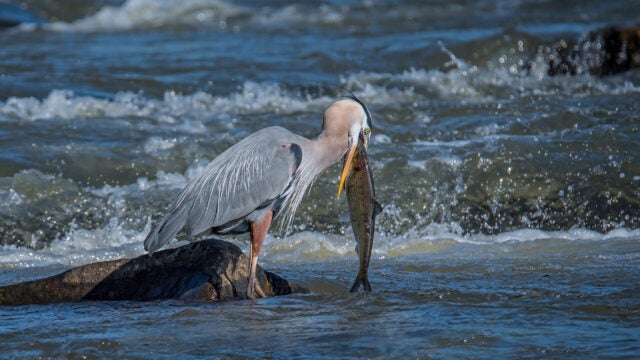
A blue heron eats an American shad along a river.
Edward Episcopo
A blue heron eats an American shad along a river.

Once the Chesapeake Bay’s most prized fish, American shad shaped the region’s economy, ecology, and culture for centuries. Each spring, they visit freshwater rivers to spawn, feeding communities and wildlife alike. But pollution, overfishing, and blocked migration routes have pushed this species to the brink. Today, few remember its legacy—but efforts are underway to restore shad and revive its place in Bay life.

About American Shad

A fish that has fed families, fueled economies, and shaped traditions along the East Coast for generations.

Conowingo Dam
David Turnbull

American shad are more than just fish—they fuel East Coast ecosystems and traditions. Each spring, these migratory members of the herring family return to spawn in rivers like the James, Potomac, and Susquehanna, supporting key species like striped bass and bluefish. Once abundant, shad were vital to fishing communities and Chesapeake culture.

Over centuries, dams, pollution, and overfishing devastated American shad populations. Once plentiful in Chesapeake Bay tributaries, their spawning grounds were blocked and waters degraded. By the 1970s, harvests had plummeted, leading to fishery closures in Maryland in 1980 and Virginia in 1990.

Reviving shad populations will take coordinated action. Efforts to reduce bycatch, remove dams, improve water quality, and boost hatchery programs can help. But recovery depends on public support—protecting habitat, restoring rivers, and ensuring shad can reach their spawning grounds.

Conowingo Dam
David Turnbull

Related Programs

Join us to explore, learn, and make a lasting impact on protecting and restoring the Bay.
Explore Our Programs
Program Become a Chesapeake Steward

CBF's Volunteers as Chesapeake Stewards, or VoiCeS, program engages local volunteers and their communities and fosters a deeper understanding of the Bay watershed and the efforts to restore it.

Maryland, Pennsylvania, Virginia, Washington, D.C.
A group of volunteers celebrating after building a living shoreline.
Program Volunteer

Do you enjoy working with others to help restore the Chesapeake Bay and its rivers and streams? Whether growing oysters, planting trees, or helping in our offices, there are plenty of ways you can contribute.

Maryland, Pennsylvania, Virginia
Sunset over a choppy bay with waves crashing onto a sandy shore, and a long bridge stretching across the horizon under a clear blue and orange sky.
Program CBF’s Online Giving Catalog

CBF's Online Giving Catalog is a great way to give a gift with meaning to friends and family for holidays and other special occasions.

Related Resources

Explore our resources to learn more about the Bay and how you can help protect it.
View All Resources
Oysters and marsh grass along the shore.
Kenny Fletcher/CBF Staff
Resource 14 Things You Can Do
One of the most common questions we're asked is "What can I do to help save the Bay?" Here are 14 ways you can help.
Resource 17 Native Trees for Your Yard
If you're thinking of planting trees, consider these 17 species native to the Chesapeake Bay watershed.
Oysters and marsh grass along the shore.
Kenny Fletcher/CBF Staff

How to Get Involved

From signing up for an event to shopping our CBF Store, there are so many ways you can get involved in the Save the Bay movement.

Learn More

Advocate

Raise your voice for clean water and healthy communities.

Take Action

Volunteer

Join us in the field to plant trees, oysters, and more across the watershed.

Learn More

Donate

Your tax-deductible gift will restore the Chesapeake Bay watershed for years to come.

Donate Now
Kenny Fletcher/CBF Staff

Sign Up for Email Updates!

Be the first to know the latest Chesapeake Bay issues and how you can help in the fight to save the Bay and its rivers and streams.

Sign Up
Atlantic Blue Crab