Living Shorelines
Living shorelines are a proven natural approach to protecting tidal shorelines from erosion, restoring shorelines, and protecting communities. They also offer many benefits to the environment.
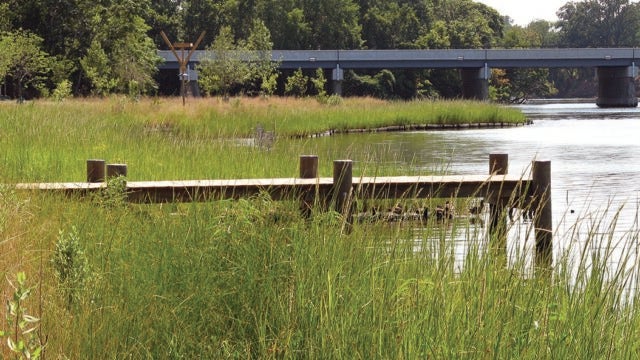
What are living shorelines?
Living shorelines are a proven natural approach to protecting tidal shorelines from erosion. Compared to hardened shorelines lined with riprap, bulkheads, and concrete, living shorelines offer many benefits to the environment. These benefits include:
- Cleaner water by settling sediment and filtering pollution
- Better shoreline habitat for wildlife like nesting turtles and shorebirds
- Improved shallow water habitat for many plant and animal species like underwater grasses, blue crabs, and various types of finfish
Living shorelines are created by planting native wetland plants, wetland grasses, shrubs, and trees at various points along a shoreline. Plantings are often paired with carefully placed bioengineering materials, such as manmade coconut-fiber rolls (or biologs) to protect vegetation and soils or in some cases oyster shell or restoration material. And, where viable, oysters can be included as well. Projects may include stone elements, as long as they do not cut off access to the shore.
As of July 1, 2020, in the Commonwealth of Virginia, living shorelines are required unless the best available science shows that would be not suitable on the site. In Maryland, regulations requiring living shorelines went into effect in 2013.
If you need to protect your shoreline, check out our Six Steps to Create Your Living Shoreline in Virginia and Six Steps to Create Your Living Shoreline in Maryland.
Living Shorelines and Erosion
A living shoreline, at the design’s core, is an erosion prevention tactic that has the ability to adapt to changing water levels and increased storm activity resulting from climate change. This is critical in today’s climate environment, where more intense storms and record rainfalls are resulting in increased soil erosion, flooding, and polluted runoff.
Hardened structures, in the short term, are an effective method of shoreline stabilization, but they cannot adapt to a changing environment. In addition, it has been proven time and time again that they eventually fail. With increased storm activity and sea-level rise, the life spans of hardened structures will become even shorter.
A living shoreline is a personal investment in the security and longevity of your property.
