Wetlands
Wetlands are a critical component to the protection and restoration of the Chesapeake Bay. They provide habitat for wildlife, naturally filter water, and protect against erosion and storms, among many other benefits.
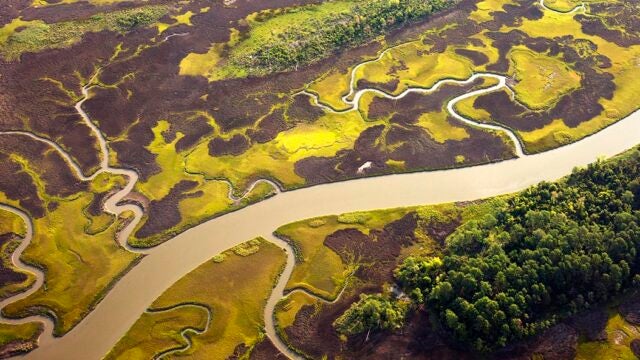
Located where land meets water, wetlands—which include marshes, swamps, and bogs—are low-lying areas covered by water some or all of the time. The Chesapeake Bay watershed includes 1.5 million acres of wetlands, including tidal wetlands and inland freshwater wetlands.
Once disregarded as worthless land, they are now recognized as critical to the protection and restoration of the Bay, its wildlife, and even adjacent lands. They provide habitat, help protect communities from storms, and act as important natural filters that improve water quality. CBF is working to ensure strong protections for wetlands throughout the watershed.
What are wetlands and why are they important?
Both tidal and non-tidal wetlands are among the most productive, diverse, and important ecosystems in the Chesapeake Bay watershed. They improve water quality, reduce storm damage and flooding, control erosion, provide vital wildlife habitat, and help fight climate change.
There are two categories of wetlands found in the Chesapeake Bay watershed. Tidal—also called coastal or estuarine—wetlands are found along the shoreline of the Chesapeake Bay and its rivers. These areas fill with water when the tide rises.
Inland or non-tidal wetlands contain fresh water and make up 86 percent of the wetlands in the watershed. Their water levels are affected by precipitation and groundwater. Many are located on floodplains bordering streams, rivers, lakes, and ponds. Some non-tidal wetlands are not adjacent to or connected on the surface to other waters, although they are connected below ground. Two types of isolated wetlands that are unique in the Bay region are “Delmarva Bays” and “pocosins.”
Delmarva Bays (also known as Delmarva Potholes) are shallow, oval-shaped depressions that cover more than 34,500 acres on the Eastern Shore of Maryland, Delaware, and Virginia. “Pocosins” (pronounced puh-COE-sins) are isolated bogs with sandy, peat soils that only exist in the Bay region in southeast Virginia.
Wetlands act as natural filters, protecting groundwater and downstream waters by trapping and treating pollutants, including phosphorus, nitrogen, and sediment. They are often referred to as the watershed’s kidneys, absorbing and cleansing polluted runoff through a complex system of physical, chemical, and biological processes before it enters the Bay.
Nontidal wetlands act as a sponge, absorbing water after storms. This water slowly sinks into the ground and helps refill underground water supplies. During dry periods, wetlands can let go of some of that water to keep streams flowing, which otherwise may run dry. This balance of water flow is critical for healthy watersheds.
Wetlands provide some of the most productive habitat for widely diverse wildlife. Their rich vegetation provides food, shelter, spawning, and nursery areas for fish and shellfish; wintering grounds for migrating waterfowl; and shelter and food for amphibians, reptiles, mammals, and birds.
In the U.S., it is estimated that 90 percent of all recreational fish and shellfish harvested and 75 percent of those commercially harvested depend on wetlands for food or habitat. In the Chesapeake that includes major recreational and commercial fisheries like Atlantic menhaden, striped bass (rockfish), herring, shad, and bass. One in ten of the Chesapeake region’s endangered species rely on wetlands for survival.
Tidal wetlands and inland wetlands absorb the energy of storm surges and overflow due to heavy rains. By absorbing the sudden influx of water, wetlands help protect low-lying communities by reducing flooding, erosion, and property damage during major storms. Losing wetlands can worsen the chronic flooding that disproportionately hurts disadvantaged communities, which are more likely to be located on what was once considered marginal land.
When it comes to climate change, wetlands can store 50 times more carbon than rain forests, helping keep this climate-change contributing gas out of the atmosphere. They trap high-carbon detritus, such as leaves, animal waste, and other debris below the water’s surface. And the flooding and erosion control functions of wetlands can aid in reducing the impacts of climate change.
What are the threats to wetlands?
Unfortunately, the Chesapeake’s wetlands are threatened by development, rollbacks of federal regulations, invasive species, and the effects of climate change, including sea level rise, flooding, drought, increased heat, and more frequent and severe storms.
Strong federal safeguards are essential to achieving pollution reductions and restoring the Chesapeake Bay and its rivers and streams. This includes protections under the federal Clean Water Act that require builders, developers, and anyone else who wants to fill in wetlands or other protected waters to first obtain a permit. These permits often require development plans to avoid wetlands, or require restoration of wetlands elsewhere to offset the loss.
However, ongoing regulatory struggles over which “Waters of the United States” (or WOTUS) are protected by the law continue to put wetlands at risk. Under debate is whether the law only covers wetlands with “a continuous surface connection” to navigable waters and how long an area must have water in it to be considered a federally protected wetland.
In November 2025, the U.S. Environmental Protection Agency and the U.S. Army Corps of Engineers announced a proposed rule defining WOTUS as waters with a continuous surface connection that have water present year-round. If finalized, the new definition would put thousands of isolated wetlands, known as Delmarva Bays and pocosins, and more than 118,000 linear miles of streams that flow intermittently or during certain seasons at risk. Maryland, New York, Virginia, and Pennsylvania all have programs allowing them to regulate all or most waters within their respective jurisdictions that are not covered by the Clean Water Act. Without federal protection, only state regulations would be left to prevent development or destruction of these valuable natural resources. This is particularly important for Delaware and West Virginia, which rely solely on the federal definition of WOTUS to protect wetlands and streams in their jurisdiction.
Invasive, nonnative plants and animals threaten native wetland species by crowding them out or establishing themselves more quickly or otherwise disrupting natives’ ability to thrive. For example, nutria, a voracious, semi-aquatic rodent, have had a devastating impact on wetlands since their introduction to the region in the 1940s. Plants like purple loosestrife, Japanese stiltgrass, and especially phragmites have also overrun Chesapeake wetlands, crowding out other native species and eliminating food supplies and habitat for native wildlife.
A number of factors caused by climate change are expected to impact wetlands. Changes in precipitation and temperature could alter habitability. In areas where development prevents tidal wetlands from shifting inland with sea level rise, they may disappear as water levels become too deep for plants. Freshwater wetlands could be affected by encroaching saltwater. All these factors affect wetlands’ critical roles for water quality, fisheries, and habitat and could result in the loss of many wetlands by the end of the century.
What CBF Is Doing to Protect Wetlands
We advocate for strong protections for wetlands across the watershed and work to hold governments and polluters accountable to them.
CBF will continue to oppose attempts to narrow the definition of “Waters of the United States” (WOTUS) that are protected by the federal Clean Water Act. Our goal is to ensure that the Clean Water Act covers all non-tidal wetlands and other waters that protect the Chesapeake Bay and make the watershed unique.
In our watchdog role holding polluters and government accountable to their clean water commitments, CBF goes to court to challenge permits that fail to sufficiently protect wetlands and adjacent waters.
CBF engages with state water quality agencies responsible for implementing water quality certifications for federal actions that might affect wetlands. We are closely watching state decision makers to ensure that watershed state wetland protections are stronger than federal protections.
How You Can Help Protect Wetlands
You can do your part to help protect wetlands and improve water quality both locally and across the Chesapeake Bay watershed.
At the local level, you can learn how your county is addressing water runoff from parking lots and roadways. Then, encourage local projects to create and restore wetlands to filter and clean water before it flows to local streams. You can also educate your friends and neighbors about the importance of wetlands for protecting and restoring the Bay and its tributary creeks, streams, and rivers in your community.
You can join CBF’s Action Network and find other advocacy tools and resources in our Action Center to help speak out against development proposals that would damage environmentally sensitive wetlands. You can also support our efforts with a donation to help CBF continue to advocate for government policies that protect our environment.
Related Stories
-
 Blog Story
Four Things Bay-Savers Should Know about the Supreme Court’s Wetlands Ruling
CBF Vice President of Litigation Jon Mueller breaks down the big takeaways from the recent Sackett v. EPA ruling and what it could mean for water quality in the Chesapeake Bay watershed.
How to Get Involved
From signing up for an event to shopping our CBF Store, there are so many ways you can get involved in the Save the Bay movement.
