Press Release
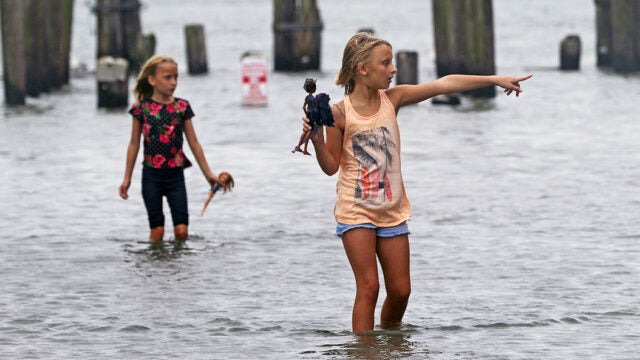
Ahead of a Feb. 5 court hearing, the Chesapeake Bay Foundation has filed a supporting brief arguing for Virginia’s continued participation in the Regional Greenhouse Gas Initiative (RGGI).
Last year, the Southern Environmental Law Center (SELC), representing four organizations, filed a lawsuit challenging Virginia Gov. Glenn Youngkin’s repeal of regulations that govern Virginia’s participation in RGGI.
In a Nov. 3 ruling, the Fairfax Circuit Court dismissed three petitioners, all conservation organizations, for lack of standing. The case was transferred to Floyd County, where the remaining plaintiff is based, and an initial hearing is scheduled to take place Feb. 5.
In its amicus curiae brief, CBF supported the petitioners’ request to suspend Virginia’s withdrawal from RGGI while the case is pending. The brief emphasizes the importance of RGGI in providing consistent and dedicated funding to community flood prevention projects that prioritize nature-based resiliency solutions across Virginia. These projects reduce the impacts of sea level rise and flooding as well as improve water quality.
Virginia joined RGGI in 2020 through legislation passed in the General Assembly. The program, implemented in 12 Eastern states, sets a regional limit on carbon dioxide emissions from power plants. Each power plant must pay for each ton of carbon dioxide (CO2) it emits at quarterly auctions. The emissions cap lowers over time, leading to cleaner air and less pollution to waterways while reducing emissions that contribute to climate change.
The proceeds from RGGI’s auctions directly benefit Virginia’s residents: 45 percent of the revenue in Virginia goes to the Community Flood Preparedness Fund, which supports resilience efforts from the Eastern Shore to southwest Virginia, particularly in communities that may not be eligible for a loan.
In just two years, RGGI raised more than $600 million, and Virginia has awarded approximately $97.7 million for community flood prevention projects.
These projects support combatting the impact of severe storms that increase stormwater runoff, increase nutrient and sediment loads to the Bay watershed, and threaten to drown critical wetlands as well as destroy properties.
Chesapeake Bay Foundation Virginia Staff Attorney Patrick Fanning issued the following statement:
“Virginia’s participation in RGGI is critical to addressing climate change and protecting communities from flooding. We will continue to support efforts to keep Virginia in RGGI, as well as efforts that prioritize nature-based resiliency projects.”
“RGGI was the only dedicated source of funding for community, nature-based projects that prevent flooding and reduce pollution. It was a critical piece in not only protecting the environment against the reality of rising seas and climate change, but Virginians as well. Our brief urges the court to allow this important program to continue operating while the case proceeds.”
Today’s decision by the Appellate Court of Maryland affirming Baltimore stormwater permits is a loss for clean water. The court’s response stems from a 2021 lawsuit and petition for judicial review brought by the Chesapeake Bay Foundation (CBF) and Blue Water Baltimore (BWB) that challenged the Maryland Department of the Environment (MDE)’s Municipal Separate Storm Sewer System (MS4) permits for Baltimore City and Baltimore County.
MS4 permits are intended to improve stormwater management and reduce pollution. However, after review by BWB, CBF, and others, the groups contended that the permits do not sufficiently ensure that urban and suburban pollution is reduced.
The permits allow Baltimore City and County to rely on short-sighted, ineffective solutions. While practices such as street sweeping and certain stream restoration projects nominally meet MDE’s water quality requirements, they do little to reduce flooding and polluted runoff. The permits also do not address the increasing frequency and severity of rainfall and severe weather from climate change. The flooding that occurs during these events is disproportionately harming vulnerable communities that are most directly impacted by flooding and overflows of polluted stormwater.
“These permits shortchange Baltimore residents suffering from flooding and don’t do enough to prevent polluted runoff to local waterways,” said CBF’s Environmental Justice Staff Attorney Taylor Lilley.
“Urban and suburban stormwater runoff is the only major source of pollution that is continuing to increase. When the government’s goal is to meet permit requirements—not reduce pollution and flooding—the residents bear the financial burden of flooded streets and homes.”
“We’re deeply disappointed with the court’s decision, because it keeps the financial burden of poor stormwater management squarely on the shoulders of those who can least afford it,” said Alice Volpitta, Baltimore Harbor Waterkeeper with Blue Water Baltimore. “Baltimore residents deserve cleaner waterways, less inland flooding, and fewer sewage backups into their homes. We’ll continue our work with communities and agencies to achieve those goals, in spite of this weak permit.”
In December 2021, CBF and BWB filed petitions in the Circuit Courts for Baltimore City and Baltimore County seeking review of these MS4 permits. Hearings on the merits were held, but both courts affirmed the MS4 permits and denied our request for the permits to be remanded back to MDE for further consideration. CBF and BWB appealed these decisions to the Appellate Court of Maryland and the two cases were consolidated. Arguments were heard in October 2023.
“MS4 permits are the only mechanism that Maryland currently has to address urban stormwater pollution, a sector in which Maryland is falling behind. Updated every five years, today’s permits only require that the mechanisms be effective enough to deal with a one-inch storm event, which is nowhere near our current reality due to the changing climate,” said CBF Maryland Executive Director Allison Colden.
“Recent flooding events in the Wyndhurst neighborhood near Stony Run and the Ednor Gardens/Lakeside neighborhood have demonstrated the real-world impacts these events have on our communities,” Colden said. “Maryland residents deserve better than the repeated flooding, poor water quality, and long-term impacts that will result under these permits.”
Chesapeake Bay Foundation Backs Legislation to Build Climate Change Resiliency
Tree conservation has taken center stage as seven new bills progress through the Virginia General Assembly. Introduced in both House and Senate chambers, these bills mainly give local governments broader authority to preserve and replace trees during the development process.
“The alarming loss of our tree canopy has ripple effects for Virginians who are seeing their backyard streams erode, their streets flood, and their utility bills increase,” Chesapeake Bay Foundation Virginia Director of Outreach and Advocacy Ann Jurczyk said. “These bills empower local governments with tools to preserve their trees, enhance their communities, and prepare Virginia to be a climate-ready Commonwealth.”
The bills are advancing through the House and Senate with bipartisan support.
Virginia continues to lose trees at a significant rate, even though they are among the most cost-effective strategies to prepare communities for climate change threats, including school closures, heat islands, property destruction, and overflowing stormwater drains.
Between 2014 and 2018, the state suffered a net loss of 9,548 acres of both intact forest and urban tree canopy. New imagery is anticipated to show accelerated loss due to the widening of interstates, hotter wildfires, greater invasive species, and increased energy infrastructure.
Trees absorb water and nutrients, enable soil to absorb rainfall more readily, and prevent erosion. These abilities make them one of the most productive and cost-effective ways to prevent polluted runoff from reaching waterways, protect streams, and alleviate flood impacts. A one-inch rainfall on a one-acre parking lot, for example, results in 27,154 gallons of water entering low-lying areas and streams. In a forest, the same amount of rainfall produces only 750 gallons of runoff.
They also cool neighborhoods, reduce energy use, and beautify communities. Neighborhoods lacking trees suffer from heat islands, which correlate to heat-related hospital visits and, according to this Science Museum of Virginia study, can be concentrated in formerly redlined areas, raising environmental justice concerns.
The General Assembly bills aiming to protect trees include:
- HB 529 introduced by Del. Patrick Hope
- Currently, localities have limited authority to replace trees lost during construction. The bill provides all localities with the authority to establish a floor, not a ceiling, on tree replacement requirements and enables statewide adoption of tree conservation language.
- HB 170 introduced by Del. Karen Keys-Gamarra and HB 1100 introduced by Del. Betsy Carr
- Currently, only Planning District 8 consisting of Northern Virginia localities, has the authority to adopt tree conservation ordinances. These bills enable all localities to conserve more trees during development, provide incentives to preserve mature trees, and add flexibility for tree funds.
- HB 170 passed the House Cities Counties and Towns Subcommittee on Jan. 18 by a 6-2 bipartisan vote.
- HB 459 introduced by Del. Richard Sullivan and SB 121 introduced by Sen. Suhas Subramanyam
- Under these bills, localities can incentivize developers to conduct an assessment—before a site plan is submitted for approval—and take necessary precautions to preserve existing healthy trees. It also allows tree funds to be used for tree maintenance.
- HB 459 passed the House Cities Counties and Towns Committee by a 15-7 bipartisan vote on Jan. 19.
- HB 309 by Del. Patrick Hope and SB 461 by Sen. David Marsden
- The Forest Conservation Act would allow Virginia to determine how many acres of the Commonwealth’s forests are healthy, the cause behind the lost acreage, how to reconnect forest fragments, and identify opportunities for further conservation efforts.
- HB 309 passed the House Natural Resources Subcommittee Jan. 24 by a 10-0 vote.
- Mitigate tree loss due to road construction.
- The Chesapeake Bay Foundation also urges legislators to direct the Virginia Department of Transportation (VDOT) to study the loss of forest and urban tree canopy due to road construction and create a restoration plan.
An expansion of tree cover is among the critical environmental issues CBF is prioritizing this legislative session.
Chesapeake Bay Foundation Supports Legislation to Protect Virginians and Environment from Cancer-Linked Product
Toxic products used mainly to seal asphalt driveways for homes and neighborhoods would be prohibited in Virginia under legislation introduced by Del. Kathy Tran (House Bill 985). The bill, expected to be considered by the House Natural Resources subcommittee Jan. 24, prohibits the sale, distribution, and use of toxic pavement sealants.
“Toxic pavement sealants put our children’s lives at risk and pollute our waterways,” Delegate Kathy Tran (D-Fairfax) said. “Banning their sale is a commonsense action to ensure clean, safe water. I am so proud to work with the Chesapeake Bay Foundation to pass our bill and prohibit selling this harmful product.”
Applied both commercially and privately, the sealant is a black liquid marketed as a pavement protector. These products contain high levels of polycyclic aromatic hydrocarbons (PAHs), which are toxic and carcinogenic chemicals that can harm people, birds, amphibians, fish, mammals, and plants. The bill would prohibit any pavement sealant with a PAH concentration greater than one percent by weight.
“Any parent would agree that their child’s health is more important than their driveway,” Chesapeake Bay Foundation Virginia Senior Scientist Joe Wood said. “The good news is that there are effective alternatives to these toxic pavement sealants and that communities that have banned this harmful product elsewhere have seen the benefits. This legislation would have profound effects on Virginians’ health and the environment.”
A USGS fact sheet shows that the excess cancer risk for people living adjacent to pavement treated with toxic sealants was 38 times higher, on average, than for those living near unsealed pavement.
Dangerous chemicals can enter the environment through skin contact, such as a child sitting on a coated driveway. They can also be loosened when a car drives over pavement, then be washed off by rain or transported by the car’s tires.
“When they look to seal or repair their driveway, many parents and Virginia residents don’t realize they might be applying a toxic product that causes cancer in people and in fish. Kids are the most vulnerable,” Wood said. “This legislation is a cost-effective way to protect the health of Virginia’s waterways and people.”
Stores like Lowe’s and Home Depot have stopped the sale of such sealants. Other types of asphalt sealants are available that are significantly less toxic, are priced similarly, and are widely available. Most highway departments and road agencies, including the Virginia Department of Transportation, have not used toxic pavement sealants on asphalt pavement for many years. Virginia’s neighbors, Maryland and Washington D.C., have both instituted bans.
PAHs have been detected in several fish and waterways throughout Virginia, correlating to freshwater mussel decline in the Clinch River. PAHs have also been a driver of fish cancer in the Elizabeth River. In addition, three experiments indicated significant negative impacts of PAHs on various early life stages of the Bay’s native oyster.
Prohibitions on the use of toxic sealants have shown to be effective, with some places showing a 50 percent decline in toxins in waterways after only a few years. The EPA’s Chesapeake Bay Program has prioritized PAHs as among the most critical toxic contaminant to rivers, streams, and Chesapeake Bay.
The bill includes a grace period for applicators who may have already purchased PAH sealant products to use their existing supplies.
Banning toxic pavement sealants is among the critical environmental issues CBF is prioritizing this legislative session. CBF urges the General Assembly to pass this bill to limit pollution and protect public health.
The bill is part of the Jan. 24 agenda of the Natural Resources Subcommittee of the House Committee on Agriculture, Chesapeake, and Natural Resources.
Chesapeake Bay Foundation Calls on Lawmakers to Approve Initiatives
Multiple efforts progressing in the Virginia General Assembly would strengthen the state’s carbon emission reduction and adaption work. These proposals would lead to significant advancement in the Commonwealth’s resilience to climate change risks.
The initiatives include aligning climate resiliency resources statewide through the creation of a new office, prioritizing equity in flood protection funding, developing plans to better preserve wetlands, and returning Virginia to the multi-state, carbon emission reduction program known as the Regional Greenhouse Gas Initiative (RGGI).
- Budget amendments to rejoin RGGI
Budget amendments requested by House Majority Leader Charniele Herring, D-Alexandria, and Senate Majority Leader Scott Surovell, D-Fairfax, would require Virginia to rejoin RGGI. Millions of dollars from RGGI have funded community-based resiliency projects across the state while reducing carbon emissions. - Investment in the Community Flood Preparedness Fund (CFPF)
Virginia’s withdrawal from RGGI means this fund won’t have any new investment unless legislators act. Lawmakers should allocate $200 million over the two-year budget to this program, which prioritizes nature-based projects and comes with equity requirements. Nature-based solutions like living shorelines rely on natural, cost-effective, and sustainable resources rather than materials like concrete.
- Creation of the Office of Commonwealth Resilience and Chief Resilience Officer: HB 1458 introduced by Del. Phil Hernandez and SB 733 introduced by Sen. David Marsden
These bills provide leadership and maximize co-benefits in Virginia’s response to climate impacts and implementation of resilience and adaptation strategies. They also ensure that these strategies prioritize the protection of Virginia’s natural resources, execute nature-based designs, and support the state’s statutory obligations to clean water. - Establishing a workgroup to develop a plan to protect Virginia’s tidal and nontidal wetlands in the face of climate change: HB 357 introduced by Del. Shelly Simonds
Wetlands are one of the most effective tools to protect communities from rising seas driven by climate change, but Virginia’s Coastal Resilience master plan estimates that 89 percent of tidal wetlands and over 50 percent of nontidal wetlands will be lost to climate threats by 2080 without action. This bill would create a workgroup to develop a comprehensive plan for protection, enhancement, and migration of Virginia’s wetlands. - Prioritizing low-income communities in the Virginia Resilient Revolving Loan Fund: HB 673 introduced by Del. Michael Feggans
Virginia businesses and homeowners are looking for resources to help with increased flooding events. The Virginia Resilient Revolving Loan Fund can help meet that need by providing funds for parcel-scale resilience adaptation projects. Climate change is already disproportionately falling on low-income Virginians and Environmental Justice communities. This bill ensures climate change solutions are equitable.
Chesapeake Bay Foundation Virginia Executive Director Chris Moore issued the following statement.
“Virginia still has a lot more work to do to become a climate ready Commonwealth. These initiatives deserve support from lawmakers looking to reduce carbon emissions, strengthen flood protection, reduce storm damage to homes and businesses, and ensure cleaner air and water for their communities.”
“The Commonwealth desperately needs to act in order to shift from reacting to these damaging weather events driven by climate change to building our resilience. We have plans and priorities in place, but it’s time to get more boots on the ground and ensure worthwhile projects already underway aren’t halted.”
Richmond residents will benefit from a new public park through the city’s recent purchase of historic Mayo Island, an acquisition made possible by the Regional Greenhouse Gas Initiative (RGGI).
Richmond has acquired the 15-acre island that connects Shockoe Bottom to Manchester, slating it as a public park with outdoor activities. The $15 million deal by the city was made possible through a $7.5 million grant from the Virginia Department of Conservation and Recreation and a partnership with the Capital Region Land Conservancy.
Those grant funds came from the Community Flood Preparedness Fund through proceeds from the Regional Greenhouse Gas Initiative (RGGI), a multi-state carbon emission reduction program.
Mayo Island is expected to be conserved with plans for it to become part of the city’s James River Park System.
The project underscores why it is critical for Virginia to rejoin RGGI, as well as commit funding for the Community Flood Preparedness Fund, which prioritizes nature-based, resiliency solutions. Planned restoration work on the historic Mayo Island, which is situated on a floodplain and is currently more than half paved blacktop, is expected to reduce stormwater runoff and alleviate flooding.
Chris Moore, the Chesapeake Bay Foundation’s Virginia Executive Director, said in a statement:
“This is the type of resiliency planning we’d like to see around the state. We applaud Richmond and Virginia leaders for coming together to find funding for this project that has both environmental and public recreational benefits. Richmond residents will now have a new beautiful, historic spot along the James River to enjoy.”
“The Mayo Island purchase highlights why RGGI and the Community Flood Preparedness Fund are so important. Now this treasure situated in the floodplain can be restored and preserved for generations to come.”
“Virginia’s resiliency projects are only becoming more urgent as threats from climate change are seen across the state. Mayo Island demonstrates the multiple benefits from just one of these projects and underscores why Virginia should rejoin the Regional Greenhouse Gas Initiative and financially support the nature-based resiliency solutions prioritized by the Community Flood Preparedness Fund.”
Chesapeake Bay Foundation Outlines Virginia Legislative Priorities
As Virginia legislators begin the legislative session, the Chesapeake Bay Foundation (CBF) is highlighting key environmental policy decisions faced in Virginia.
This legislative session comes at a pivotal time. Virginia lags in meeting its Chesapeake Bay restoration commitments by a 2025 deadline. Flooding and extreme weather from climate change is increasingly threatening people, homes, and businesses. And Virginia experienced record turnover in the most recent election, with 37 percent of the General Assembly seats filled by new faces.
“We’re looking forward to working with both new and returning lawmakers as they strive to make investments for cleaner water in their communities, protect homes from flooding, and preserve habitats and wildlife critical to the environment that are enjoyed by the public,” CBF Virginia Executive Director Chris Moore said.
Legislation this session expected to affect the health of Virginia’s rivers, streams, and the Chesapeake Bay include:
- Investing in Clean Water Programs: This year legislators are expected to vote on Virginia’s budget for the next two years. Key programs that reduce pollution to waterways include:
- The Stormwater Local Assistance Fund provides matching grants to local governments for projects that reduce polluted runoff. This program needs $50 million in new investment over the next two years.
- The Virginia Agricultural Cost-Share Program supports work by farmers to install conservation projects that prevent pollution to rivers and streams. To meet the needs of farmers, the agricultural cost-share program needs $462 million in new investment for the next two years.
- Wastewater Treatment Plant Upgrades: The modernization of sewage treatment facilities has significantly reduced pollution to Virginia rivers, but some plants still lag behind. To complete this work, Virginia should invest an additional $200 million over the next two years.
- Protecting Homes and Businesses from Flooding: Work under Virginia’s Community Flood Preparedness Fund—the only state program that funds flood protection projects—will end without new investment. The Regional Greenhouse Gas Initiative (RGGI) had been the only source of funding for the program, and Virginia’s withdrawal from RGGI puts this work at risk. The Community Flood Preparedness Fund needs $200 million in new investment over the next two years.
- Banning Toxic Pavement Sealants: Toxic pavement sealants are still commonly used in Virginia to refinish driveways and parking lots. These contain high levels of polycyclic aromatic hydrocarbons, which lead to cancer in children, adults, and wildlife. There are much safer types of pavement sealants available. Virginia should prohibit the sale and use of these toxic pavement sealants to limit pollution and protect public health.
- Protection and Restoring Key Species:
- Menhaden: Local research and data are needed to properly manage the menhaden fishery in the Chesapeake Bay—Virginia’s largest fishery. Menhaden are a critical food for striped bass, osprey, whales, and other species. Virginia needs more data on the Bay’s menhaden population to manage the fishery. Virginia legislators last session approved a study on the menhaden population, and should now fund the study with approximately $4 million over the two-year budget period.
- Oysters: The recently created Oyster Shell Recycling Fund will boost the number of shells available, which are key to rebuilding the Bay’s oyster population. Baby oysters attach to these empty shells to build and expand reefs. Investing $150,000 in the fund would incentivize restaurants, seafood companies, and people to recycle shells for oyster restoration.
- Freshwater Mussels: Freshwater mussels are among the most endangered organisms, and dozens of species filter water and create habitat in rivers and streams across Virginia. The Department of Wildlife resources needs $400,000 for mussel restoration planning and implementation, and the Harrison Lake National Fish Hatchery in Charles City needs $2 million in investment to streamline and expand operations.
- Paying for Outcomes: To accelerate progress toward meeting the Chesapeake Bay pollution reduction goals, CBF is urging legislators to make a $20 million investment to establish a Virginia Clean Water Outcomes Fund pilot program. By paying for measured outcomes, this program would encourage innovation and flexibility, engage the private sector in Bay restoration and provide enhanced assurance that investments are successful. Payments could be linked to how much pollution a project reduces in a nearby river or stream. Results would be verified by testing water quality both before and after project installation.
- Expanding Tree Cover: Virginia is losing tree cover at an alarming rate due to development, roads, energy infrastructure, and other causes. Legislators can help by:
- Enabling all local governments to set their own tree replacement requirements for development and establish a tree fund;
- Requiring the Virginia Department of Transportation to replace or replant forest lost due to roadway expansions; and,
- Allowing local governments to require developers to identify where high-value mature trees can be preserved and protected.
- Environmental Education: Human impact on the environment and the value of Virginia’s natural resources are essential parts of state education standards, but many school districts aren’t connected to the resources needed to offer the hands-on, inquiry-based learning opportunities that lead to successful environmental education. Legislators can broaden the reach of these resources with $1 million in funding for Meaningful Watershed Education Experiences, and $600,000 to a grant fund for the development of student environmental literacy planning.
“A healthy, more resilient Chesapeake Bay watershed means healthier, more resilient Virginia communities. We urge legislators to prioritize efforts to reduce pollution, support innovative conservative practices, and further protect Virginians from the threat of climate change,” Moore said.
To promote oyster aquaculture, outreach, and research in Maryland and Virginia, the Chesapeake Oyster Alliance (COA) will award 15 organizations a total of $140,000 for this year’s Oyster Innovation Awards, a grant program funded by Chesapeake Bay Foundation and administered by Chesapeake Bay Trust.
Oysters are natural water filterers. Their reefs also serve as essential habitat for marine life such as fish and crabs.
The 2024 grant awardees, spanning across Maryland and Virginia, will use the funds for a variety of innovative oyster-related projects, including new technologies to improve oyster health, stock, and reproduction, new educational opportunities for communities that have limited access to the Bay, habitat restoration, aquaculture solutions, and more.
“These intrepid partner organizations are very deserving of our 2024 Oyster Innovation Awards, and we are thrilled to support their work,” said Tanner Council, COA Senior Manager. “This program magnifies and accelerates the innovation happening in the region and will bring the Chesapeake Oyster Alliance and its partners closer to our goal of adding 10 billion oysters to the Bay by 2025 by expanding aquaculture, supporting educational opportunities, and improving monitoring techniques.”
COA, which was founded by the Chesapeake Bay Foundation in 2018, is a coalition of more than 100 non-profits, academic institutions, oyster growers, and other businesses, all of whom are eligible for these grants. For each year of the program, funds for COA’s Oyster Innovation Awards are provided by the Chesapeake Bay Foundation while Chesapeake Bay Trust administers the application process and grants themselves.
“We know that, like all areas of Bay restoration, oyster restoration is more effective when more people are empowered and involved,” said Jana Davis, Ph.D., president of the Chesapeake Bay Trust. “This year’s awardees will not only advance oyster aquaculture and increase oyster population in the Bay, but also strengthen and diversify the aquaculture industry, educate young people, and get resident stewards involved monitoring water quality.”
This year’s grant recipients include the following, which are broken down by state:
Regional
- Minorities In Aquaculture’s “Workforce Development and Internship Program” – This program fills the gaps and provides greater diversity within the aquaculture workforce. The membership community offers access to paid internships, career mentorship and seafood education to minorities and women of color.
Maryland
- Annapolis Maritime Museum & Park’s “Oyster Education Program: Prepping the Next Gen Oyster Enthusiasts” – Through this program, students learn the vital role oysters play in our region’s economy, ecology, biology, climate resilience, policy, and history. In 2024, that experience will be expanded to include three new Anne Arundel County schools, broadening opportunities for oyster learning at the Back Creek Education Center and Park Campus, and in classrooms.
- Arundel Rivers Federation’s “Oyster Robotics Education and Monitoring” – This project will support a series of workshops to result in student-led design, development, and a submersible robot capable of capturing visual and water quality data. Data collected and interpreted by students at South River High School will be shared with the Federation and wider Anne Arundel County community.
- Baywater Seafood, LLC’s “Recirculating Aquaculture System – Oyster Broodstock Condition System” – Development of a self-contained oyster broodstock conditioning system will allow oysters to be conditioned for spawning in a recirculating system, improving animal health and reproduction away from a shoreside water source. The system will focus on small-scale oyster hatcheries. It will help improve seed availability and survival on smaller farms by allowing the hatchery to start oyster conditioning sooner in the season.
- Blue Oyster Environmental’s “Monitoring Survival Rates of Oysters Set on a Novel Substrate” – Primarily conducted in Crocheron and Fishing Bay, this project will include fabrication of aluminum cages to securely hold a new clay-based substrate, introduction of oyster larvae onto this substrate, and systematic monitoring to assess the survival rates of oysters as they grow and develop.
- Coastal Conservation Association Maryland’s “Habitat Today, Fish Tomorrow: Showing Oysters Through a New Lens” – The grant will help CCA Maryland expand the reach of their existing habitat program, the Living Reef Action Campaign. The effort will prioritize connecting with BIPOC and bilingual organizations and community members, furthering the public’s understanding of the important role artificial reefs and oysters play in a healthy Bay.
- Eastport Yacht Club’s “Videographic Documentation of an 11-Year-Old Oyster-Seeded Vertical Wave Wall at a Marina in Annapolis, MD” – The effort aims to provide scientifically informed videographic and photographic documentation of a now 11-year-old oyster-seeded wave wall at the Eastport Yacht Club boat Marina at the mouth of the Severn River. Through collaboration with regional experts, the group intends to further the progress of oyster-reef monitoring while creating new video to engage citizens, with a special focus on junior sailors and fifth graders involved in the EYC Foundation’s summer STEM program.
- Oyster Girl Oysters’ “A Simple, Novel, Low-Cost System for Flipping Oyster Cages” – This technical innovation aims to greatly reduce the labor associated with control of cleaning cages for oysters grown in floating cages. The proposed solution involves automating the flipping process using a specially designed ramp attached to the workboat.
- Severn River Association, Inc.’s “Direct Setting of Larvae for Oyster Restoration in the Severn River” – SRA plans to advance oyster restoration by developing protocols for oyster stock enhancement in the mesohaline Severn River by directly setting oyster larvae onto hard substrates in situ, thereby reducing the cost of restoration efforts. As follow up, SRA will survey setting success with volunteer divers in spring 2025.
- ShoreRivers’ “Inspiring Oyster Advocates through Education” – ShoreRivers will create more educational opportunities and experiential field trips. This effort will increase the knowledge and confidence of its volunteers and students, as well as inspire new stewards of Bay waterways through Oyster restoration.
- St. Mary’s River Watershed Association’s “An Inexpensive, Quality-Assured Solution for Oyster Habitat Remote Water Quality Monitoring” – The project will add quality assurance to the Association’s five low-cost remote water quality monitoring devices. Their 2023 work focused on developing and assembling the kits, calibrating instruments, deploying the devices, collecting and analyzing data, and generating public interest using Internet of Things technology. This year’s work will refine the kit design, upgrade and expand sensors, build two new devices, develop cage cleaning protocols, and publish a user-friendly data dashboard.
- Waterfront Partnership of Baltimore, Inc.’s “The Great Baltimore Oyster Partnership” – The partnership will contribute to the restoration of the Chesapeake Bay’s native oyster population and engage underserved communities in the restoration process. The oyster gardening program provides a unique volunteer opportunity for Baltimore residents that teaches the importance of oysters for Bay health, provides on-the-spot data collection training to monitor oyster survival and growth and test water quality, and offers no-cost boat rides on the Harbor to plant oysters at the Fort Carroll sanctuary.
Virginia
- Portsmouth Public Schools’ “Portsmouth Public Schools Oyster Project” – Students from Portsmouth will experience the impact that oysters have on the environment by raising oysters, participating in an oyster float experiment, collecting and analyzing data, exploring oyster habits, and building oyster reefs. Through scientific Public Service Announcements, students will educate the public on oysters’ value.
- Black In Marine Science’s “Reviving the Eastern Oyster: A Journey of Restoration and Resilience” – This communication tool will amplify education about oysters and aquaculture through scientific web-based content. Called BIMS TV, it aims to inspire the next generation of scientists while addressing misconceptions about marine science.
- Oyster Seed Holdings’ “How’s it growing: Oyster Farm Tours from The Hatchery” – This program aims to expand the rare opportunities for the public to visit a working oyster hatchery. Oyster Seed Holdings hosts tours of its hatchery, and has acquired a food truck focused on oyster offerings. TOSH will now bring the public one step closer to oysters by offering boat tours of nearby oyster farms. The combination of hatchery tours, oyster food truck, and farm tours will create an advocacy complex.
This is the third year COA has provided funding for oyster-related grants. In 2023, COA and the Bay Trust distributed over $115,000 in oyster innovation grants to 13 different organizations.
Oyster population levels in the Bay have dropped to about 1 percent of historic levels due to pollution, diseases, and overharvesting. Ongoing restoration efforts, as well as new technology and a growing oyster aquaculture industry can bring back the species from the brink of collapse and increase oysters’ natural ability to provide habitat and filter water across the Bay watershed.
A large-scale, community-led oyster restoration initiative in Maryland’s Severn River will kick off in early 2024 thanks to a coastal resiliency grant from the National Fish and Wildlife Foundation (NFWF) and Department of Defense (DOD). The effort will restore six acres of oyster reefs and plant 30 million spat on shell oysters, benefitting Annapolis-area communities—including the U.S. Naval Academy—which are extremely vulnerable to nuisance flooding events and sea level rise.
Oyster reefs act as natural buffers, reducing wave energy, storm surge, and coastal flooding. The oyster reefs restored by this project will support natural coastal defenses in the Severn River, where more than 97 percent of oyster reefs have been lost due to overharvesting, disease, and loss of habitat.
The project, called “Readiness and Resilience: Oyster Restoration in the Severn River,” will be implemented by the Chesapeake Bay Foundation (CBF), Severn River Association (SRA), U.S. Naval Academy (USNA), Maryland Department of Natural Resources (DNR), and the Naval Support Activity Annapolis (NSAA), and will build off of CBF and others’ long history of oyster restoration in the Severn River.
“The Annapolis area is experiencing the effects of climate change at an alarming rate. These communities, including the Naval Academy, rely on oysters and a healthy and resilient Severn River to mitigate those challenges,” said Allison Colden, CBF’s Maryland Executive Director. “Chesapeake Bay tributaries have national significance, and this investment from NFWF and DOD proves that.”
In November, NFWF announced nearly 100 new National Coastal Resilience Fund (NCRF) grants totaling $144 million. Of those projects, 11 were supported by the DOD’s Readiness and Environmental Protection Integration (REPI) Program, which contributes to NFWF’s NCRF annually. These projects support a dual mission of protecting and restoring environmentally sensitive areas that also make U.S. military bases and training sites more resilient to climate change.
Over the past 50 years, Annapolis has experienced a 925 percent increase in annual nuisance flooding events, the greatest increase recorded for any U.S. city. Since 1929, relative sea level in Annapolis has risen more than 1.06 feet, making city and USNA infrastructure vulnerable to major storms. In 2003, Hurricane Isabel caused more than $120 million in damage to the Academy, according to a 2019 report.
“NSA Annapolis (NSAA) and the U.S. Naval Academy (USNA) rely on the Severn River and the Chesapeake Bay to accomplish the mission of training the Navy’s future leaders,” said Captain Chris Schwarz, Commanding Officer of NSA Annapolis. “Mission readiness and installation resilience at both NSAA and USNA will benefit from the habitat, water quality, and recreational improvements produced by this project.”
“The Severn River Association is pleased to partner with the Chesapeake Bay Foundation on this oyster restoration project, which will increase aquatic habitat and filter water in the Severn, while simultaneously providing critical climate resilience for the U.S. Naval Academy,” said SRA Executive Director Jesse Iliff. “The Naval Academy has minted generations of the finest naval officers in the world dedicated to protecting our nation. It is SRA’s great privilege and honor to work with the Bay Foundation now to return the favor and help protect the Academy from the impacts of climate change.”
In addition to restoring six acres of oyster reef (including two acres of substrate reef) and planting 30 million spat on oyster shells, the partners will also engage 35 volunteer oyster gardeners per year, recycle 1,000 bushels of oyster shells, and train six early career environmental professionals through internships. The $843,400 grant will be matched with $244,000 in private funding raised by CBF, totaling $1,087,500 towards the project. Restoration work will begin in early 2024 and is predicted to be complete by the end of 2026.
Liquid manure doesn’t run off of Greg Strayer’s Cumberland County beef farm and threaten the Conodoguinet Creek any longer, thanks to a new 185,000-gallon storage area made possible with cost-share funds through Pennsylvania’s Agricultural Conservation Assistance Program (ACAP).
“This being a $100,000 project, that’s a big chunk of change,” Strayer said. “If I were to spend that out of my pocket, it would take me 100 years to recoup that money and by that time, I don’t know if I could recoup the nutrient value out of it.”
The Clean Streams Fund (CSF) was passed by the Pennsylvania legislature and signed by former Governor Tom Wolf in 2022, with a comprehensive spending package of $220 million from the American Rescue Plan (ARP). The CSF dedicated $154 million to ACAP as investments to be passed through conservation districts and authorized conservation partners for local agricultural practices, like the storage unit installed by the Strayer Cattle Company, to reduce polluted runoff.
“The great work that Greg Strayer was able to do on his farm proves that ACAP works and deserves even greater support,” said Julia Krall, Chesapeake Bay Foundation (CBF) Executive Director for Pennsylvania. “ARP funding will run out in the next few years, and Pennsylvania will still have a lot of work to do. Increased and sustained investments through ACAP are critical if the Commonwealth is to meet its clean water commitments.”
Strayer, who also works full-time in law enforcement, received 90 percent cost-share funds for the $111,000 storage area from ACAP through the Cumberland County Conservation District (CCCD). The conservation district received a total of $3.5 million in ACAP funding for technical and administration assistance, with $2.8 million to be invested in local projects.
Conservation District Manager Carl Goshorn said three more ACAP projects have been approved to start in the spring, others are being evaluated, and the CCCD could be approving as many as 20 projects.
“With ACAP, landowners are able to install best management practices on the farm that they wouldn’t otherwise be able to afford,” Goshorn said. “A lot of farmers have good intentions, but sometimes they cannot afford to put in the practices. ACAP allows practices to go in, in a timely manner and it improves water quality quicker, with less issues with surface water.”
The State Conservation Commission (SCC) is distributing ACAP funds to all 67 counties in the Commonwealth. According to the SCC, $140 million of ACAP’s $154 million have been committed so far for projects like Strayer’s to reduce nutrient and sediment pollution. Of 366 approved applications, 217 have been contracted, 92 are active, and 21 have been completed.
Strayer’s grandfather farmed the 116 acres in Shippensburg for 40 years. When his grandfather passed away in 2016, Greg Strayer, now 48, took the farm over.
In 2019, he replaced an old bank-barn with a new one-story structure that has good air flow, and with ergonomics and the comfort of his beef herd of about 75 animals in mind.
Meanwhile, the worn-out manure storage next to the barn was over 30 years old and leaking liquid manure down the bank, and threatening a small stream that feeds the Conodoguinet, the Susquehanna River, and ultimately the Chesapeake Bay.
Today, the new manure storage area is 65-feet in diameter and with 10-foot-high walls, protects the creek and benefits the farm in that Strayer will be able to apply the natural fertilizer to the soil when the plants can best use it.
Strayer has taken other actions to protect local waters. His farm is enrolled in the Natural Resources Conservation Service’s Conservation Stewardship Program. He worked with CBF for trees on a streamside buffer and he plans to add more on the hillside above the new storage.
On the farm’s 90 tillable acres, Strayer grows wheat, soybeans, grass hay, and multiple species of cover crops, a conservation practice which provides a multitude of soil and stream health benefits.
“As farmers, we take from the land, but we also want to put back and have that quality product,” Strayer said. “If you constantly take from the ground, it’s not going to give you anything.”
The design of the legislation that created ACAP was a collaborative effort between CBF, the Pennsylvania Farm Bureau, and the Penn State College of Agricultural Sciences. The CSF and ACAP were introduced by State Senator Gene Yaw (R-Lycoming).
“Now that funding is available, it’s nice to see some of what I think the legislators and government want to get done, and coming to fruition at my level,” Strayer said. “Then I’m able to do this and keep this family farm going so that someday, I can pass this farm off to my kids.”
