Press Release
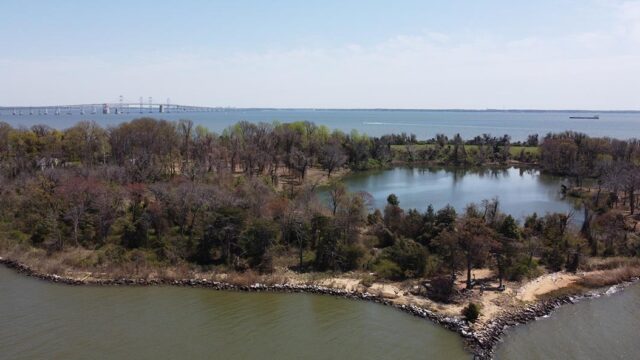
After more than two decades of ownership, the Chesapeake Bay Foundation (CBF) is proposing to transfer its portion of Holly Beach Farm in Anne Arundel County to Maryland’s Department of Natural Resources (DNR).
Holly Beach Farm is a unique and sensitive natural resource of significant ecological value to the Chesapeake Bay. With a freshwater pond adjacent to the brackish Bay, CBF’s 293-acre portion of the waterfront farm just south of the Chesapeake Bay Bridge is an important staging and wintering area for migratory waterfowl as well as a nesting site for herons and bald eagles.
“Over the last twenty years, with generous support from donors and like-minded organizations, the Chesapeake Bay Foundation has had the privilege of stewarding its part of Holly Beach Farm through significant investment in maintenance, restoration, and educational programming. We are so pleased that the State of Maryland has stepped forward with its tremendous resources to continue the conservation and management of this special natural area,” said Hilary Harp Falk, CBF’s President and CEO.
In 2002, the waterfront parcel was transferred to CBF for conservation and limited environmental education. Since then, CBF and its partners have conducted large-scale restoration of the site’s previously agricultural land and eroding shorelines.
“While we have done everything we can to reforest the agricultural lands, restore the eroding shorelines, and educate the next generation at the site, our expertise lies outside long-term management of conserved lands and it is time for a new steward. This incredible jewel on the shores of the Bay has so much more to give,” continued Hilary Harp Falk.
In October, CBF issued a Request for Expressions of Interest (RFI) seeking a new steward with a proven ability to manage conserved lands in a way that honors the intent of the original funders and continues conservation efforts while respecting the sensitivity of the property’s neighbors.
“As an original funder, the current Conservation Easement holder, and with a track record of land conservation and management, DNR was the unparalleled choice,” said Hilary Harp Falk.
Pending approval of the Maryland Board of Public Works, Maryland DNR will take possession in a no-fee transfer of the nearly 300 waterfront acres.
“Thank you to the Chesapeake Bay Foundation for choosing Maryland as the steward for this property,” said Maryland DNR Secretary Josh Kurtz. “Holly Beach Farm represents a fantastic opportunity to enable waterfront access and wildlife viewing in Anne Arundel County. At the same time, the location near the Bay Bridge presents challenges that the agency intends to address by working closely with nearby residential communities. This is a once-in-a-generation opportunity for the state to acquire an iconic property for public benefit and ensure its natural beauty is protected.”
If approved, DNR plans to undertake further restoration efforts at Holly Beach to protect the sensitive features on the mostly undeveloped peninsula. The long-term plan for the property will be developed in a public process with input from neighboring landowners and other interested groups and individuals.
“We envision providing the public, in a scaled and prescriptive manner, a chance to experience Holly Beach in a way that teaches about and protects the unique habitats and natural communities on this remarkable peninsula,” said Paul Peditto, DNR’s Assistant Secretary of Land Resources.
Increased and sustained funding for farm practices and more streambank fencing are among what the Chesapeake Bay Foundation (CBF) sees as legislative priorities for Pennsylvania in 2024.
According to Pennsylvania’s Draft 2024 Integrated Water Quality Monitoring Report (Integrated Report), 28,820 miles of waterways in the Commonwealth have been damaged by pollution. CBF continues to urge legislators and Governor Josh Shapiro to accelerate the Commonwealth’s commitment to clean water and follow the Clean Water Blueprint for success.
FUNDING FOR FARM PRACTICES
“It is imperative that the Governor and General Assembly be proactive in the next state budget, and to increase dedicated investments of financial and technical resources into the Clean Streams Fund (CSF) and Agricultural Conservation Assistance Program (ACAP),” said Julia Krall, CBF Executive Director for Pennsylvania.
Soils and nutrients running off of agricultural lands and into rivers and streams is the leading identified source of impairment according to the Integrated Report.
The Pennsylvania legislature created the CSF in 2022 with a comprehensive spending package of $220 million from the American Rescue Plan (ARP). The CSF dedicated $154 million to ACAP as investments to be funneled through conservation districts for local agricultural practices to reduce polluted runoff.
The State Conservation Commission (SCC) continues to distribute ACAP funds to all 67 Pennsylvania counties. According to the SCC, $140 million of ACAP’s $154 million have been committed for projects to reduce nutrient and sediment (soil) pollution. Of 366 approved applications, 217 have been contracted, 92 are active, and 21 have been completed.
“Increased and sustained investments through ACAP are critical if the Commonwealth is to meet its clean water commitments,” Krall added. “ARP funding will run out in the next few years, and Pennsylvania will still have a lot of work to do.”
HEALTHY HERDS AND STREAMS
While ACAP does not prioritize specific conservation practices, CBF believes that reducing unrestricted livestock access to local streams should be another legislative priority.
CBF has been working with legislators and agricultural interests on improving and amending House Bill 677, which would eliminate a current prohibition within the Commonwealth on requiring streambank fencing, when needed.
Reducing or even eliminating unrestricted access to streams is good for herd health, stream health, and public health. It also can benefit the farm’s economy.
Direct deposits of manure by farm animals standing in streams seriously degrade water quality and threaten the health of animals and people. Livestock in streams can introduce pathogens to surface water, the source of drinking water for most Pennsylvanians. Herd health and milk and beef production are known to improve when livestock have clean water to drink.
NATIVE PLANTS ALONG STATE ROADS
CBF is also urging the Pennsylvania House to pass a bill that would direct the state Department of Transportation to landscape state-owned roads using native plant species. With more than 41,600 miles of state-maintained roads, House Bill 797 would help deliver a plethora of ecological benefits across the state, reduce polluted runoff, and add more natural beauty for those traveling through the Commonwealth.
REDUCED GREENHOUSE GAS EMISSIONS
Pennsylvania is the fourth-largest carbon dioxide emitter in the country, according to the Energy Information Administration. Greenhouse gases continue to pose significant threats to personal and economic health, the quality of local rivers and streams, and to climate stability.
Because of greenhouse gases and climate change, Pennsylvania is expected to experience higher temperatures, more frequent extreme weather events, and more flooding over the next century. As the temperature of local waters continues to rise, so does the vulnerability of aquatic life like brook trout, the Eastern hellbender, and other species.
As rainstorms become more frequent and more intense, so does the concentration and amount of polluted runoff that enters our rivers and streams. More flooding means more potential for loss of life and property.
“CBF looks forward to working with the Governor and legislators on these issues, so we can leave a legacy of clean water for future generations,” Krall said.
Today Virginia Governor Glenn Youngkin announced that his proposed budget will include $500 million for conservation projects, including support for water quality and flood preparedness.
The Governor’s full budget proposal will be released on Wednesday, Dec. 20. Viginia’s two-year budget will be considered by legislators during Virginia’s legislative session, which begins Jan. 10.
Gov. Youngkin proposed the following levels of support for these important Virginia programs that are focused on improving the health of our waterways and protect homes and businesses from the growing impacts of climate change:
- Over $200 million for Agricultural Best Management Practices (BMPs) to reduce pollution to waters in the Chesapeake Bay and local rivers and streams;
- $50 million for the City of Richmond to address combined sewer overflows;
- $100 million for the Community Flood Preparedness Fund, which protects homes and businesses from flooding;
- $25 million for Resilient Virginia Revolving Loan Fund that focuses on providing loans for non-federal match and property scale projects;
- $3 million for Virginia Oyster Replenishment Program to support the wild oyster harvest; and,
- $2 million for freshwater mussel restoration.
Chesapeake Bay Foundation Virginia Executive Director Chris Moore issued the following statement.
“We welcome these proposed investments in important environmental initiatives including agricultural conservation practices, flood preparedness, and oyster and mussel restoration. These investments are critically important to improving water quality in the Commonwealth now and preparing Virginia for increasing climate change impacts in the future.”
“While we applaud these historic investments, there remains significant need for resources to Virginia’s wastewater sector to continue the tremendous progress they have made in reducing pollution to the Bay. We urge the General Assembly and Administration to appropriate the necessary funds to meet our water quality goals for wastewater treatment.”
“We look forward to working with the Governor, his Administration, and Virginia legislators in the upcoming legislative session to ensure these investments in key clean water programs are included in the final budget.”
A coalition of Hampton Roads leaders explored solutions to sea level rise, climate change, and other key water quality and habitat issues at a land conservation summit Friday in Virginia Beach.
Virginia’s United Land Trusts, Wetlands Watch, and the Chesapeake Bay Foundation (CBF) hosted land conservation agencies, government officials, nonprofit organizations, and other key stakeholders to advance solutions for land preservation in the low-lying Hampton Roads region, which is particularly threatened by sea level rise.
In Hampton Roads, organizers said, there has not been extensive coordinated policy and resources for land conservation, a key tool in tackling climate change impacts.
“Land conservation is more than about having open space for public access or an attractive view of wetlands, forest, or farm field. It’s also a strategic tool to build resiliency for sea level rise by retaining water and enhancing natural resources,” Chesapeake Bay Foundation Hampton Road’s Director Christy Everett said.
By strategically conserving more land, local leaders noted that they can not only increase resiliency for flooding areas, but also preserve open space for outdoor recreation and public use, create wildlife habitat, improve water quality, as well as protect important natural resources.
“It takes a lot of leadership in this space to do this work. And it can’t happen without community buy-in,” Executive Director of Wetlands Watch Mary-Carson Stiff said.
Amid rising development pressure and the loss of tree canopies and wetlands, stakeholders identified opportunities for land conservation, including tools like rolling easements and land banks that repurpose vacant or foreclosed properties.
Hampton Roads has the highest rate of sea level rise on the East Coast, experiencing a foot and a half of relative sea level rise over the last century. Rates are projected to more than double in the years to come.
This has deleterious effects for surrounding areas. Repeated flooding in coastal areas can contribute to septic system failures, economic losses for businesses, and increased pollution washing into the Chesapeake Bay. Rising sea levels can also lead to the loss of wetlands, which are important natural filters that help clean the Chesapeake Bay.
For more information on climate change issues facing the Bay watershed, including CBF projects in the Hampton Roads region, check out our story map.
Chris Moore, most recently the Chesapeake Bay Foundation (CBF) Senior Regional Ecosystem Scientist, has taken the helm of the CBF Virginia office as its executive director.
He replaces former Virginia Executive Director Peggy Sanner, who retired in August. Moore’s first day in the new position was Dec. 4.
“I’m excited to help continue the excellent work of CBF’s Virginia office. We have a very talented staff that is doing great things from resiliency solutions to oyster restoration to conservation. I’m honored to be able to guide their efforts moving forward,” Moore said.
Moore looks forward to applying his scientific and advocacy expertise to support the Virginia office’s initiatives in improving water quality and reducing pollution in the Bay watershed.
“I’m fortunate to have a diverse background from my previous roles, which has prepared me for many of the issues we are working on,” Moore said. “We’ll hit the ground running during Virginia’s upcoming legislative session, including advocating for investment in clean water programs and resiliency, ensuring a healthy menhaden population, banning toxic pavement sealants, and preserving tree cover.”
Since joining CBF in 2005 as a Science Advocate, Moore has led a host of advocacy, policy, and technical support efforts for Chesapeake Bay fisheries and water quality restoration.
In the scientific field, Moore helped build sustainable fisheries for striped bass, Atlantic menhaden, and blue crabs, as well as supported oyster policy and restoration initiatives. Moore’s water quality work involved a wide range of activities including monitoring, on-the-ground restoration, and regulatory development.
In addition, his advocacy efforts with elected officials at the local, state, and federal levels helped garner legislative decisions important to improving the health of the Bay watershed.
“I am very excited to announce Chris Moore as CBF’s new Virginia executive director,” said Alison Prost, CBF’s Vice President for Environmental Protection and Restoration. “His work building partnerships while consistently following the science will strengthen the initiatives of the Virginia office.”
Moore received his undergraduate degree in Environmental Studies from Randolph-Macon College in Ashland, Virginia. He received his master’s degree in Environmental Science and Public Policy from George Mason University.
Moore currently resides in Virginia Beach with his wife Kristyn, children Aubrey and Callen, and their dogs Nauset and Haven. An avid sportsman, he spends as many days as possible on the waters and tributaries of the Chesapeake Bay.
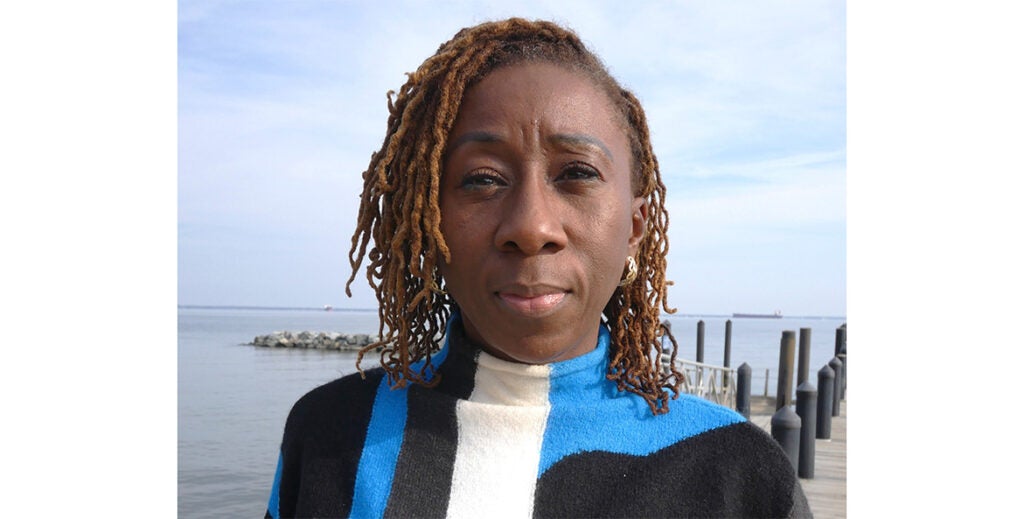
The Chesapeake Bay Foundation (CBF) has selected Tola Sanni as its new Chief Financial Officer, overseeing CBF’s accounting, payroll, and financial & grant management, and reporting. She also serves as the treasurer of CBF’s Board of Trustees.
Sanni has more than 25 years of finance and accounting experience. She comes to CBF from TOLS Consulting, where she served as strategic thought partner and collaborated with senior management, providing financial advice and review. Sanni’s first day at CBF was Oct. 30.
“Tola is a seasoned financial leader in the nonprofit sector who is well-known as a warm colleague and mentor,” said CBF President Hilary Harp Falk. “Tola’s broad technical expertise, combined with her strong people skills, make her an ideal fit for CBF.”
Prior to TOLS Consulting, Sanni spent four years as Chief Financial Officer for MomsRising, a transformative and multicultural non-profit organization working to increase family economic security. She also spent nearly 10 years at the National Association of Broadcasters, where she led the finance and accounting team. Sanni has an MBA in Finance from Howard University.
“Having seen firsthand the damage pollution can cause, I’m excited to be part of working towards a cleaner Chesapeake Bay that can be enjoyed by everyone in the watershed,” said Sanni. “I’m looking forward to being a valuable resource and mentor as we advance CBF’s mission.”
Sanni lives in Bowie, Maryland, with her husband and three sons.
Brennan Ka’aihue celebrated winning a 2022 Mira Lloyd Dock Partnership Diversity Award with a project that is for the birds.
Ka’aihue and a small crew of volunteers planted 75 shrubs and trees at the corner of Ritner Highway and College Ridge Drive on Oct. 21 at Dickinson College in Carlisle.
For Ka’aihue, the planting was about connecting people and wildlife, birds in particular. “We need birds to survive.” Ka’aihue said. “This planting will provide not only food and shelter for migratory and resident bird populations, but also present an opportunity for members of the community to interact with a food source of native species.”
The Keystone 10 Million Trees Partnership, coordinated by the Chesapeake Bay Foundation (CBF), presents the Dock award annually for conservation and Environmental Justice work in under-represented communities.
Dr. Zeshan Ismat of Lancaster City also received the 2022 award. She started the Blackbirds Environmental Justice group to teach youngsters about the environment in a fun way while emphasizing stewardship, community, and justice.
The Mira Lloyd Dock Partnership Diversity Award program is made possible by partnership with the Arbor Day Foundation and Project UP, an initiative of Packaging Corporation of America and Boise Paper that aims to revitalize urban communities through tree planting.
Recipients of the award receive trees and supplies to help advance their efforts. Ka’aihue and crew planted native pawpaw, American persimmon, black chokeberry, redbuds, and hawthorn at Dickinson.
“We are thrilled to partner with Arbor Day Foundation and Project UP on this award, and deeply appreciate their support on community-led projects such as these,” said Carla Essing, CBF Grassroots Manager in Pennsylvania.
“Conservation of our natural spaces in urban and suburban areas are key to connecting people with the environment, helps to provide places of respite for humans and wildlife alike, and brings color and life back into these highly developed spaces,” Eissing added. “I’m honored to work with such amazing partners and community members such as Brennan and Zeshan.”
Ka’aihue grew up in Las Vegas and graduated from the University of Pittsburgh Summa Cum Laude with a Bachelor of Arts degree in Anthropology, and lives in Dauphin Borough along the Susquehanna River.
Ka’aihue’s land care career started as a volunteer with Central Pennsylvania Conservancy (CPC) and now, the native Hawaiian works for the CPC as a stewardship specialist.
Ka’aihue is proud to receive recognition that comes with winning the Dock Award. “It’s great to see all the different things that I’ve done over the years recognized by my peers in the community, and to be able to use that as a platform to pay it forward,” Ka’aihue said. “Because we’re having the time of our lives planting this now, but to think seven generations ahead how this will benefit people and birds who haven’t been born yet. It’s really heartwarming and wonderful.”
Mira Lloyd Dock is recognized as the first Pennsylvania woman to lead the way in forest conservation. She was an advocate for Penn’s Woods and in 1901 was appointed to the State Forest Reservation Commission by Pennsylvania Governor William Stone.
The Keystone 10 Million Trees Partnership will announce the 2023 Mira Lloyd Dock Partnership Diversity Awards recipients in November.
Launched in 2018, the Keystone 10 Million Trees Partnership celebrated the planting of its 5-millionth tree in October of last year. To learn more about the partnership, visit www.tenmilliontrees.org.
The Halfmoon and Pequea Creek Watersheds Renewal Project, coordinated by the Chesapeake Bay Foundation (CBF), is accelerating progress toward bringing impaired streams in the two Pennsylvania watersheds back to health.
The project uses a multipronged approach to help restore the health of streams in both watersheds that are impaired by nonpoint source runoff, like certain agricultural activities. Its goals are to restore and protect those streams for the health, well-being, and quality of life of watershed residents.
The basis for the renewal project is two innovative watershed management plans that combined emerging high-resolution watershed data and modeling with extensive local stakeholder engagement.
Partners developing and implementing the Pequea and Halfmoon plans with CBF included county conservation districts, local watershed and conservation organizations, academic institutions, state and local government agencies, local businesses, planning agencies, landowners, farmers, and residents.
Funding acquired by Senators Bob Casey (D-Pa.) and Ben Cardin (D-Md.) is moving the five-year project forward. The senators requested $2.18 million for the Pequea Creek Watershed renewal plan in Lancaster and Chester counties. Senator Casey sought an additional $1.06 million for the Halfmoon Creek Watershed restoration plan in Centre and Huntingdon counties. It was the first time in a decade that senators were able to request funds for specific projects in annual appropriations bills.
Funding vital for development of the Pequea and Halfmoon watershed restoration plans was made possible by the Richard King Mellon Foundation.
The Halfmoon and Pequea plans also are eligible for federal funding through the Clean Water Act and other sources.
The project increases critically important conservation technical assistance to farmers in both watersheds, access to specialized equipment for use by Plain Sect farmers in Pequea Creek, and meaningful hands-on experiences to actively engage and inform farmers about issues like the interrelationships between soil and stream health, conservation tools and techniques, and the Chesapeake Bay ecosystem.
A dedicated position will be added in each watershed to cultivate and implement conservation opportunities with agricultural producers, landowners, agribusinesses, partners, and contractors.
Contractual technical assistance will help create conservation plans and design practices. In the Pequea watershed, access and use of non-motorized cover crop and no-till equipment will be available for use by Plain Sect farmers.
The project will also offer a series of hands-on farmer-to-farmer conservation field days to teach and engage farmers through hands-on experiences.
“The Renewal Project represents an evolution in CBF’s work to reduce pollution to Pennsylvania’s rivers and streams. Using our plans as a guide, this project will accelerate implementing key practices to bring streams back to health, improve wildlife habitat critical to critters like the brook trout, and enhance local appreciation of our local waters,” said Harry Campbell, CBF Science Policy and Advocacy Director in Pennsylvania.
Under the Pequea plan, funding will be used to keep soils and nutrients on the land with such practices as cover crops, no-till agriculture, riparian buffers, streambank fencing, streambank stabilization, and other practices.
The goals for Halfmoon are to reduce sediment, preserve critical landscapes, restore degraded landscapes, and foster stewardship of the watershed.
The Chesapeake Executive Council, which leads the federal-state Chesapeake Bay restoration partnership, elected Maryland Gov. Wes Moore as its chair at its annual meeting today in Washington, D.C. The Council is made up of representatives from of the six Bay watershed states, Washington, D.C., the Chesapeake Bay Commission, and the U.S. Environmental Protection Agency.
The meeting comes at a pivotal time. As the 2025 Chesapeake Bay restoration deadline approaches, leaders acknowledge efforts across the watershed will not meet goals to reduce pollution.
Leaders in Bay restoration are currently considering new approaches for the future. This year an EPA Chesapeake Bay Program scientific committee released a key report titled Comprehensive Evaluation of System Response, which details why Bay restoration has been slower than expected and identifies ways to accelerate efforts to reduce pollution.
Chesapeake Bay Foundation President Hilary Harp Falk issued this statement:
“The Bay restoration movement needs strong leadership more than ever as we enter the next chapter. Congratulations to Governor Moore, who is well poised to guide efforts toward a healthy Bay for future generations.”
“In the next phase of Bay restoration, we must confront climate change, focus on benefits to all people in the watershed, and build and strengthen the partnerships necessary for success. Scientists have made clear that to achieve a healthy Bay we need to welcome innovation and creative approaches, as well as invest in projects with verified benefits for the region’s waterways.”
“More than 90 percent of remaining pollution reductions needed to meet Bay restoration goals must come from agriculture. Working with the agricultural community is key to success, as well as investment in farm conservation practices in the Federal Farm Bill and state programs.”
Volunteer oyster gardeners set a record in the Chesapeake Bay Foundation’s Virginia program this year, with 691 volunteers across Virginia’s tidal waterways raising and returning 146,533 oysters in 2023. These oysters were planted on nearby reefs, where they are filtering up to 7.3 million gallons of water per day. The total this year far surpasses CBF’s previous Virginia oyster gardening record of 104,000 oysters set in 2019.
“This year’s record-breaking oyster gardening numbers are due to two factors—favorable natural conditions for oysters in the water, and the outstanding dedication of our growing number of volunteers,” said CBF Virginia Oyster Outreach Coordinator Jessica Lutzow. “We work with everyone from individuals to businesses to schools to condo associations to raise oysters for restoration work. It’s such a fun way to create a tangible benefit for waterways.”
CBF’s oyster gardeners, as shown in this video, raise oysters in cages suspended from a dock. Over the course of a year, the baby oysters grow into adults, filtering water and creating habitat for aquatic life. Volunteer gardeners return year-old oysters to CBF, which places them on a nearby reef off-limits to harvest, where they grow and reproduce. These oysters contribute to the Chesapeake Oyster Alliance goal of adding 10 billion new oysters to the Bay by 2025.
For those who don’t live on the water, CBF can help gardeners raise oysters at one of 16 public locations, including marinas and other areas with access to tidal water.
This year CBF held 11 oyster gardening events in Hampton Roads, the Eastern Shore, the Northern Neck, and the Middle Peninsula. Partners in the effort include the Tides Inn, Nansemond River Preservation Alliance, Elizabeth River Project, Friends of the Rappahannock, and the Virginia Institute of Marine Science, all COA partners.
Those interested in becoming an oyster gardener, or businesses with water access interested in becoming a public gardening location, can e-mail oystergardener@cbf.org and visit this link for more information.
