Press Release
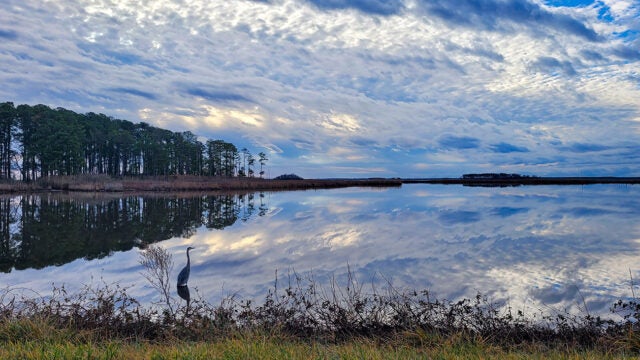
After the President’s budget and House lawmakers proposed cuts, more than half a dozen environmental and conservation groups from across the country are joining arms to press Congress to fully invest in a vital federal program that funds restoration and preservation work across watersheds covering more than two-thirds of the land of the contiguous United States.
House lawmakers moved forward this month with a funding proposal that includes about $31 million in overall cuts for the EPA’s Geographic Programs, which provide critical funding for efforts like ecosystem and habitat restoration across a dozen regions, including the Chesapeake Bay, the Great Lakes, the Columbia River Basin, Long Island Sound, Puget Sound, and San Francisco.
These major watersheds span multiple state—and even international—lines, and so federal investments are vital to make sure efforts across regions can keep moving forward.
The programs have gone a long way toward cutting nutrient pollution, improving water quality, and accelerating the restoration of critical habitats and fisheries. Additionally, these programs fund efforts in communities that have led to healthier waterways and local economies, investments in cleaning up toxic hot spots, supporting tree plantings and oyster restoration, and other community projects. For instance:
- The EPA has committed federal funding for efforts like improving water quality in Milwaukee area rivers and Lake Michigan in the Midwest and money to cut nutrient pollution in the southern U.S.
- In the Chesapeake Bay region, nearly two-thirds of all funding for the Chesapeake Bay Program is directed to state and local governments and non-governmental groups for on-the-ground and community-based restoration work.
- In the Great Lakes, work is underway or completed on more than 8,871 restoration projects throughout the region. The Great Lakes Restoration Initiative (GLRI) is enabling a local-state-federal partnership that is cleaning up toxic hot spots, controlling invasive species, restoring habitat, and reducing toxic algal blooms.
- In Puget Sound, every dollar of Geographic Program investment is leveraged with $12 of state and local funding to help solve stormwater, shellfish, flooding, water quality and quantity, and endangered species challenges, including recovering Chinook salmon and Southern Resident orcas.
- In San Francisco, the EPA’s Geographic Program is helping tackle the problem of nutrient pollution, supporting tidal marsh restoration, and improving stormwater management.
The groups calling for increased funding for these critical programs span the country and include the Chesapeake Bay Foundation, the Healing Our Waters-Great Lakes Coalition, Restore America’s Estuaries, Save the Sound in New York and Connecticut, Save The Bay in California, and the Puget Sound Partnership and Puget Soundkeeper in Washington state.
Instead of the president’s proposed cut of about 15 percent overall for these programs, the groups are pushing for Congress to include about $861 million in funding for the 2027 budget year—a bump up from the current level of about $690 million.
The House appropriations committee rolled out its own 2027 budget proposal last week that includes $659 million for these programs, or about a 4 percent cut. The full committee is expected to take up the measure on Wednesday, June 3.
It is vital that lawmakers sustain or increase Geographic Programs funding across all regions to ensure that the significant progress on clean water and conservation efforts can continue among federal, state, Tribal, and local partners.
Partner organizations pushing for continued Geographic Programs investments issued the following statements:
“Without strong federal support, our nation’s waters and the communities that depend on them—including those in the Chesapeake Bay region—are at risk. EPA’s Geographic Programs across the country help ensure that locally led projects to restore fish and wildlife habitat are funded – and that public access to these waterways exist. They also help boost local economies and spotlight our nation’s natural and historical treasures. It is vital that leaders in Congress fully fund these programs.” —Keisha Sedlacek, Senior Policy Director, Chesapeake Bay Foundation
“Cutting funding to the federal government’s largest investment in the health of our coasts would have disastrous consequences for the nearly 40% of Americans who call these regions home. Significant progress has been made thanks to the steady, bipartisan support that these programs enjoy. Cuts to any of these programs would interrupt the long-term strategic restoration efforts of organizations like Restore America’s Estuaries—leading to more polluted water for our fishermen, boaters, outdoor enthusiasts, and communities.” —Brad Williamson, Senior Government Affairs Manager for Restore America’s Estuaries
“Much like our fellow Geographic Programs across the country, EPA’s Puget Sound program funds local implementation of projects that directly support the economic vitality and ecological health of this international estuary. We’re grateful for Congress’s bipartisan investments in Puget Sound over the years, which provide foundational support for clean water, local jobs, the seafood economy, flood readiness, and dozens of other local priorities. Now, Congress must act again to fully fund Geographic Programs nationwide so that this important work can continue.” —Mindy Roberts, Executive Director, Puget Sound Partnership
“Puget Sound faces serious challenges, but with funding from EPA’s Geographic Programs, agencies like the Puget Sound Partnership are able to join environmental advocates in driving meaningful progress. Across all our nation’s most iconic watersheds, protecting clean water demands stable science, stable governance, and stable funding. We urge Congress to lock in their support by reauthorizing and fully funding all of EPA’s Geographic Programs.” —Sean Dixon, Executive Director of Puget Soundkeeper
“The EPA’s San Francisco Bay Program is an irreplaceable part of our efforts to improve water quality, restore and enhance the Bay’s natural shoreline, and provide flood protection for hundreds of thousands of Bay Area residents. These are long-term efforts that rely on stable federal investment alongside state and regional funding. We need Congress to fully fund the EPA’s Geographic Programs to keep this work moving forward and building a healthy San Francisco Bay for the more than 7 million people who live here.” —David Lewis, Executive Director of Save The Bay
“The EPA’s Geographic Programs represent one of the best examples of what can happen when the federal government, state governments, and local governments work in coordination with each other and with stakeholders to improve watershed health across the country. We encourage bipartisan support in Congress for our Geographic Programs and full funding to ensure the vital restoration work by one of the most successful Clean Water Act programs can continue.” —Denise Stranko, Executive Vice President of Programs, Save the Sound
“EPA’s Great Lakes Restoration Initiative has provided critical funding towards massive clean water improvements across the Great Lakes region, from cleaning up toxic hotspots and restoring wetlands to combating invasive species and reducing harmful algal blooms. However, there is still much work to be done in the Great Lakes and nationwide. We encourage the committee to fully fund the EPA’s Geographic Programs portfolio so we can continue to make progress towards the health of the Great Lakes and the over 30 million people who depend on them.” —Laura Rubin, Director, Healing Our Waters-Great Lakes Coalition
After eight years of hard work across Pennsylvania by over 320 partner organizations and thousands of volunteers, the 10 millionth tree was planted today in Hummelstown as part of the Keystone 10 Million Trees Partnership initiative. This initiative, funded and supported by the Chesapeake Bay Foundation (CBF), aimed to improve waterways by adding native trees to landscapes and communities across the state.
Leaders in the effort planted the 10-millionth tree, an oak tree, at Herbert A. Schaffner Memorial Park in Hummelstown.
“This is something powerful: 10 million trees planted across Pennsylvania in support of cleaner rivers and streams, healthier communities, and stronger local economies,” CBF President and CEO Hilary Harp Falk said.
“To make this happen, nursery growers, conservation partners, farmers, landowners, students, volunteers, and local communities all stepped up for the future,” she added. “Every tree planted keeps pollution out of local waterways, restores wildlife habitat, and strengthens resilience in the face of climate change.”
Speakers at the event included Falk; Cindy Adams Dunn, PA Department of Conservation and Natural Resources Secretary; Jessica Shirley, PA Department of Environmental Protection Secretary; PA Representative Tom Mehaffie (R-Dauphin); and David Roeting, Hummelstown Mayor.
Pennsylvania’s iconic Susquehanna River is the largest source of fresh water to feed into the Chesapeake Bay. However, many of its rivers and streams are damaged by pollution. According to the Pennsylvania Department of Environmental Protection (DEP) 2026 Integrated Water Quality Report, 37 percent of Pennsylvania’s miles of rivers and streams do not meet clean water standards for water supply, aquatic life, recreation, or fish consumption.
Trees are good for rivers and streams. They absorb and filter polluted runoff from rainstorms before it enters waterways, and their roots help stabilize streambanks. Adding 10 million trees alongside streams, streets, and other priority areas accelerates Pennsylvania’s goals to reduce pollution to waterways. This number would bring the state two-thirds of the way to its goal of 95,000-acres of trees along streams and rivers to repair its portion of the Chesapeake Bay watershed. Partnerships were a key part of this effort, and the hard work of many organizations helped make this lofty goal a reality.
“Planting the ten millionth tree is a powerful reminder of what Pennsylvanians can accomplish when we work together for clean water and healthy communities,” Secretary Dunn said. “Since 2018, this effort has transformed landscapes across the Commonwealth, strengthened our streams, and expanded the forests that protect our drinking water and support wildlife. DCNR is proud to be part of this achievement and remains committed to restoring the Chesapeake Bay watershed for future generations.”
Trees also help local communities right where they are planted, as they are the most cost-effective tools for keeping communities clean, cool, and protected. They bolster local economies by increasing recreational opportunities like fishing, hunting, camping, and hiking, as well as raising property values. They also increase agricultural productivity and can even boost mood.
CBF has a lot to celebrate this year, including the 40th anniversary of its work in Pennsylvania, the expansion of environmental education program offerings, and the leadership of Governor Josh Shapiro to protect and restore all of the critical watersheds that run through the Keystone State, including the Chesapeake Bay.
This milestone is a cause for celebration, but reaching 10 million new trees does not mark the end of restoration for Pennsylvania’s rivers and streams.
“Celebrating our work in partnership with so many others to add 10 million new native trees to our landscapes across the state is just one important aspect of the work underway to improve water quality in PA,” said CBF Pennsylvania Executive Director Julia Krall. “Continued and dedicated funding for implementing conservation practices throughout the state, including on agricultural lands, will be key to Pennsylvania’s future.”
Falk emphasized the importance of Pennsylvania’s leadership to the Chesapeake Bay.
“As home to the Susquehanna, Pennsylvania plays an outsized role in the health of the Chesapeake Bay. Planting 10 million trees shows how, with Pennsylvania leading the way, we can leave a legacy of cleaner water and healthier communities for generations to come,” Falk added.
MDE’s Permit Fails to Protect Health of Local Community and Environment
Maryland’s latest air pollution permit for the Quarantine Road Sanitary Landfill in Baltimore puts people’s health and the environment at risk, according to concerned community and nonprofit partners. This week, South Baltimore Community Land Trust (SBCLT), Chesapeake Bay Foundation (CBF), Chesapeake Climate Action Network, Community of Curtis Bay Association, SB7 Coalition, and Clean Water Action submitted comments to the Maryland Department of the Environment (MDE) as the agency considers renewing the landfill’s Title V air pollution permit.
The Quarantine Road Sanitary Landfill, operated by the City of Baltimore, has an alarming history of air and water pollution. The landfill is situated among a number of problematic industrial sites that have long concerned local community and environmental groups. Toxic waste and ash from the nearby BRESCO Incinerator are often transported to the landfill through residential neighborhoods including Curtis Bay, Brooklyn, Cherry Hill, Lakeland, Mt. Winans, and Westport.
“I, along with fellow residents and workers, have long expressed concerns about potential exposure to the harmful toxins like lead and dioxins commonly found in incinerator ash disposed of at the Quarantine Road Landfill,” said Carlos Sanchez, Lakeland resident and youth organizer with SBCLT. “We have requested that our concerns be reflected in decisions made by officials. Instead, they are both disparaged and ignored. This is no way to treat fellow human beings. We expect better and will achieve better through being unified and organized in our demand for transparency and accountability.”
Quarantine Road landfill is permitted to hold 21.43 million tons of municipal solid waste. The facility’s Title V permit must ensure all Clean Air Act requirements are met, including managing the facility’s methane and fugitive dust emissions. However, environmental and community partners fear the current permit does not adequately monitor and limit harmful emissions that threaten public health and local air and water quality.
In their comments to MDE, partners cited the following primary concerns with the permit:
- A lack of dust controls when handling and disposing of incinerator ash. Roughly 44 percent of the landfill is ash, and its toxic mix is currently unknown. The draft permit also fails to identify the origin of incinerator ash disposed at the facility. That ash can escape during the transportation and handling process and be released as fugitive dust.
- A lack of monitoring for PFAS, which can be even more prevalent in air pollution than water pollution.
- Inadequate and unclear monitoring requirements. Partners suggest enhancements including fenceline and drone monitoring, which can help regulators easily identify elevated emissions levels and mitigate them as fast as possible.
“People deserve to know what toxic pollution they’re being exposed to,” said CBF’s Environmental Justice Staff Attorney Taylor Lilley. “They also deserve to be kept safe from harmful industries by the agencies in place to protect them. There are still too many questions about what’s in Baltimore’s incinerator ash and how it’s being handled that this permit needs to address.”
There are well-document public health consequences for residents living in this highly industrialized area of Baltimore. Asthma-related hospitalization rates in Curtis Bay and surrounding communities are roughly three times the national average. Deaths from chronic lower respiratory disease are approximately 75 percent higher than in the rest of Baltimore, and overall life expectancy is as much as seventeen years shorter than in Baltimore’s most prosperous neighborhoods.
In May 2024, SBCLT, represented by CBF and the Environmental Integrity Project, filed a Title VI Civil Rights complaint with the U.S. Environmental Protection Agency challenging Baltimore’s failure to plan a transition away from the disposal infrastructure that underpins these inequities. EPA accepted the complaint for investigation in July 2024. Additionally, MDE’s Title V air pollution permit for the BRESCO Incinerator is up for renewal later this summer. CBF, SBCLT, and other partners will be monitoring these permits and working to ensure they protect public health, air quality, and the Chesapeake Bay as intended.
Thousands of volunteers across Virginia have picked up at least 31,000 pounds of litter as of late Saturday as part of the Chesapeake Bay Foundation’s (CBF) Clean the Bay Day, Virginia’s largest and longest-running litter cleanup.
Sporadic rain and a somewhat chilly morning in parts of the Commonwealth were no match for the more than 2,300 volunteers that gathered at sites across Virginia on foot and by boat, where they removed at least 31,000 pounds of litter and debris and filled at least 1,000 trash bags, according to preliminary estimates.
“Clean the Bay Day is the ultimate example of ‘many hands make light work,’” said CBF Hampton Roads Outreach & Advocacy Manager Lisa Renée Jennings. “In just a few hours, volunteers picked up tens of thousands of pounds of litter that’s now no longer at risk of polluting our rivers and streams, as well as the Chesapeake Bay.”
Cleanups were held at scores of sites across Virginia, including in Hampton Roads, Virginia’s Eastern Shore, Richmond, the Shenandoah Valley, and Northern Virginia. Many partner groups, including Virginia’s state parks, joined CBF within the Chesapeake Bay watershed by hosting cleanup sites.
The most common items found during clean-ups are plastic and glass bottles, aluminum cans, plastic bags, and cigarette butts. But volunteers recovered many larger items, such as a bait bucket, and some unusual items like a bag of bullets, a rusty machete, and mannequin legs.
Volunteers at Ancarrow’s Landing in Richmond also helped cut loose an entangled fishing line from a large stick to make sure it was thrown away.
Typically held the first Saturday in June, Clean the Bay Day’s earlier date this year helped allow more families to participate and helped provide a cooler—albeit rainy in some spots—climate in which to clean up.
Volunteers participating in Saturday’s event included elected officials, community leaders, small businesses, large corporations, and thousands of other Virginians.
Edward Jones is the presenting sponsor for Clean the Bay Day in 2026. Other valued sponsors include Cox Communications, ITC Federal, LLC, and the Port of Virginia.
Since 1989, Clean the Bay Day has mobilized over 177,000 volunteers who have removed over 7.1 million pounds of debris from our land and waterways.
Representatives from the Chesapeake Bay Foundation (CBF) on Friday emphasized the importance of improving water quality and the need for volunteers while touring the Lafayette River in Norfolk, as the organization gears up for its annual Clean the Bay Day event on May 2.
In just about an hour touring the river by boat, officials picked up a plastic bag, old cans, weathered glass bottles, and a Styrofoam container, among other items—highlighting the need to continue efforts like Clean the Bay Day along our local waterways.
“Microplastics pose a large threat to the entire Bay watershed, including areas in and around Norfolk like the Lafayette,” said CBF Hampton Roads Outreach & Advocacy Manager Lisa Renée Jennings. “Litter and trash can wash up anywhere in local tributaries, and it’s important to stay vigilant throughout the year.
The survey came as CBF and partners gear up for Clean the Bay Day, Virginia’s statewide major litter cleanup scheduled this year for the morning of May 2.
Litter and microplastics can create major issues for the health of the Chesapeake Bay when things accumulate in local tributaries, as well as areas farther west that ultimately feed into the Bay.
“Whether it’s picking up a single plastic bag, avoiding lawn treatments that contribute to damaging runoff, or using less water in general, every little bit helps in helping preserve and restore the Bay,” Jennings said.
Clean the Bay Day is Virginia’s largest single-day volunteer litter clean-up each year. In 2025, nearly 3,500 volunteers and more than 70 CBF partners came together at over 200 sites to collectively remove more than 70,000 pounds of debris and litter.
For more information or to register for this year’s Clean the Bay Day, visit cbf.org/clean.
For questions, please email ctbd@cbf.org or call 757-644-4122.
As Bills Cross Over, Advocates Urge Legislators to Uphold Vital Environmental Funding
Last week, the Maryland Senate passed a state operating budget that largely supports continued progress for Chesapeake Bay restoration. Now, as the House considers its budget, the Chesapeake Bay Foundation (CBF) and advocates are urging delegates to uphold a strong environmental budget and avoid additional cuts to clean water programs and agencies.
“Despite another challenging budget deficit this year, investments in the Chesapeake Bay have held steadfast with bipartisan support. But we are not yet over the finish line, and potential last-minute surprises could set back years of Bay restoration progress,” said CBF Maryland Executive Director Allison Colden. “As legislators enter the final month of session, we thank them for protecting critical environmental funding thus far and urge them to swiftly pass a Bay-friendly budget for next year.”
Maryland’s budget is comprised of three pieces of legislation, including:
- An operating budget (SB282), which funds year-to-year expenses like salaries and equipment;
- A capital budget (SB283), which is funded by bonds and used for longer-lasting things like buying property or repairing facilities; and
- The Budget Reconciliation and Finance Act (BRFA) (SB284), which makes changes to funding mandates and programs to balance past, current, and future budgets.
As of March 24, the operating budget and BRFA bills have passed the full Senate and gone on to the full House of Delegates by the House Appropriations Committee. The capital budget bill is on track to be passed by the Senate this week. Once both Senate and House budgets are passed, they will go to Governor Moore who has the constitutional authority to veto individual budget line items.
The final budget will fund critical agency operations and programs that support the environment and people, communities, and jobs that rely on it. Agencies that help protect the Chesapeake Bay, including the Departments of the Environment, Natural Resources, and Agriculture, as well as the Maryland Energy Administration, require adequate operating and capital budgets to fulfill their duties to the Bay. These agency budgets only account for 1.5 percent of state spending and are especially sensitive to additional cuts.
Also included in these budgets are vital environmental programs such as the Bay Restoration Fund, 2010 Atlantic and Coastal Bays Trust Fund, and Program Open Space that protect clean water and inject money directly into local communities, businesses, and economies.
Over the past few months, CBF has testified, rallied allies, and demonstrated to legislators the importance of environmental agencies and programs that support a healthy Chesapeake Bay. Now, CBF is urging legislators to finalize a budget that avoids further environmental funding cuts and supports continued progress to clean the Bay. Environmental advocates who wish to do the same can learn more and contact their legislators here.
The Chesapeake Bay Foundation (CBF) is collaborating with Hampton University to pioneer one of the first college living shoreline courses in the country under a new grant announced this month.
As part of the project, CBF will also work with students and community volunteers to create more than 1,200 feet of shoreline protection, almost an acre of new wetlands, and new oyster habitat along the banks of the university’s campus.
The roughly $1 million grant awarded to CBF by the National Fish and Wildlife Foundation’s (NFWF) Chesapeake Small Watershed Grants Program will support the creation of a specialized Chesapeake Bay Landscaping Professionals (CBLP) course at Hampton University.
This course, designed and taught by living shoreline experts, will accommodate at least five students and teach them how to design and permit their own living shoreline. The students will then put their learning into action by installing the living shoreline on the Hampton University campus.
The course will notably recruit students in both the marine science and architecture fields so they could work as partners, said Dr. Deidre Gibson, Chair and Associate Professor at Hampton University in the department of Marine and Environmental Science.
“I would love to see that collaboration between the two types of students and seeing them getting involved in a real-world project—one that actually is going to happen; something that they’re planning, they’re designing, and that we implement,” Gibson said.
“I know we’ve never had a class like that,” she said. “A lot of our courses go out in the field, but not like this. So that’s what I’m really looking forward to.”
CBF will receive the grant and work with partners at the university and the Chesapeake Conservation Landscaping Council, a nonprofit conservation landscaping advocacy group, to create and deliver the new curriculum.
Living shorelines are created by planting native wetland plants, wetland grasses, shrubs, and trees at various points along a shoreline. Plantings are often paired with carefully placed bioengineering materials, such as manmade coconut-fiber rolls (or biologs), to protect vegetation and soils or in some cases oyster shell or restoration material. And, where viable, oysters can be included as well.
In fact, these new living shoreline projects will complement oyster reefs CBF recently installed in the Hampton River using other NFWF grant funding.
Hampton Roads has been identified as the second most vulnerable U.S. region to risks from sea level rise in the country—and living shorelines can help address these threats.
“I think it’s critical that we have this type of experience for undergrad and graduate students who are already strongly considering fields in conservation or related to conservation work,” said Stacie McGraw, Director of Operations and Living Infrastructure at Wetlands Watch and the Virginia Director for CBLP.
That would include environmental and marine sciences—but also conservation-adjacent professions like architecture and engineering, McGraw said.
“To have that sustainable conservation lens going into that work as their career is invaluable in really shifting the needle on how our built spaces are designed and how our natural resources are protected through the next generation.”
The education component of the grant is most long-lasting and impactful, said Kati Grigsby, Hampton Roads Restoration Coordinator for CBF.
“That students will have a tangible impact on campus is pretty cool,” Grigsby said. “It could be a standard offered at our universities. Hampton University is leading the way on that effort.”
Courses where students are able to be outside and interact with the environment necessarily increase their connection to place, said Dr. Joey Reustle, Assistant Professor of Marine and Environmental Science at Hampton University.
“I think it’s a pretty powerful message that they don’t have to fly 3,000 miles away to work in some other system, but that they can do research, they can restore habitat, they can make a big difference close to home,” Reustle said.
“And that they can monitor that and effect change is a really powerful message.”
Virginia farm and environmental leaders join forces for clean water budget
As Virginia legislators prepare to finalize the budget for the next two years, the Chesapeake Bay Foundation (CBF), Virginia Farm Bureau, and Virginia Association of Soil and Water Conservation Districts are urging leaders to fix a funding shortfall in farm conservation practices and invest in other programs that reduce pollution to waterways.
For more than 40 years, Virginia’s Agricultural Cost-Share Program has helped farmers install solutions that both benefit the environment and their farms. Fencing cattle out of streams, planting streamside trees and grasses, and other conservation practices are the most cost-effective steps Virginia can take to reduce nutrient pollution to local streams, rivers, and the Chesapeake Bay.
The program has been fully funded since 2022. This much-needed period of stability has allowed program staff numbers to grow while these experts gain experience and build valuable relationships with farmers.
However, the current budget proposal introduced by former Gov. Glenn Youngkin would underfund the program, threatening to upset that stability. Fortunately, legislators are currently considering budget amendments that would fully fund the program.
Virginia legislators have set a July 1, 2028, deadline for farmers to meet goals for reducing pollution from agriculture. Even after reaching these goals, continued investment will be needed to keep pollution from growing.
“Meeting Virginia’s Chesapeake Bay clean up goals requires a heavy lift from farmers. Now is not the time to take our foot off the gas,” said Martha Moore, senior vice president of governmental relations for Virginia Farm Bureau. “Farmers are doing their part to improve the land and waterways, but we need the state to fulfill its promise. Cuts to the agricultural cost-share program would mean losing trained staff, valuable expertise, and hard-earned trust.”
This state budget will be the first after Virginia joined state and federal leaders from across the region in December to commit to an update to the Chesapeake Bay Agreement. That new accord binds Virginia to meeting numerous environmental goals by 2040.
“Farmers are on the front lines of efforts to create clean-running streams and a healthy Chesapeake Bay,” said CBF Virginia Policy Manager Jay Ford. “After recommitting to the Bay Agreement, Virginia should back words with action by fully funding its clean water programs.”
Budget amendments currently under consideration would fully fund the program by adding $8.5 million to the introduced budget funding levels for the program in the first year and $71.89 million in the second (Items 362 #19h by Del. Krizek and 362 #13s by Sen. Marsden, as well as 362 #7h by Del. Bloxom and 362 #10s Sen. Pillion).
“Farmers rely on consistent state support to protect both our waterways and their livelihoods,” said Virginia Association of Soil and Water Conservation Districts Executive Director Kendall Tyree. “Decades of collaboration have delivered cleaner streams and productive farms. Now we must make sure we don’t backtrack on that progress.”
This Sunday, Feb. 22, Virginia legislators will release budget proposals in both the House and Senate. In addition to agricultural cost-share, CBF urges lawmakers to support the following provisions:
- Save Virginia’s Trees. As Virginia loses tree cover at an alarming rate, legislators can increase support for the Department of Forestry’s Trees for Clean Water grant program, which funds community-based tree planting and restoration projects. Legislators should allocate $4 million to the program through budget amendments 362 #18h (Del. Krizek) and 362 #15s (Sen. Surovell).
- Make Pay-for-Outcomes Permanent. This effort incentivizes innovation in environmental restoration by paying only for verified pollution reductions. Demand for this program outpaced funding six to one in its first year. Virginia can make the program permanent and add $20 million to the fund through the budget amendment Item 368 #9h from Del. Krizek.
- Increase funding for the Virginia Conservation Assistance Program (VCAP), which expands nature-based stormwater solutions on private properties, schools, and community sites to reduce pollution in rivers and streams.
“Virginia’s rivers and streams are the lifeblood of our economy and way of life. When we invest in clean water, we’re paid back in dividends in the form of healthier communities, thriving businesses, and higher quality of life,” said Ford.
A new alliance will help restore the mussel population in the Pamunkey Indian Tribe’s namesake river in partnership with the Chesapeake Bay Foundation as part of a grant announced this month.
Freshwater mussels, which provide critical bay ecosystem benefits like filtering water, creating habitat, and removing excess nitrogen, are considered the most endangered class of organisms in the country, with about two-thirds of species vulnerable to extinction.
The grant to CBF through the Chesapeake Watershed Investments for Landscape Defense (WILD) Grants Program will help power the work of the Pamunkey Freshwater Mussel Alliance, a coalition working on mussel restoration efforts in the Pamunkey River watershed.
The Pamunkey Indian Tribe is excited to be a partner on the WILD grant and in standing up the alliance, said Joe Capella, Natural Resources Director for the Pamunkey Indian Tribe.
“Tribal sovereignty will be strengthened through the grant by amplifying Tribal voices in deciding how these culturally significant species are managed on and around their ancestral lands while also identifying a unique opportunity for the Tribe,” Capella said.
The grant will, in part, help to conduct targeted outreach to landowners in mussel hot spots and to investigate whether the existing Pamunkey Tribe hatchery can be used to help grow freshwater mussels.
The alliance will also work to identify populations of threatened and endangered mussels and characterize fish hosts that mussels rely on for reproduction.
The Pamunkey Indian Reservation spans about 1,600 acres in King William County—an area also facing ecological and climate-related threats like flooding and erosion.
“The Pamunkey Fish Hatchery operated as an American shad hatchery for over 100 years, and we are excited to explore how we may re-tool the facility to provide meaningful restoration support for freshwater mussels and the Chesapeake Bay ecosystem through Traditional Ecological Knowledge,” Capella said.
Other alliance partners include Virginia Commonwealth University, the York River and Small Coastal Basin Roundtable, the Virginia Department of Wildlife Resources, Randolph-Macon College, Wetland Restoration and Training LLC, and the U.S. Fish and Wildlife Service.
The Pamunkey River Watershed is home to at least 18 freshwater mussel species—three of which are at significant risk of extinction.
The South Anna River, which is a tributary to the Pamunkey, represents an exciting opportunity for restoration following the recent Ashland Mill Dam removal which opened up over 100 miles of streams and rivers to migratory fish. Most freshwater mussels rely upon fish populations to complete their reproductive cycle, and this dam removal presents new opportunities for freshwater mussels in the watershed.
The first public meeting of the alliance is expected to be held virtually on February 26 and is open to the public.
The WILD grants program is administered by the National Fish and Wildlife Foundation (NFWF), with major funding support from the U.S. Fish and Wildlife Service (NWS). The total project amount of $243,800 will go toward restoration of freshwater mussels.
The alliance “represents a commitment to protecting species on the brink of extinction and restoring the biodiversity and health of the Pamunkey River watershed,” said Joe Wood, Virginia Senior Scientist at the Chesapeake Bay Foundation (CBF).
The Chesapeake Bay Foundation thanks the National Fish and Wildlife Foundation and the U.S. Fish and Wildlife Service for providing funding through the WILD grant program for this work.
“We welcome partners from across the region to join Tribal leadership, scientists, conservation groups, and community members in building a future rooted in collaboration, sound science, and hands-on restoration,” Wood said.
“Together, we will safeguard these remarkable mussels and share their powerful story and value with the public.”
The Chesapeake Bay Foundation (CBF) Board of Trustees has elected Ann Pelham as its chair for a three-year term. Pelham spent her professional career in the media industry and is the retired publisher of Legal Times, an ALM Media company focused on law and lobbying in Washington, D.C. She lives in Chevy Chase, Maryland.
“Ann brings a thoughtful combination of strategic vision, sound judgment, and deep commitment to the Chesapeake Bay,” said Hilary Harp Falk, President and CEO of the Chesapeake Bay Foundation. “Her leadership, experience, and collaborative approach will be invaluable as CBF builds on decades of progress to restore the Bay. We are grateful for her continued service and look forward to working together to advance our mission for the Bay and its communities.”
Pelham joined CBF’s Board of Trustees in 2019, became Vice Chair in 2023, and was appointed as Vice Chair-Elect in 2025. She has also served as chair of the Audit & Finance Committee and as board liaison to the organization’s year-long strategic planning process. She takes the helm from outgoing Board Chair Otis Jones. Her term begins just after leaders around the region committed to an updated Chesapeake Bay Watershed Agreement that will guide the next 15 years of Bay restoration.
“I am honored to step into the role of board chair at a pivotal moment for the Bay,” Pelham said. “For decades, CBF has led efforts to save the Bay with science, credibility, and impact. The organization’s history of success, the strength of its team, and the collective voice of its members leave us well positioned to meet the challenges ahead.”
She praised Falk for being “an exemplary leader,” noting that “she is both hands on and strategic in her approach.” Pelham added, “Hilary has deepened and built relationships across the watershed for CBF.”
She emphasized the importance of partnership to ensure a thriving Chesapeake Bay and local waterways that benefit everyone in the region.
“As chair, I am committed to listening, learning, and engaging closely with CBF’s staff, partners, members, and community volunteers,” she said. “By working together, we will continue reducing pollution, restoring oysters, and rebuilding the fish and wildlife that depend on this extraordinary ecosystem. I am grateful for the opportunity to serve the Bay.”
Pelham spent the bulk of her career reporting and editing at Legal Times and other publications. She serves on the Duke University Board of Trustees, where she chaired the Undergraduate Education Committee and served as a member of the Executive Committee, among other roles. She also serves as a director of Canal Insurance Company, as president of the Jean T. and Heyward G. Pelham Foundation, and is a past President of the Duke Alumni Association.
