Press Release
To help faith leaders navigate critical issues in the face of climate change, the Chesapeake Bay Foundation (CBF), Church in the Public Square, Second Presbyterian Church of Richmond, Union Presbyterian Seminary, and Virginia Interfaith Power and Light are co-hosting a two-day Faith Forum beginning Oct. 16. The forum will explore the vital role of spiritual leadership in caring for creation.
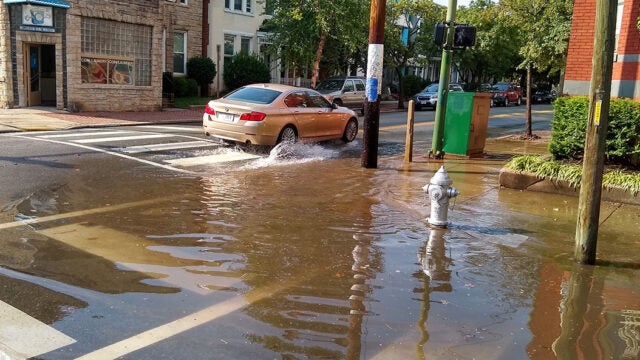
In the wake of the devastation caused by Hurricane Helene just after the extreme heat and downpours this summer, Virginia communities are facing unprecedented challenges. As faith leaders seek to support their communities in the aftermath of these disasters, they are also called to address the underlying causes of climate change and work towards building more resilient futures.
“As threats from climate change become increasingly evident, it is imperative that faith leaders come together to learn how they can support their communities in building resilience. This forum offers a valuable opportunity for spiritual leaders to connect, share experiences, and gain the knowledge and tools needed to address the challenges of climate change,” said Ann Jurczyk, CBF’s Virginia Manager of Urban Restoration.
“The faith community plays a vital role in tackling climate change challenges. By leveraging their moral authority and convening power, faith leaders can inspire and mobilize their congregations to take action. This forum will provide a platform for faith leaders to learn about practical steps they can take to create a more sustainable and just future,” said Faith Harris, Executive Director of Virginia Interfaith Power and Light.
The Faith Forum will take place on October 16 at Second Presbyterian Church of Richmond and October 17 at Union Presbyterian Seminary in Richmond, Virginia.
Renowned keynote speakers Dr. Norman Wirzba and Dr. Melanie Harris will share their expertise on how spiritual leaders can inspire their congregations to embrace environmental justice and honor creation. The forum will provide a valuable platform for participants to connect with like-minded individuals, share experiences, and learn practical strategies for leading their communities toward a more sustainable future.
Registration for the Faith Forum closes on Monday, October 14. For more information and to register, click here.
In a much-anticipated step towards future Chesapeake Bay restoration, the Maryland Department of Natural Resources (DNR) announced at its Oct. 8 Oyster Advisory Commission meeting that it will target three new tributaries for large-scale oyster restoration. The selected sanctuaries include Hooper Strait and the Nanticoke River near Dorchester County, and Herring Bay in southern Anne Arundel County. This work will be funded in part by a $10 million NOAA grant dedicated to oyster reef construction in Maryland.
Large-scale oyster restoration has been one of the Chesapeake Bay partnership’s most successful initiatives. In the 2014 Chesapeake Bay Watershed Agreement, Maryland committed to restoring oysters in five tributaries by 2025. Work has been completed in four tributaries to date, with over 1,000 acres of oyster reefs restored. Oyster reefs filter water and provide essential habitat for other iconic Bay species like blue crab and striped bass.
In its 2024 Hope on the Half Shell report, the Chesapeake Bay Foundation (CBF) recommended building off this success and targeting oyster restoration in 20 additional Bay tributaries. DNR’s commitment to three new projects is a promising start. It also sets an important example as leaders look to update the Chesapeake Bay Watershed Agreement beyond 2025.
Allison Colden, CBF Maryland Executive Director, issued the following statement:
“Oysters are the bedrock of our ecosystem and are key to adapting to climate change, building resilient shorelines, improving water quality, and supporting local economies. An investment in oyster restoration is an investment in a healthier Chesapeake Bay and more vibrant communities.
“The Bay Agreement’s current model of targeting and fully restoring tributaries for oysters has been wildly successful, and we should continue building off that progress. DNR’s latest commitment to three new tributaries is a great start towards that effort, but we hope it’s just that—a start. Maryland has dozens of tributaries ripe for additional oyster restoration, which in turn will help mitigate the impacts of climate change, sea level rise, and erosion, as well as clean our waterways, support habitat, and benefit communities.”
As officials plan for the next phase of Chesapeake Bay restoration, states in the Bay watershed will not meet goals to reduce pollution to the Bay by a 2025 deadline despite recent progress, members of Maryland’s congressional delegation and an EPA official said at a press conference yesterday.
As the 2025 deadline looms, the leaders emphasized the need to maintain momentum on cleaning up the Chesapeake Bay and its rivers and streams, and the importance of states, the federal government, and Washington, D.C., working together in that effort. The Capitol Hill event included Sens. Ben Cardin and Chris Van Hollen, Reps. Steny Hoyer, Dutch Ruppersberger, Kweisi Mfume, Jamie Raskin, Glenn Ivey, and John Sarbanes, Maryland Secretary of Natural Resources Josh Kurtz, EPA Region III Administrator Adam Ortiz, and Interior Department Deputy Assistant Secretary, Fish and Wildlife and Parks, Matt Strickler.
The meeting occurred ahead of a Chesapeake Executive Council meeting scheduled for Dec. 10 in Annapolis. There the region’s governors and other federal, state, and D.C. officials will meet to discuss the next phase of Bay cleanup.
Since the establishment of the Chesapeake Clean Water Blueprint in 2010, the six Chesapeake Bay watershed states and Washington, D.C., in partnership with the federal government, have committed to a 2025 deadline to have practices in place to reduce nitrogen, phosphorus, and sediment pollution to the Bay.
The Chesapeake Bay Foundation (CBF) is urging action at this crucial meeting. Over 1,800 people have submitted public comments to EPA echoing CBF’s call for a recommitment to the Bay restoration partnership. Important next steps include:
- Attendance in person by each of the Executive Council members, including all six Bay watershed governors, the mayor of Washington, D.C., the chair of the Chesapeake Bay Commission, and the EPA Administrator;
- A formal recommitment to maintaining the Bay restoration partnership, as well as meeting the pollution reduction and other restoration goals already agreed to by Executive Council members; and,
- A commitment by the Executive Council to update the Chesapeake Bay Watershed Agreement by the end of 2025 to address challenges identified by the latest science.
The Chesapeake Executive Council includes the governors of Pennsylvania, Virginia, Maryland, Delaware, West Virginia, and New York, the mayor of Washington, D.C., the EPA Administrator, and the chair of the Chesapeake Bay Commission. The Chesapeake Bay watershed spans all of these jurisdictions, and cooperative partnership is essential to meeting these goals.
CBF President and CEO Hilary Harp Falk issued the following statement.
“Chesapeake Bay restoration started as a big, impossible dream that has brought together people from all walks of life and both sides of the aisle. We thank Maryland’s congressional delegation for rightly calling attention to successes so far while recognizing the need for the federal/state Chesapeake Bay partnership to redouble its efforts and commitments.
“Strong action from the Chesapeake Bay Executive Council has been paramount to making progress through the restoration effort’s history. And the Executive Council’s annual meeting this December will be another defining moment not to be missed. That is why we are calling for perfect attendance from its members, including the Chesapeake Bay watershed’s six governors, the mayor of Washington, D.C., the Chesapeake Bay Commission, and federal leaders.
“Only by standing shoulder to shoulder and pledging to update the Chesapeake Bay Watershed Agreement by the end of 2025, can our leaders cement their legacies of delivering clean water, vibrant economies, and a future of pleasant living to the people they represent.”
CBF Applauds Precautionary Measure for Struggling and Essential Blue Crab
In a significant reversal, Virginia state regulators Tuesday killed the possibility of opening the blue crab winter harvest for the upcoming 2024/2025 season.
The 4-1 vote by the Virginia Marine Resources Commission (VMRC) Tuesday approved a month-long public comment period that will solely consider keeping the 16-year ban on the winter blue crab harvest. Because regulators can’t vote on anything more permissive than what they asked the public to consider, the Tuesday vote ends the prospect of reopening the winter blue crab season for the upcoming season. At their October meeting, the VMRC will entertain potential modifications of the previously adopted crab pot season including a possible December extension and earlier opening next March.
The vote Tuesday comes after months of criticism within Virginia and Maryland on VMRC’s previous decision to lift the restriction on the winter blue crab harvest. In June, despite their staff’s opposition, VMRC voted 5-4 to remove the prohibition on the winter dredge season, possibly subjecting the vulnerable keystone species to additional harvest over the winter months.
The winter dredge fishery primarily targets female crabs, which are key to maintaining a strong blue crab population. It involves scraping crabs using dredges, large, metal, rake-like structures, from the bottom of the Chesapeake Bay where they lie semi-dormant through the winter. Declines in the blue crab population led to a fishery disaster declaration in 2008. That year, closing the winter dredge fishery became one of numerous Chesapeake Bay–wide conservation measures enacted to address the disaster.
As a result, the crabbing season currently runs from mid-March through the middle of December in Virginia.
Female blue crab numbers declined by nearly 20 million in the recent annual estimate of blue crab numbers in the Chesapeake Bay and its tributaries. In 2024, according to the survey, the adult female crab population decreased to 133 million compared with 152 million last year. This figure falls far below the target of 215 million adult female crabs needed for a healthy population and sustainable harvest in the Chesapeake Bay.
An ongoing stock assessment, a scientific study expected to shed new light on the factors affecting the Bay’s blue crab population, is expected in March 2026.
Chesapeake Bay Foundation Virginia Executive Director Chris Moore and member of VMRC’s Crab Management Advisory Committee released the following statement:
“I am delighted the Commission followed the advice of its crab management advisory committee and will not consider opening a winter dredge fishery this season. The advisory committee identified numerous concerns about reopening such a fishery at this time.”
“VMRC’s decision is a significant step toward a brighter future for the Bay’s blue crab population and helps ensure we have the best available science when making important decisions about Virginia’s blue crab fishery. This decision allows the scientific stock assessment of the many factors affecting the blue crab population to proceed without significant changes occurring in the fishery at the same time, paving the way for sound evidence-based management decisions of this essential species in the future. We applaud this vote.”
Anglers reeled in 31 unique Chesapeake Bay species during the event
Anglers and Chesapeake Bay supporters had much to celebrate on Sunday, September 15, at the 2024 Maryland Rod & Reef Slam fishing tournament’s closing ceremony at the Chesapeake Bay Foundation’s Philip Merrill Center in Annapolis. During the tournament, 32 anglers reeled in more than 120 fish, including 31 different species.
Co-hosted by Chesapeake Bay Foundation (CBF), Coastal Conservation Association (CCA) Maryland, and Chesapeake Oyster Alliance (COA), the Maryland Rod & Reef Slam is one of the most unique fishing tournaments in the Chesapeake Bay region. Anglers are challenged to catch the largest diversity of fish species, rather than just the most or largest fish. Participants also must fish around restored oyster sanctuary reefs to demonstrate the immense habitat and biodiversity the reefs support.
“Fish love oyster reefs and anglers do too,” said Allison Colden, CBF’s Maryland Executive Director. “Not only do oysters filter the water, but their reefs make exceptional habitat for hundreds of aquatic species. A win-win for our slam champions, and the Bay.”
The most frequently caught fish during the tournament were spot and Atlantic croaker. Some of the most unusual catches included pufferfish, cutlassfish, kingfish, spotted sea trout, and pigfish.
The tournament ran from September 7 through September 15. The winners of each division include:
- Grand prize: Herb Floyd, of Trappe, who caught a total of 15 species.
- Powerboat: First place went to Chris Morgan with 11 species, second place to Chris Derr with eight species, and third place to James Traxel with five species.
- Kayak: Ronnie Kirin and Jeff Luoma tied with six species each. After a tie breaker determined by fish length, Ronnie took home first place.
- Youth: First place went to David Rogers with nine species, second place to Parker Barniea with seven species, and third place to Parker Corson with six species.
- Invasive species: Parker Corson of the youth division took first place with an impressive snakehead.
Winners were announced at an award ceremony and after party held at CBF’s Philip Merrill Center in Annapolis. The champions chose from a selection of prizes including a Turtle Box speaker, Toadfish gear, an Engel UltraLite cooler, and more.
“This year’s event proves how habitat today equals fish tomorrow,” said Dave Sikorski, CCA Maryland Executive Director. “The diversity of life on restored oyster reefs directly support the success of our fisheries now and into the future, and that’s all the reason we need to continue to build habitat and partnerships throughout the region.”
The Maryland Rod & Reef Slam helps further CBF, CCA, and COA’s missions by supporting oyster sanctuary reefs in the Chesapeake Bay. Oyster reefs filter water quality and provide habitat for dozens of species such as striped bass and blue crab. COA and its partnership of nonprofits, oyster farmers, and academic institutions are committed to adding 10 billion oysters to the Bay by 2025.
Community event hosted dozens of volunteers to install 100 oyster cages and improve water quality in the Baltimore Harbor and Chesapeake Bay
Today, the Great Baltimore Oyster Partnership, made up of Waterfront Partnership of Baltimore (WPB) and Chesapeake Bay Foundation (CBF), hosted 35 volunteers to install Maryland’s largest public oyster garden at Lighthouse Point Marina, in partnership with marina managers Oasis Experiences. This celebration marked the 12th oyster planting season for the Great Baltimore Oyster Partnership.
“Oysters are important to Baltimore Harbor because they clearly work at cleaning the water,” said Aaron Tsu, a volunteer oyster gardener. “I like oyster gardening for the sense of community and to spread awareness to help clean the Bay.”
Volunteer oyster gardeners play a crucial role in the Partnership and Baltimore’s oyster restoration efforts. At the event, volunteers filled wire cages with baby oysters, called spat, which CBF had set on hundreds of recycled oyster shells. The cages were then hung over the marina docks where they will stay and grow for the next nine months. This process keeps the oysters, which are most vulnerable during their first year of life, elevated from the Harbor’s muddy bottom. Oyster gardeners will continue to check and tend to them throughout the year during monthly cage cleaning events. After nine months, the oysters are planted out on protected oyster sanctuary reefs.
Once mature, each oyster can filter up to 50 gallons of water a day, making them a vital resource for improving water quality in the Harbor and Bay. Oysters not only improve water quality, but also provide valuable habitat for wildlife and have been shown to increase species diversity by 40-60%.
The Lighthouse Point Marina site is one of several public oyster gardening locations in Baltimore where people can get involved.
“We call it oyster gardening, but it’s more like oyster fostering,” said Kellie Fiala, Maryland oyster restoration coordinator at CBF. “You don’t have to have a waterfront property to participate. Lighthouse Point Marina and other public oyster gardening locations are accessible and always need extra hands. Thanks to all the volunteers who came out this event to help get us started.”
Since 2013, the Partnership, with the help of more than 5,000 volunteers, has cultivated more than 1.6 million oysters in Baltimore Harbor. In July 2019, the Partnership met its initial goal of planting out five million oysters.
“These Inner Harbor oyster gardens become home to much more than just oysters,” said Adam Lindquist, vice president of WPB. “Thousands of eels, shrimp, small fish, and crabs have been thriving alongside the spat. This increase in smaller creatures has helped bring larger predators like rockfish and even river otters back to Baltimore.”
Lighthouse Point Marina on the Canton Waterfront was an early supporter of the Partnership, hosting roughly 60 public oyster cages for years. They recently underwent a major renovation and are now expanding oyster gardening operations to reignite the connections they had with the community.
“We are thrilled to be partnering with the Chesapeake Bay Foundation and the Waterfront Partnership to bring the largest oyster garden in the state to Lighthouse Point Marina,” said Joel Schlossberg, general manager of Lighthouse Point Marina. “The oyster garden installation is part of our ongoing commitment to creating a healthier Baltimore Harbor and Chesapeake Bay. The tens of thousands of oysters that will be raised at Lighthouse Point will contribute to the improving health of our waterway for years to come.”
The Great Baltimore Oyster Partnership receives partial funding from the Chesapeake Oyster Alliance (COA). COA and its partnership of nonprofits, oyster farmers, and community organizations are committed to adding 10 billion oysters to the Bay by 2025.
Event Celebrated Oyster Restoration Benefits and Broke Down Barriers to Fishing
More than 60 anglers caught nine different species of fish from the Hampton River during the Chesapeake Bay Foundation’s (CBF) Rod and Reef Slam in Hampton Saturday.
Anglers as young as six years old reeled in flounder, croaker, and sea bass, among other species of fish for four hours Saturday. From the water, a group of kayakers explored the biodiversity of nearby coves. The event celebrated oyster restoration as well as broadened access to fishing on the Hampton River through education.
“CBF’s Rod and Reef Slam is not your typical fishing event. Size doesn’t matter. The goal is to connect the community with the joys of fishing, how oyster reefs and the biodiversity they cultivate contribute to great angling, and the importance of clean, local waterways,” CBF Virginia Executive Director Chris Moore said.
Oyster reefs are essential to the health of the Chesapeake Bay, filtering water and, in great news for anglers, providing habitat for a variety of fish like striped bass, sea trout, as well as the Bay’s iconic blue crab. On Saturday, anglers of all ages and skill levels learned the basics of angling or refined their techniques with expert CBF staff.
Cameron Harris, a freshman at Hampton University studying marine science, caught two fish by 10:30 am Saturday morning. It was his first time at the Rod and Reef Slam, but he was no stranger to fishing off the pier near Hampton University’s campus. The more oysters, he said, the more the river benefits.
The oysters in the Bay could once filter a volume of water equal to that of the entire Bay—about 19 trillion gallons—in a week. Today, it would take the remaining Bay oysters more than a year. Decades of overharvesting, habitat destruction, and disease have decimated the Bay’s oyster population.
CBF and its partners are working to restore oyster reefs in local Virginia rivers. Just last week, the National Fish and Wildlife Foundation awarded CBF a grant to bring one million baby oysters to two new sanctuary reefs in the Hampton River. This community-oriented project in the densely populated city will engage Hampton University students and other civic organizations.
This work will complement CBF’s existing restored reefs, whose success includes increased populations of popular reef fish.
Explore more oyster facts and view a time lapse video of oysters filtering water.
The Chesapeake Bay Foundation (CBF), Virginia Interfaith Power & Light (VAIPL), and Mosby Memorial Baptist Church will give away 200 native trees and shrubs to Richmond residents on Saturday, September 21, from 9:00 a.m. to noon. This free giveaway is an opportunity for homeowners to beautify their properties while contributing to a healthier environment.
“Fall is the ideal time of year to plant new trees,” said Ann Jurczyk, CBF Virginia Manager of Urban Restoration. “These native species provide vital habitat for birds and pollinators, while also cleaning the air we breathe. Trees filter out particulate pollution, a major contributor to asthma attacks, and help reduce stormwater runoff. Planting a well-placed tree can even save money on heating and cooling bills.”
Residents can choose from a variety of native trees and shrubs suited for the Richmond area. Species available include Redbud, Dogwood, Serviceberry, Inkberry, and Buttonbush.
“Many of us know all the many health and ecological benefits of trees,” said Faith Harris, Executive Director of Interfaith Power & Light. “However, most do not know that trees play a significant role in many of our religious traditions. In the Hebrew Bible, New Testament, and the Koran, trees provide a metaphor for wisdom, strength, perseverance, and good or godly character. A lawn, community village, or landscape without trees is desolate and seemingly without creative activity. At VAIPL, we plant trees to honor their place within the traditions of our many faiths.”
Despite their value, Virginia’s trees continue to disappear at an alarming rate. At a time when the Chesapeake Bay watershed is struggling to meet 2025 water quality and restoration goals, planting trees remains one of the most successful and cost-effective solutions to reducing polluted runoff and cleaning local waterways.
Trees also provide significant benefits in cities, where they cool communities, combat flooding and reduce air pollution, all of which are exacerbated by climate change.
Reserve free trees and shrubs and pick up your trees on:
- Date: Saturday, September 21
- Time: 9:00 a.m.–12:00 pm
- Location: Mosby Memorial Baptist Church (address provided upon registration)
This giveaway is a great way to:
- Enhance your landscape with beautiful native plants
- Support local wildlife and pollinators
- Improve air and water quality in your community
- Save money on your energy bills
Delegate Kathy Tran (D-Fairfax) received the Chesapeake Bay Foundation’s (CBF) Virginia Legislator of the Year award last week for her work protecting Virginians and the Chesapeake Bay from toxic substances and reducing pollution flowing into beloved waterways.
The new law Tran spearheaded, which passed the General Assembly this year, prohibits the sale and application of any pavement sealant with a PAH concentration greater than one percent by weight. Applied both commercially and privately, the sealant is a black liquid marketed as a pavement protector. These products contain high levels of polycyclic aromatic hydrocarbons (PAHs), which are toxic and carcinogenic chemicals that can harm people, birds, amphibians, fish, mammals, and plants.
“Delegate Tran’s leadership in addressing harmful toxics and pollutants has been a testament to her dedication towards creating healthier communities and restoring the Chesapeake Bay. Her unwavering support for the importance of banning toxic pavement sealants is highlighted by the fact that she carried this legislation for four years until its passage earlier this year, reflecting her tireless commitment to a cleaner environment for everyone,” said CBF Virginia Executive Director Chris Moore. “Because of her work, Virginia’s new law will reduce pollution to waterways and help shield Virginians from harmful chemicals.”
“I am honored to receive the Chesapeake Bay Foundation’s Virginia Legislator of the Year award,” said Tran. “Toxic pavement sealants put our children’s lives at risk and pollute our waterways. Many families do not realize that when repairing their driveway, they could be applying a toxic product that causes cancer in people and fish. Banning their sale is a commonsense action, and I am proud to partner with the experts at the Chesapeake Bay Foundation to pass this bill and protect our children, marine life, and waterways.”
“The Chesapeake Bay Foundation’s deep commitment to protecting the Bay inspires us all to be better environmental stewards, and I look forward to continuing our work together to build a cleaner and healthier Virginia for all,” Tran said.
CBF presents its Virginia Legislator of the Year Awards to lawmakers who have made outstanding efforts in the General Assembly to improve the health and resources of Virginia’s rivers, streams, and the Chesapeake Bay. Recent Virginia Legislator of the Year awards include Senator Emmett Hanger (R-Augusta), Delegate David Bulova (D-Fairfax), and Delegate Alfonso Lopez (D-Arlington and Alexandria).
Planting in the fall by award-winning volunteers from the Keystone 10 Million Trees Partnership
Supported by a Healing the Planet grant from The GIANT Company and Keep Pennsylvania Beautiful®, the City of Lancaster will get new trees this fall, planted by award-winning volunteers for the Keystone 10 Million Trees (K10) Partnership.
“The GIANT Company is pleased to partner with Keep Pennsylvania Beautiful to provide a grant to the Chesapeake Bay Foundation in support of its efforts to bring more trees to the Lancaster community,” said Courtney Hopcraft, manager of community relations and charitable giving for The GIANT Company. “Trees play a vital role in creating healthy communities and we are especially thrilled to see this grant benefit current and future students of McCaskey High School.”
The $4,000 Healing the Planet grant supports a tree planting in November at McCaskey High School, within the School District of Lancaster, led by Marlisa Yoder-Bontrager, and twin sisters Keisha and Tarsha Scovens. The three were recipients of the 2023 Mira Lloyd Dock Partnership Diversity Award, presented by the K10 Partnership, which is coordinated by the Chesapeake Bay Foundation (CBF).
Dock Award winners were recognized for their conservation and Environmental Justice work in under-represented communities.
Each Dock Award winner will receive $5,000 for the planting and $1,000 for maintenance of the trees. Trees for the planting will come from the Pennsylvania Department of Conservation and Natural Resources Tree Pennsylvania program, as well as the K10 Partnership.
Yoder-Bontrager’s portion of the project will also be supported by funding from the Frank Albrecht Memorial Fund. Frank Albrecht worked in the School District of Lancaster for more than 30 years, spending many years at McCaskey High School. He passed away from complications of ALS on August 24, at the age of 66.
Volunteers from the Lancaster community will help with the planting.
“More trees for the City of Lancaster provided by this new funding will be important for the health and welfare of local residents, as well as the Conestoga River,” said Julia Krall, Pennsylvania Executive Director for CBF. “We appreciate the support from The GIANT Company and Keep Pennsylvania Beautiful®. With this funding, the Keystone 10 Million Trees Partnership and its Dock Award winners will contribute to the great work already happening in Lancaster County to reduce polluted runoff into local waters.”
McCaskey High School is located west of the Conestoga River, identified in the City of Lancaster’s Comprehensive Plan as a “polluted and neglected part of our city’s landscape for too long.” The trees will filter and absorb polluted runoff before it reaches the Conestoga River, which travels directly through the City of Lancaster. Students will have access to the trees and the health and wellbeing benefits that they provide.
Mira Lloyd Dock is recognized as the first Pennsylvania woman to lead the way in forest conservation. She was an advocate for Penn’s Woods and in 1901 was appointed to the State Forest Reservation Commission by Pennsylvania Governor William Stone.
The GIANT Company and Keep Pennsylvania Beautiful awarded a total of $108,243 in support of 32 projects focused on tree planting projects. Funding for the grants was provided by customers at GIANT, MARTIN’S, and GIANT Heirloom Market stores who agreed to round up their grocery purchase to the nearest dollar from March through May.
Learn more about the Keystone 10 Million Trees Partnership.
