Field Notes: Graduation Day for Oysters
The journey from microscopic larvae, to oyster garden, to reef came full circle this month as CBF oyster restoration staff and volunteers sent their lovingly raised charges into new waters.
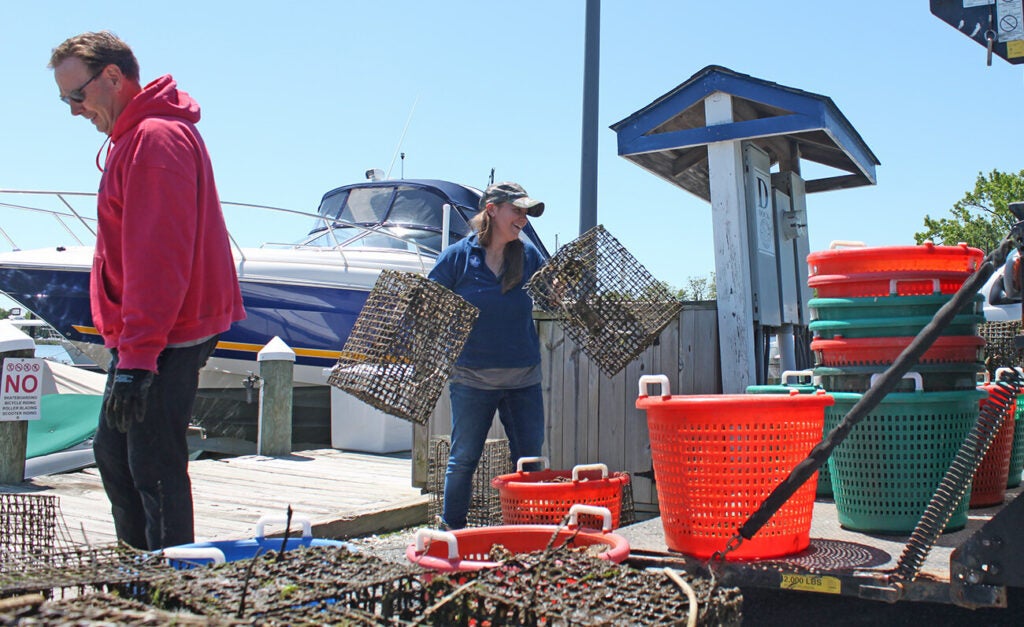
Where We’re At: The docks of Queen Anne Marina in Stevensville, Maryland, amid a sea of pleasure craft and fishing rigs. Site of CBF’s largest public oyster garden on the Eastern Shore (yes, you can garden oysters!).
Conditions: Mid-May. The sun is out, but not too hot! The water is brilliant summer blue.
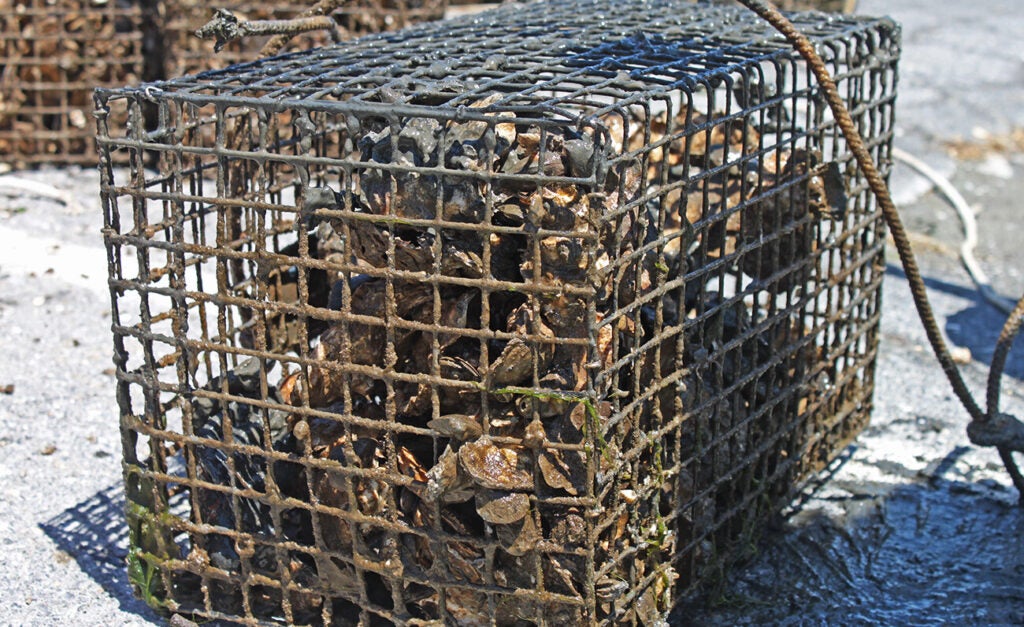
Why We’re Here: It’s graduation day for hundreds of young oysters—67 wire mesh cages full. After starting out as tiny specks clinging to recycled shells last fall, they have grown fat in the waters of Price Creek with the loving care of marina staff and CBF’s oyster gardener volunteers. Now, an inch or two long, they’re ready to move out to their permanent home, a nearby sanctuary reef off Kent Island.
Step One: Collect the Oysters
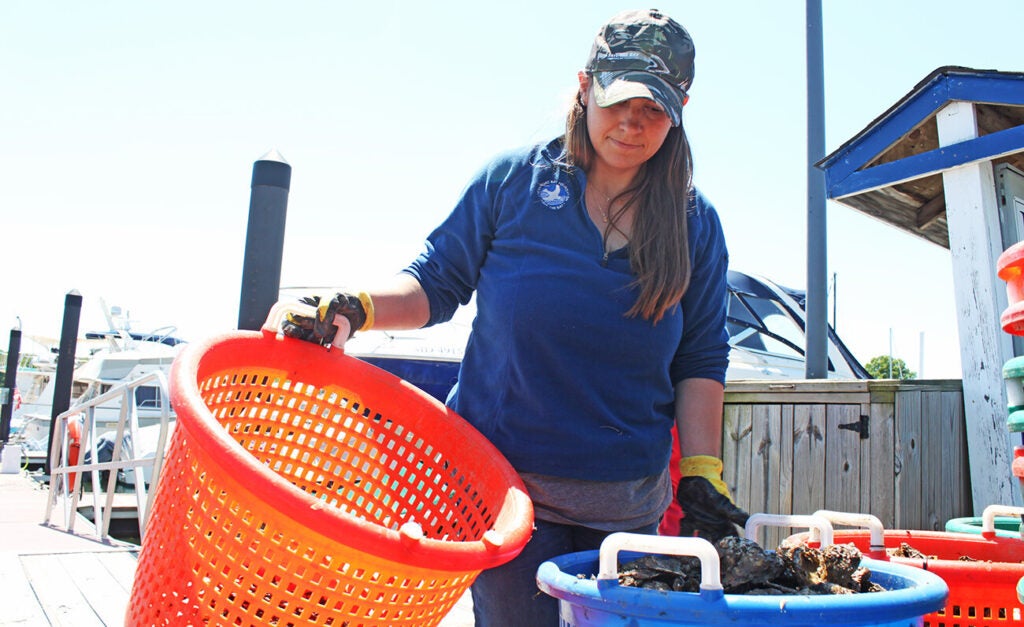
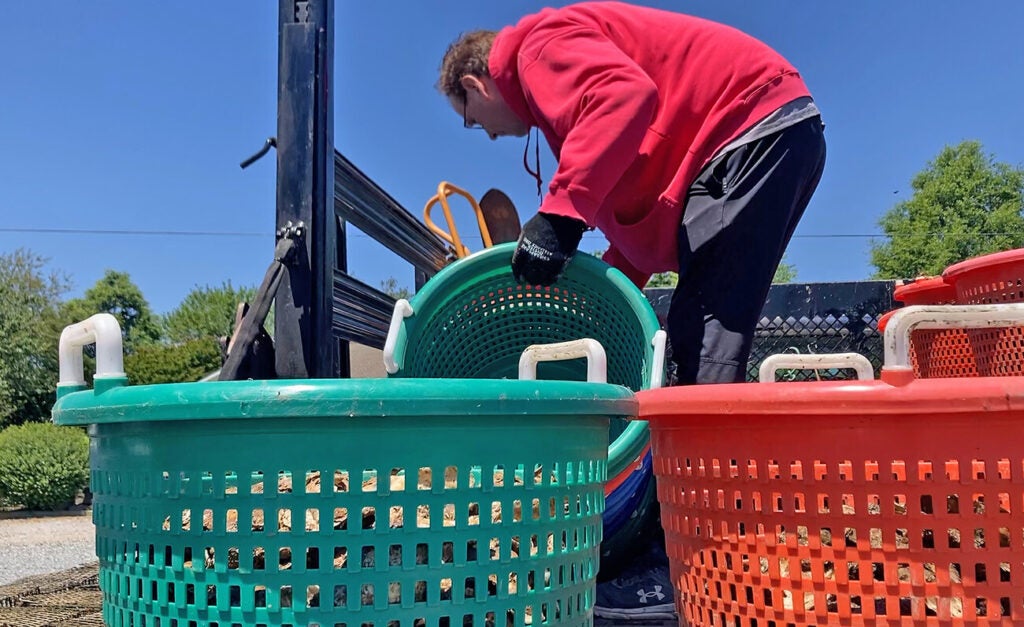
Marina staff pulled the cages where the oysters have been growing (suspended from the dock so they don’t get lost in the bottom) onto the docks before the CBF team arrived—a huge help. Kellie Fiala and Dan Johannes, CBF’s Maryland oyster restoration specialists, and Maggie Boyle and Alex Price (CBF interns on their first day!) transfer the oysters from the cages to bright orange bushel baskets.
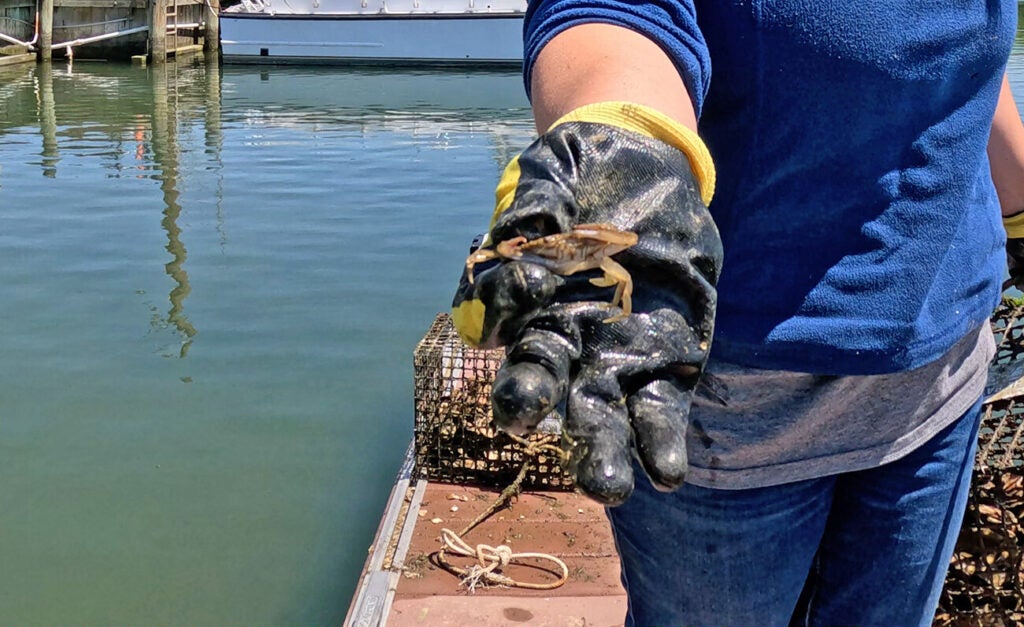
This is one of the fun parts. You can see exactly how much critters love hiding out among the oysters. The cages wriggle with life.
We find a ton of translucent grass shrimp that ‘pop!’ into the air when we try to wrangle them back into the water; young blue crabs; tiny mud crabs (luckily too small to pinch), some of them crusted with a sponge of eggs; a white shrimp (that’s the kind you eat); and a blenny (a small fish that lays its eggs in oyster shells).
Photos below: Credit Codi Yeager/CBF Staff
 Codi Yeager/CBF Staff
 Codi Yeager/CBF Staff
 Codi Yeager/CBF Staff
 Codi Yeager/CBF Staff
Step Two: Road Trip to Prospect Bay
After loading all the oysters in their bushel baskets into the back of a flatbed truck, they get a quick trip to another marina down the road. Some of CBF’s super oyster volunteers are there with a boat to take the oysters out to their reef.
 Codi Yeager/CBF Staff
One Last Bit of Science
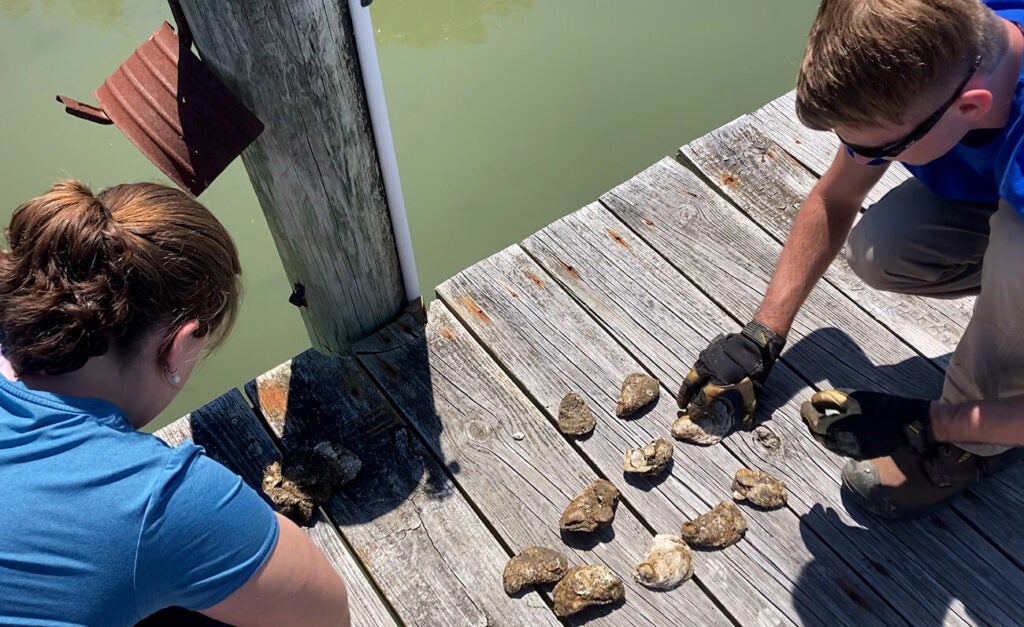
As the rest of the team loads the oysters onto the boat, Maggie and Alex pull out a sample of the oysters to do a final roll call. They count how many young oysters are growing on each of the shells in order to estimate how many are going into the Bay. They record the average: 6.1 per shell.
 Codi Yeager/CBF Staff
Step Three: Finding the Reef
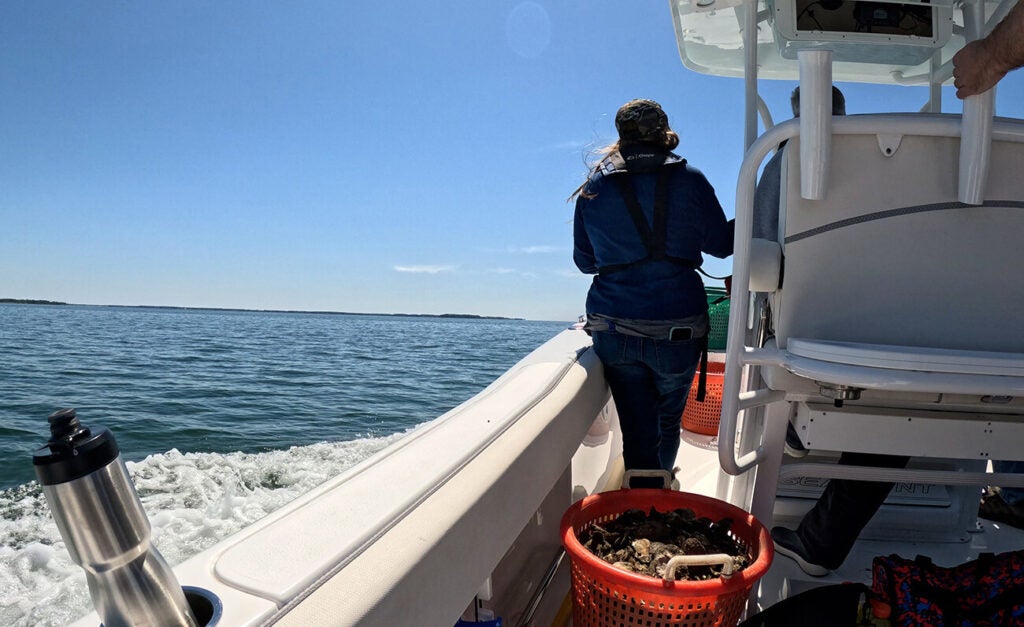
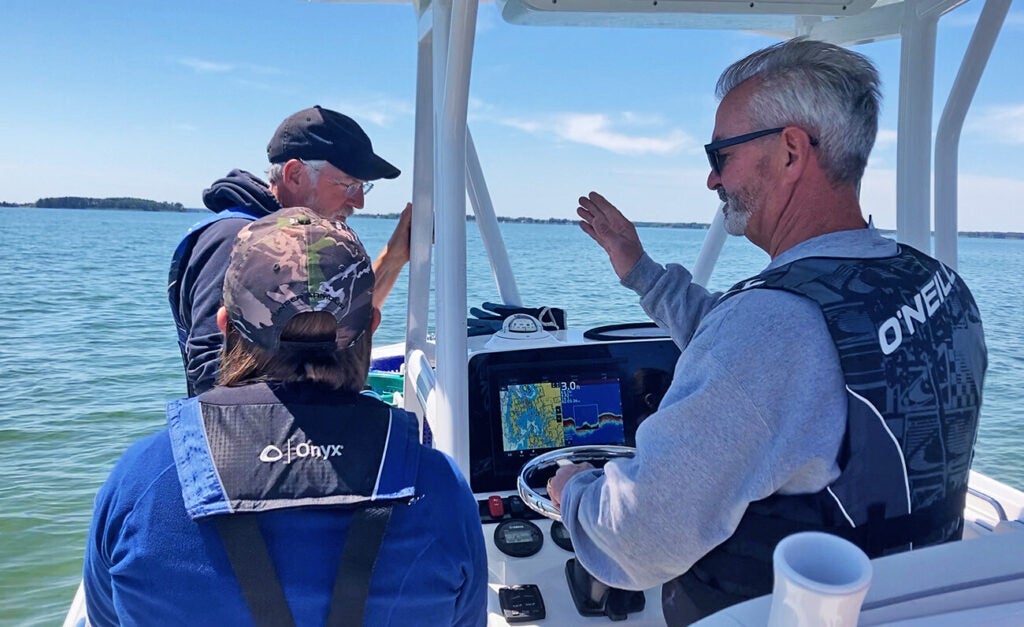
Counting and loading complete, the team climbs aboard and Captain Charles Bedore navigates to the reef. When we get close, Kellie tests the bottom with an extendable metal pole. A few prods that feel like sand. Not here. She calls out and Charles inches the boat forward. Test again. Finally, the pole touches shell. The reef.
Photos below: Credit Codi Yeager/CBF Staff
 Codi Yeager/CBF Staff
 Codi Yeager/CBF Staff
 Codi Yeager/CBF Staff
The Payoff
Bushel basket by bushel basket, the team takes turns pouring the oysters over the side of the boat. “This is the best part of it all,” says Charles.
Why so much work for such small creatures? The oyster reef, like the coral reef, is far greater than the sum of its parts. Sure, each oyster can filter water on its own. But oysters’ real superpower are the living, breathing reefs they build together. Get enough oysters in one place and they help clear up the water and provide shelter and homes for 300 other species.
The water off Kent Island is remarkably clear for this time of year. So clear that it’s easy to convince yourself you can almost see the bottom, but the reef remains hidden. The new oysters drift down lazily.
As they disappear from view, I like to think all aboard sent encouraging thoughts along with them. Good luck. Happy reef building. You’re going to do great things.
How You Can Help
Want to get involved? We need your help right now to urge Congress to keep the Bay’s oyster sanctuaries protected. The U.S. House Appropriations Committee recently passed a bill that includes two harmful provisions. One would open up protected oyster sanctuaries to commercial fishing; the other would cut off restoration funds for oyster sanctuaries most in need of investment. This is a direct attack on one of the Bay’s most successful restoration stories. Take action now!
And if you want to volunteer, you can learn more about CBF’s oyster gardening programs in Maryland and Virginia.
Related Stories
-
 Blog Story
To Save the Chesapeake Bay, Save This Fish
Saving menhaden helps save the bay. Now, evidence of a crisis is impossible to ignore.
-
 Blog Story
Field Notes: Building an Oyster Reef
Over the course of the summer, CBF built an oyster reef as part of a larger project to restore and protect an eroding shoreline along Maryland's South River.
