Chesapeake Bay Watershed Agreement
A series of agreements dating to 1983 have guided the cleanup of the Chesapeake Bay.
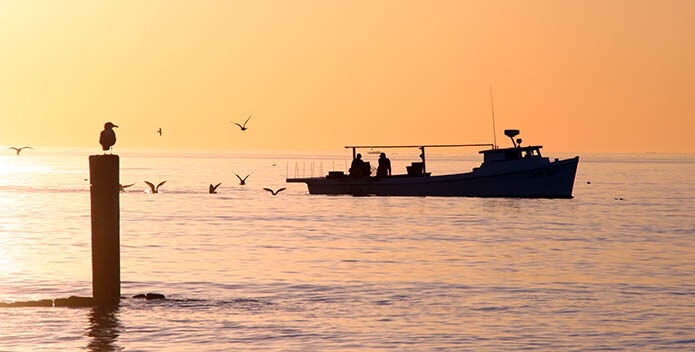 A fisherman works the Bay during the orange of dawn.
A series of five agreements dating to 1983 have guided the cleanup of the Chesapeake Bay. From the beginning, the agreements emphasized the importance of shared responsibility between the federal government, states within the Bay watershed, and the District of Columbia. No other approach would work, given that the Bay drainage area stretches 64,000 square miles over six states and the District of Columbia.
The Early Agreements
The first agreement in 1983 was a simple, one-page pledge signed by the governors of Virginia, Maryland, and Pennsylvania, the mayor of the District of Columbia, the chairman of the Chesapeake Bay Commission, and the administrator of the U.S. Environmental Protection Agency (EPA).
A subsequent Chesapeake Bay Agreement in 1987 set the first numeric goals to reduce pollution and restore the Bay ecosystem. The third Agreement signed in 2000 expanded and clarified goals, and included participation by headwater states: Delaware, New York, and West Virginia as well as the original jurisdictions.
But the early agreements did little more than acknowledge there was a problem and commit to working together to fixing it. Those agreements produced some progress, but the states and District came up well short of their own pollution reduction goals. By 2009, all participants realized a new type of approach was necessary, one that held participants to their promises.
In December 2010—after years of missed deadlines for restoration and no consequences—the EPA exercised its Clean Water Act authorities by releasing enforceable pollution limits for nitrogen, phosphorus, and sediment pollution in the Chesapeake Bay (the Bay TMDL). Subsequently, the six Bay states and the District of Columbia released their plans, called Watershed Implementation Plans or WIPs, to meet those limits by 2025. Together the pollution targets and the states’ plans comprise a Clean Water Blueprint for the Chesapeake and its rivers and streams.
But saving the Bay means more than just less pollution. It means healthier fish and oyster populations, improved habitat for wildlife, cleaner water and healthier ecosystems upstream as well as in the main stem of the Bay, and other goals. In 2014, representatives from the entire watershed signed the Chesapeake Bay Watershed Agreement. For the first time, Delaware, New York, and West Virginia committed to full partnership in the Bay Program. The agreement included the Chesapeake Clean Water Blueprint goals, but also established goals for habitat restoration and conservation, improving fisheries, increasing public access public access, and environmental literacy. A deadline of 2025 was set to put practices in place to achieve those goals.
The Revised Agreement
While states made notable progress, from oyster restoration to upgrading sewage treatment plants, they did not meet the pollution-reduction targets by the 2025 deadline. In December of 2025, in an important show of unity, the region’s governors and federal partners agreed to a Chesapeake restoration plan for the next 15 years, setting a new deadline for 2040.
This latest agreement includes four goals with measurable outcomes.
- Thriving Habitat, Fisheries, and Wildlife: Protecting, restoring, and sustaining fisheries, wildlife, and the ecosystems they rely on.
- Clean Water: Reducing pollution entering the Bay to achieve Clean Water Blueprint targets and monitoring water quality.
- Healthy Landscapes: Conserving, protecting, restoring, and enhancing important landscapes.
- Engaged Communities: Building a community of local stewards and leaders.
Clearly, the Bay agreements represent an evolving effort to turn aspirational goals into actual results.
Find out more about the Chesapeake Bay Watershed Agreement on the Chesapeake Bay Program website.
