Data Centers
The rapid expansion of data centers threatens the Chesapeake Bay region’s waters, and people.
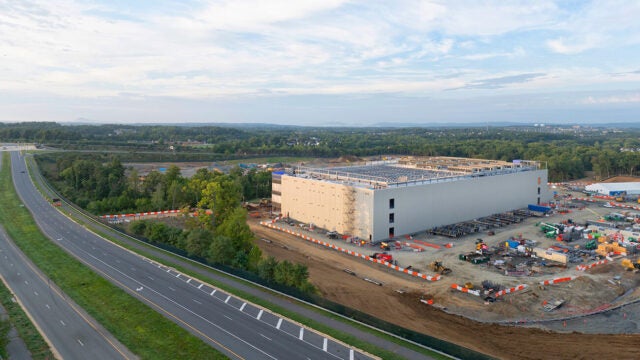
Data centers are large facilities that house the computer servers that make modern day digital information possible. These servers use an immense amount of energy and water to store and process the internet, email, streaming, and cloud-computing services we rely on every day. They also support the burgeoning AI industry.
The rapid expansion of data centers threatens the Chesapeake Bay region’s waters and people. Northern Virginia, known as “Data Center Alley,” houses the largest concentration of data centers in the world. In fact, an estimated 70 percent of global internet traffic goes through this area. And demand continues to skyrocket not just in Northern Virginia but across the watershed. CBF is advocating for stronger state and local environmental protections as well as data center transparency to address major concerns around data center growth. See this data center proposal tracker to learn more about potential data centers in your area.
Tell Congress: We Need Commonsense Protections from Data Centers!
We must demand commonsense protections in the face of growing risks from data center growth—for our communities and the environment. Contact your senator today!

What are the concerns around data centers?
Data centers run thousands of servers 24/7, which require extensive cooling systems to prevent overheating. The largest data centers, called hyperscale centers, can use as much power as 80,000 homes in a year.
This increased demand for electricity is stressing existing power grids and leading to plans for new power plants, reopening old fossil fuel plants, and new transmission lines. All of these can increase pollution to the Bay.
A single data center can use as much as five million gallons of water per day for cooling its computer servers. This water comes from drinking water, groundwater, or surface water like rivers and lakes. Impacts have been seen on water availability for communities surrounding data centers.
Around the Potomac River, data centers already use about eight percent of summer water withdrawals. By 2050, that could grow to over one-third, or 200 million gallons per day.
The electricity they use consumes even more water. About three-quarters of the water used by data centers goes to generating electricity at fossil fuel or nuclear power plants off site.
For more information on water use in data centers see American Rivers “Rivers and Data Centers.”
The largest data centers can take up millions of square feet, in many cases replacing forests, fields, farmland, and wetlands. This increases the risk of flooding and harm to wildlife habitat.
New buildings, parking lots, and other hard surfaces result in more polluted runoff that often flows into local rivers and streams.
And too often, data centers are being built close to homes, schools, parks, and other areas not appropriate for industrial use.
Many data centers use older backup diesel generators, which release pollution that contaminates the air, is bad for people’s health, and can fall back down to pollute rivers and the Bay. This pollution can be reduced with diesel generators that use the best available technology.
The electronic systems in a data center have a lifespan of just three to seven years before needing to be replaced. Many states do not have established e-recycling programs to handle this.
Across the Chesapeake Bay watershed, there is no consistent state or local requirement for data centers to publicly share how much energy and water they use. That’s a major problem.
Without this information, our elected leaders and the public can’t fully understand the risks posed by a new data center. That makes it hard to avoid or address these threats.
Data center growth is skyrocketing in our region.
In the summer of 2025, there were 600 data centers in the Chesapeake Bay watershed. That number is growing.
Northern Virginia is often called “data center alley” because of its density. About 70 percent of the world’s internet traffic goes through the region. Northern Virginia was home to about 375 data centers as of 2025, with capacity having doubled since 2020.
Data center development is also a growing concern in Maryland and Pennsylvania.
CBF is advocating for state, federal, and local policies that address major concerns around the growth of data centers, including:
- Requiring data center projects to estimate and publicly report how much energy and water they use.
- Demanding more and better ways for local governments and communities to regulate new data center projects.
- Urging the use of better rules to protect our air, land, and water in the face of rapid data center growth.
Tell PA Legislators: No Unchecked Data Center Growth!
Local communities deserve a strong voice in data center decisions that affect their water, quality of life, and future growth. Tell your Pennsylvania Senator to support several critical data center bills today!
What has CBF done so far to address data center concerns?
- In the fall of 2024, CBF’s Maryland Office and the Potomac Conservancy collaborated with the University of Maryland Global Campus by co-sponsoring a capstone Data Center Impact research project for graduate students in the Master of Environmental Management program.
- CBF opposed SB903 in the 2025 General Assembly Session that would have fast-tracked approval of natural gas and small nuclear co-located with data. This bill did not pass.
- Also in 2025, CBF supported SB116 and HB270 to study hyperscale data centers.
- In 2026, CBF supported successful legislation that requires water utilities that provide water to data centers to report the total volume of water that is provided to data centers each month.
- CBF also supported SB553 that requires proposed industrial facilities, including data centers, to submit annual water consumption estimates to allow the impact of water consumption to be considered when making rezoning and special use permit decisions. Both bills were signed into law.
- CBF successfully opposed a state proposal that would have allowed data centers in Prince William, Loudoun, and Fairfax Counties to run back-up generators that exceeded current pollution limits. This proposal was rescinded during the Department of Environmental Quality comment period.
- CBF is supportive of Governor’s Shapiro’s Governor’s Responsible Infrastructure Development (GRID) standards. This may establish strict guardrails to hold data centers accountable to more transparency and encourage better environmental standards.
- CBF is supporting several bills under consideration by the state Senate that would provide and protect transparency, water protections, and local control:
- HB 2151 empowers municipalities to regulate data centers through model local zoning and ordinances.
- HB 2246 ensures large data centers cannot move forward without clear guardrails by strengthening water-use permits, monitoring impacts, and protecting existing water users.
- HB 2496 creates a temporary “pause button” for new data center proposals, giving municipalities up to 180 days to halt the acceptance and review of data center applications while they update their land‑use ordinances.
- HB 2650 codifies Governor Josh Shapiro’s GRID Standards into law and replaces the old data center tax‑exemption program with a strict, enforceable certification framework.
CBF is supportive of Senator Mark Warner’s Data Center Tax Accountability and Disclosure Act, which would require large data centers to publicly report their energy and water usage, emissions, and backup power generation. It would also provide incentives to data centers that operate more efficiently through the LEED certification process, the global standard for sustainable buildings.
