Dead Zones
Excessive nitrogen and phosphorus pollution cause dead zones in the Chesapeake Bay where fish, crabs, oysters, and other aquatic life literally suffocate from a lack of oxygen in the water.
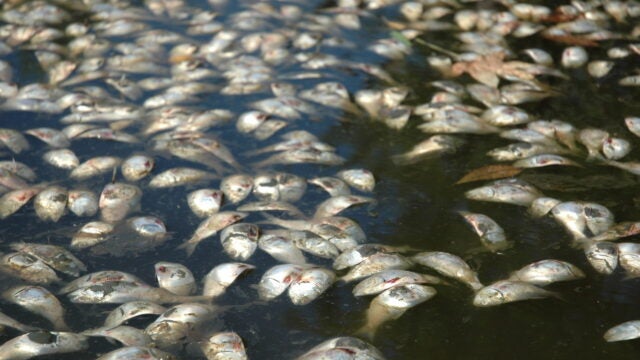
In the water, the nitrogen and phosphorus fuel algae that can bloom to harmful levels. Dead zones form when the algae die, sink to the bottom, and are decomposed by bacteria—a process that strips dissolved oxygen from the surrounding water.
The best way to reduce dead zones is to stop pollution at its source by putting in place practices that control pollution from urban and agricultural lands, as well as wastewater treatment plants and septic systems.
Dead Zones in the Chesapeake Bay
Dead zones are areas in the Chesapeake Bay that have little to no oxygen.
Dead zones form in both the Bay’s mainstem and its tidal rivers, typically in deeper water near the bottom. The location, extent, and severity of the dead zones can change throughout the year, usually peaking during the summer months.
On average, the Chesapeake Bay dead zone covers between 1.2 cubic miles during the summer months, when the water is warmest and oxygen levels are historically lowest. Long-term trends indicate the Bay’s dead zones are getting smaller. There can be significant variation from year to year due to changes in weather. For example, a rainy spring can wash more pollution into rivers like the Susquehanna, the Bay’s largest tributary, leading to a bigger dead zone that year.
Once a dead zone forms, several factors can influence its size and duration. For example, wind can mix oxygen from the surface into deeper water and help break up dead zones. Hot temperatures can make dead zones worse by warming a layer of surface water that locks colder, denser water below where oxygen from the surface can’t mix in. Heavy rainfall increases the amount of pollution washed into waterways.
How do dead zones affect the Chesapeake Bay?
Dead zones are not a direct threat to humans, but they are extremely harmful to fish, crabs, oysters, and other aquatic animals that humans rely on for seafood and livelihoods.
Researchers have hypothesized that the Bay’s dead zone contributes to stress and disease in striped bass, loss of animals from the bottom of the Bay’s food chain, and a reduction in nutrition for predators, as bottom dwellers’ growth is stunted by lack of oxygen. Oxygen levels in a dead zone can get so low that fish and wildlife can no longer survive.
The dense algal blooms that lead to dead zones also block sunlight, which prevents underwater grasses from growing. In turn, the animals that depend on these grasses for food and shelter suffer, as well.
The algal blooms that fuel dead zones can be detrimental to tourism and recreation. Harmful algal blooms can generate toxins that are harmful to people and pets, increase water treatment costs for drinking water, release unpleasant odors, and cause fish kills that can wash hundreds of dead fish onto beaches.
How is CBF working to reduce dead zones?
Dead zones are unhealthy for the Bay, harmful to local economies, and fixable. CBF believes the best solution is stopping pollution at its source.
Agricultural runoff from farmland carries nutrients from fertilizers and animal manure into rivers and streams, eventually flowing into the Chesapeake Bay. We’re working to reduce this runoff by working with farmers to plant trees as buffers along rivers and streams and use conservation practices such as those that improve soil health.
Runoff from developed areas washes nutrients from fertilizers, septic systems, and other pollutants into local waterways that flow downstream into the Chesapeake Bay. We are working with communities to plant trees and reduce the amount of hard surfaces in cities to reduce this source of pollution.
Wastewater treatment plants release treated water—often still containing large amounts of nutrients—into streams and rivers across the watershed that flow into the Chesapeake Bay. We advocate for funding and policies to upgrade these plants to reduce the amount of nutrients they release.
What can you do to prevent dead zones?
Restoring the Bay and preventing future dead zones go hand in hand. Here are some actions you can take to fix the dead zones in the Chesapeake Bay.
Make a donation to help CBF continue the fight to stop the pollution that causes dead zones. Join our action network and let your elected officials know you care about clean water. Get the latest updates on local and federal actions you can take by visiting our Action Center.
Drive less and walk or bike more to reduce your carbon footprint. Test your soil before you fertilize your lawn to ensure you are adding the right amount at the right time. Install a rain barrel or plant a rain garden to slow polluted runoff.
If you live near the water in Maryland or Virginia, consider becoming an oyster gardener to help restore water-filtering oysters and the habitats they provide.
Help reduce the amount of nutrient pollution coming from farms by supporting farms that practice regenerative agriculture.
