Baltimore’s Wastewater Treatment Plants
Maryland’s two largest wastewater treatment plants have been undergoing renovations to resolve major problems that resulted in excess pollution entering the Chesapeake Bay.
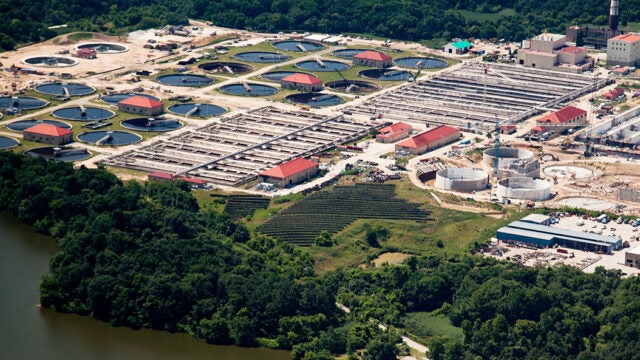
Between 1985 and 2021, nutrient loads to the Bay were reduced by approximately 118 million lb/year (nitrogen) and 14 million lb/year (phosphorous). According to the 2023 Comprehensive Evaluation of Systems Response (CESR) report from the Chesapeake Bay Program’s Scientific and Technical Advisory Committee, wastewater treatment plant upgrades provided the majority of those reductions. The Back River and Patapsco wastewater treatment plants were both upgraded to Enhanced Nutrient Removal standards in 2017 and 2020, respectively. Subsequent failures of operation and maintenance lead to unacceptable, unsafe, inadequately treated discharges from facilities that should have been contributing to nutrient load reductions thanks to those upgrades.
The Maryland Department of the Environment (MDE) detailed the maintenance and operational issues at the Back River and Patapsco plants in a series of inspection reports.
Many of the problems could be seen in photos released with the reports. Settling tanks at the plants, which are used to remove the sediments from wastewater as it arrives at the plant, were clogged with fats, oils, grease, and sediment. Phragmites, a marsh-loving plant, grew in biological reactors designed to remove Bay pollutants such as nitrogen and phosphorus from the water.
Later in the treatment process, secondary clarifiers were inundated with algae and plant growth preventing them from removing the remaining solids in the water. At the next step, filters designed to remove nitrogen from the water were clogged with solids not filtered out in the initial steps.
Taken together, the multiple problems throughout the treatment process, which the state is now working to fix, resulted in gray water and black solid particles being discharged into nearby waterways when the effluent should have been as clear and clean as drinking water. The ongoing pollution discharges exceeded permitted levels for the plants, which threatens Chesapeake Bay water quality.
Due to high bacteria levels, MDE advised on April 22, 2022 that everyone should avoid any contact with Back River water and if contact occurs to wash with soap and water as soon as possible.
How Did We Get to This Point?
Problems at the Back River and Patapsco plants were publicly revealed in August 2021, after Blue Water Baltimore alerted MDE to high bacteria levels at the Patapsco plant’s discharges in May. That alert later prompted MDE inspections at the Back River and Patapsco plants.
In subsequent inspection reports, MDE evaluated how the operational issues were harming the treatment process. The problems caused the plants to discharge excessive amounts of bacteria, nitrogen, and phosphorus into Chesapeake Bay tributaries. In the water, these pollutants threaten public health, cause fish kills, and lead to low dissolved oxygen levels.
Previous MDE inspection reports of the facilities have shown that some of the maintenance issues first began in 2017 and compounded over time. Baltimore City officials said that the COVID-19 pandemic, supply chain issues, staff retirements, and struggles to hire new staff all contributed to problems at the plants.
MDE and environmental groups, including CBF, urged Baltimore’s Department of Public works to quickly fix the issues.
What’s Happening at the Plants?
In late March 2022, MDE directed the Maryland Environmental Service (MES), which operates both state-owned and private wastewater treatment plants across the state, to oversee and operate the Back River facility once it became clear that City staff could not run the plant within the requirements of its discharge permit. MES also undertook major rehabilitation projects on facility equipment and provided extensive recommendations for future operation and management. The Patapsco plant remained under City oversight, though it too faced staff shortages and unmaintained equipment. Once the Back River plant achieved six months of compliance with its permit, MES was able to withdraw. Neither facility is yet fully staffed by City employees: both rely upon external licensed contractors to fill gaps.
Significant progress has been made at the Back River plant: repairs to treatment equipment have been completed on time, staffing gaps are being filled by qualified contractors while the City recruits and trains certified operators, and the facility has come into alignment with its permit limits for nutrients and bacteria. The facility continues to meet the requirements of the consent decree, and the final major project for the facility’s equipment, rehabilitation of the large, golden egg-shaped digestors, is underway. Even the facility’s midge problem has been addressed: a notable population of orb weaver spiders used to inhabit Back River’s sand filters, but with their food source depleted, the spider population density has greatly reduced.
The Patapsco Wastewater Treatment Plant has also seen most of its consent decree requirements completed, with rehabilitation of its grit facility and one of its secondary clarifiers still outstanding. In June 2025, however, the facility discharged over 21 million gallons of partially-treated effluent into the Patapsco River due to excessive rainfall that threatened to overwhelm the treatment plant. The effluent contained high concentrations of nutrients, but it did pass through important treatment steps to remove harmful bacteria.
Partial bypasses are often done to preserve the overall function of the wastewater treatment plant: excessive flow will wash out a facility’s biological treatment steps and remove important microbes that help break down waste. Ideally, rainwater would be kept separate from wastewater, but as sewer pipes age and crack, they become prone to inflow and infiltration (I&I) of rainwater. Regular inspection and maintenance of sewer systems plays a key role in preventing bypasses and keeping excess nutrients, bacteria, and other pollutants from reaching the Bay.
What Is CBF Advocating for on This Issue?
Now that these plants are back on track, operators, regulators, and advocates must stay vigilant to prevent backsliding. In 2025, permits for both facilities came up for renewal, providing an opportunity for public comment. Both permits shored up requirements for operator training and recordkeeping, and added testing for PFAS chemicals, but allowed each facility to engage in nutrient credit trading. CBF’s comments requested that nutrient credit trading be restricted until the facilities have made up for their history of pollution.
Even with the plants themselves operating correctly, climate change and aging pipes and pump stations cause added strain on the system. Traditional wastewater treatment plants, even those operating at Enhanced Nutrient Removal standards, cannot remove contaminants like PFAS, pharmaceuticals, and other emerging contaminants of concern. Funding enhancements to the Bay Restoration Fund, which provides funding for wastewater and septic upgrades around the state, are scheduled to sunset in the years ahead without additional legislative action. This funding will be critical for the next round of modern treatment upgrades and should be extended for repair of collections systems.
