Forests
Forests are vital to the health of the Chesapeake Bay. They filter pollution, prevent erosion, cool waterways, and provide habitat—yet they’re disappearing at an alarming rate.
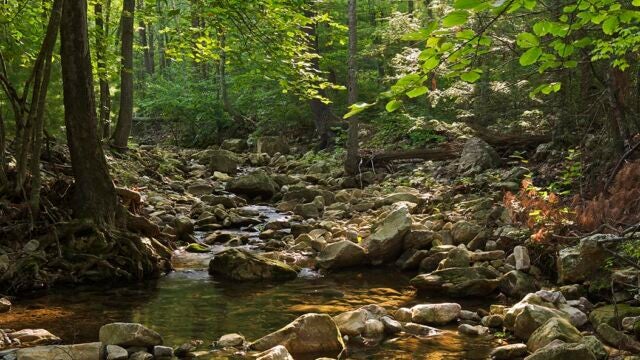
Forests are one of nature’s most powerful tools for keeping our rivers, streams, and the Chesapeake Bay clean. But every year, thousands of acres vanish due to development and weak protections. As the Bay struggles to meet water quality goals, planting and protecting trees remains one of the most successful and cost-effective solutions.
About Forests
Forests clean our water, cool our cities, and support wildlife. Their benefits span rural, suburban, and urban landscapes, making them essential to life throughout the Chesapeake Bay region.
Forests act like natural water filters. Trees near rivers and streams trap and absorb pollutants—especially nitrogen and phosphorus—that would otherwise flow into the Bay and harm aquatic ecosystems. According to the Chesapeake Bay Program’s 2025 “State of Chesapeake Forests,” only an estimated 60 percent of the watershed’s rivers and streams have these forested buffers.
The leafy tops of trees form a protective canopy that shades and cools waterways. This natural cover helps regulate stream temperatures, creating safe habitats for fish and other aquatic life.
In cities and suburbs, trees do more than beautify—they cool streets, lower energy bills, and make neighborhoods more resilient to climate change. They clean the air, increase property values, and deliver thousands of dollars in environmental benefits every year.
Forests provide critical habitat for birds, mammals, and pollinators. They connect ecosystems through wildlife corridors, stabilize soil, reduce erosion, and absorb stormwater—creating healthier, more resilient environments for both wildlife and people.
Threats to Forests
Development and lax protections are causing rapid forest loss across the watershed.
Each year, thousands of acres of land throughout the Bay region are paved over, replacing forests with rooftops, roads, and parking lots. This loss eliminates vital air and water filters, destroys wildlife habitat, and increases pollution flowing into our rivers and the Bay. “Forest fragmentation,” a patchwork of suburban and forested areas, is a common sight in communities throughout the watershed.
In many places, forest protections are either too weak or nonexistent. Without strong policies, we risk losing the very trees that safeguard our communities and clean our water.
What can we do?
Forests are disappearing—but together, we can change that. CBF is planting trees, advocating for forest protections, and partnering on local projects to safeguard clean water and support healthy communities. Read on to learn how you can be part of the solution.
CBF plants hundreds of trees in critical streamside and urban areas each year, and you can help. Visit our events calendar to find a volunteer opportunity near you. You can also plant native trees in your own yard to support clean water and wildlife.
CBF is fighting for strong and sustainable forest protections at the local, state, and federal level. Join our Action Network to speak up for trees and help shape policies that protect our forests.
CBF partners with communities to bring green space to under-resourced areas. Southside Richmond is just one region where we helped plant trees, remove heat-absorbing concrete, and create cooler, healthier neighborhoods. We also work with farmers to plant trees along streams, improving water quality and wildlife habitat.
How to Get Involved
From signing up for an event to shopping our CBF Store, there are so many ways you can get involved in the Save the Bay movement.
