Press Release
Coalition Pushes for Pausing Industrial Menhaden Extraction in the Chesapeake Bay While Scientific Study is Completed
As lawmakers prepare to vote in the coming days on breakthrough legislation to address concerns around Virginia’s menhaden extraction industry in the Chesapeake Bay, groups are calling for a pause on the fishery while research occurs.
Menhaden are small, nutrient-rich forage fish that anchor the Chesapeake Bay food web, feeding iconic species like striped bass and osprey. They are targeted by an extraction fishery that grinds up more than 100 million pounds of Chesapeake menhaden every year for industrial uses.
“It’s time to prioritize the Bay’s long-term health over the short-term profits of a single corporation,” said Chesapeake Bay Foundation Forage Campaign Manager Will Poston. “The Bay is showing signs of unprecedented strain, and we can’t afford to continue to stick our heads in the sand. We must ensure sufficient menhaden are available to sustain the Chesapeake Bay ecosystem while scientists begin to address longstanding concerns about threats from concentrated industrial extraction.”
Proposed state legislation would better protect a fish at the heart of the Chesapeake Bay and finally begin to improve Bay-specific menhaden science. This comes after years of failed attempts in the General Assembly to fund research to inform harvest levels needed to protect the Bay. This legislative session the pieces of the puzzle could finally be lining up.
Those include HB1048, patroned by Del. Betsy Carr, which would pause the industrial menhaden fishery inside the Chesapeake Bay until research shows no harm to other fisheries or species. Recent bipartisan polling shows that 79 percent of Virgina voters support that approach. This bill would not reduce how much menhaden the industry can harvest. Workers would still be able to fish in the ocean, as they already do regularly, but Bay waters would be protected.
A separate bill from Del. Carr aims to reduce potential harm from the industrial menhaden fishery by setting different harvest limits at different points in the year, as well as require fisheries observers on industrial menhaden fishing trips (HB1049).
Adding urgency, a bill that aimed to establish a menhaden science fund failed to clear the Senate Finance Committee this week (SB474, patroned by Senator David Marsden). However, hope remains on the House side as a separate budget amendment by Del. Carr still under consideration would invest in menhaden research.
Recognizing the level of concern for the menhaden population, Congress passed a funding bill last month that included $2.5 million for NOAA to support menhaden research in the Bay.
These commonsense conservation measures would provide long-overdue accountability by protecting menhaden, and the jobs, communities, and ecosystems that depend on them. Carr’s legislation is expected to be taken up Monday by the House Agriculture Chesapeake and Natural Resources – Chesapeake Subcommittee.
Warning signs point to a Chesapeake Bay under increasing stress. Osprey chicks are starving at unprecedented levels in parts of the Bay where they depend on menhaden for food. Small-scale watermen who catch menhaden for bait report catches down over 80% in recent years in Virginia, threatening livelihoods passed down through generations.
A new scientific assessment estimates far fewer menhaden up and down the Atlantic Coast than previously thought, but science specific to the Bay remains woefully inadequate.
Omega Protein and its associates have worked to delay meaningful action, blocking science and conservation efforts, violating harvest limits, and polluting the Bay.
“Virginia has an obligation to let data guide the management of Chesapeake Bay’s largest fishery. The science used to manage the Atlantic menhaden fishery is on a coastwide scale, even though nearly a quarter of total harvest occurs in Chesapeake Bay,” said Jaclyn Lunaas, forage fish program manager for the Theodore Roosevelt Conservation Partnership. “HB1048 provides a commonsense mechanism for the Commonwealth to pause reduction fishing in the Bay until science demonstrates that this industrial harvest is not harming the ecosystem, a step that complements rather than rejects coastwide management by addressing its current limitations.”
Pollution and climate change are among the stressors on the menhaden population. Factory fishing by Omega Protein and its exclusive harvester partner Ocean Harvesters intensifies concerns about a population in decline being subject to high-volume extraction from Bay waters.
“Menhaden are integral to productive and thriving recreational fishing economies, as many of the most iconic Atlantic coast sportfish rely on this nutrient-packed forage fish,” said Mike Waine, Atlantic fisheries policy director with the American Sportfishing Association. “As warning signs mount for menhaden and the ecosystem, Virginia has the opportunity to respond with conservation-minded measures. Better protecting menhaden in the Chesapeake Bay protects a thriving recreational fishing economy here in the nation’s largest estuary and throughout the coast.”
The osprey crisis is ringing alarm bells in Virginia and beyond.
“Osprey chicks are starving to death,” said Alan Wingfield, president of the Richmond Audubon Society. “Osprey can’t speak, but they are telling us that there is something seriously wrong in the Bay and the need for action is urgent.”
The American Bird Conservancy is calling for action.
“Policy change is needed in the Chesapeake Bay to conserve menhaden and birds, and the Virginia legislature has the opportunity to do that right now,” said Brian Brooks, Vice President for Advocacy & Threats Programs at American Bird Conservancy. “Osprey nests are failing in the Bay and limited food availability is one of the reasons for this decline. These legislative proposals would advance needed research, science, and harvest limits on menhaden that would aid their conservation, benefitting the wider ecosystem, including osprey, which depend on this food source.”
This week CBF launched Save Menhaden, a new campaign raising awareness and mobilizing action to protect one of Virginia’s most critical natural resources.
“Protecting menhaden is essential for a healthy Bay and all the livelihoods that depend on thriving waterways,” said Poston. “That includes the community of Reedville, which has the most to lose if the fishery collapses due to short-sighted corporate interests. Let’s act now before it’s too late.”
Virginians must speak up and ensure legislators pass legislation that pauses industrial menhaden fishing in Virginia and supports research on menhaden in the Bay. Learn how to save the bay and our fish at savemenhaden.org.
Changes Could Better Protect Rockfish When They’re Most Vulnerable
Marylanders who want to help protect the Chesapeake Bay’s iconic striped bass should make their voices heard to the Department of Natural Resources (DNR) this month. The agency is seeking public comment through Feb. 23 on proposed changes to the state’s striped bass recreational fishing seasons.
The adjustment would close all striped bass fishing in Maryland waters for the month of August, while reopening a few days of catch-and-release fishing in April. If enacted, this would simplify Maryland’s current, complex fishing calendar. It would also better reflect the latest science and trends striped bass are experiencing in Maryland.
“We’re seeing two major trends in Maryland: young striped bass are struggling to survive their early life, and mature fish are suffering high rates of summer mortality,” said Chesapeake Bay Foundation (CBF) Maryland Executive Director Allison Colden. “It’s critical we consider these realities and protect Maryland’s striped bass however we can—especially considering up to 90% of the entire Atlantic Coast stock spawn here in the Bay.”
For six consecutive years, Maryland’s juvenile striped bass numbers have been well below average. Not enough young fish are surviving the challenges of early life — such as habitat loss and invasive predators like blue catfish — to maintain a healthy population.
At the same time, mature striped bass are experiencing high rates of catch-and-release mortality in the hot summer months. Low oxygen levels and heat-induced stress make striped bass most vulnerable during this time.
DNR’s proposed August closure could help reduce that stress. The proposed change would also add a few more days for catch-and-release fishing in April when air and water temperatures are cooler and fish are much less likely to die.
Lastly, the proposed season adjustment would simplify Maryland’s fishing schedule. The current calendar is a complex patchwork of some harvest days, some catch-and-release, and some closed entirely for a few weeks at a time. Simplifying to a single month-long closure would leave less margin for error and help improve angler compliance with fishing regulations.
“Our understanding about the health of the striped bass population is based on the assumption that anglers are fishing according to regulations,” added Colden. “Ensuring the rules are clear and easy to follow is key to conservation efforts.”
DNR is currently accepting public comments through Feb. 23 to formalize the proposed regulatory changes. Those who want to help preserve the striped bass’s future in Maryland can learn more and make their voices heard here.
In addition to Maryland’s efforts, the Atlantic States Marine Fisheries Commission (ASMFC) Striped Bass Board, which manages the striped bass fishery along the entire Atlantic Coast, will meet at its annual winter meeting on Feb. 5. CBF will remain engaged at every step and level, urging ASMFC to protect striped bass across the coast while Maryland takes local action.
Court agrees Queen Anne’s County Commissioners’ approval of Chesterhaven Beach development plan is against state law
In a win for clean water and habitat, on Friday, Dec. 5 the Queen Anne’s County Circuit Court decisively ruled in favor of environmental organizations over a long-standing dispute involving the Chesterhaven Beach development proposal on Kent Island. The property, which had been proposed for the development of dozens of new houses, includes an ecologically significant mix of forests, wetlands, and fields overlooking the Chester River that feeds into the Chesapeake Bay.
The development proposal, which has been a source of litigation for over 30 years, would have circumvented environmental laws and allowed dwellings to be built on a vulnerable 101-acre waterfront ecosystem. The property owner claimed that he had “grandfathered” rights to build 186 residential units, despite laws that limit residential density in this sensitive area to just one unit per 20 acres. The developer’s argument was rejected by the courts in 1992, but it became just the start of numerous unsuccessful legal challenges.
Last week, the Queen Anne’s County Circuit Court once again ruled in favor of environmental protection and clean water after a group of environmental partners challenged the latest Chesterhaven Beach development attempt in July 2024.
“Time and again, this developer has wasted everyone’s time trying to convince someone – anyone – that he somehow has grandfathered lots that do not exist,” said Queen Anne’s Conservation Association Executive Director Jay Falstad. “And time and again, the Courts have ruled against him. With this latest decision, hopefully the matter is now settled.”
The developer wanted to build 90 homes on the 101-acre waterfront property, which is almost entirely within Maryland’s Critical Area where state law limits development near tidal water. Perhaps most concerning, the proposal was approved by the Queen Anne’s County Commissioners, who claimed the property qualified as a “growth area” despite the state’s Critical Area laws.
The decision drew an immediate challenge from the Queen Anne’s Conservation Association, Chesapeake Bay Foundation, Chesapeake Wildlife Heritage, and several adjacent neighbors, who raised six individual claims for summary judgment against the proposal. Maryland’s Critical Area Commission (CAC) also raised red flags with the proposal, including the development’s size, and that no application or notice had been provided to the CAC, in accordance with state law. CAC intervened in the case on Jan. 29, 2025.
After hearing the case, the Court found all six of the plaintiff’s arguments persuasive, including the failure of Commissioners and Chesterhaven Beach to give the CAC the required notice of the comprehensive rezoning that the project needed to move forward. The Court also agreed that Commissioners illegally adopted the rezoning request two years after the adoption of the County’s Comprehensive Plan, where such designations are required to be identified. The summary judgment in favor of the plaintiffs underscores the legal finding that intense development is not permitted on this property.
“This proposal completely disregarded the health of the Chesapeake Bay and was simply against the law,” said Chesapeake Bay Foundation Advocacy Director Alan Girard. “We are pleased and encouraged that the Queen Anne’s County Circuit Court ruled against this dangerous, illegal development plan and upheld Maryland’s commitment to protect our land and water.”
Maryland’s Critical Area law protects land within 1,000 feet of high tide or tidal wetlands to minimize the harm of new development on Bay water quality, habitat, and wildlife.
The Chesterhaven Beach property includes 1.6 miles of vulnerable and ecologically important shoreline on the Chester River and Piney Creek. The property’s mix of forests, marshes, and wetlands supports wildlife, naturally filters polluted stormwater runoff, and is vital to Maryland’s resilience against flooding and climate change.
“In the end, this landowner should do what every other landowner is required to do in Queen Anne’s County: follow the Comprehensive Plan, follow the law, and follow the process of the Critical Area Commission,” Falstad said.
QACA was represented by its longtime attorney Jesse Hammock and Parker|Counts of Easton, Maryland.
For Information Contact
Jay Falstad, Queen Anne’s Conservation Association, jay.falstad@qaca.org, 410-739-6570
Valerie DiMarzio, Chesapeake Bay Foundation, vdimarzio@cbf.org, 215-900-5719
Jesse Hammock, jhammock@parkercountslaw.com, 410-822-1122
PA Governor Shapiro Named Chair of Chesapeake Executive Council
In an important show of unity, the region’s governors and federal partners today agreed to a Chesapeake Bay restoration plan for the next 15 years.
At a Chesapeake Executive Council meeting in Baltimore, a host of state and federal leaders committed to the latest version of the Chesapeake Bay Watershed Agreement—including Maryland Governor Wes Moore, Virginia Governor Glenn Youngkin, Pennsylvania Governor Josh Shapiro, Delaware Governor Matt Meyer, Washington, D.C. Mayor Muriel Bowser, EPA Deputy Administrator David Fotouhi, Chair of the Chesapeake Bay Commission Maryland State Senator Sara Love, and others.
The Council also elected Shapiro as its next chair, marking the first time in more than two decades a Pennsylvania governor has led the group.
Since 1983, versions of this agreement have held together the Bay restoration partnership, a decades-long effort that has become a national model for different levels of government cooperating to meet common environmental goals.
Separately from the Bay Agreement, in 2010 states committed to meeting legally-binding commitments to reduce nitrogen, phosphorus, and sediment pollution. This requirement was enshrined alongside other goals in the 2014 Bay Agreement.
While states have made notable progress, from oyster restoration to upgrading sewage treatment plants, they did not meet the pollution-reduction targets by the 2025 deadline.
In late 2024, the federal and state restoration partners committed to revising the Bay Agreement by the end of this year to update goals and incorporate new science that promises to more efficiently restore the Bay.
Throughout the process, the Chesapeake Bay Foundation (CBF) advocated for a strong agreement that:
- Affirms state commitments to meet legally-required pollution reductions;
- Provides accountability with a uniform deadline across goals and a midpoint assessment; and,
- Factors in growing challenges from climate change.
After input from CBF and other advocates, the final Bay Agreement revision includes improvements over the July draft. It now has a uniform deadline of 2040, as well as a 2033 midpoint check in that offers a chance to adapt to the latest science. It also reaffirms the legally-binding pollution reductions states must meet. The council today also approved a charge to develop by July 1 recommendations on including the region’s seven federally recognized Indigenous tribes in the restoration partnership.
While the agreement approved today is not as ambitious as what CBF called for, it remains critical. The agreement sustains a historic partnership working to restore the Bay—including governors of Maryland, Virginia, Pennsylvania, West Virginia, Delaware, and New York, the mayor of the District of Columbia, state legislators with the Chesapeake Bay Commission, and leaders at the EPA and six other federal agencies.
CBF President Hilary Harp Falk issued the following statement:
“The revised Bay Agreement is what we need to keep progress alive. Even in a time of deep division and uncertainty, leaders from across the political spectrum still find common ground in restoring the Bay. But words alone won’t save the Bay. Now is the time for bold action and thinking big.
“We must use what we’ve learned over the last 40 years to deliver lasting solutions for polluted runoff from farms, cities, and new development. We should build on past successes like oyster restoration to exceed these goals. We’ll keep pushing for the policies and investments needed to make that happen. Because when the Bay thrives, so do we.
“We’re thankful for the leadership of Maryland Governor Wes Moore as chair of the Chesapeake Executive Council and congratulate Pennsylvania Governor Josh Shapiro as he steps into the role. Together, we can leave a healthy Chesapeake Bay for future generations.”
CBF Pennsylvania Executive Director Julia Krall issued the following statement:
“As chair of the Chesapeake Executive Council, Governor Josh Shapiro’s mantra to ‘get stuff done’ represents an important call to action for continued momentum on clean water efforts throughout the Bay region. We look forward to his vision and leadership at this key time for the partnership.
“Governor Shapiro pledged that Pennsylvania is ‘all in’ for doing its fair share to ensure cleaner local rivers and streams, which means a healthier Chesapeake Bay.
“Now is the time to turn vision into action and for the Bay community to live up to our commitments. Governor Shapiro’s leadership will help do just that.”
A new short film by 27-year-old Baltimore local Jacob Jackson highlights the healing power of oysters in the Baltimore Harbor. In his video, Saving the Bay: The Untold Story of Oyster Gardening, Jackson shows how oysters can both clean the water and inspire a community to connect to local waterways and the Chesapeake Bay.
“For me, this project came from a lifelong sense of wonder about the natural world — the same curiosity that made me chase frogs and turtles as a kid,” said Jackson. “The more I’ve learned about the Bay and its wildlife, the more I’ve realized that some of the most impactful restoration work is also the most approachable. I wanted this piece to show that anyone, no matter their background, can take part in rebuilding something as vital as our oyster reefs.”
Jackson’s film showcases the Chesapeake Bay Foundation (CBF)’s oyster restoration efforts in Baltimore. The program includes hundreds of volunteer oyster gardeners, like Jackson, who help CBF grow young oysters and tend to their cages, which hang off marina docks around the city.
Last year, the Baltimore Oyster Partnership, a collaborative effort between CBF and Waterfront Partnership of Baltimore, added roughly 500,000 oysters to the Harbor. The partnership plans to expand that number, with a goal to grow 5 million oysters by 2030.
Once grown, the oysters are planted at the Fort Carroll oyster sanctuary reef in the Patapsco River where they’ll forever filter the water and provide habitat for other iconic Bay species like rockfish and blue crabs. An adult oyster can filter up to 50 gallons of water a day.
“Oyster restoration simply could not happen without dedicated volunteers like Jacob,” said Morgan Shapiro, CBF’s Baltimore Oyster Restoration Coordinator. “This program fills a real need in the Baltimore community for hands-on environmental stewardship. To see how it’s made a difference in someone’s life through the lens of this film is truly inspiring.”
Watch Jacob Jackon’s oyster video here to get inspired. And those interested in oyster gardening can learn more here.
Chesapeake Bay Foundation Event Expands Tree Cover at Chimborazo Park
Richmond Mayor Dr. Danny Avula and 63 Chesapeake Bay Foundation (CBF) volunteers helped bring Richmond Tree Week to a close Saturday by planting 46 native trees at Chimborazo Park.
The planting adds to the greening efforts across the city, helping reduce polluted runoff entering the James River, improving local air quality, and combating the urban heat island effect. Saturday’s planting served as the final phase of a two-day planting at Chimborazo Park that in total planted 92 trees at the East End park.
“Seeing so many Richmond residents come out to dedicate their Saturday to planting trees is incredibly inspiring,” said Ann Jurczyk, CBF’s Virginia Manager of Urban Restoration. “These trees are some of the most cost-effective tools we have for cleaning our water and creating a city stronger in the face of flooding and extreme weather. Every native tree planted today in Chimborazo Park will filter runoff, absorb carbon for decades to come, and cool our city neighborhood.”
Mayor Avula joined volunteers, emphasizing the administration’s commitment to creating a sustainable built environment for future generations. He recalled that, like many homebuyers, he once bought a house because of a nearby willow oak.
“Planting trees is a practical, immediate way we can invest in the health and vitality of our city and our residents,” said Mayor Avula. “The trees planted here today are future air filters, shade providers, and soil stabilizers. This work is crucial for giving us another line of defense against flooding and extreme weather.”
The impact of urban trees extends directly to residents’ well-being and their pocketbooks. More urban trees significantly combat the ‘urban heat island’ effect, cooling neighborhoods and filtering airborne pollutants known to exacerbate asthma.
They also lower energy bills. Properly placing trees around buildings can reduce air conditioning needs by 30 percent and can save 20 to 50 percent in energy used for heating.
Volunteers of all ages came from Richmond and the surrounding counties.
“At a time when it feels like things are getting lonelier and lonelier, we are meeting new people and contributing to the community. Now every time when I come with my classmates or my dog, I will be able to see this tree and say, ‘I did that with my fellow neighbors,’” said Hannah Jones, a volunteer.
The event was held in partnership with Richmond Tree Week and was made possible through funding provided by the U.S. Environmental Protection Agency through the National Fish and Wildlife Foundation’s Chesapeake Bay Stewardship Fund.
Frederick County Event Featured Three Farms Improving Biodiversity and Climate Resilience
Maryland policymakers, conservation partners, public land decision makers, and farm leaders explored three Frederick County farms yesterday that are improving soil health, water quality, climate resilience, and biodiversity through regenerative agriculture.
Agriculture is the second largest land use in Maryland—covering roughly one-third of the state—and the largest source of pollution entering the Chesapeake Bay. Frederick County has the most farmland out of all Maryland counties with over 188,000 acres. Fortunately, there have been immense improvements that both reduce pollution and help address climate change. Maryland farmers are at the forefront of this effort, implementing regenerative agriculture practices such as crop diversification and rotational livestock grazing, which can improve soil health and reduce a farm’s carbon footprint.
“Agriculture can be part of the solution or continue to be a problem for the Chesapeake Bay,” said Rob Schnabel, Chesapeake Bay Foundation (CBF) Restoration Scientist. “Innovative local farmers are proving that regenerative agriculture can restore a farm’s soil health, making their land more resilient and productive, while at the same time reducing costly chemical fertilizer. Over 50% of farms are not profitable, making them vulnerable to development. Regenerative agriculture can be part of the solution to work with diverse natural systems for economic viability and for cleaner rivers and streams.”
The October 23 event, coordinated by CBF and Mobilize Frederick, toured three unique farm businesses implementing regenerative practices, including:
- Stone Pillar Farm in Frederick, a livestock and vegetable operation specializing in pasture-raised meat and eggs and marketing directly to consumers;
- Hedgeapple Farm in Frederick specializing in grass-fed beef and pork, with over a mile of Monocacy River frontage; and,
- Jehovah Jireh Farm in Dickerson, which specializes in organic pasture-raised eggs and sells to MOM’s Organic Market and other local grocers.
“We started implementing regenerative practices like cover crops for the environmental benefits, but saw the operational benefits right away,” said Abby Fahrner at Stone Pillar Farm.
During the event, presenters demonstrated the immediate water quality benefits of regenerative agriculture through rain simulators, slake soil tests, and greenhouse gas emissions and carbon sequestration calculators. Presenters included representatives from CBF, Mobilize Frederick, University of Maryland Extension, American Farmland Trust, Future Harvest, U.S. Department of Agriculture’s Natural Resources Conservation Services, Frederick County Office of Agriculture, Maryland Forest Service, American Chestnut Foundation, Maryland Bird Conservation Partnership, local beekeepers, and more.
“Mobilize Frederick is dedicated to implementing sustainable, equitable local solutions to climate change. We see regenerative farming as a key part of Frederick’s climate resilience and mitigation,” said Karen Cannon, Mobilize Frederick Executive Director. “We import the vast majority of our food from other parts of the country and around the world. To improve local food production and security and to maintain our agricultural heritage we need to ensure farms and farmers have all the tools they need to protect farmland and be profitable in the long run. Regenerative agriculture helps us meet these goals while mitigating climate change.”
Healthy soil and biodiversity are critical for a prosperous farm. They are also a natural shield against flooding, absorbing rainfall and reducing polluted runoff, rather than letting it run off into our waterways.
“We can really see the difference,” said Myron Horst at Jehovah Jireh Farms. “Now when we get a heavy rain, it has to rain at least two inches before we start seeing polluted runoff. Usually when it rains, the Monocacy River turns to mud from topsoil.”
The top principles of regenerative agriculture include:
- Minimizing negative disturbances like tillage and pesticides that can harm soil biology;
- Always keeping soil covered with crops to prevent erosion;
- Diversifying plant cover;
- Prolonging root life to maintain photosynthesis, sequester carbon, and feed soil microbes, and;
- Rotational grazing of livestock, which spurs diverse manure probiotics for better plant growth and deeper roots.
Implementing these principles through a system of conservation practices across the Chesapeake Bay watershed is an efficient and cost-effective way to stop pollution at the source, meet the Chesapeake Clean Water Blueprint’s clean water goals, and provide economic resilience to farmers. Maryland must invest in the financial and technical assistance that farmers need to implement regenerative agriculture to meet these pollution reduction goals while illustrating the economic benefits for farmer profitability.
Learn more about regenerative agriculture and how it benefits the health of the Chesapeake Bay.
This project is made possible through a grant from the National Fish and Wildlife Foundation.
Fisheries Regulators to Consider New Coastwide Harvest Limits, Chesapeake Bay Management
There are fewer menhaden along the Atlantic Coast than previously thought, leading to potential major catch reductions, according to scientific assessments released this week ahead of a fisheries regulators meeting.
Forecasts show that the menhaden catch must be cut in half to provide a better than 50 percent chance of a sustainable menhaden harvest in the future. This comes amidst mounting warning signs linked to menhaden in the Chesapeake Bay.
Menhaden are a small fish that are an important food for many species, including osprey, whales, and striped bass. The Atlantic States Marine Fisheries Commission (ASMFC) menhaden board meets on October 28 to consider the results of this assessment. It will also continue deliberations on how to better manage the menhaden harvest in the Chesapeake Bay.
The new menhaden coastwide stock assessments by the ASMFC take into account the latest science available to estimate the menhaden population from Maine to Florida. These new assessments factor in several updates, including a lower number of menhaden that die naturally, to more accurately estimate numbers of the fish and fishery impacts.
For example, the 2025 assessments find that the biomass of menhaden was 37 percent lower than the previous assessment. As a result, the current catch limits were likely set far too high. New catch limits are needed to correct course.
Menhaden industry giant Omega Protein has previously championed this assessment process when it showed higher numbers of menhaden, leading to higher catch limits. The industry has not yet publicly commented on the latest assessment.
That industry harvests more than 100 million pounds of menhaden annually in Virginia’s portion of the Chesapeake Bay. The new coastwide assessments released this week do not consider the impacts of concentrating this fishery in the Bay. A separate study to specifically address menhaden in the Chesapeake Bay has been delayed due to Omega Protein’s lobbying efforts in Virginia.
There are mounting warning signs linked to menhaden in the Chesapeake Bay. Osprey chicks are dying in parts of the Bay where menhaden are traditionally a staple of the bird’s diet, according to research by the Center for Conservation Biology at William & Mary
The U.S. Geological Survey attributes the osprey decline to a scarcity of food, stating “limited prey availability, their capture or their delivery to nests is seemingly the principal driver of poor reproductive success,” in a recent letter to Congress.
There are also plummeting menhaden catches by local watermen who harvest the fish for bait—a separate, much smaller, fishery than the massive industrial effort driven by Omega Protein. The menhaden bait harvest dropped from 5.4 million pounds in 2019 to less than 1 million pounds in 2024, according to data from the Virginia Marine Resources Commission.
Recent bipartisan polling shows that 92 percent of Virginians want action to leave more menhaden in the Chesapeake Bay.
Chesapeake Bay Foundation Forage Campaign Manager Will Poston released the following statement:
“The new menhaden assessment confirms the alarm bells we’ve been hearing for years. With the latest science showing populations down coastwide and signs of mounting trouble in the Chesapeake Bay, it’s time to act.
“To protect menhaden’s role in the food web, and meet science-based Ecological Reference Points, fisheries regulators must follow the science and immediately cut the coastwide harvest by at least 50 percent while also beginning the process to give menhaden additional protections urgently needed in the Chesapeake Bay.
Former Seafood Market and Ice House in Galesville, Maryland, Will Be Transformed into the Truman T. Semans Center for Oyster Restoration and Innovation
Representatives from the Chesapeake Bay Foundation (CBF) were joined this week by partners and supporters to celebrate a ceremonial groundbreaking at what will henceforth be the Truman T. Semans Center for Oyster Restoration and Innovation in Galesville, Maryland.
The 2.09-acre waterfront site, known locally as the former Woodfield Ice House, Fish & Oyster Co., has a long history of maritime use deeply rooted in the seafood industry and the Chesapeake Bay’s natural bounty. CBF plans to transform the historic site into a new oyster restoration center where science, innovation, and community engagement will thrive. Here up to 50 million oysters per year will be grown for planting on Chesapeake Bay oyster sanctuary reefs.
‘A hub for oyster education, restoration, and innovation’
The new Truman T. Semans Center for Oyster Restoration and Innovation will not only allow CBF to expand and advance its oyster restoration work, but will foster greater scientific collaboration and help people feel more connected to the Chesapeake Bay.
“Our purchase of this site represents a full circle moment for oysters,” said CBF Senior Vice President of Programs Alison Prost. “This historic property where oysters were shucked and processed will soon become a hub for oyster education, restoration, and innovation, where oysters will return to the water and help support a healthier Bay.”
The Truman Oyster Center will act as a Bay-wide gathering place for oyster restoration and provide an open, interactive space for volunteers, partners, and the local community to plan and coordinate Chesapeake Bay cleanup efforts. Here CBF will conduct operations including oyster shell recycling, growing juvenile oysters called spat, reef ball building, and oyster gardening programs. The center will provide space to grow spat-on-shell in up to eight large tanks, and house CBF’s 60-foot oyster restoration vessel, the R/V Patricia Campbell.
The Truman Oyster Center will sustainably minimize its environmental footprint and maximize environmental benefits, following in the footsteps of other CBF-owned green buildings, including the world’s first ever LEED platinum building, the Philip Merrill Environmental Center in Annapolis, and the Brock Environmental Center in Virginia Beach. These facilities include environmentally-friendly features like onsite solar, electric vehicle chargers, living shorelines, and stormwater management features that minimize pollution entering the Bay.
The center will feature exhibits and educational signage that tell the story of the Bay’s oyster fishery, its watermen, and joint efforts to bring oysters back from the brink after centuries of decline.
Truman T. Semans: A Bay Visionary
The Truman Oyster Center’s namesake, Truman T. Semans, is one of CBF’s earliest supporters and helped establish the organization nearly 60 years ago. He continues to be a champion for the Chesapeake Bay. At the ceremonial event, Semans joined CBF President & CEO Hilary Harp Falk and other Bay leaders to celebrate what’s to come for the oyster center.
“I’ve had a connection with oysters since I was six years old. Oysters have been central to my living and I still adore them—they’re my favorite food,” said Truman T. Semans. “I believe the Chesapeake Bay is the single most important natural resource for people in the United States. It’s worth spending all kinds of time, effort, and fortune to keep going in the right direction. And it is going in the right direction.”
Galesville: Rich in Seafood History
As demand for tasty oysters and other Bay seafood rose in the 1900s, small coastal towns like Galesville became popular spots for the canning and packing industry. In its heyday, from 1935 to 1945, Woodfield’s Fish & Oyster Co. was considered one of the largest on the East Coast, selling about 150,000 gallons of shucked oysters per year. During the season, Woodfield’s employed up to 125 shuckers that could tackle 800 bushels a day.
In addition to oysters, Woodfield’s also sold bagged ice and a wide variety of other seafood, including white perch, shrimp, scallops, and herring roe to local grocery chains and distributed product all over the U.S. Oyster canning at Woodfield’s ended in the mid-1990s, due to a steep decline in both oysters and shuckers. Annapolis Produce and Seafood purchased the plant in 2002 and operated it through 2022.
Once a place where oysters were removed in bulk from the Bay when overharvesting was at its peak, the property will become a place where oysters are returned to it—a full circle of healing for the land and water.
Importance of oysters in the Bay
Oysters are a keystone species in Chesapeake Bay. An adult oyster can naturally filter up to 50 gallons of water a day. Their uniquely structured oyster reefs also provide critical habitat for almost every other aquatic critter in the Bay.
The Chesapeake Bay’s oyster restoration effort is the largest in the world. Getting oysters back in the Bay has been one of the ‘Save the Bay’ movement’s most critical pillars, and its greatest success story to date. In Maryland alone, oyster populations have tripled since 2005.
“Oyster restoration is working, and we want to build off that momentum and proven success,” said CBF Maryland Executive Director Allison Colden. “The new Truman Oyster Center will help us do just that—offering new opportunities for innovation, scientific collaboration, hands-on community experiences, and supporting our efforts to grow oysters and get them back into the Bay and its tributaries.”
Oyster restoration requires ample space and waterfront access. It starts by setting oyster larvae onto recycled oyster shells in large tanks. Once attached, the juvenile oysters, known as spat, are planted onto sanctuary reefs throughout the Bay by CBF’s purpose-built restoration vessel, the R/V Patricia Campbell.
Other spat are distributed to oyster gardeners across the watershed. Volunteer oyster gardeners hang the baby oysters off docks in cages, at their homes or at one of CBF’s public locations. This process helps keep the young oysters elevated from the Bay’s muddy bottom and aids their survival in early life when they’re most vulnerable. Once the oysters are about a year old, they are then planted out onto a protected sanctuary reef.
This work heavily relies on the dedication of private funders and volunteers. The new Truman Oyster Center will allow CBF to host and engage more volunteers, students, community groups, and partners in hands-on oyster restoration. Visitors will build reef balls, collect and prepare recycled shells, participate in oyster gardening, and more.
CBF’s oyster restoration program has operated for more than 20 years and produced nearly half a billion oysters since its inception.
The road ahead
CBF is currently finalizing architectural plans for the new Truman T. Semans Center for Oyster Restoration and Innovation. The center is expected to open in 2027.
During construction, CBF will engage with the local community in Galesville and prospective partners across the watershed. The property, including an existing boat ramp, will be closed to the public during parts of construction when visitation is unsafe. The new and improved space will welcome community guests upon completion.
In the meantime, CBF will continue its Maryland oyster restoration operations out of its current location in Shady Side.
92 percent of Virginia Voters Want to Leave More Menhaden in the Chesapeake Bay
As warning signs escalate in the Chesapeake Bay, a recent poll shows the vast majority of Virginians support increased protection of menhaden—a small fish that is an important food for larger fish, osprey, and whales.
An overwhelming 92 percent of Virginia voters believe the state should leave more menhaden in the Bay, according to a poll of 600 registered Virginia voters conducted by a pair of research firms—one Republican and one Democrat—between July 30 and Aug. 5.
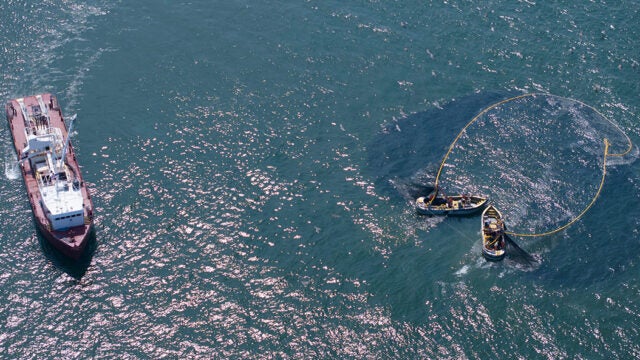
Menhaden in Virginia’s portion of the Chesapeake Bay are the target of Omega Protein, a subsidiary of Canadian corporation Cooke, Inc., and its partner Ocean Harvesters. In what is called a reduction fishery, this industry uses spotter planes, enormous purse seine nets, and vacuum hoses to harvest more than 100 million pounds of menhaden annually from Virginia’s Bay waters.
Longstanding concerns about the appropriate size of a menhaden fishery in Chesapeake Bay are gaining attention amid reports of plummeting menhaden catches by Maryland watermen and small-scale Virginia fishermen, as well as unprecedented levels of starving osprey chicks. Industry efforts to block science and data on Chesapeake Bay menhaden has left Virginia without enough information to effectively manage the fishery.
“Virginians resoundingly want more menhaden in the Chesapeake Bay, and overwhelmingly back every single policy we tested for stricter management of the Bay’s menhaden fishery,” said Lori Weigel, a pollster with the Republican research firm New Bridge Strategy.
“We almost never see this kind of consensus across party, age, and geography,” said Miranda Everitt, a pollster with the Democratic research firm FM3.
The Chesapeake Bay Foundation (CBF), which commissioned the poll with New Bridge Strategy and FM3 Research, has for decades advocated for better management of the Bay’s menhaden resource.
Further delay of menhaden management reform and science only worsens the threats to the Bay and all the dependent communities. Therefore, CBF believes the best approach is to pause industrial menhaden fishing in the Chesapeake Bay until science can show whether concentrating the fishery here is sustainable.
“We can’t continue to stick our heads in the sand and ignore the storm brewing. The Bay’s lack of menhaden is already hurting small businesses, commercial and recreational fisheries, and the predators that depend on menhaden for food,” said CBF Virginia Executive Director Chris Moore. “It is clear Virginians want definitive action to leave more menhaden in the Bay. The safest approach is to pause menhaden reduction fishing inside Chesapeake Bay until science can show whether this industrial fishery is sustainable.”
Poll results show that Virginians strongly back reform of the industrial menhaden fishery:
- 79 percent support ending large-scale commercial menhaden fishing in the Bay until science can show what fishing level is compatible with a healthy ecosystem;
- 85 percent support allowing commercial fishing of menhaden in ocean waters, but not in the Chesapeake Bay where younger fish feed and grow;
- 92 percent would prefer to see Virginia leave more menhaden in the Chesapeake Bay to support the ecosystem;
- 80 percent support allocating $5 million in state funding to a study to improve management of the menhaden fishery and answer longstanding concerns; and,
- 92 percent support requiring commercial menhaden fishing companies to publicly release data about where they fish and how much they catch.
‘Houston, We Have a Problem’
Ospreys exclusively eat fish, and the Chesapeake Bay is home to the largest breeding population of ospreys on the planet. Research shows that in recent years osprey chicks are starving at unprecedented levels around tidal waters of the Chesapeake Bay, where they typically depend on menhaden for food.
In contrast to the reduction industry, Maryland and Virginia watermen that catch menhaden on a much smaller scale for bait are reporting catches declining by more than 70 percent in recent years.
In Maryland the bait harvest dropped from 3.5 million pounds in 2022 to just 1 million pounds in 2024, according to the Maryland Department of Natural Resources. The Virginia reported menhaden bait harvest dropped from 5.4 million pounds in 2019 to less than 1 million pounds in 2024, according to data from the Virginia Marine Resources Commission. In contrast, Omega Protein’s harvest quota for Chesapeake Bay menhaden stands at 112 million pounds.
“Houston, we have a problem,” said Russel Dize at an Aug. 7 meeting of the Atlantic States Marine Fisheries Commission Menhaden Management Board. Dize is a waterman who represents Maryland’s governor as an ASMFC board member. “We’re hurting. And our menhaden business has completely dried up, so our crabbers can’t get bait,” he later added.
Beyond intense fishing pressure, several factors could be affecting menhaden and osprey, including pollution, climate change, and development. “Given these mounting challenges, the Chesapeake Bay may no longer be able to support a massive industrial fishery,” Moore said.
Virginia Institute of Marine Science: Data Inadequate, Time to Consider Restricting Fishing
Virginia is the only East Coast state to allow menhaden reduction fishing in its waters. Currently, management of the Atlantic menhaden fishery is based on science for the coastwide population from Maine to Florida. While an important driver of coastwide fishery management, this leaves open questions about the impacts of highly concentrated menhaden fishing in Virginia waters.
There is no existing data to determine whether this level of harvest is sustainable in the Chesapeake Bay, a critical nursery habitat. Scientists do not fully understand the industrial fishery’s impacts on Bay fisheries and habitat, and the threats to Virginia businesses and livelihoods.
The menhaden reduction industry has consistently worked to delay critical science proposals and common-sense conservation measures, including a menhaden study in Virginia’s General Assembly earlier this year.
For example, the industry opposed implementation of the revised Chesapeake Bay harvest cap for menhaden in 2017. In 2019, Omega Protein intentionally caught approximately 33-percent more fish in the Bay than allowed under the cap, leading to Virginia being found out of compliance. Then in 2021, the industry refused to participate in cooperative research with federal and academic partners to improve menhaden management in the Chesapeake Bay.
Once again, legitimate concerns about the sustainability of industrial menhaden fishing in the Bay and ecological warning signs are mounting. Yet the industry ignores these concerns and has effectively worked to delay science. These consistent delays are not only bad for the ecology of the Chesapeake Bay, but also those who depend on the Bay’s menhaden resource for their livelihood.
For several years, Virginia has worked toward a comprehensive study to better inform management of the Bay’s menhaden fishery. But industry opposition has resulted in delaying necessary research funding the last two years in Virginia’s General Assembly.
Earlier this year, Omega Protein’s team of lobbyists instead requested a study of study methods. They did so despite having participated in consensus discussions that developed the study plan.
In addition to opposing research on Chesapeake Bay menhaden, Omega Protein continues to hide behind rules that allow them to keep their fishing data from the public.
The Virginia Institute of Marine Science (VIMS), the Commonwealth’s primary scientific advisory body, is expressing concern.
“It is perhaps the wisest course of action to take a precautionary approach and give serious consideration to reducing purse seine fishing in Chesapeake Bay,” states an April 7 VIMS letter.
“The reality is that data on menhaden abundances in Chesapeake Bay, their movements between the Bay and the inner continental shelf, localized depletion resulting from fishing, and the ecological impacts of the purse seine fishery all remain woefully inadequate and difficult management decisions must be made in this context,” the letter states
For too long, one company has wielded outsize influence to block science in order to exploit the Bay’s menhaden resource.
“With so many unanswered questions, we are risking the health of our cherished wildlife, the Chesapeake Bay, and the menhaden fishery itself,” Moore said. “The best option is to pause industrial menhaden fishing in the Bay until Virginia completes sorely-needed research. In the long term, this is the safest move for Omega Protein’s workers, the community of Reedville, and the future health of the Chesapeake Bay.”
Photo above credit Theodore Roosevelt Conservation Partnership and CosmoVision Media.
