For the Love of Oysters 2.0
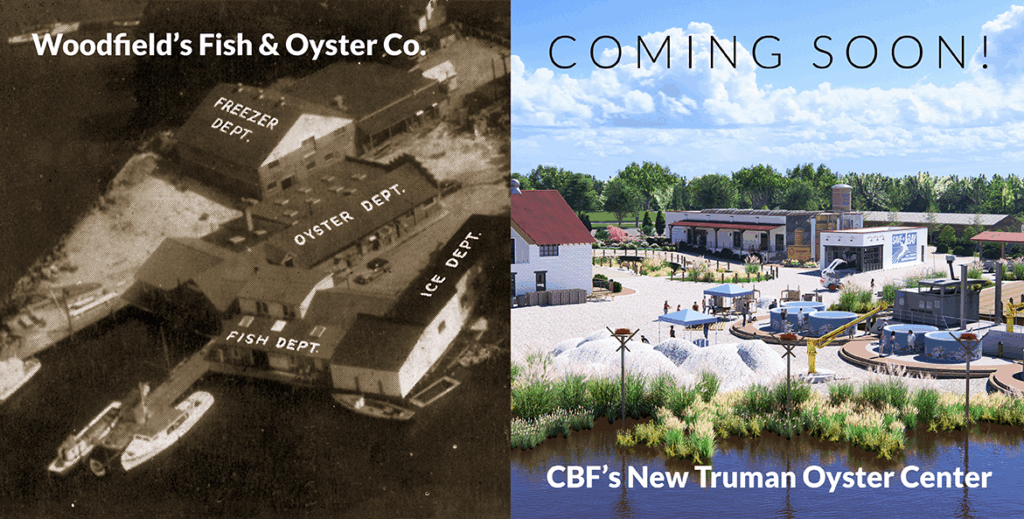
This fall, CBF will start a journey to revamp oyster restoration and innovation at our new Truman Oyster Center on the site of the former Woodfield’s Fish & Oyster Company in Galesville, Maryland.
Galesville: A Family Affair
Americans have had a long love affair with oysters. In the 1800s, demand for the tasty bivalves spawned a boom in oyster canning plants in coastal cities like Boston, New York, and Baltimore. In the 1900s, Galesville, a small village on Maryland’s West River became home to seven such packing houses.
In 1917, Herman A. and William F. Woodfield, sons of a waterman, bought a Galesville oyster canning plant that became one of the largest on the East Coast. In its heyday, from 1935 to 1945, Woodfield’s Fish & Oyster Co. was selling about 150,000 gallons of shucked oysters per year. From September to March, oysters were dredged off leased land using company-owned boats and purchased from local watermen. In season, Woodfield’s employed up to 125 shuckers—some local, some from Baltimore—that could tackle 800 bushels a day.
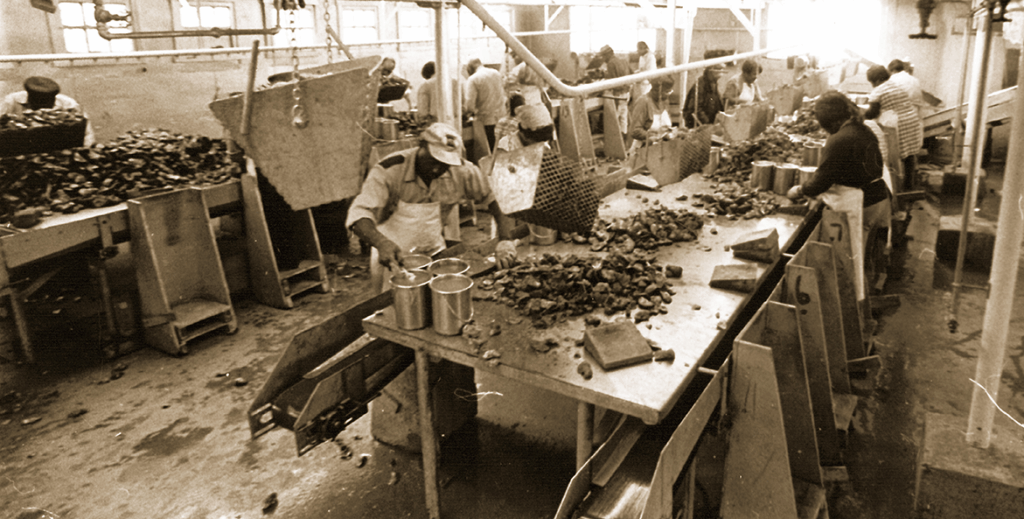 courtesy of the Woodfield Family
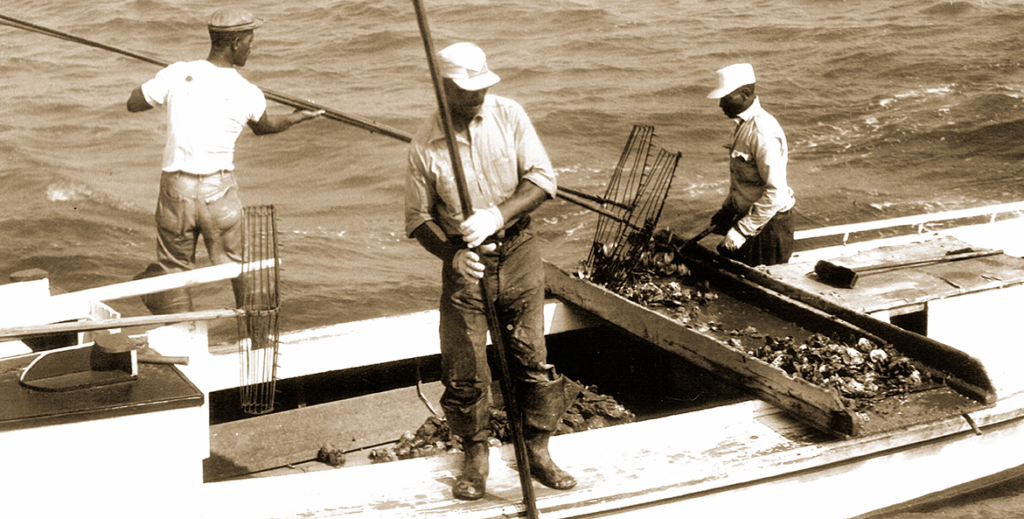 Courtesy of the Woodfield Family
In addition to oysters, Woodfield’s also sold bagged ice and a wide variety of other seafood, including white perch, shrimp, scallops, and herring roe to local grocery chains and distributed product to Chicago, Detroit, Cleveland, and other large cities.
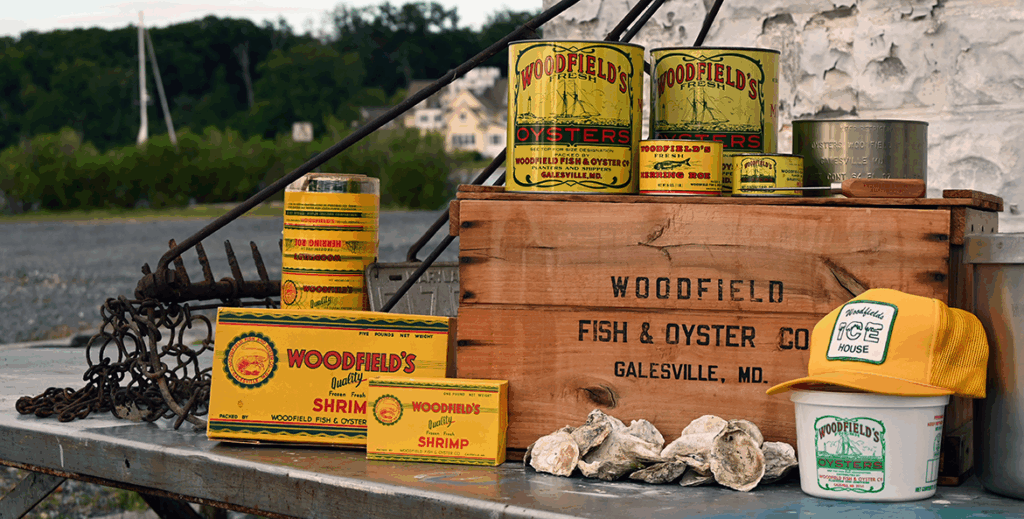 Loren Anne Barnett/CBF Staff
As a child, Herman’s grandson William R. Jr. (Bill) would pull a red wagon full of canned herring roe around Galesville, selling it for 40¢ a pound. His first memory of the plant? “Cold.” The suite of buildings included lots of freezer space for storage of fish, oysters, and ice.
About his career at Woodfield’s, Bill says, “I knew in the early days that I was going to be there.” As a teen he helped at the plant by weighing fish and pushing herring to the cutter to harvest roe and came on the scene in a more meaningful way after high school and a term in the Navy. “Besides time in the Navy, this was my only job,” he says. “And I never asked anyone to do anything I wouldn’t do.”
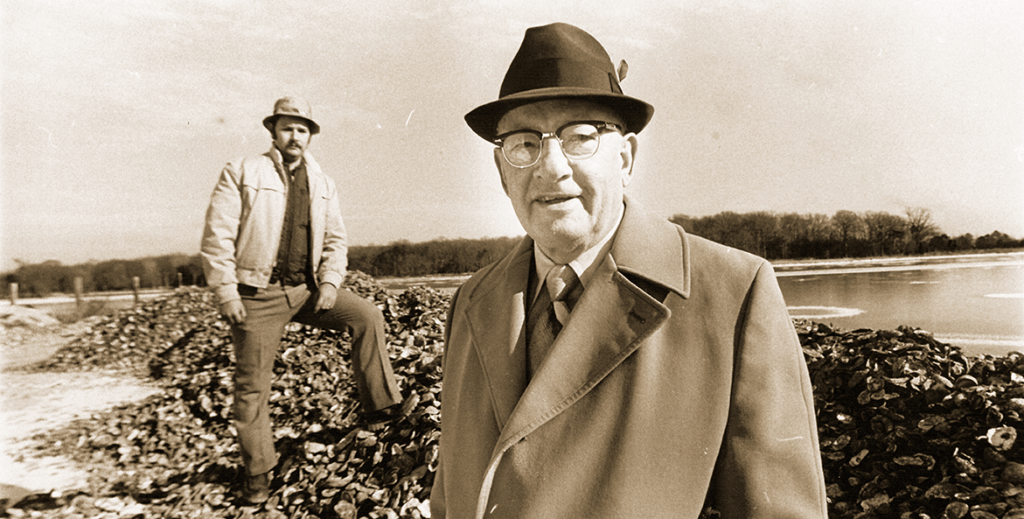 Courtesy of the Woodfield Family
Bill’s son Tim worked for the company briefly as a young man, driving a Woodfield’s ice truck, but, seeing the writing on the wall, Bill encouraged him to seek another path. Due to a decline in both oysters and shuckers, oyster canning at Woodfield’s came to a stop in the mid-90s. Annapolis Produce and Seafood purchased the plant in 2002, and Bill continued working with them until they closed their doors in 2022.
Bill and Tim and Bill’s sister Shirley Day, who spent her entire career in the offices at Woodfield’s, still live in the tight-knit community of Galesville along with Russell “Blondie” Jones, who worked at the plant from 1961 and followed Bill to Annapolis Seafood. Blondie can recount the long list of work he performed at Woodfield’s from manning the herring table to skimming oysters. “I’m the only original [from 1961] still alive,” he says. “I always keep moving.”
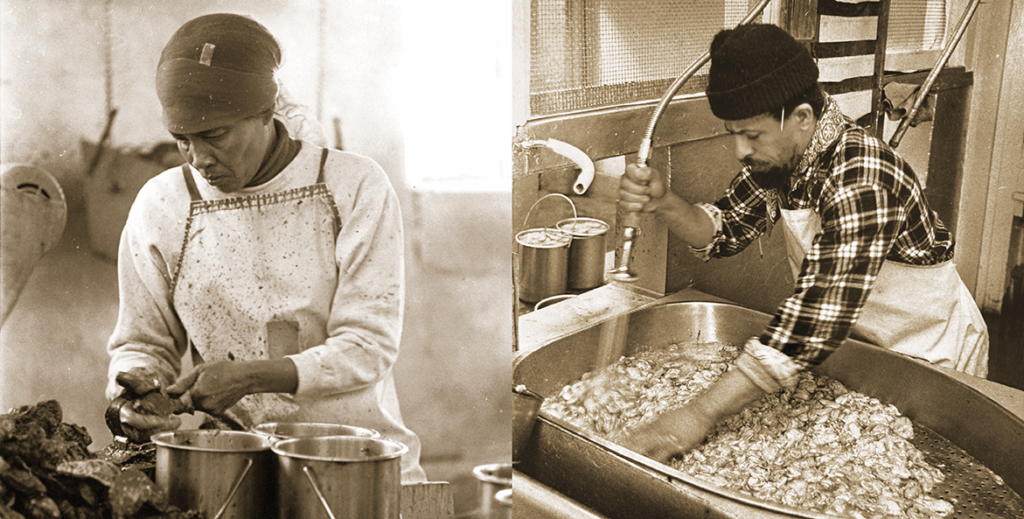 Courtesy of the Woodfield Family
A Full Circle Moment
Oysters are delicious, but another reason to love them is for the ecological benefits they provide. Oysters filter excess nutrients, algae, and sediment from our waterways and provide food and valuable habitat for a variety of marine life.
In search of a home to expand and advance our oyster restoration work, this spring, CBF purchased the historic Woodfield’s Fish & Oyster Co site.
Named after Truman T. Semans, who was instrumental in CBF’s founding, the new Truman Oyster Center (The Truman T. Semans Center for Oyster Restoration and Innovation) will serve as a Bay-wide hub for oyster restoration and provide a venue for volunteers, partners, and the local community.
In alignment with our history of leading the green building movement (CBF’s buildings in Annapolis and Virginia Beach are both shining examples of environmentally sustainable building practices.), the Truman Oyster Center will incorporate green features like onsite solar power, EV chargers, living shorelines, and stormwater management. CBF’s stewardship of the property will be marked by both the preservation of its history and the reinvigoration of its spaces for new and exciting opportunities.
Mobile oyster operations are performed using CBF’s tandem-barge the Prudence H. & Louis F. Ryan Mobile Oyster Restoration Center in Virginia waters and a 60-foot oyster restoration vessel the Patricia Campbell in Maryland.
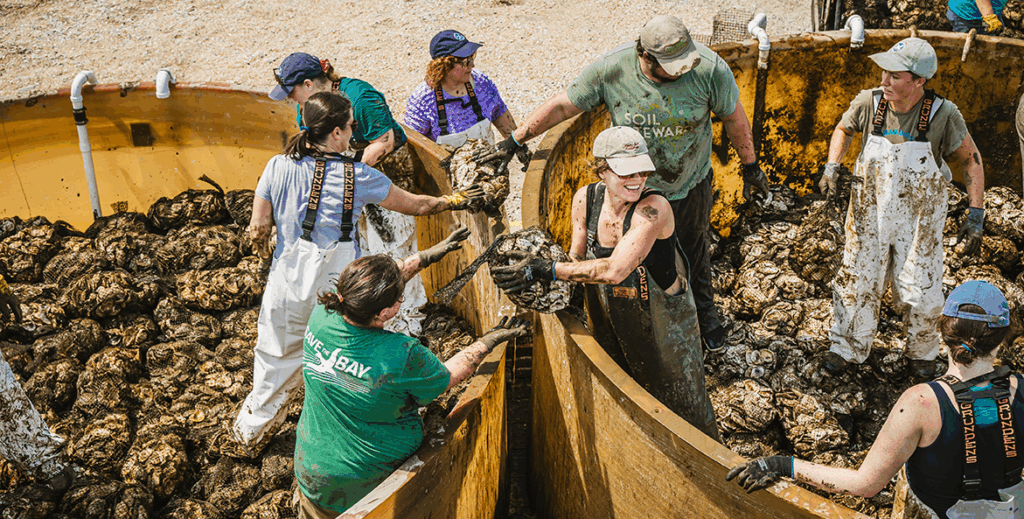 Caroline Phillips
The Chesapeake Bay’s oyster restoration effort is the largest in the world. Getting oysters back in the Bay has been one of the save-the-Bay movement’s greatest success stories. That progress inspires us to go further by scaling oyster restoration efforts. CBF’s new Truman Oyster Center will help us do just that. And we can think of no better place to do it than the site of the old Woodfield’s Fish & Oyster Co. plant in Galesville—a community with deep oyster roots and a place where neighbors often feel more like family.
Related Stories
-
 Blog Story
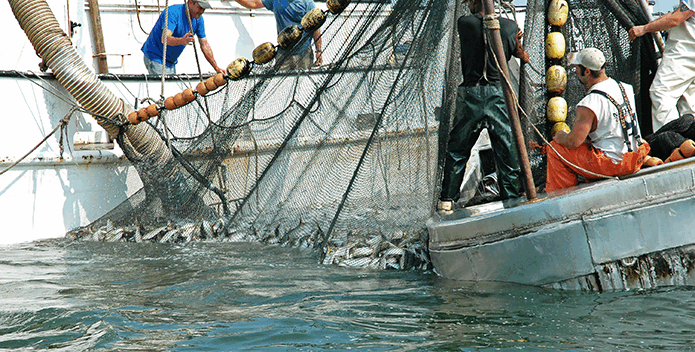
To Save the Chesapeake Bay, Save This Fish
Saving menhaden helps save the bay. Now, evidence of a crisis is impossible to ignore.
-
 Blog Story
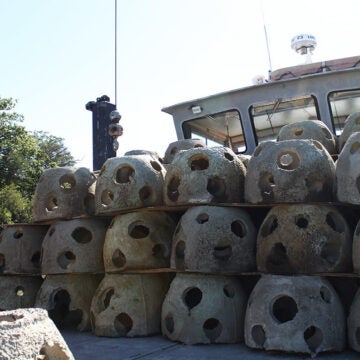
Field Notes: Building an Oyster Reef
Over the course of the summer, CBF built an oyster reef as part of a larger project to restore and protect an eroding shoreline along Maryland's South River.
