Press Release
Virginia’s Next Leader Can Take Action to Save the Bay and Build a Better Future Across Virginia
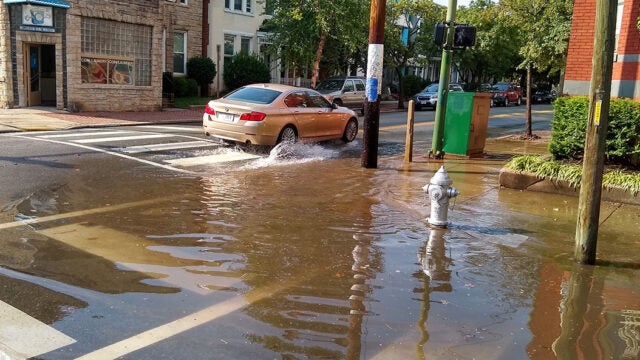
As the campaign for Virginia’s governor heats up, Virginia’s next governor will need to tackle a host of environmental issues affecting homes and businesses, including flooding, climate change, pollution, toxics, and agriculture.
The Chesapeake Bay Foundation outlined five key actions the next governor can take to ensure a healthier, more resilient Commonwealth for future generations.
“Virginia’s next governor will assume office at a time when Virginia is facing increasing threats from flooding, toxins, a change climate, and pollutants. While the federal government should be ramping up protections to protect Virginia homes and businesses, just the opposite is happening. It will be up to Virginia’s next governor to catch Virginia up and protect our communities and wildlife from these impacts,” said Jay Ford, Virginia Policy Manager at the Chesapeake Bay Foundation.
CBF’s five key priorities include:
- Restoring and protecting waterways: This includes continued investment in reducing pollution from wastewater, stormwater, and agriculture; expanding wetland and shoreline restoration; and increasing environmental education for students.
- Creating a safe and climate-resilient Virginia: CBF urges the new administration to rejoin the Regional Greenhouse Gas Initiative (RGGI), fund local resilience projects, and expand resources for homeowners and businesses to create climate-resilient coasts.
- Safeguarding Virginia’s diverse landscapes: Virginia must expand communities’ authority to conserve forests and urban trees, modernizing the Chesapeake Bay Preservation Act, and fully funding programs to preserve special lands.
- Investing in Virginia farmers: The next administration must maintain strong support for the agricultural cost-share program and work with farmers to target pollution hotspots.
- Stopping toxics at their source: This involves taking bold action on emerging pollutants like PFAS and microplastics, holding polluters accountable, and accelerating the transition to clean energy in a way that protects green spaces.
“The choices made by our next governor and elected officials will have a lasting impact on our rivers, streams, and the health of the Bay,” said Chris Moore, Virginia Executive Director at the Chesapeake Bay Foundation. “Rising seas, supporting our farmers in their clean water efforts, or holding polluters accountable are not just environmental issues—they are economic and public health issues. CBF is ready to work with the new administration to make Virginia a leader in clean water protection.”
Volunteers and community partners kick off 13th season with ceremonial cage drop and the new Electric Spat Mobile
Today, the Baltimore Oyster Partnership, a joint initiative between the Waterfront Partnership’s Healthy Harbor Initiative and the Chesapeake Bay Foundation (CBF), kicked off its 13th season of oyster restoration with a celebratory press event at Harbor East Marina, announcing a bold new goal: planting 5 million oysters in the Baltimore Harbor by 2030.
Volunteers, program partners, community leaders, and Poe, the Baltimore Ravens mascot, joined the ceremonial dropping of the first oyster cage of the season, marking the start of a new year of hands-on restoration. The event also introduced the Partnership’s brand-new Electric Spat Mobile, a colorful electric truck that will transport oysters and supplies throughout the city.
“It’s incredible to see how far this program has come,” said Adam Lindquist, Vice President of Waterfront Partnership of Baltimore, and head of the Healthy Harbor Initiative. “From just a handful of volunteers 13 years ago to thousands of oysters being planted every season, Baltimoreans are showing that community-driven restoration works. With 5 million oysters on the horizon, we’re doubling down on our commitment to a cleaner, healthier Harbor.”
Oysters are more than a Chesapeake Bay icon—they’re natural water filters, with each adult oyster capable of cleaning up to 50 gallons of water per day. They also provide critical habitat for fish, crabs and other Bay species, increasing biodiversity and helping restore the Harbor’s ecosystem.
During the 2024–2025 season, volunteers helped plant 417,059 spat, a combined total from the Waterfront Partnership and CBF efforts. Since the program began in 2013, more than 2 million oysters have been raised and planted at the Fort Carroll oyster sanctuary reef in the Patapsco River.
“This milestone isn’t just about oysters. It’s about people,” said Carmera Thomas-Wilhite, CBF Vice President for Communities & Partnerships and board member at Waterfront Partnership. “This program fills a need in our community—a need for cleaner water, hands-on environmental stewardship, and opportunities to see the impact of people’s efforts, firsthand.”
The program also welcomed a new partner this year: the Baltimore Ravens and the Stephen and Renee Bisciotti Foundation, joining downtown businesses, marinas, and nonprofits including the Downtown Sailing Center and Living Classrooms Foundation.
Volunteers remain the heart of the program. They assemble cages, add spat, record data, and tend to oysters as they grow in the Harbor. More than 1,000 volunteers are expected to participate this year, most Saturdays, continuing Baltimore’s largest community-driven oyster restoration effort.
“The oysters we grow in Baltimore stay in Baltimore,” said CBF Maryland Oyster Restoration Coordinator Kellie Fiala. “That’s because we want the thousands of volunteers who dedicate countless hours to benefit from the cleaner water and healthier ecosystems that oysters can provide.”
“Every oyster we plant is a step toward a healthier, more vibrant Harbor,” said Dan Taylor, President of Waterfront Partnership of Baltimore. “We’re thrilled to celebrate what’s been accomplished and to look ahead at the millions of oysters—and volunteers—still to come.”
The press event concluded with speakers and volunteers lowering 10 cages, each filled with baby oysters, into the Harbor, officially launching the 2025–2026 oyster season.
No experience required for this free fishing fun in Baltimore on September 6
Kids who are avid anglers, or who want to try fishing for the first time, are now welcome to sign up for the 2025 Maryland Rod & Reef Youth and Family Fishing Derby on September 6 at Port Covington Marina. This free event—hosted by Coastal Conservation Association (CCA) Maryland and Chesapeake Bay Foundation (CBF)—is part of CCA Maryland’s annual Oysters, Brews & Blues festival. It offers families a chance to enjoy the Chesapeake Bay’s natural resources and culture right in the heart of Baltimore.
At the 2025 Maryland Rod & Reef Youth and Family Fishing Derby, kids and families can fish from shore or join a boat trip to fish on a restored oyster reef at Fort Carroll. The Fort Carroll oyster sanctuary reef in the Patapsco River is home to millions of protected oysters and provides exceptional habitat for dozens of fish species. The annual Rod & Reef event helps demonstrate how oyster sanctuaries can support species that anglers like to catch such as striped bass, blue catfish, and white perch.
“Kids of all ages and skill levels will focus on catching as many species of fish as they can,” said David Sikorski, CCA Maryland Executive Director. “The Rod & Reef Derby at Oysters, Blues & Brews is a fun family activity, and a great opportunity for the Baltimore community to learn about the Bay’s important critters and how restored oyster reefs benefit a diverse ecosystem that few ever get to see.”
In addition to providing great habitat, oysters naturally clean the Harbor. An adult oyster can filter up to 50 gallons of water a day. During its 2024 to 2025 oyster gardening season, CBF planted nearly 185,000 oysters at Fort Carroll.
“There’s nothing like reeling in a fish to connect kids to the hidden world underwater, and spark excitement in learning more,” said Allison Colden, CBF Maryland Executive Director. “Baltimore’s youth are the future of Bay saving, and on-the-water experiences help kids develop a lifelong passion for protecting the Bay, which will ultimately lead to a healthier future for all.”
CCA Maryland and Combos for Kids volunteers will provide on land and on water fishing experiences at this event. Trips will depart at noon and 3 p.m. on a 30-person charter boat. Additional boats will provide flexible on water experiences during the 12 p.m. to 6 p.m. timeframe. All required gear will be provided, and all trips are free of charge.
“Our focus at Combos for Kids and Angler’s Sport Center is to connect a new generation of anglers with our Bay and to introduce people to our local waterways in a memorable way. We are proud to return as partners for the Maryland Rod & Reef Derby at Oysters, Blues & Brews,” said EJ Harman, Combos for Kids Director and Co-founder.
In addition to fishing opportunities, the Maryland Rod & Reef Youth and Family Fishing Derby will include hands-on learning activities, a fish touch tank, and more. CCA Maryland and CBF staff and volunteers will be on site building reef balls, installing cages to create an oyster garden, and offering educational opportunities for attendees of all ages.
Event details:
- When: Saturday, September 6 from 12:00–6:00 p.m.
- Where: Port Covington Marina, 321 E Cromwell St, Baltimore, MD 21230
- Who: CCA Maryland and CBF
- What: A free family-friendly outdoor event featuring a youth fishing derby, live music, oyster tastings, local brews, and educational and hand-on oyster restoration activities for all ages. For the fishing derby, all experience levels are welcome and all gear will be provided.
Interested attendees can learn more about the Maryland Rod & Reef Youth and Family Fishing Derby and register.
August Events, Public Feedback Key to Strengthening Major Federal-State Agreement
As state and federal leaders around the region update the major agreement guiding Chesapeake Bay restoration, this August is a pivotal time to urge stronger measures to protect the Bay.
A draft update of the 2014 Chesapeake Bay Watershed is open for public feedback through Sept. 1, and people across the region can urge leaders to adopt a stronger Bay Agreement. On Aug. 5, the state of Maryland will hold an open house to discuss the agreement, and on Aug. 14 the Chesapeake Bay Foundation (CBF) will hold a town hall in Annapolis on ensuring an effective Bay Agreement.
Since 1983, various iterations of the Bay Agreement have held together the federal-state Bay restoration partnership. Starting in 2010 under the Chesapeake Clean Water Blueprint, states in the partnership committed to a 2025 deadline for legally-binding goals to reduce nitrogen, phosphorus, and sediment pollution. The 2014 agreement included this and additional Bay restoration goals.
Though states have made notable progress on many Bay Agreement goals, including reducing pollution, they will not meet the 2025 pollution-reduction deadlines. Meanwhile, new science shows how Bay restoration work can be done more efficiently and effectively.
Last December, the federal and state Bay restoration partners committed to revising the Bay Agreement by the end of 2025. The partnership includes the governors of Maryland, Virginia, Pennsylvania, West Virginia, Delaware, and New York, the mayor of the District of Columbia, state legislators, and leaders at federal agencies.
These partners have worked toward a more effective agreement, including laudable efforts to bring more voices into the process. However, the draft agreement still falls short.
The revised Bay Agreement should apply the latest science, implement innovative environmental and economic strategies, and increase accountability. It must:
- Set one uniform deadline of 2035 across all goals to provide accountability, with regular check-ins every two years;
- Clearly define targets, including for habitat restoration and pollution reduction;
- Include the voices and perspectives of Indigenous communities;
- Address challenges from climate change across goals; and
- Affirm commitments to meeting the pollution reductions the federal government and states are legally required to meet under the Clean Water Act, despite missing the 2025 deadline.
Chesapeake Bay Foundation Senior Policy Director Keisha Sedlacek issued the following statement.
“This is a defining moment for the Chesapeake Bay. We have made tremendous progress, but the system remains out of balance. Growing threats from climate change add to the challenge. This August is the chance for everyone to speak up, or risk a future with dirty rivers and streams and a struggling Chesapeake Bay.
“The current draft of the Bay Agreement is incomplete—and the holes matter. While key goals and outcomes are included, the draft agreement lacks accountability and important details. It falls short in charting the course to clean water, healthy habitats, and engaged communities.
“To provide accountability, the agreement needs one uniform deadline of 2035 across goals with regular check-ins every two years. Clearly defined targets, including for habitat restoration and pollution reduction, are critical. Including the voices and perspectives of Indigenous communities will strengthen the partnership. Addressing challenges from climate change should be woven into each goal and outcome.
“Most importantly, the revised Bay Agreement must reaffirm commitments to pollution reductions the federal government and states are legally required to meet under the Clean Water Act. The Bay Agreement adds additional accountability and transparency to reducing pollution to the Bay. We can’t afford further delay. If those pollution reduction commitments are abandoned, we will explore all options—including litigation.
“The Chesapeake Bay is home to one of the largest and longest-running environmental restoration movements in the world. We have faced challenges before, banded together to set aggressive goals, and come out stronger. Future generations are counting on us to do it again. We cannot let them down. By working together toward common goals, we can leave a legacy of clean water, thriving marshes, forests, and reefs, and flourishing communities.”
Results Point to Need for Reaffirmation of Chesapeake Bay Agreement Goals
The checkered recovery of underwater grasses in the Chesapeake Bay persisted this year, with declines in some Maryland waters offsetting promising increases in the Bay’s Virginia portions, according to results released today of the annual 2024 Chesapeake Bay underwater grasses survey in Maryland and Virginia.
Overall, in 2024, the Bay’s underwater grasses decreased by 1 percent when compared to the previous year.
These underwater meadows have many benefits. They improve water quality and provide critical shelter and food for Bay species like the blue crab, migrating water birds, and juvenile fish. They also mitigate climate change through carbon uptake and sequestration, as well as diminish Bay acidification caused in part by greenhouse gas emissions. Sensitive to pollution but rapid responders to water quality improvements, underwater grasses serve as effective barometers of the Bay’s health.
The recent survey shows the federal-state Bay restoration partnership is off track in meeting targets for grasses, reaching only 64 percent of the Chesapeake Bay Watershed Agreement goal of 130,000 acres of underwater grasses by 2025.
In the moderately salty zone of the Bay, the largest of the zones, underwater grasses decreased by 14 percent, from 38,371 acres to 33,031 acres. The Eastern Shore of Maryland in the Choptank, Little Choptank Rivers, and the Tangier Sound saw the biggest losses.
In the salty portion of the Bay that extends near Virginia Beach up to Maryland-Virginia border, these underwater meadows increased to 24,800 acres in 2024, the highest coverage since annual mapping began in 1984. The largest gains, according to the survey, took place in Mobjack Bay, Poquoson Flats and nearby Western Shore areas. Eelgrass in particular surpassed all previous monitoring records.
Reducing pollution to the Bay is critical to increasing underwater grass coverage. This restoration work is guided by the Chesapeake Bay Watershed Agreement. The federal and state Bay restoration partners have committed to revising the Bay Agreement by the end of 2025. A draft update is open for public feedback through Sept. 1, and people are encouraged to urge leaders to adopt a stronger Bay Agreement.
The updated agreement must not only commit to vital goals for grasses and other habitats, but also affirm commitments to reaching the pollution reductions the federal government and states are legally required to meet under the Clean Water Act.
Chesapeake Bay Foundation (CBF) Virginia Senior Scientist Joe Wood said in a statement:
“Underwater grasses are essential not only to Bay critters like the blue crab, but also critical in our fight against climate change. They act as temperature refuges and reduce acidification caused in part by greenhouse gas emissions. Virginians should celebrate the eelgrass boom in the lower Bay, particularly in Mobjack Bay, that is creating new housing for crabs, fish, and shrimp. But the recovery is far from certain.
“Clean water and bountiful grasses are inextricably linked. Virginia and states around the region must commit to a stronger Chesapeake Bay Agreement to leave a healthy Bay for future generations. The Bay agreement goal is more than just a number—it’s a key outline for managing many species in the Bay and the industries that depend on healthy fisheries.”
CBF Maryland Coastal Resource Scientist Julie Luecke issued the following statement:
“Thriving underwater grasses mean a healthy Bay. But grass declines are a warning sign of deeper problems. Though aquatic grasses flourished in parts of Maryland, they took a big hit along parts of the Eastern Shore, including the Choptank River. Eastern Shore rivers have suffered from increasing pollution in recent years from both development and agriculture.
“As leaders update the Bay Agreement this year, a strong agreement is critical to holding states accountable and working together for a healthy Chesapeake Bay.”
In a triumph for outdoor stewardship and clean water, roughly a dozen U.S. veterans and servicemembers joined the Chesapeake Bay Foundation (CBF) this week to restore oyster habitat in Maryland and Virginia.
Both events were part of a larger Chesapeake Bay fishing excursion hosted by Backcountry Hunters & Anglers (BHA)’s Armed Forces Initiative (AFI). During the trip, military members from across the nation experienced the Chesapeake Bay’s premiere angling opportunities as part of BHA’s AFI program—a community-based initiative designed to serve military members navigating post-traumatic stress disorder (PTSD) and traumatic brain injury (TBI) through a new mission in natural resource conservation.
“Watching 2.5 million oyster shells turn from restaurant waste into living reef reminds every service member why service still matters,” said Garrett Robinson, Corporate Partnerships Manager and AFI Board member for BHA. “Sweat, saltwater, and a shared mission strip away the noise of transition and let real healing begin—proving that when we restore the Bay, it restores us right back. We’re warriors with a new mission in conservation: a mission bigger than ourselves, bringing peace and solace to lives once filled with chaos. It revives the part of us we left on the battlefield and proves that our land, water, and wildlife are still worth fighting for.”
On their trip, AFI participants gave back to the Bay by helping carry out oyster restoration efforts. Oysters are a bedrock of the Bay’s ecosystem, naturally filtering the water and providing exceptional habitat for many other species, including fish often targeted by anglers such as striped bass, speckled trout, white perch, and red drum.
Chesapeake Bay is home to the most successful oyster restoration effort in the country. After decades of overharvesting, disease, and habitat loss, partners have been able to bring oysters back from the brink of expiration all across the Bay. The Chesapeake Bay partnership is on track to complete its goal to fully restore 11 Bay tributaries for oyster habitat by the end of 2025.
On July 15, AFI members contributed to that goal by processing roughly 2.5 million recycled oyster shells at CBF’s Maryland Oyster Restoration Center in Shady Side. The group then travelled down the Eastern Shore, and on July 17, assembled 115 bags of recycled oyster shells at CBF’s Brock Environmental Center in Virginia Beach. The bags are used for various oyster restoration work including living shorelines and oyster reefs. The recycled oyster shells come from nearly 100 restaurants across Maryland and Virginia that participate in CBF’s shell recycling program. Thanks to the generosity of SITKA Gear, the AFI participants and the project support was fully funded through their Ecosystem Grant Program.
“CBF is honored to partner with volunteers who have dedicated so much to this country and continue to give back beyond their years of military service,” said CBF’s Maryland oyster restoration coordinator, Kellie Fiala. “Oyster restoration would not be one of the Bay’s greatest success stories without dedicated volunteers like them.”
“People who love fishing in the Chesapeake Bay also love oysters,” said CBF’s Virginia oyster restoration manager, Jackie Shannon. “The oyster reefs we’re building and expanding offer critical habitat for the fish anglers most enjoy. We are grateful that AFI recognized that important connection and wanted to help.”
Volunteers have helped CBF add millions of oysters back into Maryland and Virginia waters. While large scale oyster restoration has been one of the Bay’s greatest success stories, it’s at a critical juncture. Partners are currently defining what the future of oyster restoration should look like by updating current Chesapeake Bay cleanup goals. This process is happening at the same time that the National Oceanic and Atmospheric Administration and other federal agencies critical to Bay restoration are being dismantled and defunded.
Protecting our natural resources has always been a bipartisan effort, and CBF and BHA urge Congress to fully fund agencies that support oysters, fish, and a healthy Bay.
Chesapeake Bay Foundation’s largest living shoreline now closer to completion
The “Roots to Reef” initiative spearheaded by the Chesapeake Bay Foundation (CBF) in the Hampton River reached a critical new milestone this week in its mission to bolster the city’s climate resilience.
Following the installation of oyster castles, the living shoreline has now successfully deployed the 650 innovative Natrx Basalt Shell Bags, a new frontier in oyster restoration consisting of bio-compatible material that provides a stable, resilient, and long-lasting foundation for baby oysters to attach and grow. This marks a significant step forward in the “Roots to Reef” project that will build CBF’s largest living shoreline combined with oyster reefs.
“We are incredibly excited to see our basalt shell bags deployed as part of the Hampton River ‘Roots to Reef’ project,” said Dylan DiBona, Creative Director with Natrx.
“Our innovative shell bags are designed to provide a robust, eco-friendly foundation for vibrant oyster reefs, accelerating natural restoration processes. Witnessing them integrated into such a vital living shoreline is a testament to what’s possible when cutting-edge technology meets dedicated conservation efforts. We are proud to contribute to the future health of the Chesapeake Bay.”
The Hampton River, a vital artery stretching 3.2 miles, has historically supported local communities through food, recreation, and national security. However, its proximity to a dense population of approximately 138,000 residents has led to challenges like polluted runoff.
This resilient and natural living shoreline, supported by the Blocker Foundation and Immaculate Conception Catholic Church, involves the strategic placement of 5,584 oyster castles, 720 bushels of recycled oyster shells, the 650 Natrx Basalt Shell Bags, 22 coconut fiber coir logs, and 15,000 native wetland plants. It offers a natural solution, creating a dynamic buffer that filters pollutants, provides essential habitat for marine life, and protects against erosion.
Unlike conventional mesh bags, these next-generation Natrx shell bags are crafted from durable basalt fibers, a naturally occurring volcanic rock, which are then filled with recycled oyster shells.
Their unique structure allows for better water flow, promoting optimal conditions for oyster reef development, while also providing robust protection against erosion and storm surges. Their strength and flexibility enable them to adapt more effectively to dynamic coastal environments and rising sea levels.
“The ‘Roots to Reef’ initiative at Pine Cone Harbour is a testament to nature-based solutions,” said Kati Grigsby, CBF’s Hampton Roads Urban Restoration Coordinator. “It’s truly inspiring to see how these living shorelines, especially with the integration of innovative materials like the Natrx bags, can adapt and strengthen our coastal communities against the impacts of climate change.”
The “Roots to Reef” project marks the first collaboration between CBF’s Hampton Roads Oyster Team and its Urban Restoration Team on the Hampton River.
Virginia’s leading environmental and governmental partners celebrated the successful completion of commitments to restore oyster reef habitat in six Virginia Chesapeake Bay tributaries on June 2 at the Chesapeake Bay Foundation’s (CBF) Brock Environmental Center.
This milestone event marks Virginia’s fulfillment of its portion of the Chesapeake Bay Program’s ambitious goal to restore ten Bay tributaries with oyster reefs by 2025, contributing to what is recognized as the largest oyster restoration project globally.
In Virginia, those tributaries consisted of the Lafayette, Piankatank, Great Wicomico, Elizabeth River, Lynnhaven, and lower York rivers. The Maryland portion restores five tributaries.
More than 1,000 acres of oyster reefs are part of these projects.
This event highlighted the collective efforts that have revitalized critical oyster habitats across the Commonwealth, including significant recent work in the Lynnhaven River.
Partners recognized for their collaborative success in the Lynnhaven River include the Commonwealth of Virginia, Lynnhaven River Now (LRN), Chesapeake Bay Foundation (CBF), U.S. Army Corps of Engineers (USACE) Norfolk District, National Oceanic and Atmospheric Administration (NOAA), and the City of Virginia Beach. Additional partners supported work in the other five Virginia tributaries as part of the Chesapeake Bay Program’s Virginia Oyster Restoration Workgroup.
“This oyster restoration success is a testament to years of dedicated work, scientific innovation, and unwavering partnership,” said Chris Moore, Virginia Executive Director for the Chesapeake Bay Foundation. “The completion of these six tributaries is a profound achievement for Virginia and a major leap forward for the health of the entire Chesapeake Bay. Oysters are the Bay’s natural filters, and their return means cleaner water and a healthier ecosystem for everyone.”
The Lynnhaven River stands as a prime example of this success. Due to overharvesting and pollution, a decade ago oyster habitat in the Lynnhaven River remained at a fraction of its historic scale. Thanks to oyster restoration efforts in recent years, the Lynnhaven now has 152 acres of new oyster reef that will enhance water quality and fishing while adding critical habitat for oysters, fish, crabs, shrimp, and other fish.
Funding from key partners, including the National Fish and Wildlife Foundation (NFWF) under the EPA’s Chesapeake Bay Program, has been instrumental in supporting these critical restoration initiatives.
“The Lynnhaven River has been a focal point of these restoration efforts, and seeing the measurable success of our reefs is incredibly rewarding. This work not only brings back a vital species but also strengthens our connection to the river and its future,” said Karen Forget, Executive Director of Lynnhaven River Now.
Volunteers help proactively tackle microplastic threat in Chesapeake Bay
More than 48,000 pounds of litter will stay out of Virginia’s waterways thanks to over 2,600 volunteers who joined the Chesapeake Bay Foundation’s (CBF) annual Clean the Bay Day, Virginia’s largest and longest-running litter and shoreline cleanup.
“What started off as just a chat among neighbors back in 1989 has ignited Virginia’s most impactful cleanup movement. This past Saturday, that collective power was palpable across the state,” said CBF Grassroots Coordinator Lisa Renee Jennings. “Volunteers didn’t just clear trash; they tackled the invisible threat of microplastics and created connections as they united for the common goal of a healthier, plastic-free Bay for generations to come.”
On June 7, 2,698 volunteers and more than 60 CBF partners gathered at over 200 sites in Richmond, Hampton Roads, the Eastern Shore, Northern Virginia, the Shenandoah Valley, and at Virginia State Parks. While the vast majority of the partners have reported and numbers will increase, preliminary totals show 48,880 pounds of litter and debris were removed from beaches, parks, shorelines, streams, rivers, streets, and lakes.
Since 1989, this Virginia tradition has engaged about 177,000 volunteers who have removed approximately 7.1 million pounds of debris from across our land and waterways.
This year’s litter removal played a critical role in mitigating the pervasive threat of microplastics and other pollution to the Chesapeake Bay. Litter like plastic bottles and cups break down into microplastics and wash into the Bay.
Litter, especially plastic, doesn’t just disappear. It breaks down into smaller and smaller pieces, known as microplastics, which contaminate the Bay’s water and sediment. More than 90 percent of microplastics that enter in the Bay stays in the Bay.
These microplastics can be ingested by fish and animals in the water, entering the food chain and potentially harming wildlife and even human health. Additionally, larger debris can entangle animals and degrade the natural beauty of the Bay.
As in previous years, the most common items found during this year’s cleanup were plastic and glass bottles, plastic wrappers, plastic bags, and cigarette butts. But volunteers recovered many larger items, including an 8-foot pipe, a palette with milk jugs attached, a plastic car fender, and a headboard.
Unusual items included a Santa’s reindeer, dentures, a paintball gun, a fresh cup of salsa, a marble countertop, and hot wheels underwear.
Among the volunteers were many elected officials, other community leaders, service members, Scout groups, small businesses, large corporations, and thousands of other Virginians.
“Roots to Reef” Initiative Connects Oyster Reefs with Living Shoreline that Combats Climate Change
In Hampton this week, a major new initiative is underway by the Chesapeake Bay Foundation to protect the city from climate change threats by building its largest living shoreline combined with oyster reefs.
As part of the “Roots to Reef” initiative, CBF staff and volunteers this week planted the first oyster castles as part of the living shoreline.
The Hampton River, stretching 3.2 miles long, has historically served as a hub for food, recreation, and national security. But with the dense surrounding population of approximately 138,000 residents living within a 51 square mile area, the river faces polluted runoff from streets, parking lots, and buildings.
Living shorelines offer an effective natural alternative to protecting shorelines from storms, erosion, and pollution when compared with traditional hardened structures like seawalls, which often fail over time. In addition, oysters filter algae, sediment, and other pollutants while oyster reefs provide habitat for fish, crabs, and other Bay organisms.
This resilient and natural approach to tidal shoreline protection made possible by the Blocker Foundation and Immaculate Conception Catholic Church in Hampton will involve the strategic placement of 5,584 oyster castles, 720 bushels of recycled oyster shells, 650 innovative Natrx Basalt Shell Bags, and 22 coconut fiber coir logs near the Pine Cone Harbour Condominiums along the densely populated Hampton River.
“This Roots to Reef initiative at Pine Cone Harbour creates a natural buffer and filtration system at the water’s edge. We’re really connecting the dots here—the work we do on the land directly influences the health of the water, and vice versa” said Kati Grigsby, CBF’s Hampton Roads Urban Restoration Coordinator. “The end result is a more resilient and interconnected ecosystem along the urban Hampton River. Unlike hardened shoreline projects such as concrete sea walls, living shorelines are designed to evolve and migrate with rising sea levels.”
The Pine Cone Harbour Living Shoreline project marks a groundbreaking collaboration between CBF’s Hampton Roads Oyster Team and its Urban Restoration Team. In an unprecedented effort, both teams are implementing restoration projects directly offshore from one another, creating an integrated approach using both living shorelines and oyster reefs to confront the threats of climate change.
Living shorelines strategically combine the planting of native wetland plants, grasses, shrubs, and trees along the tidal waterline along with materials including oyster reefs, coconut fiber coir logs, and basalt shell bags. While hardened structures may offer short-term stabilization, they cannot adapt to increased storm activity and sea-level rise in the same way living shorelines do. This exacerbates erosion in adjacent areas.
The hard work of dozens of volunteers has made this project possible.
