Press Release
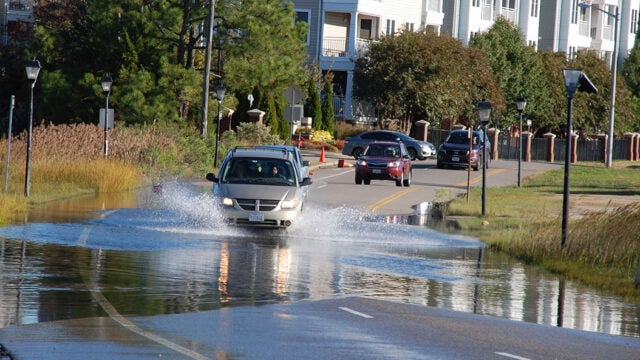
Record-Breaking Year Adds Urgency to Flood Preparedness and State’s Return to RGGI
During the Virginia legislative session this month, lawmakers will consider measures that address rising challenges from climate change and strengthen Virginia’s protections against extreme weather. Those include returning Virginia to the Regional Greenhouse Gas Initiative, bolstering Virginia’s community flood preparedness, and expanding natural defenses against erosion and storm surge.
Last year brought record-breaking summer temperatures, deadly storms like Hurricane Helene, and flood watches dominating the calendars of coastal communities. Coastal Virginia has seen the highest rate of relative sea-level rise on the Atlantic Coast, while residents battled flood alerts 80 days last year—about a quarter of 2024.
Lawmakers will also consider proposals to return Virginia to the carbon emissions reduction program known as the Regional Greenhouse Gas Initiative (RGGI), as well as expanding flood preparedness resources.
“We can’t afford to normalize what is extreme. The rising threats to Virginians and their homes and businesses shows the need for urgent action from state leaders. These bills and budget amendments build on our progress and make Virginia communities stronger in the face of an unprecedented challenge,” said Delegate Phil Hernandez, who introduced bills advancing living shoreline funding and coastal storm risk studies.
Coastal storm risk studies ensure communities have the resources they need to protect their homes and businesses.
“No Virginia community is immune to the rising challenges brought on by the climate crisis. We must prepare now to avoid more damage and calamity in the future. These measures unify resources to tackle this statewide issue, which is paramount to safeguarding Virginia’s economy, protecting public health, and preserving our natural resources,” Chesapeake Bay Foundation (CBF) Virginia Policy Manager Jay Ford said.
To build resilience statewide, CBF urges lawmakers to support:
Virginia’s Return to the Regional Greenhouse Gas Initiative (RGGI)
- A budget amendment requiring Virginia to rejoin RGGI immediately and appropriate existing revenues and any future revenues to the low-income energy efficiency fund and the Community Flood Preparedness Fund as outlined by law through the Community Flood Preparedness Act.
Strengthen Community Flood Preparedness
- HB 2077 introduced by Delegate Paul Krizek and SB 1335 introduced by Senator David Marsden: These bills allow federally-recognized tribal governments access to Community Flood Preparedness funding;
- $50 million in the budget for the Stormwater Local Assistance Fund (SLAF): Runoff from roofs, sidewalks, and roadways is a major source of harmful pollutants reaching our waterways. SLAF provides matching grants to localities for projects that reduce polluted runoff, such as stream restoration, rain gardens, and other retrofits.
Expand Natural Defenses against Erosion and Storm Surge
- HB 1950 introduced by Delegate Phil Hernandez: This bill creates a fund to help pay for large-scale living shorelines with an accompanying $5 million budget amendment to supply the fund;
- HB 1949 introduced by Delegate Phil Hernandez, HJ 434 introduced by Delegate Michael Feggans, and SB 1337 introduced by Senator David Marsden: These bills direct studies on how state and localities would fund Coastal Storm Risk Management (CSRM) plans;
- HJ 437 introduced by Delegate Convirs-Fowler: This bill reestablishes the Joint Subcommittee of Recurrent Flooding;
- HB 2034 introduced by Delegate Shelly Simonds: This establishes a task force to develop strategies to protect the state’s existing tidal and nontidal wetlands plus develop plans for wetland restoration, creation, and migration.
CBF Supports Bill Removing Restriction on Catch of Invasive Species
An invasive predator wreaking havoc in Virginia waters is now the target of a bill introduced by a Virginia lawmaker. The proposal advancing through the General Assembly hopes to get more blue catfish out of state waters and on to people’s plates.
HB 2782 patroned by Del. Shelly Simonds (D-Newport News) removes the one-fish daily limit for blue catfish longer than 32 inches. It removes this limit in the tidal waters of the James, Rappahannock, and York Rivers.
“Blue catfish threaten the delicate balance of wildlife in our rivers but they’re also delicious. This bill is a crucial step towards getting them under control and ensuring the long-term health of our rivers and streams,” Del. Shelly Simonds (D-Newport News) said.
Blue catfish were introduced to Virginia rivers and streams in the late 1960s and early 1970s for recreational fishing. Now, almost all major Chesapeake Bay watershed tributaries contain them. In fact, catfish can make up to 75 percent of the total fish weight living in rivers and streams where they have been established in the Chesapeake Bay watershed.
“By encouraging the harvest of these invasive predators, we can not only protect our native fish but also provide Virginians with a delicious and sustainable seafood option,” Del. Hillary Pugh Kent (R-Warsaw) said.
The invasive species are known to feed on native species like menhaden, striped bass, shad, and blue crabs, straining these critical fisheries populations.
“Removing this cap on the blue catfish harvest is another step in the right direction to help mitigate the threat of this invasive species and safeguard the long-term health of the Bay and the livelihoods that depend on it,” Chesapeake Bay Foundation Virginia Executive Director Chris Moore said.
If passed, the bill would join other state efforts to control the problem. Rounds of grants issued by the state in recent years awarded funds to encourage more catching and eating of the species.
The bill has been referred to the Committee on Agriculture, Chesapeake and Natural Resources.
A Virginia effort to fund a three-year study would provide insights critical for a healthy Chesapeake Bay
Update: Delegate Paul Milde has now issued House Bill 2713 and a budget amendment to fund the menhaden study in Virginia.
During the 2025 legislative session, Virginia lawmakers will again consider providing funding for university research into the Commonwealth’s largest fishery: Atlantic menhaden. Delegate Paul Milde (R-64) is spearheading the effort to provide the $3 million necessary for the Virginia Institute of Marine Science to complete a three-year study of the ecology, fishery impacts, and economic importance of the menhaden population in the waters of the Commonwealth.
Atlantic menhaden are a small, schooling fish targeted by industry to be turned into fishmeal and fish oil products through a process known as “reduction” fishing. Due to their high oil content, menhaden—otherwise called bunker—serve as the base of the marine food chain in Virginia, feeding iconic predators like striped bass, bluefish, and ospreys during critical points in their life cycles, especially inside the Chesapeake Bay. Although menhaden are managed on a coastwide basis by the Atlantic States Marine Fisheries Commission, there is a lack of specific data related to how many menhaden are present within the Bay itself throughout the year and what impacts reduction fishing may have on the fragile estuarine ecosystem.
“Current menhaden management relies on incomplete information. This research will provide the scientific foundation needed to make sound decisions that balance the needs of the fishery with the ecological importance of this keystone species,” said Delegate Paul Milde (R-64), who is sponsoring the effort. “Menhaden are essential to the health of the Chesapeake Bay, supporting a variety of commercial and recreational fisheries. By investing in this research, we can make informed decisions about menhaden management and protect this vital species for future generations.”
Concerns about the removal of menhaden from the Virginia portion of the Chesapeake are the primary reason ASMFC implemented a harvest cap on the state’s reduction fishery in 2006. However, this cap is based solely on historic landings and not actual scientific data on the current population of menhaden in the Bay.
“As questions continue to mount about the health of the Chesapeake Bay’s menhaden population, the need for this important effort grows every day. We appreciate all the work that the Virginia Institute of Marine Science and Virginia Marine Resources Commission have done in the development of the study,” said Chris Moore, Virginia executive director of the Chesapeake Bay Foundation. “CBF is very appreciative of Delegate Milde for his leadership to ensure this effort is not further delayed.”
This relatively low-cost education funding provision would allow VIMS to expand its knowledge about Virginia’s largest commercial fishery to improve sustainable fisheries management and give the Virginia Marine Resources Commission the information necessary to determine the role menhaden play in maintaining viable recreational fishing access and a healthy Chesapeake Bay ecosystem. A robust menhaden population directly supports Virginia’s $980 million recreational fishing economy, by serving as a critical food source for valuable sportfish like striped bass (or rockfish).
“Making up the gaps in science is the only way to effectively evaluate the menhaden population in the Bay,” said Chris Macaluso, director of the Center for Marine Fisheries for the Theodore Roosevelt Conservation Partnership. “The reduction industry removes millions of pounds of menhaden from the Chesapeake. Numerous economically, ecologically, and culturally important fish like striped bass, cobia, and red drum depend on this forage, yet little is known about the impacts of depleting menhaden inside the Bay. Establishing a baseline of knowledge for the Bay’s fishery is vital to support both sustainable commercial and recreational fisheries.”
Recent fish spills by the menhaden reduction industry initially highlighted the need to find ways to mitigate the impact of these spills to local economies. As a result, the General Assembly passed SB 1388 during the 2023 legislative session, which required VIMS to develop plans for studying menhaden populations in the waters of the Commonwealth. In early 2024, Virginia lawmakers failed to pass a bill that would have funded this necessary research.
“For years, we’ve lacked the baseline knowledge we need to help establish robust and lasting protections for menhaden in the Chesapeake Bay,” said Romaric Moncrieffe, marine conservation policy manager for the National Audubon Society. “This funding bill is a step in the right direction towards achieving a lasting and healthy fishery that is able to support and protect vital bird and fish species along the entire Atlantic coast. We must do everything we can to preserve the health of the Bay.”
“An investment by Virginia in science to better manage, use, and conserve public fishery resources in the Chesapeake Bay is a logical and long-awaited step towards establishing an important balance for stakeholders and the fishery resources we all share,” said David Sikorski, executive director for the Coastal Conservation Association – Maryland.
“It’s clear advancing science in the Chesapeake Bay is important to understanding the ecosystem dynamics in the primary producer area for striped bass,” said Mike Waine, Atlantic fisheries policy director for the American Sportfishing Association. “Menhaden, as a key forage species, play a vital economic role in supporting recreational fishing businesses that serve hundreds of thousands of anglers across the Chesapeake Bay watershed.”
“We need Bay-specific science to better understand the impacts of fishing on birds and other predators within Chesapeake Bay,” said Nikki Rovner, associate state director of The Nature Conservancy in Virginia. “Better science will help us make better decisions on how to manage those impacts and continue improving the health of the system.”
Learn more about the recreational fishing community’s push for better management of menhaden in the Chesapeake Bay.
Chesapeake Bay Foundation Supports Legislative and Budget Initiatives to Advance Clean Water & Healthier Communities
Virginia legislators are poised to consider key environmental budget and policy during the 2025 legislative session on Chesapeake Bay restoration, flooding and resiliency, menhaden, oysters, and environmental education.
Governor Youngkin formally recommitted to Chesapeake Bay restoration at a gathering of Bay state leaders December 10 and released an executive directive that outlines Virginia’s role in the next chapter of Bay restoration. On Dec. 18, Youngkin also rolled out his budget priorities for the second year of Virginia’s two-year budget.
“Virginia is still lagging in meeting Chesapeake Bay restoration commitments by a 2025 deadline. But Governor Youngkin’s recommitment to Bay restoration charts a promising path forward for cleaner water and healthier communities in Virginia,” said Chesapeake Bay Foundation (CBF) Virginia Executive Director Chris Moore.
“During the upcoming General Assembly session, the Chesapeake Bay Foundation will support legislative and budget measures that help the Commonwealth meet restoration targets, protect communities against extreme weather, invests in the wise management of living resources, and preserves critical habitat and wildlife,” Moore said.
During the session, legislators must confront new challenges from a changing climate as well as growing demands from development and data centers.
The latest science as well as investments in successful and innovative programs offer opportunities for a healthy and more resilient future for Virginia and the Chesapeake Bay. In addition, legislators may answer long-running questions about the health of iconic species including oysters and menhaden.
Environmental Education Expansion to Keep Virginia Students on Par with Neighboring States
Lawmakers should support $1 million annually for a competitive environmental education experiences grant program as well as expand the program statewide.
- Human impact on the environment and the value of Virginia’s natural resources are essential parts of state education standards, but many school districts aren’t connected to the resources needed to offer the hands-on, inquiry-based learning opportunities that lead to successful environmental education.
- Virginia’s current investments of just 30 cents per student in environmental education lags significantly behind neighboring states, falling 89.2% below Maryland ($2.78 per student) and 48.3% less than Pennsylvania (58¢ per student).
Shield Homes and Businesses from Flooding & Extreme Weather
Invest in Virginia’s Community Flood Preparedness Fund (CFPF): CFPF is the only state program that funds flood protection projects across Virginia. That work could grind to a halt without new investment. The Community Flood Preparedness Fund needs $100 million for the second year of the budget. CBF also urges legislators to allow tribal governments to have access to CFPF.
Support the Stormwater Local Assistance Fund (SLAF): Runoff from roofs, sidewalks, and roadways is a major source of harmful pollutants reaching our waterways. SLAF provides matching grants to localities for projects that reduce polluted runoff, such as stream restoration, rain gardens, and other retrofits. To meet our Bay clean-up goals, the SLAF program needs $50 million in this year’s budget.
Develop Plans for Wetland Protection: In the wake of a Supreme Court decision that rolled back federal protection for wetlands, CBF urges legislators to create a workgroup to develop plans to create and restore these natural water filterers and sponges.
Preserve and Conserve Trees: Another natural sponge that cools our neighborhoods and reduces our energy use, trees are essential elements in Virginia’s fight against extreme weather. Many local governments have expressed the desire to use tree canopy to cost-effectively reduce flooding, manage stormwater, and reduce the health impacts of urban heat islands on their residents. But localities have limited authority to do so. Legislators can help by enabling developers to pay into a tree fund if they can’t achieve mandated canopy replacement, support and expand a tree grant program to include maintenance of both young and mature trees, plus require transportation projects like roads and highways to incorporate trees into their designs and budgeting processes.
Living Shorelines: To bolster Virginia’s resilience from shoreline erosion and other impacts of climate change, CBF supports increased investment in living shorelines and a dedicated, statewide, largescale living shoreline fund. Living shorelines are often created by planting native wetland plants, and grasses, shrubs, and trees at various points along a shoreline.
Protecting and Restoring Key Species
Menhaden: Menhaden are a small fish that are a critical food for striped bass, osprey, whales, and other species, and the target of a major industrial fishery. Virginia needs more data on the Bay’s menhaden population to responsibly manage the fishery and ensure a sustainable population. Virginia legislators previously approved a development of a study on the menhaden population and should now fund this $3 million assessment to get the work started.
Oysters: In addition to serving as delicious cultural fare, oysters provide a host of benefits to the Commonwealth including cleaner waters, shoreline protection, and habitat for blue crab and striped bass. Their restoration supports an oyster industry that has experienced a 52 percent increase in dockside value since 2013.
In addition to $4.5 million for continued oyster restoration and replenishment efforts, investment in an oyster stock assessment is key to continuing efforts to rebuild the Bay’s oyster population. The assessment will help target restoration funding to the most needed areas by estimating the abundance of oysters in Virginia’s portion of the Bay, the fraction of oysters that die each year from natural causes, and the fraction of oysters that are harvested each year.
Mussels: These valuable organisms that filter water and reduce pollution have shown rapid decline with 20 years of signs of recovering struggles. Increased state funding can advance mussel population restoration as well as support the Harrison Lake mussel hatchery.
Durable Future for Clean Energy
To achieve established clean energy goals without compromising farmland or forests, lawmakers should create a body that provides state advisory opinions for localities to consider when evaluating zoning approval for a utility-scale solar project. A regional energy plan should also be required to lay out how Virginia localities will meet clean energy targets.
Reducing Pollution
Practices like fencing cattle out of streams, planting streamside trees and grasses, and many others are the most cost-effective steps Virginia can take to restore the Bay and local streams. At the same time, many of Virginia’s sewage treatment facilities have made important progress in nutrient reductions in recent years due to investments made by the General Assembly.
CBF thanks legislators for their robust investment in the Virginia Agriculture cost-share program as well as wastewater treatment plant upgrades and urges them to keep these programs fully funded in years to come.
The Chesapeake Bay Foundation (CBF) staff in Pennsylvania has surrounded itself with woodlands, water, and wildlife by relocating to Wildwood Park in Harrisburg.
“Wildwood Park is the perfect location for CBF’s base of operations in Pennsylvania,” said Julia Krall, CBF Executive Director in the Keystone State. “While our 21 local staff members work throughout Pennsylvania’s portion of the Bay watershed, it is important to have a physical space where staff and the community can come together that embodies our mission and exemplifies our work here in the Commonwealth.”
The CBF staff is based in the Benjamin Olewine III Nature Center at 100 Wildwood Way. The office had previously been located in the city at Third and Reily Streets in Midtown Harrisburg.
“Our space at Wildwood Park provides the opportunity to advance and promote the beneficial purpose of public parks, including the conservation benefits of open space, recreation, and flood plain preservation,” Krall added.
The Nature Center is one of the leading interpretive centers in the area and a resource center for groups, educators, nature enthusiasts, and home-schooled children. The center’s exhibit hall displays the workings of a freshwater wetland and gives visitors a glimpse of the wildlife inhabitants.
The 229-acre park, just north of Harrisburg is administered and maintained by the Dauphin County Parks and Recreation Department. In the great outdoors, the park is known for its 90-acre shallow lake and wetlands, and a diversity of flora and fauna. There are 6 miles of trails, 1.5 miles of boardwalks and a convenient stop for exercise enthusiasts and nature goers.
Hours for the Benjamin Olewine III Nature Center are Tuesday through Sunday, 10 a.m. to 4 p.m. The center is closed Mondays.
The CBF office telephone number is 717-234-5550.
To promote innovation in oyster restoration, aquaculture, and education, the Chesapeake Oyster Alliance (COA) announced $150,000 in grants distributed to 17 organizations across Maryland and Virginia. The Chesapeake Oyster Innovation Awards Program is funded by Chesapeake Bay Foundation (CBF) and administered by Chesapeake Bay Trust.
The 2025 grant awardees will use the funds for creative approaches to restoring Chesapeake Bay oysters through a variety of projects, including new interactive technologies, public education initiatives, and new restoration techniques.
Oysters are a keystone species in Chesapeake Bay, where they filter water, remove pollutants, and serve as essential habitat for hundreds of other species, including blue crabs and the Bay’s iconic finfish.
“Investments in oysters are investments in clean water and a healthier future for all residents of the Bay region,” said Tanner Council, CBF COA Senior Manager. “This program accelerates oyster innovation and aims to unlock more of the economic, ecological, and cultural benefits of the Bay oyster. Ultimately, these efforts will bring COA and its partners closer to our goal of adding 10 billion oysters to the Bay.”
COA, which was founded by the Chesapeake Bay Foundation in 2018, is a coalition of more than 100 non-profits, academic institutions, oyster growers, and other businesses. This is the fourth year COA has provided funding for oyster-related grants, totaling $570,000. In 2024, COA distributed $140,000 in oyster innovation grants to 15 different organizations.
“We are proud to administer this program that empowers more people to get involved with oyster restoration,” said Jana Davis, Ph.D., president of the Chesapeake Bay Trust. “This year’s awardees will lead impactful projects across industries to raise awareness and build lifelong stewards to promote the long-term protection of oysters and the Chesapeake Bay.”
This year’s grant recipients include:
Maryland
- Coastal Conservation Association Maryland‘s “Building Habitat and Educating Consumers Oyster Experience” will expand the existing Living Reef Action Campaign to a new geographic location, reaching communities who may face barriers accessing public health information and local, sustainable, affordable food options provided in the Chesapeake Bay region. The initiative will involve two events in Caroline County, focusing on culinary education, recreational fishing, and habitat awareness.
- Living Classrooms Foundation‘s “Oyster Restoration and Education at The Crossroads School” will engage135 Baltimore County middle school students in oyster restoration through hands-education and activities, including sailing trips, where they will raise and monitor oysters from spat to maturity, and students will transplant adult oysters to a local oyster reef.
- Maryland Department of Agriculture‘s “Bay-to-Tray” educational journey will offer the public a variety of educational and volunteer programs that demonstrate the ecological importance of Bay oysters. The goal is to increase the inclusion of Maryland oysters on restaurant menus, and the popularity of oysters among diners by taking 30 chefs and 30 social media influencers on a hands-on, deep-dive into oyster aquaculture and restoration.
- Minorities In Aquaculture‘s internship program will provide career development opportunities for minorities and women of color to fill the current demand gaps in the aquaculture workforce. MIA is able to provide fully-funded internships that provide on-the-spot data collection training to monitor oyster survival and growth, and that help marginalized individuals grow their career in aquaculture.
- ShoreRivers‘ “Eastern Bay Oyster Restoration Monitoring and Outreach” project will elevate oyster restoration in the Eastern Bay complex through expanded monitoring and outreach. The Miles-Wye Riverkeeper will use these funds to monitor restored oyster sanctuaries and create a variety of social media posts and videos based on their monitoring results to educate the public in the novel ways.
- St. Mary’s River Watershed Association‘s “Bay Observation Boxes” offer a new, inexpensive, automated water quality monitoring technology for oyster restoration sites. The project will use low-cost Internet of Things technology to increase the limited spatial and temporal water quality data collection in the St. Mary’s River and beyond.
- Waterfront Partnership of Baltimore‘s “Great Baltimore Oyster Partnership” oyster gardening program gives Baltimore residents a unique volunteer opportunity to engage in the oyster restoration process right in their community. A predicted 400,000 spat will be returned to the Patapsco River as a result of the 2025 season, and about 637 public volunteers will attend installation, cleaning, and planting days to help raise the spat.
Virginia
- Batten School of Coastal & Marine Sciences‘ project will evaluate biodiversity and behavioral complexity within oyster aquaculture farms using GoPro cameras. By doing so, they’ll qualify marine life diversity within aquaculture structures using citizen science, partnering with oyster farmers to collect data. They’ll also collaborate with oyster farmers and present a story map to inform regulators and the public about the habitat ecosystem services provided by oyster farms.
- Friends of the Rappahannock‘s “Clean Carters Creek” project will enhance the new Oyster Heritage Park on Carters Creek by establishing a setting tank to grow spat-on-shell at the park, improving oyster reef restoration and educating the public on oyster history. The project aims to engage local schools and volunteers, promoting hands-on learning and ecological awareness.
- Lynnhaven Oyster Club is constructing a mobile bottom-rack system that incorporates motion to mimic a floating system within 12 inches of the bottom. Their primary goal is at least a 10-15% reduction in mortality of their aquaculture oysters and overall improvement in shell density over the first year of implementation. Lynnhaven Oyster Club will partner with the Virginia Beach Public School’s Environmental Studies Program for the build out, expansion, and monitoring of the project.
- Nansemond River Preservation Alliance‘s “Celebration of Oyster Education and Culture” will enhance oyster knowledge in Suffolk, including the publication of a children’s book called An Oyster’s Tale and a community-wide event, Celebration of Oyster Education and Culture. The Oyster’s Tale, authored by local oyster enthusiast Karla Smith, will highlight the incredible science and history between oysters and humans. The book launch event will bring together Nansemond Indian Nation, Suffolk Public Schools, Barrett’s Seafood Company and more to connect with community and leaders.
- Portsmouth Public Schools‘ Oyster Project will engage students in Meaningful Watershed Educational Experiences with a focus on an experimental comparison of oyster growth between populations in Hoffler Creek and Paradise Creek Nature Parks in Portsmouth, Virginia. Students will collect data and investigate the impact of water quality on oyster growth. Students’ final products will educate residents through local media platforms.
- Shored Up LLC‘s “Culinary Oyster Vocational Experience (COVE)” program equips culinary students at New Horizons Career & Technical Education Center with farm-to-table knowledge that is important to expand oyster consumption demand, and habitat stewardship. The programs will enhance aspiring local chefs’ appreciation of oysters as a valuable, nutritious, all-season food as well as a keystone environmental species.
- Tidewater Oyster Gardeners Association (TOGA)’s “Middle School Writing Contest” will inspire young adults to learn about oysters and the impact they have on the Chesapeake Bay. The theme of the contest is “Consider the Oyster,” which is intended to be wide open so various aspects of oysters and their habitat can be selected for the essay. TOGA will promote the contest through various outreach efforts, reaching over 5,000 people annually.
- Virginia Institute of Marine Science will take a holistic mixture modeling approach for monitoring Crassostrea virginica (the Chesapeake Bay’s only native oyster). The project’s goals include identifying oyster cohorts, tracking their lifespan over time, and assessing how environmental changes affect these lifespans. The project will have a comprehensive dataset from the Virginia Oyster Stock Assessment and Replenishment Archive to develop sophisticated statistical methods for better management of oyster resources.
- Vogt Oyster Company LLC / Big Island Aquaculture Oysters will test the co-culture of seaweed and oysters’ effect on consumer perception in its “Sea Lettuce and Merroir” project. Their study aims to understand if the co-culture of Ulva (sea lettuce) and oysters in the Chesapeake Bay alters an oyster’s taste, if consumers perceive the differences between the two varieties, and to gauge consumer willingness to pay for this new oyster variety.
- Virginia Oyster Trail‘s “Oyster Education and Engagement” project will inspire stewardship through interactive learning and digital outreach. The effort aims to educate both children and adults about the importance of oysters in Virginia’s ecosystem, economy, and cultural heritage. This initiative will develop and distribute 700 copies of an oyster-themed activity book to after-school programs and public outreach events, covering topics such as oyster anatomy, ecological benefits, and restoration efforts. It will also include a social media campaign to increase public awareness of oysters.
Oyster population levels in the Bay have dropped to a fraction of historic levels due to pollution, diseases, and overharvesting. Ongoing restoration efforts, as well as new technology and a growing oyster aquaculture industry can bring back the species from the brink of collapse and increase oysters’ natural ability to provide habitat and filter water across the Bay watershed.
Pilot Program Comes at 2025 Bay Restoration Deadline Crossroads
The bigger the pollution cut, the bigger the payment. That’s the idea behind a new pilot program Virginia farmers and landowners can now benefit from through the state.
The Department of Environmental Quality (DEQ) rolled out the pilot program this month, announcing deadlines for proposals and information sessions. The Chesapeake Bay Foundation (CBF) championed the $20 million initiative, which legislators passed during the 2024 General Assembly session.
“This is a prime opportunity for farmers and landowners to earn money for reducing pollution,” said Joe Wood, CBF’s Virginia Senior Scientist and member of the Scientific and Technical Advisory Committee (STAC) of the EPA’s Chesapeake Bay program. “By paying for results, the state is encouraging innovation and ensuring that our resources are being used to achieve the greatest possible benefit.”
Stemming from a STAC recommendation, the program aims for effective, results-driven practices that drive nitrogen and phosphorus pollution reductions to the Chesapeake Bay.
The roll-out comes at a critical time for Bay restoration, with 2025 deadlines looming and growing calls for a commitment by Bay state leaders to the next chapter of restoration.
In addition to the major challenge of reducing pollution that comes from nonpoint sources like stormwater and agricultural runoff, bipartisan leaders have called for the next chapter of Bay restoration to include solutions afforded by the latest science, climate change resilience, and people.
In the new program, payments to farmers would be linked to how much pollution a project reduces in a nearby waterway.
“Farmers know their land best,” Wood said. “There’s a variety of ways to impact crop yield. In a similar way, a variety of approaches can improve conservation work.”
Virginia’s current agricultural cost-share program only pays for a limited range of projects already supported by computer models, including longstanding practices such as planting buffers of trees along waterways and fencing livestock out of streams.
The greater flexibility under a pay-for-outcomes program would incentivize new approaches not currently eligible for funding and would reward projects that can demonstrate assurance of positive impacts to water quality.
Rather than relying exclusively on model projections, the results would be verified by scientific monitoring both before and after a project is implemented. In addition, a panel of scientific experts will review proposals and select those that offer the most cost-effective and promising approaches.
Applications for the Pay-For-Outcomes program are due on February 3, 2025. A mandatory pre-application webinar will be held on January 6, 2025.
Learn more and register for the webinar.
Hilary Harp Falk, CBF president and long-time Smith Island visitor, interviewed alongside local residents
The plight of Smith Island, Maryland attracted national attention this week on CBS’s 60 Minutes. Smith Island, nestled off the coast of Crisfield in Tangier Sound, is one of Maryland’s most unique cultural and ecological places. It is also at the front lines of the climate crisis, facing immense threats from sea level rise, flooding, and erosion.
Sea level rise is occurring in the Chesapeake Bay region at one of the fastest rates in the nation. Smith Island was once one of dozens of inhabited islands in the Bay, most of which have been reclaimed by natural forces. Sea level rise on these islands is harming communities, erasing histories, and even displacing people from their homes. For centuries, the people of Smith Island have made their living off the bounty of the Bay—from fishing, crabbing, boating, and more. Those centuries-old traditions are now at risk from a combination of climate change and the pressures of pollution.
During a recent visit, 60 Minutes Correspondent Jon Wertheim interviewed residents about the island’s unique culture. He also met with Hilary Harp Falk, president and CEO of the Chesapeake Bay Foundation (CBF), who spent many childhood summers on the island. In her early career, Harp Falk worked as one of CBF’s island educators. Prior to rejoining CBF as president and CEO in 2022, she was an executive at the National Wildlife Federation. Today, she is a partial owner of Smith Island property and frequently visits with her own family.
Harp Falk has seen Smith Island change before her eyes from both a personal and scientific perspective. She knows firsthand the importance of this place and its people, as well as what’s at stake if the climate crisis is not urgently addressed.
“When you spend time here, there’s a saying that you get mud between your toes,” Harp Falk told Wertheim in their interview. “It means that Smith Island never leaves you, that you will always be connected to this place. For those of us that have mud between our toes, we can understand what it [would mean] to not have Smith Island anymore.”
Maryland will likely see one to two feet of sea level rise by 2050 and more than four feet by 2100, according to projections from the University of Maryland Center for Environmental Science. For a low-lying area like Smith Island, where the average elevation is nearly at sea level, this would be devastating for families and infrastructure. Additionally, rising water temperatures place increasing pressure on many iconic Bay species like blue crabs, oysters, striped bass, and migratory birds, which are critical to Smith Island’s way of life and economy.
During the visit, Wertheim and Harp Falk visited Smith Island’s pelican rookery—the northernmost place where pelicans are known to nest on the East Coast. Nesting brown pelicans started appearing in Maryland around 25 years ago.
“These nesting pelicans have been moving north, summering in more northern places [as a result of the warming climate],” Harp Falk added.
Wertheim also interviewed Mary Ada Marshall, who made the renowned Smith Island Cake a state-honored delicacy, and other residents who call Smith Island home.
“We’re survivors,” said Marshall, who’s lived on Smith Island her whole life. “We learn how to adapt with the weather. It’s like a big family.”
While the challenges Smith Island faces are daunting, Harp Falk emphasizes hope. Many of the solutions being implemented to restore the Chesapeake Bay watershed-wide will also make coastal communities more resilient to climate change—work such as planting trees, restoring oyster reefs, building living shorelines, and practicing regenerative agriculture.
Smith Island serves as an important reminder that collaboration and national investment is urgently needed to create more resilient communities and healthier waterways around the country.
It is also a place where CBF educates the next generation of climate champions. CBF’s Smith Island Environmental Education Center has hosted over 95,000 students, teachers, and other learners since it opened roughly 46 years ago. Here, students collect scientific data, explore wetlands, observe underwater grass beds and oyster reefs, and gain a hands-on appreciation for the Chesapeake Bay.
The plight Smith Island faces from climate change is being experienced by communities around the world. While these challenges are immense, there are solutions. States leadership on climate change and environmental issues will be critical during the current federal transition. CBF urges leaders to make strong investments in Smith Island’s natural resources and infrastructure to better protect those on the frontlines of the climate crisis.
This video is being shared from the “60 Minutes” YouTube channel. © CBS News/60 Minutes
Piedmont Reliability Project Must Properly Mitigate Threats to Habitat and Water Quality
Over 500 acres of protected land, including vulnerable forests and high-quality watersheds, would be threatened by the Maryland Piedmont Reliability Project, according to a new analysis by the Chesapeake Bay Foundation (CBF). In the fight for cleaner water across the Chesapeake Bay watershed, CBF today issued new geospatial data regarding how the controversial proposed transmission lines in Baltimore, Carroll, and Frederick Counties would harm wetlands, forests, and habitat.
“If done thoughtlessly, this project would be a huge backslide on Maryland’s robust environmental investments,” said Gussie Maguire, CBF Maryland Staff Scientist. “But we are not powerless. Maryland can and must enforce strict regulations to minimize and mitigate the environmental losses from this project, and ensure support for affected communities.”
Data summary
According to CBF’s Geographic Information System (GIS) findings, the transmission line’s right-of-way will cut through:
- 514 acres of protected area, including Maryland agricultural preservation foundation easements (a vast majority at 374 acres), Forest Conservation Act acres, and a portion of Gunpowder Falls State Park;
- 483 acres of Tier II watershed—a classification of high-quality watershed acres that represent the cleanest water and most valuable habitat in Maryland;
- 377 acres of forest cover, which filter carbon from the atmosphere and keep streams cool in the face of climate change;
- 47 acres of wetlands, which prevent pollution by soaking up excess nutrients and provide quality habitat; and,
- 125 acres of riparian buffer, or vegetation surrounding streams and water bodies that improves water quality and environmental benefits.
CBF’s GIS survey data was derived from information released by the project developer, utility company Public Service Enterprise Group, Inc (PSEG), and assumes a 150-foot-wide easement around the length of the transmission line.
Background
In October, PSEG announced a proposed route for the Maryland Piedmont Reliability Project, which the company said would deprioritize environmental concerns. All three counties where the line will intercede—Baltimore, Carroll, and Frederick—have fiercely opposed the project.
Maryland’s electric grid operator, PJM, asserts that a high-powered transmission line is necessary due to the growing demand for power from data centers in Northern Virginia. The proposed 500,000-volt transmission line’s area of impact would be roughly 70 miles long and 550 feet wide.
PSEG still needs to submit a permit application to the Maryland Public Service Commission (PSC) before the project can proceed. That application is expected before the end of 2024.
Why It Matters
If classified as necessary utility infrastructure, this project would be exempt from Maryland’s Forest Conservation Act, including conservation and reforestation requirements. However, PSC’s permit could include additional conditions that effectively minimize the line’s environmental harm wherever possible and enforce mitigation requirements where avoidance is not possible.
This is the first of 10 transmission lines that PSEG intends to construct through Maryland. It is paramount that PSC sets a strong precedent with this initial permit, enforcing the highest environmental standards and ensuring maximum remediation for affected communities.
As the state moves towards a greener grid and electrification of appliances and cars, more power will be needed. However, the deforestation and environmental devastation required would contradict many of Maryland’s climate change goals. It is much more cost-effective to preserve high-quality waterways upfront than to try and restore streams and landscapes after devastation occurs.
Preserved forests and wetlands in the upper reaches of the Chesapeake Bay watershed are some of the most effective water filtration systems and fighters of climate change. They provide habitat for many of Maryland’s most beloved wildlife species who are already experiencing forest fragmentation and habitat loss from intense development pressure.
Residents voiced their concerns last week during a series of public hearings in Baltimore, Carroll, and Frederick Counties. CBF encourages concerned advocates to email questions and comments directly to the Maryland PSC inbox at piedmontcomments.psc@maryland.gov.
Cuffs Run proposal would destroy a ‘phenomenal natural area’
The Chesapeake Bay Foundation (CBF) is considering its next move in the fight against plans to create a hydroelectric facility in York County and build a 1.8-mile-long dam and flood 580 acres of farms, fields, and forests at Cuffs Run.
The Federal Energy Regulatory Commission (FERC) today granted a preliminary permit to York Energy Storage LLC, for a 1,000-acre pumped-storage hydroelectric facility proposed for Cuffs Run, near the Susquehanna River.
“This is a phenomenal natural area, and this facility is the wrong project, in the wrong place, at the wrong time,” said Paul Smail, Vice President for Litigation and General Counsel at CBF. “We will review FERC’s order at length and determine how best to proceed. Make no mistake about it, we remain committed in the long term to opposing this project.”
Smail said CBF questions how FERC could grant the fourth consecutive preliminary permit application for the same project, when others were denied in the past, and again place substantial burdens on the region. He also noted that FERC’s ruling could lead to severe threats to people and the landscape, a concern expressed by so many.
As a next step, CBF could petition FERC within 30 days for a rehearing. If FERC’s decision to grant the permit is left standing, CBF could then consider appealing to the U.S. Court of Appeals.
In March, CBF filed a motion to intervene in the administrative proceedings and also filed a protest and comments on the project. CBF previously joined other groups in signing a letter to FERC, urging it to deny the preliminary permit application.
Smail said CBF stands with the Lancaster Conservancy, Susquehanna River Heritage Area, Lower Susquehanna Riverkeeper, and other partners in opposing the project, as well as local, state and federal officials, and residents and businesses who filed hundreds and hundreds of comments opposing the permit application.
CBF collected signatures from 462 of its members in Pennsylvania on a petition urging FERC to deny the preliminary permit.
Opposing the Cuffs Run project is a unique opportunity to work in partnership with groups to defend water quality, wildlife habitat, natural resources and public access to those resources, and private property rights in a predominantly agricultural community in York County.
The $2.5 billion project at Cuffs Run would do irrevocable harm to Cuffs Run and the Susquehanna River and includes projected displacement of 40 families. Water would be pumped from the Susquehanna to fill a reservoir and flood roughly 580 acres and homes. Flooding and clear cutting of habitats will result in increased risk of erosion and destroy vital wildlife habitat along Cuffs Run and the river. The proposal is in direct contradiction to Pennsylvania’s commitments under the 2014 Chesapeake Bay Agreement.
Lost would be carbon sequestering forests, prime farmland, and conservation lands. Naturally reproducing brook trout would be devastated. Vital habitats for plants and animals classified as of special concern would be obliterated. Gone too would be part of the Mason Dixon Trail, recognized by the National Park Service as a heritage trail.
“I had the fortunate experience to hike part of the Mason Dixon trail to Cuffs Run,” said Trisha Salvia, CBF Staff Attorney in Pennsylvania. “The cascading waterfalls and unique rock formations takes you to another world. This beautiful part of York County needs to be protected to let others experience it, nature to thrive, and Cuffs Run to continue to flow into the Susquehanna River. CBF will continue working to ensure Cuffs Run is protected for future generations.”
