Press Statement
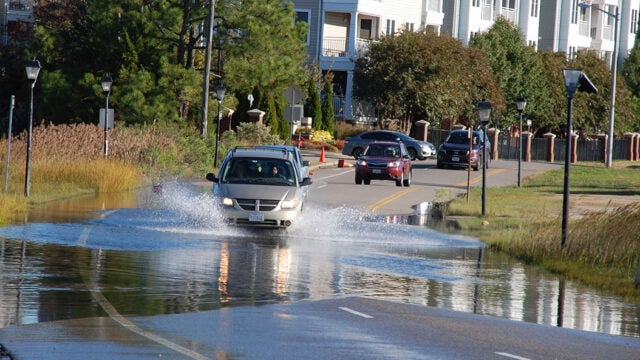
Grants Highlight Importance of Virginia’s RGGI Reentry and Investment in Climate Resilience
Another round of grant funding opened this month for projects that strengthen communities’ resilience to climate change and protection from extreme weather through the Community Flood Preparedness Fund.
The Chesapeake Bay Foundation (CBF) is encouraging communities to take advantage of this fifth round of grant funding, which supports a variety of projects including flood mitigation measures, stormwater management initiatives, coastal resilience projects, and green projects, that feature natural solutions to flooding. Other grant rounds have supported projects in localities from Petersburg to the Town of Chincoteague on the Eastern Shore to Buchanan County in Southwest Virginia.
The announcement of the grant funding comes as Southern Environmental Law Center lawyers argued in court last week to reinstate Virginia in the Regional Greenhouse Gas Initiative (RGGI). RGGI, a multi-state carbon emissions reduction program, was the state’s only dedicated funding source for community-based climate resiliency projects. CBF filed a legal brief in court to support the legal effort.
RGGI has been instrumental in reducing greenhouse gas emissions, as well as funding the Community Flood Preparedness Fund (CFPF). CFPF in turn supported these climate adaptation grants. After Virginia withdrew from RGGI, no money was allocated in the second year of the state budget for CFPF.
The grant round will be open for 60 days, closing on November 9. Learn more about eligibility requirements and the application process.
Jay Ford, Virginia Policy Manager at the Chesapeake Bay Foundation, issued the following statement:
“We’re coming out of the hottest summer on record, and a year where communities across Virginia suffered through extreme weather causing school closures and damage to their homes and businesses. The need for effective climate resiliency projects has never been more urgent and the Community Flood Preparedness Fund gives localities the opportunities to invest in their communities prior to damage occurring. We encourage communities to apply for these grants and invest in solutions that will protect their residents and property from the effects of climate change.”
“It’s an understatement to say it’s disappointing that there’s no money set aside for the Community Flood Preparedness Fund in the second year of the budget. This lack of funding will set back Virginia’s efforts to address climate change and protect its communities. This highlights one of the many reasons Virginia should return to RGGI as soon as possible. CBF continues to advocate for additional General Assembly funding for the CFPF and the state’s participation in RGGI to reduce our emissions and strengthen our resilience to inevitable extreme weather.”
To protect the health of residents and waterways, the Caroline County Commission unanimously passed new legislation this week that will strengthen local oversight of storage of food processing residuals, also known as industrial sludge or dissolved air flotation (DAF) material.
For over a year, county residents have sought relief from the irresponsible use of food processing residuals being stored and spread in their communities, citing threats to the local environment, rivers and streams, public health, and way of life. In response, County Commissioners passed a moratorium in December on the use of land or structures for the material’s storage. Then in July, Commissioners proposed permanent legislation that would require parties storing food processing residuals in Caroline County to hold a permit and meet certain conditions intended to protect the public and environment from harm.
This action complements recently-enacted state legislation requiring a permit for the handling, transportation, storage, and land application of sludge material on farmland. Caroline County Commissioners provided extensive testimony that was key to the state permit program legislation’s passage.
Chesapeake Bay Foundation Maryland Advocacy Director, Alan Girard, issued the following statement:
“Caroline County has been a statewide leader in responding to the need to better regulate food processing residuals in Maryland. They heard the concerns of their constituents and acted on them.
“Misuse and misapplication of food processing residuals are a major threat to Maryland’s environment and health. Caroline’s county-level action, combined with state legislation, will provide residents with strong protections against misuse of this material, and will ultimately help prevent Maryland farms from being a dumping ground for sludge. We commend the Caroline County Commissioners for prioritizing residents, health, and the environment.”
CBF Calls for Menhaden Study and Additional Precautionary Measures
Amid continuing concerns about the availability of menhaden in the Chesapeake Bay, a study released this week shows that osprey chicks are starving in nests in parts of the Bay where they typically depend on menhaden for food.
The most recent update, released by the William and Mary’s Center for Conservation Biology, shows that osprey young are not surviving at rates that sustain the population.
The primary factor for the loss of young osprey is starvation, according to the study. The findings this week support other recent surveys by USGS and Center for Conservation Biology showing osprey nesting failures.
The latest study surveyed data from 12 different sites this year in both Virginia and Maryland.
Osprey young were struggling to survive at 10 sites in saltier waters where osprey primarily depend on menhaden for food. However, osprey young had much higher survival rates in two freshwater sites studied for reference, where they eat mainly catfish and gizzard shad.
Menhaden are a key part of the Chesapeake Bay food chain, serving as a food for striped bass, osprey, and whales.
For years, the industrial harvest of menhaden in the Chesapeake Bay by Omega Protein and affiliate Ocean Harvesters, owned by Canada-based Cooke Inc., has raised concerns due to threats to other species.
Last month, the Atlantic States Marine Fisheries Commission voted to form a workgroup to consider additional restrictions on the industrial harvest of menhaden, following a presentation of survey results showing low osprey nesting success.
Virginia failed to fund a study earlier this year that would shed much-needed light on potential localized depletion of menhaden in the Chesapeake Bay. Existing data concentrates solely on the menhaden population coastwide, leaving unanswered questions about the impacts of industrial fishing in the Bay.
Chesapeake Bay Foundation (CBF) Virginia Executive Director Chris Moore issued the following statement:
“The management of the menhaden fishery, one of the most critical species in the Bay ecosystem, is operating with a question mark. We don’t have a full understanding of the impacts of industrial fishing in the Bay because Omega Protein continues to delay much needed scientific answers to this urgent question.
“This year’s osprey data adds to the growing concerns about the number of menhaden in the Bay and the importance of a robust menhaden population for species that depend on them for food and Virginia’s economy.
“We must follow a precautionary, ecosystem-based approach to setting limits on the menhaden fishery. That approach must include the study of the industrial fishing impacts to the Bay, as well as considering seasonal fishing closures from the Atlantic States Marine Fisheries Commission.”
CBF applauds current efforts to hold Ridgely’s Reserve accountable
In an important stand to reduce harmful polluted runoff from entering the Gunpowder River in Harford County, Maryland’s Office of the Attorney General, on behalf of Maryland Department of the Environment (MDE), filed a legal complaint today against developers of the Ridgley’s Reserve housing development for ongoing water pollution violations.
This action follows the Gunpowder Riverkeeper’s—represented by Chesapeake Legal Alliance (CLA)—recent ‘Notice of Intent’ to sue the development under the Clean Water Act in August.
Ridgley’s Reserve in Joppatowne, Maryland, includes more than 100 acres along Foster Branch cleared for residential homes. When the project began in 2022, all trees and vegetation were removed simultaneously, exposing soil to the elements and making sediment extremely susceptible to runoff. The developers continuously violated federal and state law by failing to keep the soil from washing off into Foster Branch and the Gunpowder River.
Residents describe the Gunpowder as running orange with mud. In 2023, despite Bay-wide increases, underwater grasses were found to have declined 80-87% in the river.
After roughly 30 inspections, MDE detected consistent violations at the site. The complaint filed suggests a financial penalty of up to $25,000 per violation to enforce compliance and to restore the aquatic resources already harmed by pollution.
Paul Smail, Chesapeake Bay Foundation (CBF)’s Vice President for Litigation, issued the following statement:
“Serial polluters need serious legal and economic consequences.
“After years of noncompliance with environmental law, consistently contaminating Gunpowder River, and harming local communities, it’s time to see Ridgley’s Reserve held accountable. We are pleased to see MDE and the Attorney General take this strong step towards protecting our shared natural resource. Much credit is due to the Gunpowder Riverkeeper and local resident advocates for undoubtedly spurring this action.
“Stormwater runoff remains one of the fastest growing sources of pollution in the Chesapeake Bay watershed. To keep pace with intense development pressure and effects of climate change, Maryland must take strong action if we’re to have a cleaner future.”
Seasonal temperature changes combined with polluted water, algal blooms, and dead zones, created deadly conditions for fish in the Baltimore Harbor on Wednesday, September 4. State officials identified roughly 24,000 dead fish in the Harbor, mostly menhaden. Menhaden are a key species in Chesapeake Bay food chains, but concerns are mounting over their numbers in the Bay.
Baltimore Harbor educators with the Chesapeake Bay Foundation (CBF) observed the dense algal bloom on Tuesday, noticing the water’s stark change in color and sulfur-like smell. On Wednesday, mounds of floating dead fish followed.
While small fish kills are a natural occurrence during seasonal changes—when days are warm and nights are cold—this magnitude is alarming. To compare, in late August a similar algal bloom killed approximately 1,700 fish.
Thermal inversion in the water column, which contributed to this fish kill, occurs when cooler, denser water sinks to the Harbor bottom, and lifts up warmer water and sulfur bacteria. These bacteria photosynthesize like plants, but consume oxygen rather than producing it, and release the “rotten-egg” smell currently permeating the Harbor.
At the same time, algae have been thriving on a diet of nutrient-rich stormwater runoff and pollution, and enjoying waters warmed by climate change. A recent report by the Environmental Protection Agency (EPA) showed that, despite improvements in many clean water metrics, Maryland is failing to make progress on stormwater remediation, holding back progress on overall Bay health and contributing to the possibility of additional fish kill events.
Though thermal inversions, sulfur bacteria, and algae occur naturally, their impact on Harbor life is greatly exacerbated by pollution and climate change. Having to combat stressors from all angles, both natural and man-made, makes fish highly vulnerable. Climate change and pollution only make these conditions worse.
Gussie Maguire, CBF Maryland Staff Scientist, issued the following statement:
“It’s crucial that we limit further stressors on our beloved aquatic species. Menhaden are the bedrock of the Bay ecosystem, supporting many other species’ diets. They already face immense pressure from industrial fishing lower in the Chesapeake Bay. Reducing nutrient pollution from stormwater runoff in Maryland would help expand habitat for these critically important fish. Right now, the Bay’s menhaden are pinched between industrial fishing and dead zones.
“Earlier this year, an EPA progress report showed that Maryland has made zero progress on reducing polluted stormwater runoff from entering our waterways. Pollution from stormwater has outpaced any management improvements due to increased development pressure and more intense rainfall from climate change. If our regulations remain par for the course, wildlife and people will continue to suffer.”
The National Fish and Wildlife Foundation (NFWF) today awarded the Chesapeake Bay Foundation (CBF) a grant to restore oyster habitat in the Hampton River, providing key support to a community-oriented project that will advance understanding of a champion water filterer for the river.
The $494,701 in funds will enable the planting of one million baby oysters on two acres of newly created sanctuary oyster reefs along the 3.2-mile-long waterway within the densely populated city. CBF plans to engage many civic organizations, including building on CBF’s longstanding research partnership with Hampton University, a historically black university located along the banks of the Hampton River.
With the expected achievement of the Chesapeake Bay Agreement’s goal to restore six Virginia tributaries, this project marks a transition to large-scale, community-based oyster restoration work within historically underserved communities.
Over time, the reefs are anticipated to support an array of different species, additional recreational fishing opportunities, and help improve water quality in the Hampton River.
Even though productive oyster leases were once maintained throughout the Hampton River, today the waterway’s aquatic life and recreational opportunities remain impaired. In the 1800s, hundreds of acres of natural oyster reefs called the Lower Bay home, supporting popular reef fish like speckled trout, black sea bass, and red drum. But decades of overharvesting, habitat destruction, poor water quality, and disease decimated the population of Bay oysters to a fraction of historic levels.
Engagement with students and the community will span multiple stages of the project from oyster planting, oyster shell recycling, and oyster reef construction, in part through participation and exploration on CBF’s cutting-edge mobile oyster restoration barge.
This grant will complement CBF’s work on a living shoreline at the nearby Bluebird Gap Farm, as well as rain gardens at local schools and parks. It also comes after successful NFWF-funded oyster restoration work by CBF and partner Elizabeth River Project in the Lafayette River, which in 2018 was named the first tributary in Virginia to be restored for oysters.
Because of oysters’ water-filtering capabilities, oyster restoration is a critical piece of the effort to reduce nitrogen and phosphorus pollutants entering the Chesapeake Bay. The grant announcement comes just months before Bay state leaders must confront the future course of Bay restoration, with many key 2025 restoration deadlines unlikely to be met by Bay states.
CBF Virginia Oyster Restoration Manager Jackie Shannon issued the following statement:
“We are thrilled to be working in the Hampton River to bring these sanctuary reefs to the community, build on our research partnership with Hampton University, and help Hampton River oysters make a comeback, especially through the use of CBF’s unique oyster barge. With their water-filtering abilities, the one million oysters added to the river will not only improve water quality, but fishing and recreational opportunities for Hampton residents.
“These NFWF grant funds have been crucial in restoring Bay tributaries and helping the Bay become home to some of the largest oyster restoration projects in the world. We are excited to build on this momentum to get closer to the Chesapeake Oyster Alliance goal of adding 10 billion oysters to the Bay by 2025.”
In the fight for a healthier community and Chesapeake Bay, advocates have taken legal action against Kent Island’s Chesterhaven Beach residential development project. On August 8, Kent Island residents, with support from Queen Anne’s Conservation Association (QACA), Chesapeake Bay Foundation (CBF), and Chesapeake Wildlife Heritage, filed a petition for judicial review in Queen Anne’s County Circuit Court regarding a recent County Board of Commissioners decision to designate sensitive land as a growth area for the Chesterhaven Beach project. An Application for Appeal was also filed with the County Board of Appeals objecting to the County’s action.
On July 9, County Commissioners voted to allow major residential development on 100 acres of waterfront land, much of which is in Maryland’s sensitive Critical Area. Passed by the Maryland General Assembly in 1984, the Chesapeake Bay Critical Area law protects land within 1,000 feet of high tide or tidal wetlands to minimize the negative impacts of new development on Bay water quality, habitat, and wildlife. The Chesterhaven Beach property includes 1.6 miles of vulnerable and ecologically important shoreline on the Chester River and Piney Creek.
The County’s decision undermines Maryland’s Critical Area law by circumventing requirements to obtain local and state land use change approvals known as growth allocation. It also sidesteps requirements in state law related to designating growth areas in local comprehensive plans.
Neighbors of the property, as well as environmental advocates in the Kent Island community, have voiced major opposition to the project. Not only is the project located in the sensitive Critical Area, but the ecosystem of forests, marshes, and wetlands where the development is proposed support wildlife, are important natural water quality filters, and are vital to Maryland’s resilience against flooding and climate change. Major conservation investments have been made near the property including oyster restoration and preservation and stewardship of the Piney Creek Wetland Preserve.
Development of Chesterhaven Beach runs counter to ongoing conservation in Queen Anne’s County, which recently reported 43 percent of farmland as permanently protected from development. The County Circuit Court and Board of Appeals are requested to review the petition and appeal application and consider the project’s compliance with all applicable laws.
CBF Maryland Advocacy Director, Alan Girard, issued the following statement:
“We can’t just ignore environmental law in the name of ‘growth.’
“The Queen Anne’s County Board of Commissioners is trying to go around Maryland’s Critical Area law by changing their Comprehensive Plan and allowing a 90-unit residential subdivision on extremely environmentally sensitive land. It would be devasting to the Chesapeake Bay ecosystem if this decision is upheld. The decision runs counter to state and local law, as well as major land preservation milestones recently celebrated by County leaders. It could also be precedent setting for other Maryland jurisdictions looking to grow development in tidal areas.
“In their review, we hope Queen Anne’s County’s Circuit Court and County Board of Appeals agree that the approval of the Chesterhaven Beach development is, in fact, against the law and must not prevail.”
Key states in the Chesapeake Bay watershed are not fully on track to meet commitments to reduce pollution to the Bay by 2025, according to evaluations released today by the U.S. Environmental Protection Agency.
The EPA evaluations come ahead of a Chesapeake Executive Council meeting in December that is key to the Bay’s future. The Chesapeake Bay Foundation (CBF) is calling for action from the region’s governors at this crucial meeting.
Every two years, the EPA evaluates state progress towards milestones to meet Chesapeake Bay water quality goals. The results reported today show that, despite noteworthy progress in recent years, Maryland, Pennsylvania, and Virginia have not fully met their goals to reduce pollution. Together, these states are responsible for roughly 90 percent of the pollution that reaches the Chesapeake Bay.
Since the establishment of the Chesapeake Clean Water Blueprint in 2010, the six Chesapeake Bay watershed states and Washington, D.C., in partnership with the federal government, have committed to a 2025 deadline to have practices in place to reduce nitrogen, phosphorus, and sediment pollution to the Bay. The commitment includes short-term goals every two years, called milestones, that are intended to keep progress on track.
This December, on the eve of 2025, the Chesapeake Executive Council is scheduled to meet. The Council is comprised of governors of Pennsylvania, Virginia, Maryland, Delaware, West Virginia, and New York, the mayor of Washington, D.C., the EPA Administrator, and the chair of the Chesapeake Bay Commission. The Chesapeake Bay watershed spans across all of these jurisdictions, and cooperative partnership is essential to meeting these goals.
CBF is calling for the following actions at the December meeting:
- Attendance in person by each of the Executive Council members, including all six Bay watershed governors and the EPA Administrator;
- A formal recommitment to maintaining the Bay restoration partnership, as well as meeting the pollution-reduction and other restoration goals already agreed to by Executive Council members; and,
- A commitment by the Executive Council to update the Chesapeake Bay Watershed Agreement by the end of 2025 to address challenges identified by the latest science.
CBF President and CEO Hilary Harp Falk issued the following statement.
“While tremendous progress has been made, these evaluation reports demonstrate we still have a long way to go. As climate change, development, and population growth make finishing the job harder, we must be direct about the challenges ahead.
“The immediate next step is clear. This December, the Chesapeake Bay’s six governors and federal leaders must recommit to working together and pledge to update the Chesapeake Bay Agreement by the end of 2025, including a new timeline for water quality goals that should be measured in years, not decades.
“Chesapeake Bay restoration is an international model built on the world’s best science. And it’s working. By continuing to follow the latest science and build upon our collective experiences, together we can ensure a thriving Chesapeake Bay ecosystem for all.”
Maryland
According to EPA’s milestone evaluation for Maryland, the state has made critical improvements, specifically in wastewater treatment and its forest buffer initiative. Maryland is reported to have met 83 percent of its 2025 goal for nitrogen reduction, and 100 percent of its 2025 goals for phosphorus and sediment. To fully meet its pollution reduction goals, Maryland will need to accelerate implementation of best management practices for agriculture and urban and suburban stormwater management.
CBF Maryland Executive Director Allison Colden issued the following statement:
“Governor Moore and his administration have made great progress towards a healthier Maryland and Chesapeake Bay, especially considering the tough challenges we’re facing such as increased development pressure and intensified rainfall from climate change.
“But there are still improvements to be made. We can no longer stay the course on stormwater management. It’s one of the fastest growing sources of pollution in the Chesapeake Bay watershed. Current permits do not account for the latest rainfall data or require sufficient on-the-ground restoration. These clear solutions should be a top priority if Maryland wants to meet its pollution reduction goals.”
Pennsylvania
EPA’s evaluation of Pennsylvania’s milestones for 2024-2025 indicates that the Commonwealth is not on track to meet its 2025 pollution reduction targets for nitrogen, phosphorus, or sediment. The evaluation noted that the legislature included in the state budget a $50 million annual investment for the Clean Streams Fund, which funds the Agriculture Conservation Assistance Program (ACAP). EPA also urged expanded efforts advocating for a sustainable source of funding to support programs strategically designed to accelerate implementation of best management practices.
CBF Pennsylvania Executive Director Julia Krall said:
“This latest evaluation is a reminder that Pennsylvania has a lot of work to do to meet its clean water targets. But progress being made and greater commitments by the Commonwealth are reasons for optimism that there will be cleaner local rivers and streams.
“To meet goals, most pollution reductions need to come from agriculture, and these historic investments in the ACAP cost-share will lead to more soil and water conservation practices on family farms. The Clean Streams Fund addresses urban/suburban stormwater runoff, agriculture, and acid mine drainage, the top three sources of stream impairment in Pennsylvania.
“It is also significant that Governor Josh Shapiro reaffirmed this summerthat the Commonwealth plans to continue its clean water work for the long haul. ‘We’re not talking about fixing the Bay anymore, we are fixing the Bay, and we are making sure Pennsylvania does its fair share,’ the governor said, adding that, ‘You have my commitment that this work will continue. Pennsylvania is all in’.”
Virginia
The EPA’s milestone report for Virginia noted the state’s record funding for agricultural best management practices and significant new funding for wetlands acquisition. Virginia so far has achieved 80 percent of its 2025 goal for nitrogen, 62 percent of its target for phosphorus, and 100 percent of its statewide target for sediment. Nonpoint areas of pollution continue to be a major source of pollution.
CBF Virginia Executive Director Chris Moore issued the following statement.
“Virginia has made significant strides in improving the health of the Chesapeake Bay and the many communities that live in the watershed. The state should be lauded for the notable support for farmers who are putting practices on the ground that improve water quality and their crop.
“The state still has work to do, especially as the Bay continues to face threats from increased development and new challenges from climate change. Virginia must continue to build on its momentum and accelerate nutrient pollution reductions from agriculture, expand practices to protect wetlands, and increase support to reduce pollution from stormwater and nonpoint areas of pollution.”
Return of Algae Highlights Importance of Nutrient Management Plans
The North Fork Shenandoah River is once again experiencing excessive algal growth, restricting the community’s full use of the river for fishing and swimming.
The Virginia Department of Health’s (VDH) algal mat alert spans approximately 11 miles of the river from Deer Rapids to the Town of Strasburg, and community observations of the algae persist. The VDH’s investigation revealed widespread and unavoidable algal mats potentially producing toxins.
If ingested, the algae’s toxins can be fatal for dogs and other animals. Disturbing the mats can pose human health risks as well. According to VDH, drinking water is not affected at this time.
Chesapeake Bay Foundation Virginia Watershed Restoration Scientist Matt Kowalski issued the following statement:
“These hot summer days help create a perfect storm for the North Fork of the Shenandoah River. Higher water temperatures from hotter weather, low water levels, and pollutants from sources like lawns, parking lots, and farm fields cause these algal mats. That shouldn’t be the case for the river in your own backyard. The community should be able to swim and fish in our river.”
“This algal mat occurrence highlights the importance of nutrient management plans in order to reduce pollution to our local waterways. In an area with as much agriculture as the Shenandoah Valley, we should ensure fertilizers are applied at rates and using techniques that protect water quality.”
Laura Bennett, Executive Director of Friends of the North Fork of the Shenandoah River, issued the following statement:
“People love to swim and fish in the North Fork Shenandoah River and bike near the water. In the middle of summer, excess nutrients entering the Shenandoah River fuel these algal mats and too often restrict or prevent the water from being enjoyed by our community. It stresses why tree plantings and managed applications of fertilizer are so important to keep our water safe.”
In a strong effort to reduce harmful polluted runoff from entering the Chesapeake Bay, Gunpowder Riverkeeper has filed a ‘Notice of Intent’ to sue the new Ridgley’s Reserve housing development in Joppatowne, Maryland under the Clean Water Act.
In 2022, more than 100 acres were cleared for the Ridgley’s Reserve development. All trees and vegetation were removed simultaneously, exposing its soil to the elements and making sediment extremely susceptible to runoff. Noticeably muddy water and a decline in underwater grasses in the nearby Foster Branch and Gunpowder River sparked major community and water quality concerns.
Despite repeated stormwater management violations, and multiple complaints and citations, corrective actions have been unsuccessful at stopping the pollution. Enforcement from both Harford County and the Maryland Department of the Environment has fallen short.
Gunpowder Riverkeeper is represented by Chesapeake Legal Alliance (CLA). Chesapeake Bay Foundation (CBF) is extremely supportive of the action.
Paul Smail, CBF’s Vice President for Litigation, issued the following statement:
“We need severe economic consequences for polluters. That seems to be the only way to enforce compliance with our laws.
“Stormwater runoff is one of the fastest growing sources of pollution in the Chesapeake Bay watershed. Not only do we need to better enforce current stormwater management rules, but we need to enhance them. Maryland’s regulations are not keeping pace with the rapid pressures of development, nor the effects of climate change and increased rainfall.
“CBF applauds the Gunpowder Riverkeeper and CLA’s legal action against Ridgley’s Reserve, for it demonstrates our collective intent to hold polluters accountable for their harm on communities and our shared natural resources.”
