Press Statement
Most comprehensive proposal in nation would boost transparency, promote clean energy and water usage
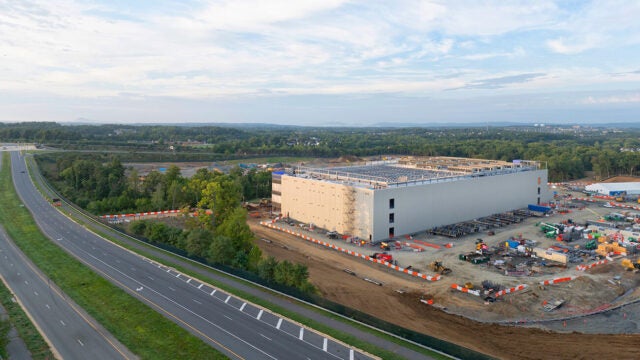
Virginia Governor Abigail Spanberger on Friday released a framework that would impose significant new guardrails on energy-guzzling data centers by boosting transparency and promoting requirements for clean energy and public water usage.
Data centers are already affecting Virginians in many ways—driving up electricity bills, saddling communities with noise and harmful air pollution from diesel generators, and using significant quantities of water resources. Without proper regulations, data centers pose significant risks to Virginia communities, the health of the Chesapeake Bay, and the Commonwealth’s air and waterways.
Among other measures, the Governor’s Data Center Accountability Framework calls for:
- Banning non-disclosure agreements that shield data center development from necessary public scrutiny and requiring local input and support before larger data center projects move forward
- Limiting the amount of electricity data centers can generate from on-site natural gas and closing loopholes that allow these emissions to bypass Regional Greenhouse Gas Initiative (RGGI) requirements and sidestep state clean air standards
- Setting and enforcing water use standards for data centers and ensuring data center investment in projects that compensate for the water they take
The framework, which is the most comprehensive overall data center policy package of any state to date, also takes important steps to cut methane emissions and expedite new regulations intended to reduce the amount of water used in water scarce areas.
Virginia—predominantly Northern Virginia—is the data center capital of the world. This growth has shown no signs of slowing down, with new data centers popping up all over the state. Dominion, for example, expects that 51% of its electricity will be sold to data centers by 2035. In other words, most of the electricity from Virginia’s largest utility would not go to residential households, small businesses, churches, or schools—it would go to a single energy-hungry private industry.
The General Assembly now has an opportunity, through the 2027 legislative session, to codify many elements of the Governor’s framework into law. Legislators must continue to build on this momentum. As AI leaders increasingly warn of the potential destruction data centers are helping fuel, it is time for lawmakers to rein in their escalating erosion of public processes and energy use and water consumption.
Chesapeake Bay Foundation Virginia Policy Manager Jay Ford issued the following statement:
“The wealthiest companies in human history shouldn’t make Virginians pay higher energy bills, breathe dirtier air, and risk access to clean water so they can build more data centers. Enough is enough.
“Governor Spanberger’s actions are a historic step toward putting checks and accountability on the enormous energy and water demands from data centers.
“Virginia’s General Assembly now must act. Lawmakers should pass the Governor’s bold proposals—and build on them to go further. We must ensure that data centers are transparent throughout their lifecycles, offset their water use, and fuel their operations with clean energy.”
The Trump Administration today issued an executive order on the Chesapeake Bay that repeals Executive Order 13508. This foundational 2009 order directed federal agencies to coordinate Chesapeake restoration, make fuller use of Clean Water Act authorities, pursue science-based and publicly accountable strategies, and strengthen federal leadership across the watershed.
With this latest action, the Trump Administration is jeopardizing decades of Bay restoration progress.
For more than 40 years, the federal government has worked in partnership with the states across the watershed to reduce pollution to the Chesapeake Bay. That partnership was strengthened in 2009 when EO 13508 established a new framework for federal leadership, coordination, and accountability. Water does not respect state or political boundaries. What happens upstream affects people downstream.
EPA recently touted significant progress toward reducing pollution and restoring the Chesapeake Bay. Today’s executive order dismantles a key part of the federal-state framework that helped drive that progress.
Chesapeake Bay Foundation President and CEO Hilary Harp Falk issued the following statement:
“The Trump Administration has repeatedly and unsuccessfully tried to slash funding for Chesapeake Bay restoration. Now they are trying to destroy Bay restoration by executive order.
“For 17 years, the 2009 executive order has helped provide the federal leadership, coordination, science and accountability needed to restore the Chesapeake Bay. Repealing it weakens this historic federal-state partnership at exactly the moment we need greater accountability and collaboration. Its replacement undermines the federal government’s role while eroding the ability of states and local governments to fix problems ranging from pollution to flooding.
“Playing politics with the Bay is a risky proposition. The Chesapeake Bay has long had bipartisan support, and Congress has repeatedly rejected the Trump Administration’s efforts to roll back investment in the Bay.
“Now is the time for leaders in Congress, the states, and local communities to step up and defend the Chesapeake Bay movement. They must hold firm on their commitments to restore, conserve, and protect the Bay and its waterways, habitats, fisheries, and wildlife, for everyone who depends on them.”
Groundbreaking Chesapeake Bay scientist Walter Boynton, whose work has been a key force behind the four-decade state-federal partnership to restore the Bay, passed away on Sept. 14. For more than 50 years, Boynton worked at the Chesapeake Biological Lab, the University of Maryland Center for Environmental Science’s facility in Solomon’s Island, Maryland, where he was at the vanguard of estuarine nutrient ecology research.
Over the course of his career, Boynton saw the resurgence of underwater grasses, the recovery of fisheries, and the launch of one of the world’s leading environmental movements, all in a large part thanks to his work.
Soon after joining the lab in 1975, Boynton co-led a team investigating the troubling decline of underwater grasses across the Chesapeake Bay. This research helped establish how nutrient and sediment pollution harms grasses and the Bay’s overall ecology. In the early 1980s, Boynton helped launch the Chesapeake Bay monitoring program, which tracks the health of the Bay and has been key to identifying where action is needed.
Boynton’s groundbreaking research on nutrient pollution helped lay the foundation for the ongoing decades-long Bay restoration effort, considered a global model for federal-state cooperation in environmental restoration. As a result, states across the Chesapeake Bay region agreed to legally-binding commitments for reducing nitrogen, phosphorus, and sediment pollution across the Bay.
During the precipitous striped bass decline in the 1980s, Boynton’s research on the game fish led science supporting strict limits on the fishery. These actions were widely credited with the striped bass comeback in the 1990s.
Boynton was gifted at communicating complex scientific concepts in simple, easy-to-understand ways. This skill was vital in helping elected leaders and other officials develop policy to protect and restore the Chesapeake Bay. His relentless optimism in finding solutions to the Bay’s toughest problems has spurred action for decades.
Chesapeake Bay Foundation President and CEO Hilary Harp Falk issued the following statement:
“Walter Boynton didn’t just study the Chesapeake Bay, he helped change it for the better. Through decades of research, mentorship, and public service, he gave us the wisdom and confidence to save it. His hopefulness will always stay with me.”
CBF Vice President for Litigation and General Counsel Paul Smail worked for Boynton beginning in 2002, when he joined the Chesapeake Biological Laboratory as a faculty research assistant. Smail issued the following statement:
“Walter saw the beauty and magic in how nutrient inputs impact water quality and habitat and instilled in me and everyone around him an appreciation of estuarine ecology, as well as the joy in how these systems themselves could tell us a story.
“Over the course of our nearly twenty-five year friendship he demonstrated this same approach to life. Show up, be kind, do good, work hard, and the results will do the talking. Most of all, he gave me hope.”
The Trump Administration today announced that the Environmental Protection Agency is rolling back most limits on greenhouse gas emissions from power plants, and stated that it plans to repeal the finding that these emissions are a threat to the public.
This follows the Administration’s action earlier this year to repeal an analogous greenhouse gas endangerment finding for vehicles. In April, the Chesapeake Bay Foundation (CBF) joined Earthjustice and partners in suing the Trump Administration to challenge this rollback for vehicles.
Since the vehicles rule issued in 2009, federal endangerment findings have supported regulations that fight climate change and its harm to people and the environment.
While today’s repeal of power plant emissions limits takes effect immediately, the endangerment finding repeal for power plants must first undergo a public comment period. If that finding is lifted, it may be harder for future presidents to place limits on power plant emissions. During the public comment period, CBF plans to strongly oppose the latest proposed repeal as it is scientifically indisputable that power plant emissions impact human health and contribute to climate change.
The Chesapeake Bay is on the front lines of climate change threats. In our region, sea level rise and flooding threatens homes and businesses and destroys habitat. Warmer water stresses fish and other aquatic life. Stronger and more frequent storms due to climate change add pollution to the Bay. CBF has worked for years to address these threats from climate change.
CBF Senior Vice President for Programs Alison Hooper Prost issued the following statement.
“This defies common sense. There is no denying that climate change is harming people and the Chesapeake Bay. The science is indisputable that power plant emissions are making it worse.
“In our region you can see the damage with your own eyes, from flooding and dangerous heat waves in our cities to stronger storms sending pollution into the Bay’s rivers.
“We’re already suing the Trump Administration for repealing climate change protections for car and truck emissions. Now we’ll be fighting the latest rollback of the power plant endangerment finding through the public comment process.”
Another year of crisis linked to lack of menhaden for food
The 2026 season was the worst year ever recorded for breeding ospreys in the Chesapeake Bay, according to research released Monday by the Center for Conservation Biology at William & Mary.
This continues a yearslong trend of osprey reproductive rates struggling particularly in saltier parts of the Bay, where they fell well below rates needed to sustain the population. Within tidal freshwater parts of the Bay, productivity rates only barely met the threshold needed to maintain osprey populations, according to the research, which monitored 937 osprey pairs among 23 study areas from March to August.
In 2026, a prime factor was food stress causing chicks to starve, researchers found. And the extreme food stress in recent years “appears to be caused by” changes to the availability of Atlantic menhaden, the report said.
Average productivity in saltier parts of the Bay was 0.25 young per pair in 2026 – well short of the roughly 1 young/pair breeding rate needed to maintain a stable population on a global scale.
Dr. Bryan Watts and other researchers had previously linked unprecedented levels of starving osprey chicks in the Bay to concerns around menhaden, a nutrient-packed fish that is a key food source for osprey and many other species.
Other research in recent years has documented osprey chicks starving in nests across portions of the Chesapeake Bay where osprey primarily rely on menhaden for food.
While other factors could be at play as well, ensuring more menhaden are left in the water is the most feasible immediate step to help osprey recover, the Chesapeake Bay Foundation said.
Virginia is the only state along the Atlantic coast that still allows industrial menhaden fishing in state waters. That lone remaining industrial operation—Omega Protein and their fishing partner Ocean Harvesters—extracts over 100 million pounds of menhaden from Chesapeake Bay waters each year, with limited scientific understanding of the impacts to the Bay’s ecology or coastal communities.
Widespread osprey nesting failures are among several warning signs that the menhaden population is struggling both in the Bay and along the Atlantic Coast, including plummeting catches by small-scale watermen who catch menhaden for bait for local crab fisheries.
The Atlantic States Marine Fisheries Commission (ASMFC) is currently weighing changes that could reduce the menhaden harvest in the Bay by up to half and better spread the harvest throughout the season, lessening some of the stress on this struggling estuary.
The public can submit comments on the proposal, known as Draft Addendum II, until October 9. There are also in-person hearings in the coming weeks where the public can weigh in, including one at Annapolis High School in Annapolis, Maryland on Tuesday, September 15 from 6 p.m.-8 p.m. and one at Fort Monroe in Hampton, Virginia on Monday, September 28 from 6 p.m.-8 p.m.
Chesapeake Bay Foundation Virginia Executive Director Chris Moore issued the following statement:
“Ospreys are in a downward spiral. This research confirms what people who know the Chesapeake Bay have been seeing for years.”
“To help reduce the number of starving ospreys, we need to ensure the fish are there for them to eat. These data should spark strong action from the Atlantic States Marine Fisheries Commission on menhaden in the Chesapeake Bay, which could go a long way toward ensuring a better future for the Bay’s osprey population. The Bay and its osprey can’t wait any longer. The commission must act if we have any chance at reversing these dire ecological warning signs.”
“It’s time for the ASMFC to cut the Bay’s industrial menhaden harvest in half, spread out fishing pressure better throughout the season, and protect menhaden for future generations.”
Underwater grasses across the Chesapeake Bay reached their highest point since 2018, though some rivers continue to see troubling declines, according to 2025 survey results released today by the Virginia Institute of Marine Science and Maryland Department of Natural Resources. Providing numerous ecosystem benefits but sensitive to pollution, underwater grasses are strong indicators of the Bay’s overall health.
The annual survey recorded a total of 89,385 acres of underwater grasses, an increase of more than 6,000 acres compared to 2024 results. This nearly reaches the Chesapeake Bay Watershed Agreement’s 2030 interim goal of 90,000 acres, though much work remains to meet the long-term goal of 196,600 acres by 2040.
The overall gains mask troubling declines in several of the Bay’s rivers. Underwater grasses have seen the biggest increases in the Bay’s saltier waters. Meanwhile, sections of some rivers in Maryland and Virginia have experienced dramatic drops in underwater grasses. Those include parts of the Potomac, Patapsco, Gunpowder, Rappahannock, and James rivers. In the 2024 results saltier portions of the Bay also saw the largest gains.
Underwater grasses have many benefits. They lead to cleaner water and provide shelter and food for Bay species like blue crabs, fish, and waterfowl. They also mitigate climate change and diminish acidification caused in part by greenhouse gas emissions.
Chesapeake Bay Foundation Virginia Senior Scientist Joe Wood issued the following statement:
“Increased underwater grass coverage is a clear sign of how the Bay is healing. While there’s plenty to celebrate with more grasses in saltier parts of the Bay, the declines in many rivers, including the Rappahannock, reveal that significant work remains. Polluted runoff from sources like development and agriculture remains a big threat to underwater grasses, and this is exacerbated by rising temperatures and more intense storms fueled by climate change.
“State and federal leaders have their work cut out for them to meet their commitments of 196,600 acres of grasses by 2040. Now is the time to double down on efforts to reduce pollution to the Bay and its rivers and streams.
Chesapeake Bay Foundation Maryland Coastal Resource Scientist Julie Luecke issued the following statement:
“Underwater grass gains across the Bay are welcome news, but Maryland’s rivers tell a more complicated story. Declines in places like the Patapsco, Gunpowder, and Potomac show the pressure from polluted runoff and increasingly intense rainstorms.
“For thriving grasses across the region, we need more than celebration. We need action. The underwater grasses survey results show that state and federal leaders still have a lot of work ahead to meet their commitment of 196,600 acres of grasses by 2040.
Virginia’s popular agricultural cost-share program has contributed significantly to improving local water quality in the Commonwealth and cutting pollution that ultimately flows into the Chesapeake Bay, state analysts said in a report released on Tuesday.
However, the Virginia Agriculture Best Management Practices Cost-Share Program (VACS) could benefit from changes to prioritize the most cost-effective practices and ensure that the state is getting the most bang for its buck, according to the report from the state’s Joint Legislative Audit and Review Commission (JLARC).
Even with calls to make the program run more efficiently, VACS is one of the state’s primary tools to improve water quality and is largely effective, the report found.
The report noted that during the last five years, the number of farmers participating in the program has grown by more than 30 percent, to nearly 2,600. Over the same period, the program has collectively helped fund more than 200,000 pollution-reducing conservation practices on the Commonwealth’s agricultural lands.
The Chesapeake Bay Foundation has strongly supported the program, which received a record $304 million for the current budget year.
For more than 40 years, VACS has helped farmers install projects that both benefit the environment and their farm. Fencing cattle out of streams, planting streamside trees and grasses, and other conservation practices are among the most cost-effective steps Virginia can take to reduce nutrient pollution to local streams, rivers, and the Chesapeake Bay.
Farmers can receive up to $300,000 in reimbursements through the program for developing good management practices – critical funding when, for example, they’re putting up miles of fencing along streambanks. Virginia’s Soil and Water Conservation Districts (SWCDs) help distribute funding from the program and provide technical assistance.
The JLARC report made several recommendations for changes to the program, including:
Prioritizing the most effective practices by cataloguing top projects, revising the grant award process, and including new economic incentives for the most effective projects
Creating an outreach pilot program to bring more farmers into the program
Developing a plan to reduce the state’s reliance on annual practices, which can be more costly over time, by implementing more long-term practices like planting vegetation near bodies of water or fencing livestock away from streams
Virginia legislators have set a July 1, 2028, deadline for farmers to meet goals for reducing pollution from agriculture. Even after reaching these goals, continued investment will be needed to keep pollution from growing.
The state budget that took effect July 1 is the first one after Virginia joined state and federal leaders from across the region in December to commit to an update to the Chesapeake Bay Watershed Agreement. That new accord binds Virginia to meeting numerous environmental goals by 2040.
Chesapeake Bay Foundation Virginia Policy Manager Jay Ford issued the following statement:
“This program has been great for farmers and for promoting healthier rivers and streams in Virginia. It will continue to be an important resource for farmers working to ensure the prosperity of their operations and implementing sustainable agriculture practices.
“Any program of this size will need to be tweaked and refined over time. The JLARC report makes clear that Virginia must prioritize long-term practices that will boost water quality while ensuring taxpayers get the biggest bang for their buck.
“Long-term practices like planting vegetation near rivers, fencing cattle from streams, and creating wetlands can deliver major cuts to pollution while being more cost-efficient.
“Even with these recommendations, the report reaffirms the substantial value of the program: over the last five years alone, VACS has collectively helped fund more than 200,000 pollution-cutting conservation practices as enrollment increased more than 30 percent.
“We hope farmers will take advantage of this year’s record investment in the program. Reducing pollution and runoff from farms is one of the best, most cost-effective ways to preserve and restore local streams and the Chesapeake Bay.
“We stand ready to work with the legislature and with farmers across the Commonwealth to help ensure the program’s continued success and long-term sustainability.”
DNR Initiative is a Strong Step for Maryland Farmers and Clean Water
This week, Maryland Department of Natural Resources (DNR) announced a first-of-its-kind regenerative farming lease on state-owned land. This program will help farmers who lease property from the state to prioritize and scale regenerative agriculture practices. These practices improve soil health, biodiversity, and climate resilience, and reduce pollution entering the Chesapeake Bay.
DNR is one of the largest agricultural landowners in the state, leasing about 10,000 acres of state property for farming. Incentivizing regenerative agriculture on state-owned land will have significant long-term benefits for farmers, communities, soil health, and clean water across the state—especially as farm ownership continues to become more expensive and a barrier for new farmers.
The new program launched with DNR’s first lease, available in Poolesville, Maryland. The program was developed as part of the Chesapeake Bay Legacy Act (HB 506), which was sponsored by Governor Wes Moore and passed in the 2025 General Assembly session. The program allows DNR to issue longer leases to farmers, which enables more time and certainty for them to implement voluntary regenerative farming systems. The Chesapeake Bay Foundation (CBF) has long advocated for regenerative farming on state-owned land and lobbied in support of the Bay Legacy Act.
Regenerative agriculture is a climate-smart farming method that focuses on biodiverse ecosystems and healthy soils. Its benefits include water infiltration and retention, carbon sequestration to mitigate climate change, increased biodiversity, and improved farm economics by reducing costly fertilizer and herbicides. Regenerative practices such as diversifying crops and livestock and integrating trees help the soil retain both nutrients and water, and reduce pollution from running into Maryland waterways.
DNR is currently seeking applicants for its first available lease in Poolesville and is working to identify additional properties that are suitable for long-term regenerative agriculture leases throughout the state.
Maryland farmers and leaders who are interested in learning more about regenerative agriculture are also welcome to join CBF and Mobilize Frederick at their third annual Regenerative Farm Tour on October 15 in Woodsboro, Maryland.
CBF Maryland Watershed Restoration Scientist Rob Schnabel issued the following statement:
“DNR’s new farming program is a model for regenerative agriculture implementation, combining land access opportunities for farmers while maximizing community and conservation benefits.
“Maryland has long been a leader in regenerative agriculture, which is a critical tool in our fight against climate change, flooding, and droughts. This initiative is a great example of how proven solutions that improve healthy ecosystems can be implemented and scaled across the state. It should serve as a national model for public owned farmland. We applaud DNR and Governor Moore for their leadership to make regenerative farming easier and more profitable for farmers who are leasing state land to feed their communities.”
The Atlantic States Marine Fisheries Commission (ASMFC) this week officially opened the comment period on proposed changes to the Chesapeake Bay’s industrial menhaden fishery—a move that now gives the public the opportunity to weigh in on how best to protect the critical forage fish.
The ASMFC on August 5 advanced a measure, known as Draft Addendum II, that could cut the industrial fishery harvest cap in the Bay by up to 50 percent and spread the harvest out throughout the year, among other possible changes.
The Chesapeake Bay Foundation (CBF) supports the strongest option on the table: cutting the Chesapeake Bay Reduction Fishery Cap in half and creating three quota periods to better spread the harvest out throughout the season. This would cut down on sustained pressure from concentrated high-volume fishing.
Menhaden are a key fish in marine food chains, feeding osprey, striped bass, and other wildlife. The menhaden reduction fishery is an industrial operation concentrated in the Chesapeake Bay, where a fleet of vessels catches more than 100 million pounds of the fish each year.
The reforms the ASMFC is considering respond to ongoing concerns tied to the menhaden population in the Bay, including starving osprey chicks and plummeting catches for watermen who use menhaden for bait.
As these warning signs escalate, 92 percent of Virginia voters support leaving more menhaden in the Bay, according to recent polling.
In addition to submitting comments to the ASMFC online, there will be several opportunities to offer in-person public comments on the measure. Those include an event hosted by the Maryland Department of Natural Resources and Potomac River Fisheries Commission at a to-be-determined location on September 15 from 6 p.m. to 8 p.m. and an event hosted by the Virginia Marine Resources Commission (VMRC) at Fort Monroe in Virginia on September 28 from 6 p.m. to 8 p.m.
The public comment period for Draft Addendum II ends at 11:59 p.m. on Friday, October 9. The commission will use the public comments to inform their decisions ahead of possible action at their annual meeting, slated to take place November 9-12.
Upcoming CBF Menhaden Events
For those interested in learning more about menhaden and Draft Addendum II, CBF will be hosting a “Menhaden Matter” free event at the Philip Merrill Environmental Center in Annapolis, Maryland on Thursday, September 10. CBF staff and partners will share more about menhaden advocacy efforts and how the public can help take action moving forward.
CBF is also slated to host an in-person menhaden learning session on Draft Addendum II at the Brock Environmental Center in Virginia Beach, Virginia on Wednesday, September 23 and a virtual menhaden learning session on Tuesday, October 6. Both of these events are free as well.
In addition to providing comment in-person at public hearings, members of the public can click here to take action.
Chesapeake Bay Foundation Forage Campaign Manager Will Poston issued the following statement:
“The Chesapeake Bay needs more menhaden in the water. It’s time to cut the Bay’s industrial menhaden harvest in half, spread out fishing pressure better throughout the season, and protect menhaden for future generations. The public now has the chance to speak up for one of the Bay’s most important fish.
“From watermen to researchers to nature enthusiasts, people are crying out for action on menhaden in the Bay. The overwhelming public support to leave more menhaden in the Bay must be channeled into productive advocacy for menhaden conservation.
“The ASMFC has thankfully moved forward on critical menhaden reforms. Now, the public must make their voices heard.”
Governor Josh Shapiro signed an executive order Tuesday detailing new requirements for data center projects in Pennsylvania.
The Chesapeake Bay Foundation (CBF) is encouraged to see that the Governor’s office is building transparency into the data center construction process in the Commonwealth. Without proper oversight, data centers can threaten the health and well-being of Pennsylvania communities, compromise air quality, and put local streams, the Susquehanna River, and the Chesapeake Bay at risk. Requiring developers to report energy and water use is essential to understanding the environmental impacts of these large-scale industrial projects.
Data centers can place significant demands on surface and groundwater supplies, increase electricity bills, and fill communities with persistent noise and harmful air pollution from diesel generators. These new requirements will help communities better understand the potential threats and support efforts to protect clean drinking water, healthy air, and a high quality of life for Pennsylvanians.
CBF Pennsylvania Director of Science Policy and Advocacy Harry Campbell issued the following statement
“Pennsylvania continues to move in the right direction in fighting the mounting challenges posed by data center projects. Now that these facilities are required to report their electricity and water usage, we can better understand potential threats.”
“The executive order signed by Governor Shapiro establishes stronger safeguards, greater transparency, and added accountability to the data center industry. We look forward to continuing to work with state lawmakers to ensure that Pennsylvanians can enjoy thriving communities, clean air, productive farms and forests, and healthy rivers and streams for generations to come.”
