Bay Grasses
Underwater grasses are vital to the Bay’s health. They filter pollution, support wildlife, and serve as an indicator for clean water. Their decline threatens an entire ecosystem—but restoration efforts are underway.

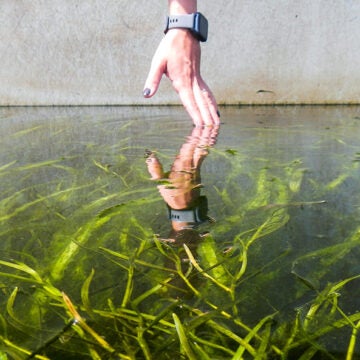
More than a dozen varieties of underwater grasses—known as submerged aquatic vegetation (SAV)—grow in the shallow waters of the Bay. Once covering hundreds of thousands of acres, these grasses have declined due to pollution and climate change. CBF is working to restore this critical habitat.
From a low of 38,000 acres in 1984 to a peak of over 100,000 acres in 2018, restoration progress has fluctuated with weather and pollution. Recent gains are promising, but setbacks from storms, sediment, and algal blooms remain a challenge.
About Bay Grasses
Bay grasses are underwater plants that thrive in shallow areas. They play a key role in water quality and support a diverse range of wildlife.
Bay grasses absorb excess nutrients like nitrogen and phosphorus, which helps prevent harmful algae blooms and improves water quality.
Underwater grasses provide habitat for blue crabs, juvenile striped bass, and other aquatic life. Migrating waterfowl, including ducks and geese, rely on them for food.
Grasses stabilize sediment and improve water clarity. Their leaves and stems slow wave energy, helping particles settle, while their roots anchor the soil.
Bay grasses are a strong indicator of clean water. Their presence reflects healthy conditions, and their decomposition feeds benthic (bottom-dwelling) aquatic life.
Threats to Bay Grasses
Bay grasses are sensitive to pollution and climate extremes, which can cloud water and block the sunlight they need to grow.
Stormwater runoff carries sediment that clouds the water, limiting sunlight and threatening the survival of grasses and the species that depend on them.
Excess nitrogen and phosphorus fuel algal blooms that block sunlight and deplete oxygen, creating “dead zones” that harm fish and shellfish. These blooms can also raise pH levels, stressing fish and creating conditions that spur the growth of parasites.
Heavy storms increase soil erosion, flooding, and sewer overflows—dumping nitrogen, phosphorus, and sediment into the Bay and its rivers and streams. Climate change is intensifying these events.
Warmer waters have a decreased capacity to hold dissolved oxygen, exacerbating the Bay’s fish-killing dead zones and contributing to algal blooms. Rising temperatures also threaten temperature-sensitive species like eelgrass, a key food source for waterfowl and habitat for blue crabs.
What can we do?
CBF is supporting underwater grasses by reducing pollution, advocating for clean water policies, and protecting waterways. Everyone can help—small actions at home and in your community make a big difference.
CBF advocates for Bay grasses by fighting for stronger pollution controls and clean water. Join CBF’s Action Network to support local clean water initiatives and advocate for stronger environmental protections in your community.
CBF promotes planting riparian buffers—trees and shrubs along waterways—and caring for wetlands. These natural barriers filter pollutants before they reach the Bay.
Creating green infrastructure, or infrastructure that functions like the natural environment, can reduce sediment and nutrient pollution from stormwater runoff. Projects such as rain gardens and living shorelines can reduce polluted runoff, alleviate flooding, and help mitigate the impacts of climate change. At home, reduce fertilizer use, compost yard waste, and install rain barrels or gardens to prevent runoff.
Through education programs and volunteer opportunities, thousands of Bay savers pitch in every year to support clean water initiatives and restoration projects that help Bay grasses. Explore volunteer opportunities to get involved.
Related Stories
-
 Blog Story
How Are the Chesapeake Bay’s Underwater Grasses Doing?
An annual pulse-check of one of the Bay’s most important habitats found a mixed bag. Here’s your guide to understanding the results.
How to Get Involved
From signing up for an event to shopping our CBF Store, there are so many ways you can get involved in the Save the Bay movement.
