Conowingo Dam
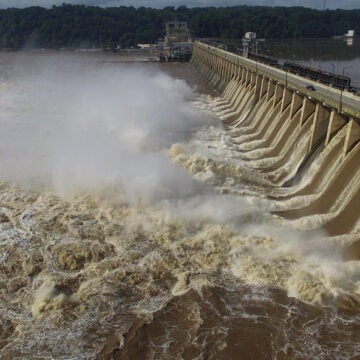
For decades the Conowingo Dam on the Susquehanna River in Maryland trapped much of the sediment and nutrient pollution carried by the river and prevented it from reaching the main stem of the Chesapeake Bay. But now with the dam’s reservoir silted in, more pollution is flowing downstream.
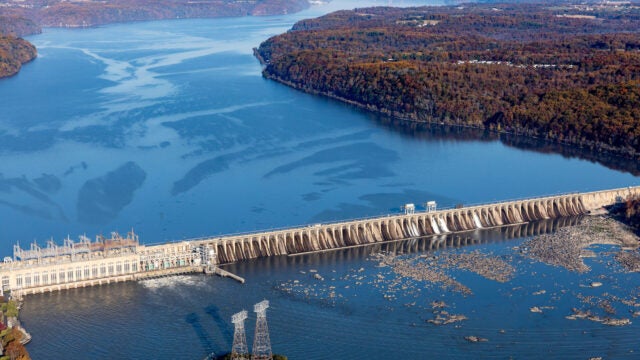
Now the area behind the dam has silted in, and more quickly than scientists had anticipated. With the loss of trapping capacity, major storms scour some of that sediment and wash the pollution downstream.
Environmental partners, including CBF and local waterkeepers, have been seeking a comprehensive solution to the Conowingo problem that would address both the pollution building up at the dam and the pollution entering the Susquehanna River upstream.
How Conowingo Dam Impacts Water Quality
In the mid-1990s, researchers estimated that dams on the Susquehanna, including the Conowingo, trapped about two percent of the nitrogen, 40 percent of the phosphorus, and 70 percent of the sediment that would have entered the Bay from the river. But over time the reservoir behind Conowingo filled up, and its ability to trap pollution declined.
A 2016 report by state officials and the Army Corps of Engineers showed that the dam’s trapped sediment doesn’t present as significant a problem as originally feared, in terms of amount of pollution scoured from behind the dam and delivered to the Bay during big storms.
Sediments—sand, silt, and clay particles—making their way past the dam in storms generally settle to the bottom without threatening the Chesapeake Bay water quality or aquatic life, the report concluded. Underwater grass could be threatened by a storm and sediment surge during the growing season.
The bigger threat to the Bay is excess nutrients—nitrogen and phosphorus—coming through the dam, according to the 2016 Army Corps of Engineers report. Nitrogen generally dissolves in water, so the dam never trapped or prevented much nitrogen from moving downstream to the Bay. But phosphorus is typically associated with sediment particles and was historically trapped by the dam. Now that the dam has less capacity to trap these particles, more phosphorus is washing downstream when it storms.
Strong storms that produce significant rainfall cause “scour events” during which large amounts of water flowing through the dam wash the sediment, debris, and pollutants trapped behind the dam into the lower reaches of the Susquehanna River and the Chesapeake Bay. This process alters the form and timing of pollutants that enter the Bay by causing large amounts of pollutants to flow through the dam all at one time, overwhelming natural systems. The pollutants then contribute to algal blooms that cause dead zones devoid of oxygen, where marine life can’t survive.
Conowingo’s Role in Reducing Pollution
The federal license to operate the Conowingo Dam was issued in 1980 and expired in 2014. Legal challenges over the terms of a new license, and how to protect water quality, have been ongoing between Maryland, the dam operator, and environmental organizations, including CBF.
In order to renew its license from the Federal Energy Regulatory Commission (FERC), Exelon—then the dam’s owner—had to request a Section 401 water quality certification from Maryland under the Clean Water Act. Under this section, states must consider potential environmental impacts from the dam and include appropriate conditions in the new FERC permit to minimize these impacts.
Maryland issued its certification in April, 2018 for Exelon to operate the Conowingo Dam for the next 50 years. It included a condition that Exelon shoulder the main responsibility for reducing nutrient pollution passing through the dam, though its share of the costs could be reduced by amounts contributed by the Bay states. The certificate also ordered Exelon to develop a better plan for releasing water from the dam in order to improve downstream habitat for fish and other marine life. The company also was directed to better aid spawning fish to bypass the dam on their way upstream.
After Exelon challenged the Maryland water quality certification, the state agreed to a settlement in October 2018 that would require Exelon to invest about $200 million in projects such as trash removal at the dam, mussel restoration, improved fish passage, and agricultural conservation practices. However, it also forfeited Maryland’s right to modify the dam’s pollution permit, preventing the state from requiring Exelon to reduce pollution coming from the dam for the next 50 years. It didn’t expressly require Exelon to add the pollution reduction measures the company said it would fund as part of the settlement. And it did not focus settlement funds to Pennsylvania, where pollution projects are most urgently needed to address Bay pollution being exacerbated by the dam’s presence on the Susquehanna River.
Following the Maryland settlement, the Federal Energy Regulatory Commission issued the new license to operate Conowingo in 2021. Environmental groups, including Waterkeepers Chesapeake, Lower Susquehanna Riverkeeper, ShoreRivers, and CBF, challenged the license in court. In 2022, the U.S. Court of Appeals in Washington, D.C. vacated the license, ruling that FERC had no authority to issue a license based on Maryland’s after-the-fact withdrawal and “waiver” of its water quality certification granted for the dam in 2018. This ruling nullified the negotiated agreement between Maryland and Constellation, the firm that took over the dam from Exelon, and brought interested organizations back to the debate over the water quality certification. The Maryland Department of the Environment (MDE) and other parties went back to the negotiation table.
In October 2025, Governor Wes Moore announced an updated $341 million settlement between MDE, Constellation Energy, Waterkeepers Chesapeake, and Lower Susquehanna Riverkeeper. The updated settlement will require Constellation to meet enforceable water quality standards by mitigating the impacts associated with the dam’s operation. The agreement includes investments such as restoring mussel populations via a new hatchery, combatting invasive species, improving fish passage, and studying the viability of dredging sediment trapped by the dam. Following the agreement, a Revised Water Quality Certification will be filed with the federal government for the dam’s license to be renewed.
Accountability is what got us here and will be key to carrying out the terms of the settlement and ensuring its tangible water quality benefits. This was a decades long fight, and there’s still work to be done.
Hilary Harp Falk, CBF President
CBF’s Actions on the Conowingo Issue
CBF has been active for years on the Conowingo issue. We advocate for addressing pollution at its source—upstream of the dam—as well as addressing pollution building up at the dam.
Throughout the current relicensing process, CBF has filed comments on the Maryland water quality certification. We also filed to intervene in the FERC relicensing to ensure the Foundation’s voice was heard, and to position us for a legal challenge if necessary.
As Maryland and Constellation worked on a new water quality certification for the dam, CBF urged Constellation to make conservation investments upstream of the dam to reduce the amount of pollutants flowing through it. We believe that investments in streamside forest buffers, green infrastructure to prevent stormwater from entering streams and rivers, and projects to reduce agricultural pollution in the Susquehanna’s watershed in Pennsylvania would be the most cost-effective and long-term solutions to offset the pollution exacerbated by the dam’s presence.
In 2017, CBF and The Nature Conservancy commissioned an examination of the dam’s finances and used that report to support a call for Exelon—then the dam’s owner—to make a financial contribution to mitigation efforts. The report concluded Exelon could continue to make a healthy profit from the hydroelectric dam while paying $27 million to $44 million a year toward the cleanup. CBF did not advocate for Exelon to be responsible for the entire cost of the pollution reduction—estimated at over $170 million a year. The dam is now owned and operated by Constellation, which split from Exelon in 2022.
CBF was involved in the previous relicensing of the dam in the late 1980s, filing comments in support of actions to improve the ability of migratory fish to pass by the dam and access historic upstream habitat. We continue to advocate for this issue.
Solving the Conowingo Challenge
The relicensing process sets up the opportunity for Maryland to secure much-needed water quality improvement projects and policies from the dam’s operator. Broader efforts to reduce pollution are also important.
Due to the lack of pollution mitigation requirements in the 2018 deal with Exelon—the dam’s former owner—Chesapeake Bay watershed states were being saddled with reducing the additional pollution loads caused by the dam’s operations. A Conowingo Watershed Implementation Plan identified ways to reduce the pollution, which was estimated to cost at least $53 million per year. But the federal Environmental Protection Agency later declared it had no confidence in the Conowingo cleanup plan because states had not identified ways to finance the work. The new Conowingo Dam license process can be transformative for the Bay, but only if Maryland officials can work through the challenges of dealing with the dam’s private operator, the utility Constellation Energy. The 2025 settlement is a good starting place. Once the conditions of the Revised Water Quality Certification are incorporated in the dam’s operating license, Maryland will work to ensure that the obligations in the certification are fully and effectively enforced.
The 2016 study about Conowingo’s impacts and potential solutions concluded that dredging material from behind the dam would be prohibitively expensive with little environmental benefit. Instead, it said the most cost-effective solution would be to stop pollution from entering the Susquehanna River in the first place. The Susquehanna contributes, on average, roughly one third of the sediment, one quarter of the phosphorus, and 46 percent of the nitrogen flowing into the Bay. Pennsylvania and New York must do more to reduce sediment, phosphorus, and nitrogen entering the Susquehanna as required by their commitments to meet the Bay’s water quality targets.
We continue to caution that the Conowingo Dam is not the only major threat to the Bay’s health, and in fact, has little impact beyond a portion of the main stem of the estuary. Local areas must continue to do their part. For example, many of Maryland’s creeks and rivers are on the U.S. Environmental Protection Agency’s “impaired waters list” and are polluted almost entirely by local sources—farms, sewage plants, septic systems, urban and suburban runoff, and other sources which must be addressed locally. These need to be cleaned up if we ever expect to have clean water.
Related Programs
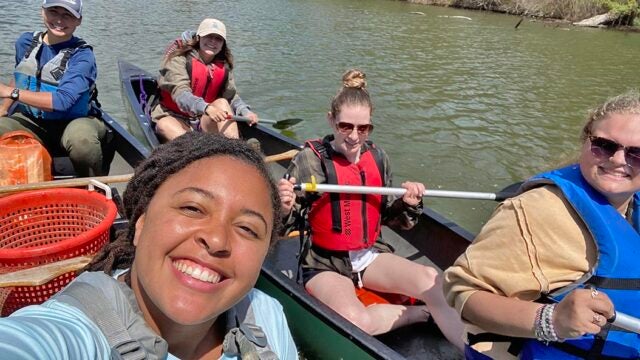
The Bay Advocacy Institute (BAI) offers college students the opportunity to delve into Chesapeake Bay topics, gain real-world skills in advocacy, and develop environmental solutions for their local community and beyond. CBF provides the expertise, training, and resources for this next generation of Chesapeake advocates to engage and inspire action on the issues that matter to them.
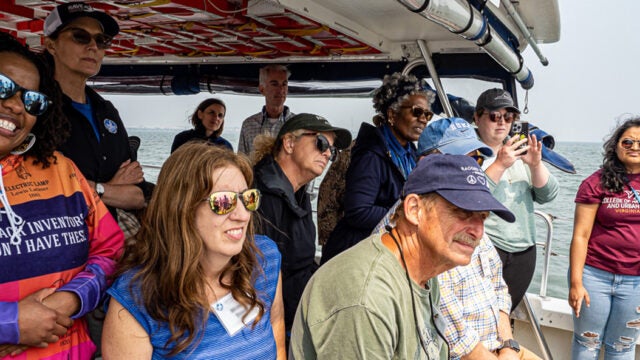
CBF's Volunteers as Chesapeake Stewards, or VoiCeS, program engages local volunteers and their communities and fosters a deeper understanding of the Bay watershed and the efforts to restore it.
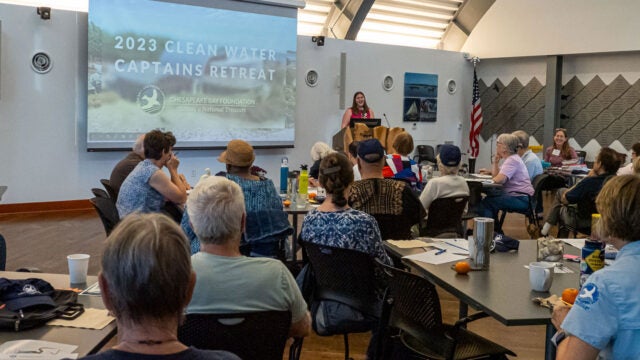
Clean Water Captains are Bay ambassadors who make a big difference in their communities. They share information with neighbors, congregations, schools, elected officials, and more about policy initiatives that help restore the Bay while helping to create practical and effective local clean-up plans.
Related Resources
Related Stories
-
 Blog Story
New Conowingo Dam License Critical to Bay Restoration
The new Conowingo Dam license process can be transformative for the Bay, but only if Maryland officials can work through the challenges of dealing with the dam’s private operator, the utility Constellation Energy.
-
 Blog Story
Could It Happen Here?
After a devastating and deadly July of extreme flooding and rainfall across the country, what does the future hold for the Chesapeake region?
