Actions to Reduce Particulate Matter Air Pollution
United States Court of Appeals for the D.C. Circuit
State of California, et al. v. United States Environmental Protection Agency
Case No.: 21-1014
Issue:
Air PollutionTopic:
Clean Air Act
Updated: 7/29/2025
The Clean Air Act (“CAA”) identifies six “criteria pollutants” known to endanger human health and welfare, including airborne particle pollution, or particulate matter (PM). Breathing in PM can be harmful to your health. Fine particulate matter, measuring less than 2.5 micrometers in diameter, known as PM2.5, is especially harmful because it can travel deep into the lungs and lead to serious health problems. Low-income communities and communities of color are disproportionately affected and more vulnerable to PM pollution due to proximity to the pollution sources and other compounding factors.
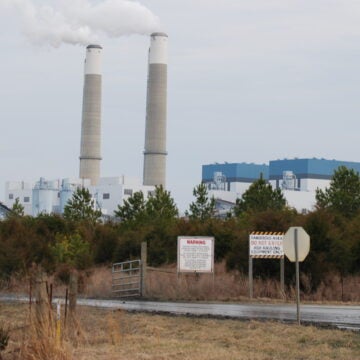
Sources of PM 2.5 pollution throughout the Chesapeake Bay region include industrial facilities, power plants, concentrated poultry operations, and vehicle tailpipe pollution. These sources also release precursor pollutants, like ammonia and nitrogen oxides, which contribute to the formation of PM and lead to harmful nitrogen deposition into the Bay and its waterways.
The CAA directs EPA to establish National Ambient Air Quality Standards (“NAAQS”) to protect public health and welfare for each criteria pollutant, including PM. EPA is required to review the NAAQS every five years to ensure they accurately reflect the latest scientific knowledge and are sufficiently protective. States are responsible for designing state implementation plans (“SIPs”) detailing how the NAAQS will be attained throughout the state.
In December of 2020, EPA issued a final action titled “Review of the National Ambient Air Quality Standards for Particulate Matter” that retained the existing NAAQS for PM 2.5 at the levels previously set in 2012. EPA’s PM NAAQS review process repeatedly marginalized scientific expertise and did not account for the latest scientific knowledge, and the 2012 standards are insufficient to protect human health and welfare. As a result, CBF joined a coalition of environmental and public health groups to file a challenge to the rule at the D.C. Circuit Court of Appeals on January 19, 2021. These consolidated cases are currently held in abeyance as the EPA reviews the PM NAAQS Rule in accordance with Executive Order 13990. On January 27, 2023, EPA published in the Federal Register a notice of its proposed action reconsidering the Particulate Matter NAAQS standards. CBF joined a coalition of environmental nonprofit organizations and filed a comment letter calling for the EPA to implement a strengthened version of its proposed rule.
The Final Rule revising and strengthening the national ambient air quality standards for particulate matter was finalized by EPA on March 6, 2024. Immediately after publication in the Federal Register, 24 states and industry groups filed lawsuits against EPA seeking to have the Rule thrown out by the D.C. Circuit; these cases are consolidated under Commonwealth of Kentucky, et al. v. EPA. CBF’s case is currently held in abeyance pending resolution of these challenges.
CBF is represented in this case by Director of Litigation Ariel Solaski.
See our blog post “Dirty Air.”

