Press Release
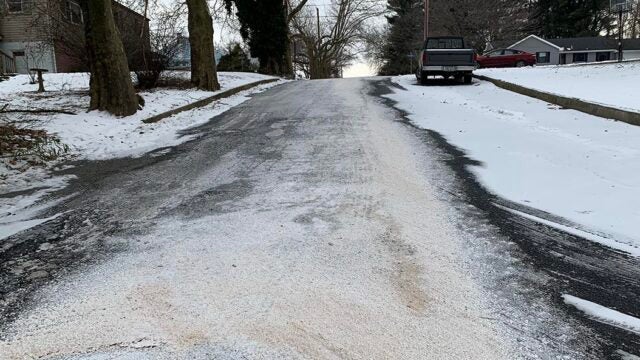
I recently came back from a trip to Pittsburgh. My car and windshield were caked in dried road salt.
While this year has been relatively snow-free for much of the Keystone State, state and local road crews have been actively adding salt when the threat of wintry weather hits.
When I was a kid growing up in the Back Mountain area of Luzerne County, I remember snow covering the ground most of the winter.
Pennsylvania is part of what’s called the Salt Belt, states that use a lot of salt on roadways to control snow and ice.
This winter, the state Department of Transportation (PennDOT) has budgeted over $212 million for clearing roads of snow and ice. Last winter, they applied over 801,000 tons of salt and over 525,000 tons of anti-skid materials to state roads. Thousands more tons were likely added by local municipal road crews.
For storm events last winter, PennDOT also pretreated roads with more than 10.3 million gallons of salt brine. The water in the brine evaporates and the remaining salt helps prevent ice from forming a strong bond with the road surface.
Road salt is an unpurified version of good old table salt, sodium chloride. It helps melt snow and ice by lowering the freezing point below 32 degrees.
Although the road salt seemingly disappears after doing its job, we often see it again caked onto our cars when the snowmelt dries. But it also accumulates in roadside soils and eventually can flow into the nearest river or stream.
A study published in the Proceedings of the National Academy of Sciences suggests that salt ions are changing the chemistry of freshwater streams across the nation, including in Pennsylvania. Researchers analyzed five decades of data from 232 U.S. Geological Survey river and stream monitoring sites. They found that salt ions increased in rivers and streams that make up 37 percent of the contiguous United States.
For our creek critters, salty streams are a toxic brew. But road salts also pollute nearby soils, kill trees and plants important for wildlife, corrode bridges, and pollute drinking water supplies.
Studies by the Susquehanna River Basin Commission and others are gathering scientific data on the extent of the problem in Pennsylvania’s rivers and streams.
My grandmother would often say “Moderation is key.” It applies to using road salt too. The right amount helps keep our roads safe, but too much pollutes our water, kills plants, and degrades our infrastructure.
Around the home we can do our part by not using, or using far less, salt on driveways, sidewalks, and walkways.
Safer alternatives, like calcium magnesium acetate (CMA) exist, but no perfect replacement has yet to emerge.
If you use a deicer, be aware that some store-bought salt products may have toxic impurities or additives, like forms of cyanide. So read the label.
Sand or even kitty litter are popular go-to alternatives to salt for improving traction on slick surfaces. But they too can find their way into streams where they can smother habitat important to fish and other aquatic life.
Regardless of which type of snow or ice melt you choose, proper application is key to preventing negative impacts.
Frankly, snow is a good thing. Snowmelt is a big source of cold groundwater feeding into our streams during the dry summer months The cleaner it is, the happier and healthier iconic critters like our native brook trout and the Eastern hellbender will be.
So, as we await the next big one, remember that snow is also a good thing and obliterating it with salts can come at a big cost.
On Friday, Chesapeake Bay Foundation (CBF), Dorchester Citizens for Planned Growth (DCPG), Friends of the Nanticoke River, ShoreRivers, and Wicomico Environmental Trust filed a legal challenge against Maryland Department of the Environment’s (MDE) newly issued wastewater discharge permit for Valley Proteins’ animal waste rendering plant in Linkwood.
The environmental organizations are challenging the permit due to the potential for the plant’s pollution discharges to contribute to unhealthy water quality in the Transquaking River, Higgins Mill Pond, and Chesapeake Bay. The lawsuit was filed in Dorchester County Circuit Court.
“MDE relied on insufficient data about the Transquaking River and its watershed when issuing this permit,” said CBF’s Eastern Shore Director Alan Girard. “While the agency claims the new permit would reduce pollutants, it doesn’t ensure water quality will be protected. The amount of pollution that MDE permits Valley Proteins to release into Dorchester County waterways will continue the long-term, well-documented harm this facility is causing in the Transquaking River watershed. The agency that issued the permit under the previous Governor’s administration must be held accountable for not meeting its obligation to protect water quality as required by federal law.”
The permit would not require Valley Proteins, now owned by Darling Ingredients, to make any significant changes to their operations for three years. It also allows the company to expand its wastewater discharge from an annual average of 150,000 gallons per day up to 575,000 gallons per day if the plant meets some slightly higher requirements for ammonia, biochemical oxygen demand, and dissolved oxygen. The plant’s previous five-year permit expired in 2006 and was not updated for 16 years, making it one of the longest administratively extended permits in the state’s history.
Under the law, the new permit is supposed to ensure that Higgins Mill Pond and the Transquaking River are safe for swimming, fishing, and wildlife habitat.
The water quality impairments where the plant discharges are well documented. Valley Proteins is the only point source polluter on the Transquaking River and, according to MDE documents, contributes about 40 percent of the river’s nitrogen pollution. In Higgins Mill Pond on the Transquaking, just downstream from Valley Proteins, fish kills have occurred, the water is not always safe for recreation, and aquatic life has decreased. Harmful algal blooms have been recorded in the pond, with a sign posted next to it warning residents not to touch the water.
In September 2022, the company settled a lawsuit with ShoreRivers, DCPG, CBF, and MDE related to past violations of the prior permit. That settlement required the company to pay $540,000 in civil penalties to the state and $135,000 to the non-profit petitioners for funding water quality monitoring and restoration. It also required Valley Proteins to investigate groundwater at the site and make facility and process improvements.
“We appreciate the efforts of the Maryland Department of the Environment to address the large volume of public comments that were received concerning the discharge from Valley Proteins. But, despite some improvements in water quality protections and discharge limits in the renewed permit, the agency appears to prioritize the interests of the operator over the health of the Transquaking River and the safety of our Eastern Shore residents,” said Matt Pluta, Director of Riverkeeper Programs at ShoreRivers. “Even with a Total Maximum Daily Load, or ‘pollution diet’ for the river issued in 2000, the Transquaking continues to show signs of degrading water quality with harmful algal blooms, high bacteria levels, and an overabundance of nutrients. Valley Proteins has spent years violating pollution controls, failing to modernize their wastewater treatment plant, and discharging unauthorized waste materials, and now is the time to chart a better path forward.”
MDE used information from the nearby Chicamacomico River to estimate whether the Transquaking River and downstream waters could handle the pollution from Valley Proteins. Unlike the Chicamacomico, the Transquaking has an impoundment that impedes its flow and creates Higgins Mill Pond. The Valley Proteins outfall is above the pond where effluent from the plant can linger an average of nine days. This creates conditions that fuel harmful algal blooms, low oxygen dead zones, and wildlife impacts, especially in hot weather.
“The proposed four-fold increase in wastewater discharge volume will only result in the death of the river unless the current treatment technology is brought to a much higher standard,” said Fred Pomeroy, President of the Board of Directors of Dorchester Citizens for Planned Growth (DCPG), a citizens group which has been trying since 2014 to get MDE to establish strong pollution limits for the rendering plant. “MDE should not allow Valley Proteins to dump increasing volumes of polluted wastewater into the Transquaking and the Chesapeake Bay. The technology exists for the company to clean up their operation, and it is incumbent on MDE to require them to do so.”
Jay Martin, President of The Friends of the Nanticoke River, noted the group joined many other citizens in the fall of 2021 in providing written and public testimony regarding the permit for Valley Proteins. “We are dismayed that our and others’ expressions of concern appear to have been dismissed. The effects of overwhelming nutrient pollution of the Transquaking River propagate downstream and have the potential to measurably degrade the water quality of Fishing Bay and of the Lower Nanticoke River,” Martin said.
“We’re concerned about the effect of a massive increase in the rendering plant’s discharge to groundwater, which could imperil the health of residents throughout the Lower Eastern Shore area, particularly those who rely on well water,” said Madeleine Adams, President of the Wicomico Environmental Trust. “The way we treat our water has far-reaching implications, given the interrelationship of the health of the watershed and quality of life, public health, and the economic health of the region.”
The lawsuit seeks to remand the permit back to Maryland Department of the Environment so the agency can address deficiencies, protect water quality and communities from harm, and fully comply with the law.
Until recently, MDE inspections and enforcement activity were declining at an alarming rate. Maryland’s new Governor has pledged $3.7 million to help MDE fill staffing vacancies and deal with an extensive backlog of administratively extended permits like the one renewed for Valley Proteins.
The Chesapeake Bay Foundation (CBF) will be advocating for five priority bills designed to bolster the Bay’s natural filters and improve water quality during the 2023 Maryland General Assembly session.
Natural filters are plants or organisms capable of removing Chesapeake Bay-choking water pollutants such as nitrogen and phosphorus by purifying air and water. CBF’s 2022 State of the Bay report found an urgent need to expand the use of natural filters, which are often the most cost-effective methods to clean our waterways. This year, CBF is focusing on legislation to better protect trees and forested land, increase the use of living shorelines along Maryland waterfront, and support the oyster aquaculture industry.
These investments in long-term natural filters will help Maryland reach the requirements of the 2025 Chesapeake Clean Water Blueprint and mitigate the harmful effects of climate change.
Strengthen forest protections:
Forested land in Maryland is being lost at an alarming rate. A new study released in 2022 by the Harry R. Hughes Center for Agro-Ecology at the University of Maryland found that the state lost nearly 19,000 acres of forest and other tree canopy from 2013 to 2018, with much of that loss concentrated in growing suburban counties near Washington, D.C.
Maryland’s continuing loss of forested land makes the state more vulnerable to the harm caused by climate change such as increasing temperatures and stronger storms that bring greater flooding risks. Trees and, to a greater extent, forest ecosystems filter air and water, provide habitat, reduce erosion, and improve human health and well-being. Trees can provide more of these benefits as they grow older and larger, underscoring the importance of protecting Maryland’s existing forested land rather than using sapling replacement for trees that have been removed.
SB526/HB723 – Forest Preservation and Retention
This new bill would update the state’s outdated 1991 Forest Conservation Act to better define and protect contiguous forests and tree canopy. The legislation aims to reverse the long-term loss of forested land from development activity and allow restoration efforts to move the state toward net gain of forest cover and tree canopy. It does this by raising the bar for forest protection while giving counties and municipalities the flexibility to create specific plans to meet forest retention goals. The bill helps combat fragmentation of forest patches and recognizes the important role trees play in urban and suburban communities by incentivizing protections for this vital foliage.
“Forests are among the most critical natural resources to protect Maryland from climate change,” said Erik Fisher, CBF’s interim Maryland Executive Director. “If we continue to lose tree cover and forested land at the rate we have in the past, our efforts to safeguard communities against flooding and excessive heat, protect wildlife, and clean up the Chesapeake Bay will be more difficult and expensive. We urge legislators to support this bill that will better protect the state’s forested land and tree canopy while providing cities and counties with the flexibility needed to effectively manage growth.”
Promote living shorelines:
Throughout Maryland, armored shorelines such as rip rap and bulkheads remain a primary approach to protect properties from erosion instead of living shorelines composed of sand, grasses, and other natural elements. Living shorelines provide more environmental benefits and flooding protection than armored alternatives.
Hardened shorelines compose more than 1,000 miles of Maryland’s 7,000 miles of coastline, despite Maryland law requiring living shorelines as the primary option for coastal resilience. Maryland’s Department of Environment (MDE) routinely grants waivers for property owners to authorize armored shorelines rather than living shorelines.
SB417/HB602 – State Wetlands and Shoreline Restoration
This new bill aims to curb the continued widespread use of armored shorelines and clarify existing law by directing the installation of shorelines that increase the resilience of the land and natural habitat. The legislation also calls on MDE to identify priority restoration zones where adding living shorelines would prevent erosion and improve habitat connections between land and water.
Lastly, the bill would invigorate a Maryland program to provide financial assistance to residents who replace a hardened shoreline with a living shoreline in a priority restoration zone.
“Constructing more living shorelines and expanding wetlands are our best ways to prepare Maryland’s coastline as sea levels rise due to climate change,” said Doug Myers, CBF’s Maryland Senior Scientist. “Scientists predict sea levels in cherished coastal areas such as Annapolis will rise 1.5 feet by 2050 and 3 feet by 2100, which would overwhelm our current infrastructure. If we continue armoring our shorelines in the face of this reality, we’ll displace floodwaters to communities that can’t afford to build ever-higher sea walls. Prioritizing living shorelines now will ensure more impactful solutions are in place as threats to Maryland’s coastal communities continue to grow.”
Expand oyster aquaculture:
CBF is pursuing a package of three bills this year geared toward boosting the state’s oyster aquaculture industry. Since 2012, the state’s oyster aquaculture industry has grown by about 24 percent per year. With continued growth, the industry has the potential to substantially contribute to oyster recovery in the Bay and to Maryland’s economy, according to an economic analysis commissioned by CBF in 2020.
Maryland has an opportunity this year to increase the amount of Bay floor used for aquaculture conservation and improve opportunity within the industry.
SB437 – Reforming Aquaculture Leasing and Increasing Industry Representation
This bill would streamline the state’s approval process for aquaculture leasing, ensuring that applications that meet all regulatory requirements and receive no protests are processed within six months. Currently, some new businesses wait years for oyster aquaculture lease applications to be approved. The bill further directs state agencies to identify state-owned land with waterfront appropriate for aquaculture leasing and directs leases adjacent to those lands to be fast-tracked. Finally, this bill adds representation for the aquaculture industry to key advisory boards and commissions to make sure the needs of the growing industry are considered in state policy making.
SB433 – Woman- and Minority-Owned Shellfish Aquaculture Enterprise Fund
To assist individuals who have historically been underrepresented in the state’s commercial fishing industry, this bill would provide zero interest loans up to $50,000 to new aquaculture businesses owned by a woman or minority community member. This will help entrepreneurs make critical start-up investments in equipment, infrastructure, training, or staff to start or expand their oyster aquaculture business. This program would work with existing loan programs to create new opportunities in this growing industry for women and minority business owners.
SB434 – Restorative Aquaculture Pilot Program
This third piece of oyster aquaculture-related legislation would create a pilot program to provide financial incentives for aquaculture businesses that achieve similar oyster population and habitat improvements as oyster reef restoration projects. This program creates a win-win situation by keeping water-purifying oysters in the Bay for longer periods of time.
“Oyster aquaculture is a restorative industry in which business owners invest their own capital to add oysters to Maryland waters,” said CBF’s Maryland Senior Fisheries Scientist Allison Colden. “It makes sense for the state to make targeted investments to accelerate the industry’s growth. Making oyster aquaculture leases easier to obtain and helping entrepreneurs start new businesses are effective ways to do just that.”
State Budget Priorities:
CBF is also urging state lawmakers to support the following items as part of the budget process:
- Increased staffing for pollution control and water quality inspectors.
- $15 million to continue planting new trees under the Tree Solutions Now Act so Maryland can meet its goal of planting 10 million trees during the next decade.
- $2 million for a new Bay Bottom Survey to update maps from the 1970s and 1980s to help identify oyster and underwater grass habitat.
- Fully funding the Bay Restoration Fund, Program Open Space, and the Chesapeake and Atlantic Coastal Bays 2010 Trust Fund.
The Chesapeake Bay Foundation (CBF) is pleased to announce that Carmera Thomas-Wilhite has joined the organization as Vice President for Diversity, Equity, Inclusion, and Justice. CBF is dedicated to a thriving Bay that provides for the health, wellbeing, and quality of life of the nearly 19 million people who call the Bay region home.
Generations of racism and discriminatory policies have created a society where the burdens of an unhealthy Bay are not borne equally. Equitable solutions to these issues require the voices and input from the communities disproportionally impacted. But for too long, the environmental movement, CBF included, has not provided adequate space for these leaders.
Ms. Thomas-Wilhite returns to CBF after serving as the Director of Urban Conservation Initiatives at The Conservation Fund. Before joining The Conservation Fund, Carmera was the Baltimore Program Manager at the Chesapeake Bay Foundation, where she began her career as a member of the inaugural class of the Chesapeake Conservation Corps.
“We are thrilled to have Ms. Thomas-Wilhite back as we continue our work to become a more inclusive and just organization,” said CBF President Hilary Harp Falk. ”Her leadership in equitable access to the outdoors and developing meaningful partnerships will build a better CBF and stronger clean water movement.”
In this position, Ms. Thomas-Wilhite will lead CBF’s internal efforts to build equity into all facets of the organization and external efforts to advance meaningful engagement with underrepresented communities, especially those impacted by environmental injustices in the Chesapeake Bay region.
“The effects of pollution and climate change touch the lives of all of us, so it is essential that all have a voice in the solutions,” Carmera Thomas- Wilhite said. “I am committed to help make that happen, both within CBF and across the broader Bay restoration community.”
Ms. Thomas-Wilhite currently serves as the Vice Chair of the board for Anne Arundel County Watershed Stewards Academy, a board member of Waterfront Partnership of Baltimore, Inc., and is a member of the Anne Arundel County Citizen Environmental Commission. Carmera earned her B.S. in Biology from North Carolina Wesleyan University. She enjoys camping and spending time with her friends and family, especially, her husband and dog.
Ms. Thomas-Wilhite has roots in this area, spending summers at her grandparents’ house fishing and swimming in the Severn River with her cousins. She and her husband live in Crofton.
Student Artwork on Display Through Feb. 9
A new Bay art exhibit by Virginia Beach Middle School students is on display at the Chesapeake Bay Foundation’s (CBF) Brock Environmental Center through Feb. 9 from 8:30 a.m. to 5 p.m. The exhibition is a collaboration between CBF and sixth and seventh grade students in the Gifted Visual Arts Program at Virginia Beach Middle School.
The artworks reflect the students’ experiences on a hands-on boat trip on the Lynnhaven River and Chesapeake Bay led by CBF educators last September. Students crabbed, fished with nets, identified aquatic species, and discussed how to spread awareness about Bay issues through art.
“Through this hands-on learning experience, students were immersed in their local aquatic environment, learning to collaborate with their peers and community, and gaining inspiration to use their artistic expression to promote positive environmental change,” said Jessica Provow, Gifted Visual Arts Instructor for Virginia Beach City Public Schools. “Students learned they have a voice through their art, how the world around them is a place of inspiration, and how building community is a beautiful way to share knowledge and grow. From start to finish, this project empowered our artists and pushed their understanding of the learning.”
Every year, CBF leads about 1,500 Hampton Roads students in hands-on educational field experiences.
“CBF Education is dedicated to working with Virginia Beach Public Schools to find exciting opportunities to connect students with their local environment through field experiences, teacher professional learning, and student leadership opportunities,” said CBF Education Engagement Coordinator Kathlean Davis. “The exhibit at the Brock Center is a great reflection of this dedication to elevating student experiences and voices.”
This opportunity was made possible by a Virginia Beach City Public Schools Innovative Learning Grant, and grant underwriter, Mike Ross from HBA Architecture.
In separate bills approved this Sunday, the Virginia Senate and House of Delegates released proposed amendments to Virginia’s two-year state budget. Building on proposals made by Governor Youngkin, the House and Senate amendments would provide additional funding for state programs that reduce pollution to the Chesapeake Bay and rivers and streams across the Commonwealth.
A conference committee of legislators will now negotiate a single set of budget amendments, which will need approval from Governor Youngkin before becoming law.
The House and Senate proposals include the following levels of funding:
- Virginia’s Agricultural Cost-Share (VACS) and related programs: Both the House and the Senate would add $137.1 million in cost-share grants to farmers who adopt important conservation practices that keep soil and fertilizer out of waterways. This amount would be in addition to the appropriation of $237 million over two years for these programs by the General Assembly in early 2022.
- Legislators in both Houses also propose several other amendments to enhance pollution reduction from farms, including $12.9 million to incentivize farmers to adopt the most cost-effective farm conservation practices (stream fencing, nutrient management plans, and forested buffers) and $1 million for engineering and other tools the Soil and Water Conservation Districts need to help farmers adopt these practices.
- Wastewater Treatment Plant Upgrades: Under both budget proposals, $237 million would be provided to sewage treatment plants to continue upgrades that reduce nitrogen, phosphorus, and sediment pollution. This amount would be in addition to the $70 million appropriated in early 2022 for the two-year budget period.
- Combined Sewer Overflows (CSO): Both the House and the Senate would provide an additional $100 million for the City of Richmond to continue modernizing its outdated combined sewer system that currently allows raw sewage to be discharged into the James River in times of heavy rains. This would be in addition to appropriations in early 2022 for reducing CSOs in Richmond ($100 million), Alexandria ($40 million), and Lynchburg ($25 million).
- Stormwater Management: The House proposes an additional $10 million, and the Senate seeks an additional $20 million, for the Stormwater Local Assistance Fund (SLAF) which provides grants to localities for projects that reduce polluted runoff. These amounts would be in addition to the $25 million appropriated for SLAF in 2022.
- Forest and tree canopy enhancement: The Senate proposes $500,000 for the Virginia Department of Forestry to conduct a technical study of changes in forests and tree canopy. This study will help Virginia and its localities protect and enhance forests, which are essential for healthy streams and the Chesapeake Bay.
- Oyster Shell Recycling: The Senate urges the appropriation of $100,000 to support oyster shell recycling.
Chesapeake Bay Foundation Virginia Executive Director Peggy Sanner issued the following statement.
“These investments are crucial for Virginia to make progress toward meeting its longstanding commitments to reduce pollution to waterways under the Chesapeake Bay Clean Water Blueprint. Inflation and climate change are adding significant challenges to Bay restoration efforts.
“About 90 percent of Virginia’s remaining pollution reductions must come from agriculture. Increasing investment Virginia’s successful agricultural cost-share program, combined with innovative approaches that incentivize the most effective farm practices, will both help farmers and lead to healthier waterways.
“As these budget proposals demonstrate, Virginia legislators are committed to supporting existing and new pollution reduction programs that will continue progress in restoring our streams and the Chesapeake Bay. We look forward to a final budget that will accelerate this important work.”
The Chesapeake Bay Foundation (CBF) Board of Trustees last week elected Otis S. Jones as its chair for a three-year term. Jones is currently the sales executive of the Southeast Financial Services business unit at the software company ServiceNow. He is a native of Virginia’s Northern Neck and son of a Chesapeake Bay waterman whose family ties to the Bay stretch back generations.
“Otis Jones’ lifelong connection to the Bay together with his strong leadership and stellar business sense are an incredible combination. We’re lucky to have such a strong advocate at the helm as CBF’s new Board Chair,” said CBF President Hilary Harp Falk.
Jones has been a member of CBF’s Board of Trustees since 2018, and most recently served as its vice-chair with outgoing Board Chair Elizabeth Oliver-Farrow.
“I’m honored to be chosen to lead the CBF Board and foster its rich tradition of serving our mission to protect and save the Bay. We must continue to strive for clean water and a healthy Bay for all the communities that make up the fabric of our watershed,” said Jones. “I look forward to working with and learning from constituents while leveraging my board and leadership experience to drive CBF’s alliances, partnerships, and programs across the watershed.”
Jones emphasized that everyone at CBF—field educators, scientists, litigators, policy experts, and restoration staff—should double down on Chesapeake Bay restoration. “We must accelerate efforts by the states, federal government, and local communities to fully realize the benefits of clean water for all,” Jones said.
Prior to joining ServiceNow in March 2021, Jones retired from a 36-year career at IBM, which included 30 years as a salesman, manager, and sales director supporting financial services firms.
In 2020, Virginia’s governor appointed Jones to the Virginia Council of Environmental Justice, where he served a two-year term. Jones is a founding member of MEGA Mentors, an organization that mentors African American and other underrepresented students in Chesterfield County Public Schools. Jones is a graduate of Lancaster High School and Norfolk State University.
Mr. Jones and his wife Machel have three adult children and live in Chesterfield County, Virginia.
Restaurants and other businesses that recycle oyster shells to restore oyster populations would receive a tax credit under legislation that passed a Virginia Senate committee today. Businesses would receive a $4 tax credit for each bushel of oyster shells recycled, up to $1,500, under bills introduced by Sen. Monty Mason (S.B. 997) and Del. Tim Anderson (H.B. 1438). This afternoon, the Senate version of the bill was approved by the Senate Committee on Agriculture, Conservation and Natural Resources.
The Chesapeake Bay Foundation (CBF) urges legislators to support these proposals in order to boost the tight supply of oyster shells, which challenges large-scale oyster restoration work. While a growing number of restaurants recycle oyster shells, far too many shells still end up in landfills.
“Oyster shells are a limited resource that are key to increasing the Chesapeake’s oyster population, supporting the wild oyster fishery, and assisting aquaculture operations,” said CBF Virginia Oyster Restoration Specialist Julie Luecke. “Many dedicated Virginia restaurants and businesses are already recycling shells and donating them to restoration programs. A tax credit would benefit these restaurants for their hard work and provide an important incentive to new businesses to increase the supply of oyster shells.”
Baby oysters, called spat, must attach to a hard surface such as empty oyster shells. One shell can become home to 10 or more oysters. In oyster restoration work, these spat-on-shell oysters are planted on sanctuary oyster reefs to increase oyster populations. Oyster shells are also used to construct the base of oyster reefs.
Recycled oyster shell is also extremely important to Virginia’s oyster replenishment program, which supports the wild oyster fishery by placing shell in state-managed public waters for oysters to grow and eventually be harvested. Additionally, recycled shells are used by the Commonwealth’s growing oyster aquaculture industry.
While oyster populations are rebounding, the limited supply of oyster shell has driven up the cost of this important resource. To help increase the supply, several volunteer-based shell recycling programs pick up empty oyster shells from restaurants, oyster roasts, and other businesses. These shells are then cleaned, cured, and prepared for planting on oyster reefs. Oyster reefs filter water and provide habitat for fish, crabs, and other species vital to the fishing and seafood industries.
Under the legislation, entities such as the Virginia Marine Resources Commission and nonprofits engaged in oyster restoration activities would receive the oyster shells and use them for restoration purposes. Businesses that are paid for shell would not be eligible for the tax credit.
This tax credit would provide an important benefit to restaurants and other businesses doing their part to increase the local oyster population.
Todd Jurich’s Bistro in Norfolk recycles the restaurant’s oyster shells for restoration work.
“Recycling oyster shells costs us some money due to the time, space, and labor involved. But we’ve always been proponents of taking care of the Chesapeake Bay,” said restaurant owner Todd Jurich. “The oyster shell tax credit proposal couldn’t have come at a better time. It has really been tough for restaurant businesses recently due to COVID, inflation, and labor shortages. This would help the restaurant community and encourage new businesses to recycle shells.”
Several Virginia organizations conduct oyster shell recycling programs. CBF’s Virginia shell recycling program includes nearly 40 restaurants across Virginia. People with oyster shells left over from meals at home and oyster roasts can also drop them off at one of CBF’s 17 shell recycling bins across Tidewater and Central Virginia.
Restaurants participating in CBF’s program qualify to become part of the Chesapeake Oyster Alliance’s Reef Builders network, supporting efforts to add 10 billion oysters to the Bay by 2025. A robust supply of recycled oyster shell is key to meeting that goal.
The Chesapeake Oyster Alliance (COA) in partnership with Chesapeake Bay Trust is proud to announce over $115,000 in new grants were recently awarded to 13 different oyster-related businesses and organizations to enhance efforts to add more oysters to the Bay.
Organizations receiving the grants plan to make oyster aquaculture production more efficient, teach students about aquaculture and oyster biology, and examine ways to create synthetic oyster shells
The Chesapeake Oyster Alliance (COA) in partnership with Chesapeake Bay Trust is proud to announce over $115,000 in new grants were recently awarded to 13 different oyster-related businesses and organizations to enhance efforts to add more oysters to the Bay.
The Oyster Innovation Grants were given to eight different Maryland entities and five in Virginia that are working on projects to boost oyster aquaculture production and oyster restoration in the Chesapeake Bay. Oyster aquaculture supports local businesses in the region and brings private investment to the overall effort to add more oysters to the Bay. Oysters are natural water filterers that build reefs, which serve as needed habitat for marine life such as fish and crabs.
“The Chesapeake Oyster Alliance is proud to award these grants to so many different and deserving organizations this year,” said Tanner Council, COA Manager. “The funding will accelerate efforts to bring back Chesapeake Bay oysters from tragically low population levels by growing aquaculture businesses, supporting restoration, and furthering research. This program is designed to drive innovation in the oyster sector and magnify the amazing work happening across the Bay to help COA and its partners reach the goal of adding 10 billion oysters to the Bay by 2025.”
COA, which was founded by the Chesapeake Bay Foundation in 2018, is a coalition of more than 90 non-profits, academic institutions, oyster growers, and other businesses committed to adding 10 billion new oysters to the Bay by 2025.
The Maryland grants include $10,000 to Orchard Point Oyster Co. in Stevensville to further research into synthetic oyster shells. The synthetic shells are being developed using non-toxic, organic materials and could be used in place of natural oyster shell as a base to grow new oysters. Oyster shell is becoming increasingly rare and more expensive due to aquaculture and restoration demand.
“Winning an innovation grant allows us to pursue the important task of developing a long-term solution to the oyster shell and substrate supply crisis, which will be critical in supporting efforts in restoration, aquaculture, and the public fishery,” said Scott Budden, partner of Orchard Point Oyster Company. “There is even hope that the results will benefit coastal regions outside of the Mid-Atlantic. The oyster has supported us, and this is a way we plan to give back to the oyster.”
COA awarded an $8,000 grant to The Phillips Wharf Environmental Center in Easton to help residents raise oysters in cages over the course of a year and measure their growth. The data will help researchers evaluate whether specific areas are more suitable for oyster growth.
The St. Mary’s River Watershed Association received $10,000 for water quality monitoring efforts to support oyster restoration in southern Maryland.
Solar Oysters in Baltimore received a $9,760 grant to develop a new spray wash system to clean the oyster cages that rotate through the water column on the specially-designed solar-powered platform built by the company.
Also in Baltimore, the Waterfront Partnership of Baltimore, Inc. was awarded a $10,000 grant to grow its oyster gardening program—dubbed the Great Baltimore Oyster Partnership—that serves underserved communities in the city by teaching students and adults how to raise oysters. Oysters raised as part of the program are later added to the Fort Carroll oyster sanctuary just outside Baltimore Harbor.
ShoreRivers, the Easton-based environmental organization, received a $10,000 grant to increase its education outreach efforts focused on the value of oyster restoration. The multi-step education campaign will educate residents about how ongoing efforts to increase oyster populations in the Chester, Choptank, Miles, and Wye rivers on the Eastern Shore are improving water quality and providing more opportunities for fishing, paddling, and viewing wildlife.
Annapolis Aquaculture will use its $10,000 grant to develop more efficient ways to clean oyster cages that rest on Bay bottom. These underwater cages are prone to plant growth and can be fouled by various underwater organisms, so aquaculture operators have to lift the heavy, oyster-filled cages out of the water to periodically clean the cages. Improving this process would reduce the amount of time and labor that businesses spend on this process.
Rounding out the Maryland grants, Owings Mills-based Black Girls Dive Foundation, which teaches minority students how to scuba dive, received a $4,200 grant to develop a marine science program based on the Severn River that includes field experiences such as underwater oyster monitoring.
COA innovation grants were also awarded to the following Virginia organizations:
- Friends of the Rappahannock was awarded $3,438 to pilot curriculum in school districts in the Northern Neck and Middle Peninsula focused on the science of oysters, oyster aquaculture and oyster restoration.
- Portsmouth Public Schools received $9,995 to develop a hands-on educational program that includes performing an oyster float experiment, raising oysters, collecting oyster data, exploring oyster habitats, and building oyster reefs. Students will educate residents about the value of oysters through the development of scientific public service announcements.
- The Accomack-Northampton Planning District Commission on the Eastern Shore will use its $10,000 grant to fabricate artificial reefs designed for oyster colonization and marine habitat.
- Long Creek Oyster Co. in Hampton Roads was awarded a $10,000 grant to help purchase an oyster sorter to ensure small oysters stay in the water for longer periods of time to filter more water and aid restoration efforts.
- Barretts Neck Seafood LLC in Suffolk received $10,000 to turn the Lion’s Paw Oyster Restoration Education Sanctuary into an outdoor living classroom where students will have the opportunity to participate in hands-on learning about oyster aquaculture.
“Friends of the Rappahannock (FOR) is excited about this new oyster innovation grant to support oyster-themed environmental education programs in the Rappahannock River watershed,” said Jen Sagan, Oyster Restoration Specialist with FOR. “This grant will enable more students to learn and participate in oyster restoration programs offered by FOR and our Chesapeake Oyster Alliance partners.”
The Chesapeake Bay Trust handled the grant request and award process to ensure an independent selection process.
COA has been working toward its goal to add 10 billion oysters to the Bay by 2025 since 2018. In that time it has recorded about 4.7 billion oysters added to the Chesapeake.
Oyster population levels in the Bay have dropped to about 1 percent of historic levels due to pollution, diseases, and overharvesting. Ongoing restoration efforts and a growing oyster aquaculture industry can bring back the species from the brink of collapse and increase oysters’ natural ability to provide habitat and filter water.
This is the second year COA has provided funding for oyster-related grants. In 2021, COA and the Bay Trust distributed over $127,000 in oyster innovation grants to 13 different organizations.
States Must Focus on Agriculture and Stormwater Pollution
(ANNAPOLIS, MD)—Today, the Chesapeake Bay Foundation (CBF) released its 2022 State of the Bay report. The biennial evaluation graded the Bay and its watershed at a D+, unchanged from the 2020 score.
Efforts to restore the Bay are struggling to reduce agricultural pollution. Urban and suburban polluted runoff is increasing amid inconsistent enforcement by government agencies, new development, and climate change. Despite these challenges, the federal/state Chesapeake Clean Water Blueprint, based on the world’s best science, remains the most promising plan for restoring local rivers, streams, and the Chesapeake Bay. What has been lacking is implementation.
“While we’ve made significant progress, far too much pollution still reaches our waterways and climate change is making matters worse,” said CBF President Hilary Harp Falk. “The good news is that the Bay is remarkably resilient and there is tremendous energy around the table. With many new leaders taking charge—EPA administrators, governors, legislators, and within environmental organizations—we have an opportunity to prove that restoring clean water is possible. By following the science, approaching our challenges with optimism, and holding each other accountable, we will leave clean water, strong economies, and vibrant communities for the next generation.”
Established in 1998, CBF’s State of the Bay report is a comprehensive measure of the Bay’s health. CBF scientists compile and examine the best available data and information for 13 indicators in three categories: pollution, habitat, and fisheries. CBF scientists assign each indicator an index score from 1–100. Taken together, these indicators offer an overall assessment of Bay health. Reaching an overall score of 70 or more would mean a fully restored Bay, while a 100 represents the Bay’s condition before European settlers arrived in the 1600s.
In 2022, the overall State of the Bay score remained a 32, with seven of the 13 indicators unchanged, three increasing, and three decreasing.
In the pollution category nitrogen, toxics, and dissolved oxygen indicators were unchanged, the phosphorus indicator improved, and overall water clarity declined. Recent farm conservation funding at the federal and state levels should help reduce nitrogen and phosphorus pollution, which fuels harmful algal blooms that remove dissolved oxygen from the water. Monitoring data indicated the 2022 dead zone—the area of the Bay with low or no dissolved oxygen—was the 10th smallest in size since scientists began surveying it 38 years ago, an encouraging sign. Water clarity dropped one point in the report due to average water clarity in the Bay decreasing slightly in 2022 compared to 2020.
In the fisheries category, the rockfish (striped bass) and oyster indicators rose, while the blue crab indicator declined.
Striped bass populations have been declining and this year’s juvenile striped bass survey found low numbers in Maryland. However, states along the Atlantic coast have put in place stronger measures to reduce the number of fish harvested as well as catch-and-release mortality. These regulations should allow the striped bass population to rebuild by 2029, which is why the score increased despite population declines.
Oysters are seeing a renaissance of sorts. After years of overharvesting and limited natural reproduction, in 2020 and 2021 Maryland and Virginia reported the highest rates of juvenile oyster production in the past 30 years. Large-scale oyster restoration projects have been completed in eight sanctuary tributaries in Maryland and Virginia, with two more sanctuary restoration projects planned to be completed before 2025. Scientists monitoring the oyster restoration sanctuaries have found high densities of oysters beginning to build vertical reef structure, an important marine habitat.
Blue crabs fell the most of any indicator, with the overall score dropping five points. In 2022, blue crab dredge survey results found the lowest number of crabs in the Bay in the survey’s 33-year history. In response, fishery managers decreased catch limits to try to reduce overall harvest. Efforts to increase underwater grasses—important nursery habitat for blue crabs—have stalled, with underwater grass acreage hovering around 70,000 acres each year after hitting a high of 105,000 acres in 2018.
In the habitat category, scores for underwater grasses, forest buffers, and wetlands remained unchanged, but resource lands fell slightly by a point. Resource lands refer to forests, natural open areas, and well-managed farmland. The drop in score was largely due to approximately 95,000 acres of farms and forests transitioning to development across the Bay watershed during the most recent reporting period, from 2013/14 to 2017/18.
Overall, the unchanged score is largely a result of failures to make needed changes on farmland to reduce pollution. After forests, the agricultural sector is the second largest land use in the watershed and about 90 percent of the remaining reductions needed to meet the Chesapeake Clean Water Blueprint must come from limiting farm-related pollution.
However, the cleanup is hitting a roadblock. For years, jurisdictions made continuous, incremental progress toward Bay restoration goals by upgrading wastewater treatment plants. Today, most of the major wastewater plants in the watershed have been upgraded to stringent standards that improve overall water quality. Because of this, future water quality improvements must come largely through improvements designed to limit polluted runoff from farms, buildings, roads, lawns, and other diffuse sources that are more difficult to control.
Efforts to do so are complicated by climate change, which is bringing stronger rainstorms that drop more precipitation in shorter time periods. The good news is that many of the same practices that will reduce agricultural and urban runoff—such as tree plantings, restoring soil health, and limiting impervious surfaces—are the same ones that help reduce greenhouse gases and make the region more resilient to a changing climate. Saving the Bay and addressing climate change are inextricably, and fortunately, linked.
There is hope on the horizon. The recently passed federal Inflation Reduction Act included $20 billion for the U.S. Department of Agriculture to support farm pollution reduction practices nationwide. And last year, Pennsylvania lawmakers approved $154 million for a new agricultural cost share program. In 2022, Virginia’s Virginia adopted a two-year budget that includes $280 million to assist farmers who install farm conservation practices as well as about $190 million for urban sewer system upgrades and projects to reduce stormwater runoff.
“The State of the Bay is at a precipice,” said Beth McGee, CBF’s Director of Science and Agricultural Policy. “We need to accelerate our efforts at reducing farm pollution to ensure the watershed-wide restoration effort is successful. New funding at the federal and state levels is an opportunity to directly address the Bay’s largest pollution source, but it must be spent efficiently on the projects that provide the most benefit for each dollar spent.”
Investing in agricultural conservation practices also makes good economic sense. For every dollar spent helping farmers adopt practices that improve water quality in the Bay and its tributaries, the Bay region would see $1.75 in higher sales and earnings. Fully funding the farm pollution-reduction practices needed to restore the Chesapeake Bay would inject $655 million annually into the region’s economy, including $269 million per year in higher earnings for businesses and workers, according to a report prepared for CBF by Key-Log Economics, an ecological economics research and consulting firm based in Charlottesville, Va.
The Chesapeake Clean Water Blueprint requires the Bay jurisdictions to develop plans to decrease pollution to local creeks, rivers, and the Bay. However, an EPA assessment released last fall found that only Washington D.C. and West Virginia are on track to meet the 2025 goals. And in November, EPA rejected Pennsylvania’s most recent update to its Bay cleanup plan because it didn’t demonstrate how the state would meet pollution reduction requirements.
At its October meeting, the Chesapeake Executive Council agreed “to set a path forward over the next year to outline the necessary steps, and prioritize the actions needed, to meet the targets” that had been committed to.
CBF’s federal and state offices identified the following priorities to restore local streams, rivers, and the Chesapeake Bay.
Maryland
Maryland’s cities and towns are struggling to meet goals to reduce stormwater pollution. This source of Bay pollution recently surpassed the amount of pollution coming from wastewater treatment plants. To address this, state and local leaders should look for innovative ways to add green space, divert runoff from storm drains into rain gardens filled with vegetation, and reduce impervious surface. This should be coupled with increased enforcement to ensure permitted polluters are following the law.
CBF Maryland Executive Director Josh Kurtz said:
“Two years ago, the General Assembly approved a law to plant 5 million trees in the state by 2030. That was a good first step. However, continuing forest loss and degradation, mostly from development, is estimated at about 3,000 acres per year in the state. As the State of the Bay stagnates, Maryland would benefit from limiting forest loss as it adds new trees. Trees help prevent soil loss and reduce runoff, they naturally filter water and air, and create habitat for wildlife.
“While urban runoff is the only growing source of pollution, agriculture still remains the largest. State leaders should also focus on ways to connect farmers with state and federal resources to add conservation practices on their land, with strong priority given to permanent practices. Recent federal funding increases and a strong state budget provide a unique opportunity to alter the state’s agricultural landscape by improving soil health, which in turn would make fields more productive and reduce polluted runoff.
“Lastly, we hope the new administration being assembled by Gov-elect Moore and Lt. Gov-Elect Aruna Miller can reverse the 20-year decline in environmental enforcement activities in Maryland. Doing so would ensure that industrial polluters and others licensed to discharge pollution into local waterways aren’t violating pollution limits, which threatens the Bay and the health of Marylanders.”
Pennsylvania
With nearly 28,000 miles of polluted streams statewide, Pennsylvania has a lot of work to do to get back on track and meet its Clean Water Blueprint. As part of the $220 million Clean Streams Fund, state legislators dedicated $154 million toward a new statewide program to support family farmers in designing and implementing practices that keep soils and nutrients on the farm instead of in streams, called the Agricultural Conservation Assistance Program (ACAP).
Agricultural activities are a leading identified source of stream impairment, and more than 90 percent of the Keystone State’s remaining pollution reductions must come from agriculture.
CBF Pennsylvania Science Policy and Advocacy Director Harry Campbell said:
“The recent commitments dedicating $220 million towards clean streams, have helped give the Commonwealth something it hasn’t had in some time—momentum. ACAP provides critical resources to help farmers get the job done.
“These recent investments, along with enhancing its latest watershed implementation plan and being held accountable along the way, would be significant steps toward reaching the 2025 pollution-reduction goals.
“It is critical that during this new legislative session, the Governor and legislators provide increased and sustainable funding that builds on momentum and leads to the clean water that is the right of every Pennsylvanian.
“Investment of financial and technical resources will create resilient infrastructure on farms and in communities, boost local economies, and protect human health. CBF looks forward to working with the Governor and legislators to leave a legacy of clean water for future generations.”
Virginia
We are seeing some promising signs of cleaner waterways in Virginia but challenges remain, from harmful algal blooms to concerns over the blue crab population. Addressing these concerns requires accelerating efforts to reduce pollution from agricultural lands, sewage treatment plants and urban streets.
CBF Virginia Executive Director Peggy Sanner said:
“The legislative session that starts this month is an important opportunity for Virginia’s elected leaders to recommit to a healthy Chesapeake Bay through renewed investments in programs that reduce pollution from agriculture, wastewater treatment plants, and stormwater.
“We urge legislators to ensure investments in these crucial programs address the most effective farm conservation practices, such as fencing cattle out of streams and planting buffers of trees along waterways. This focus would pay dividends in the form of cleaner streams, thriving farms, and local economic benefits.
“For healthy rivers and streams and strong fisheries, Virginia should support mussel restoration programs and a stock assessment of the threatened blue crab population. To address the growing threats from climate change and sea level rise, we will continue to advocate for nature-based solutions to erosion and flooding that also reduce pollution to waterways.”
Federal
Federal funds and leadership are critical to achieving the Blueprint goals. In the coming year, the U.S. Department of Agriculture (USDA) will begin distributing the additional $20 billion the Inflation Reduction Act (IRA) allocated to Farm Bill conservation programs. These programs are crucial to Bay restoration because they support farmers who use practices that help stop agricultural pollution at its source, improve water quality in local waterways and the Bay, and build climate resiliency on the farm. The 118th Congress is also due to reauthorize the Farm Bill this year.
USDA must direct a significant amount of the $20 billion IRA increase to areas in the Bay states where it can do the most to reduce farm runoff. It can do so through the Chesapeake Bay States’ Partnership Initiative it created last May. Congress should build on that investment with more conservation funding for farmers in the Bay region in the 2023 Farm Bill. Congress must also provide USDA with enough money to hire more technical experts who can work directly with farmers to put these practices in the ground.
CBF Interim Federal Affairs Director Keisha Sedlacek said:
“The $20 billion IRA boost and next year’s Farm Bill give the Biden administration and Congress the perfect opportunity to jumpstart the cleanup effort. Farm practices that improve water quality are the most cost-effective way to tackle the largest source of pollution in the Bay and its tributaries. The same practices make farms more resilient to climate change and its effects. Devoting more federal dollars to agricultural conservation in the region is a smart investment that benefits local communities, businesses, and the Bay.”
