Press Statement
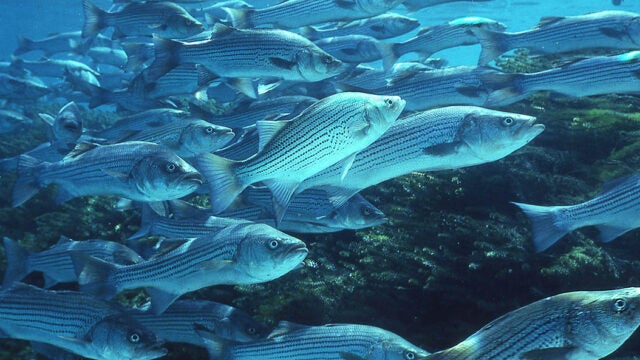
Plan Could Bring New Limits for Anglers, Public Urged to Support Conservation
Aiming to rebuild the struggling striped bass population, the Atlantic States Marine Fisheries Commission (ASMFC) yesterday released a proposed update to the striped bass fishery plan for public comment.
The update, known as Addendum III, includes various options that could lead to new regulations for anglers and watermen. Following a public comment period on those options, final adoption of any new measures is expected at the ASMFC’s annual meeting in late October.
Striped bass recruitment, or reproductive success, in Maryland has been below average for six consecutive years. There are not enough young striped bass to grow up and replace the big fish being caught, foreshadowing a potential future disaster. The Chesapeake Bay produces between 70 to 90 percent of all striped bass on the East Coast, and low striped bass recruitment is also occurring in other nursery areas such as the Hudson and Delaware rivers.
Challenges contributing to these striped bass struggles include pollution, loss of habitat, overfishing, invasive predators like blue catfish, and warming water temperatures due to climate change. Chesapeake Bay states have proactively closed fishing for striped bass during the hot summer months, when fish are most vulnerable to dying after being caught and released.
But the ASMFC’s 2024 striped bass stock assessment showed that without additional action by ASMFC member states it’s unlikely that striped bass recover to their target numbers by 2029 due to higher than predicted fishing rates in 2024. The striped bass addendum issued this week includes several options intended to further reduce fishing effort to help striped bass rebound to the target by 2029.
Over the coming months, ASMFC will host public hearings on Draft Addendum III, where participation will be critical to support striped bass conservation. The Chesapeake Bay Foundation is reviewing changes to the document and will share further information ahead of public hearings and public comment deadlines.
CBF Maryland Executive Director Allison Colden issued the following statement.
“Maryland’s striped bass surveys have made it clear – we’re facing a looming disaster. Without action now, the Chesapeake Bay won’t have a striped bass fishery in the future. Additional regulations will have real impacts, but they pale in comparison to the threat of continued striped bass decline. ASMFC must err on the side of conservation to protect striped bass.”
CBF Virginia Executive Director Chris Moore issued the following statement.
“Striped bass are a Chesapeake Bay icon, but they’re facing a variety of challenges. With climate change and invasive blue catfish on the rise and numerous conservation measures having already been adopted, the options that fisheries managers have are becoming more limited. Given the importance of a healthy striped bass population in the Chesapeake Bay, we urge ASMFC to adopt strong conservation measures in Amendment III in order to help rebuild the striped bass population.”
Rejecting the Trump administration’s deep budget cuts, the Senate Appropriations Committee approved a fiscal year 2026 spending bill yesterday that would continue funding key Bay restoration work at EPA and Interior Department at current levels. The vote was 26-2.
With the House panel approving the same amounts earlier this week, EPA’s Chesapeake Bay Program and Interior grants for habitat restoration and historic preservation cleared the first hurdle of Congress’s annual budgeting process without sustaining any cuts.
But the agencies fared worse overall in the House committee bill, which would cut EPA’s total budget 23 percent, cut funds that help municipalities upgrade sewage treatment plants by 26 percent and lock in the administration’s sweeping staff reductions. The House committee bill also includes a host of policy riders that lack bipartisan backing.
The White House wanted to zero out funding for the two Interior Department grant programs the Fish and Wildlife Service-run Chesapeake WILD program and the National Park Service’s Chesapeake Gateways and Watertrails. Instead, the House and Senate Appropriations Committees would keep their funding steady next year at $8 million and $3 million, respectively.
The administration also wanted to eliminate funding for vital U.S. Geological Survey (USGS) research and monitoring in the region. The House Appropriations Committee broke with the administration and would continue funding the work at $17.6 million in fiscal 2026.
The Senate panel did not specify a funding level for USGS’s Bay work, instead increasing the overall budget for the USGS ecosystem research. USGS’s Bay activities are primarily funded through this account.
The EPA Chesapeake Bay Program leads the partnership of multiple federal agencies, the six Bay states, and the District of Columbia involved in cleaning up the Bay and its local rivers and streams.
Both bills could still be amended when the full House and Senate consider them on the floor later this year. Floor votes have not yet been scheduled for either bill.
Chesapeake Bay Foundation (CBF) Senior Policy Director Keisha Sedlacek issued the following statement.
“It’s a testament to the longstanding bipartisanship behind Bay restoration that EPA and Interior Department programs directly benefiting the Bay region cleared the House and Senate Appropriations Committees with their current funding unchanged.
“But these bills, and bills that fund essential Bay-related work by the National Oceanic and Atmospheric Administration, are far from finished. We must remain vigilant and ready to act until the fiscal 2026 spending bills become law. Now is not the time to backtrack on clean water promises. Together, we are making progress toward saving the Bay.
“CBF appreciates the hard work of Senate Appropriations Committee Bay champions Shelley Moore Capito (R-W.Va.), Chris Van Hollen (D-Md.), Chris Coons (D-Del.), and Kirsten Gillibrand (D-N.Y.), along with that of Interior-Environment Subcommittee Chair Lisa Murkowski (R-Alaska), Subcommittee Ranking Member Jeff Merkley (D-Ore.), full committee Chair Susan Collins (R-Maine), and full committee Vice Chair Patty Murray (D-Wash.).”
The Chesapeake Bay Program today announced the expected completion of one of the Bay’s most successful recovery efforts to date: fully restoring oyster habitat in 10 tributaries in Maryland and Virginia by 2025.
This announcement comes as partners prepare to plant the final few acres of oyster reef in the last targeted tributary—the Manokin River on Maryland’s Eastern Shore. Other tributaries already fully restored in Maryland include Harris Creek, the Little Choptank, Tred Avon, and St. Mary’s rivers, and in Virginia the Lafayette, Piankatank, Great Wicomico, Lynnhaven, Lower York, and Eastern Branch of the Elizabeth rivers.
The Eastern Branch of the Elizabeth River is considered Virginia’s sixth ‘bonus’ tributary, bringing the total to 11 rivers restored, exceeding the initial goal. At more than 2,200 acres of habitat restored, this effort is considered the largest oyster restoration initiative in the world, drawing practitioners from across the globe to learn from oyster recovery efforts in Chesapeake Bay. Additionally, the vast majority of reefs are meeting or greatly exceeding goals for oyster abundance.
Oysters are the bedrock of the Chesapeake Bay ecosystem, naturally filtering the water and providing habitat for hundreds of other species. The goal to fully restore oyster habitat in these tributaries was first included in the 2014 Chesapeake Bay Watershed Agreement—the joint federal and state plan to restore the Bay. As we approach the current Bay Agreement’s 2025 deadline, the Bay partnership is updating the agreement to look toward the future, including setting new goals for large scale oyster restoration.
Recognizing the incredible success of this effort and need for continued momentum, the Chesapeake Bay Foundation (CBF) urges partners to accelerate the scale and pace of oyster restoration. Specifically, CBF believes that we can restore an additional 2,400 acres of oyster sanctuary reef by 2035. The current draft agreement calls for 1,800 additional acres of oyster reef habitat, with no specified deadline.
The Bay Program is currently accepting public comments through September 1 on the updated Bay Agreement draft. CBF will be calling for more clearly defined targets, including for habitat restoration and pollution reduction, and for the agreement to set a uniform 2035 deadline across all goals for stronger accountability. People who live in the Bay watershed, care about its health, and want continued investment in oyster restoration should make their voices heard here.
CBF Maryland Executive Director, Allison Colden, issued the following statement:
“Large scale oyster restoration is working. In Maryland alone, the oyster population has tripled since 2005. And Maryland’s Department of Natural Resources has already started its work toward the next goal, by committing to restore three additional oyster sanctuaries in the state. Because of the momentum and proven success behind this work, restoring an additional 2,400 acres of oyster habitat by 2035 is an ambitious, yet attainable, goal.”
CBF Virginia Executive Director, Chris Moore, issued the following statement:
“This oyster restoration success is a testament to years of dedicated work, scientific innovation, resource allocation, and unwavering partnership. The Chesapeake Bay is proud to be home to one of the most successful examples of oyster restoration in the world. Now it’s time to keep the momentum going, not only for the health of our waterways but for the health of people, other species, and local economies.”
CBF Senior Policy Director Keisha Sedlacek issued the following statement:
“Exceeding the oyster restoration goals in the current Bay Agreement is a testament to the power of the federal/state partnership and following a shared plan to save the Bay. To build on that success, it is critical that the next Bay Agreement include clearly defined targets for every goal—from water quality to oyster restoration—with a hard deadline of 2035. It must also recognize the impact climate change will have on how and where we do our work. With the revised agreement, we can lay out an ambitious plan that will deliver on the promise of clean water for the Bay, the people who love it, and future generations.”
The House Appropriations Committee would continue funding key Bay restoration programs at EPA and the Department of the Interior at current levels in the fiscal year 2026 spending plan it approved today, 33-28.
The panel rejected President Trump’s push to eliminate critical grant programs the Bay states rely on to reduce polluted runoff and run their state clean water programs. While it did not slash funds to modernize wastewater treatment plants as deeply as the administration called for, it would cut program funding deeply, from $1.64 billion this year to $1.2 billion in fiscal 2026.
The House Appropriations Committee did follow the administration’s recommendation to direct $92 million to EPA’s Chesapeake Bay Program. Funding for the Bay Program, which leads the multi-agency, multi-state cleanup effort, has held steady at $92 million in the last three budget cycles.
Roughly two-thirds of the Bay Program’s annual budget goes to state and local governments, universities, and local conservation groups to fund everything from monitoring water pollution to restoring eroded stream banks and rebuilding populations of native brook trout.
At the Interior Department, the U.S. Geological Survey’s (USGS) work in the Bay watershed would be flat funded at nearly $17.5 million again next year. The Trump budget request would wipe out funding for all USGS ecosystems research and monitoring activities, including in the Bay and its rivers and streams.
The committee also used the report on the bill to express support for USGS’s “watershed-wide research, assessment, monitoring, and modeling that help the Chesapeake Bay partners make informed management decisions to restore and protect the Chesapeake Bay and its watershed.”
USGS provides the Bay states and other restoration partners with unbiased scientific information to help manage the watershed’s lands, waterways, fish, and wildlife.
The House Appropriations Committee would also keep funding steady for the Chesapeake WILD grant program, at $8 million, and Chesapeake Gateways and Watertrails, at $3 million in fiscal 2026. The White House budget would not fund either one.
Chesapeake WILD is run by Interior’s Fish and Wildlife Service. It provides competitive grants for habitat restoration and conservation projects across the Bay region. Chesapeake Gateways and Watertrails, which the National Park Service administers, makes grants to local communities to showcase sites of historical, environmental, and cultural significance to the Bay and its waterways.
Chesapeake Bay Foundation Senior Policy Director Keisha Sedlacek issued the following statement:
“The broad, bipartisan support on Capitol Hill for restoring the Bay and its waterways stands in stark contrast to the devastating budget cuts and poison pill riders in the House Appropriations Committee bill.
“The committee did reject the White House’s push to eliminate programs that help the states clean up the Bay and its waterways, restore wildlife habitat, and spotlight our region’s natural and historical treasures.
“But this bill would still slash total EPA funding 23 percent, roll back bedrock clean air and water protections, and lock in the administration’s destabilizing mass layoffs and senseless reorganization plans.
“It will be up to the Senate Appropriations Committee to address these glaring deficiencies and match, if not exceed, the Bay restoration funding levels in this bill when it takes up its version later this week.”
Proposal Would Fund Oyster Restoration, Menhaden Science, and Environmental Education
The Senate Appropriations Committee defended essential Chesapeake Bay restoration and education programs from the Trump administration’s budget ax in the fiscal year 2026 spending plan for the National Oceanic and Atmospheric Administration (NOAA) approved last week.
The Senate committee adopted the bill, which would fund the Department of Commerce, where NOAA is located, the Department of Justice, and federal science programs next year, by a vote of 19-10. It could advance to a vote on the Senate floor later this week.
The bill would set NOAA’s fiscal 2026 budget at $6.1 billion. That’s a $200 million decrease from the agency’s current budget of $6.3 billion. But it’s more than $1.5 billion over the White House proposal to slash it down to $4.5 billion.
While the White House called for eliminating funding for NOAA’s Chesapeake Bay Program Office and the rest of its habitat conservation and restoration work, the Senate Appropriations Committee would give the office another $1.5 million, on top of the existing $3 million, to restore the Bay’s oyster population. Oysters are a key driver of our seafood economy and clean water.
NOAA’s Chesapeake Bay Office leads restoration work and conducts research that helps protect native species like oysters, blue crabs, and striped bass; improves climate resilience in the region, and funds hands-on environmental education of the next generation of Bay stewards.
The Senate committee also rejected the administration’s bid to zero out NOAA environmental education funds, including for regional programs like the Chesapeake Bay Watershed Education and Training program (Chesapeake B-WET). Instead, the bill would continue funding to help schools teach students about their local environment at $8.7 million in fiscal 2026.
Notably, the committee recognized the need for more data about the population of menhaden in the Chesapeake Bay. Menhaden are a small, oily fish that is a critical food source for other fish, birds, and whales on the Atlantic Coast. It would provide at least $2.5 million for NOAA and the Atlantic States Marine Fisheries Commission to collect data on menhaden numbers in the Bay.
Virginia is home to the only industrial menhaden fishery on the Atlantic coast. Lobbying by the menhaden reduction industry has repeatedly blocked state proposals to fund the research needed to properly protect menhaden’s important role in the food chain.
Chesapeake Bay Foundation (CBF) Senior Policy Director Keisha Sedlacek released the following statement:
“NOAA is crucial to restoring the Bay and its waterways. NOAA programs support managing its valuable fisheries, enhancing our region’s resiliency, and educating the next generation of Bay stewards. The Senate Appropriations Committee rightly rejected the White House’s threat to eliminate support for a healthy Chesapeake Bay.
“Senators of both parties instead wisely recognized the value of continuing one of the largest and most successful oyster restoration efforts in the world and ensuring that students don’t lose the benefits of hands-on outdoor educational experiences in their local communities.
“The proposal to invest in menhaden research brings welcome federal focus to Virginia’s industrial menhaden fishery. CBF hopes it will spur Virginia to step up with additional funding to better manage this economically and ecologically valuable fishery.
“NOAA is the most important funder of environmental education in our region. Chesapeake B-WET helps teachers and students learn outside on the Bay and our local rivers and streams, oftentimes providing the only chance students will have to practice science in the real world.
“CBF thanks Sens. Chris Van Hollen (D-Md.), Shelley Moore Capito (R-W.V.), Christopher Coons (D-Del.), and Kirsten Gillibrand (D-N.Y.) for providing NOAA the funding it needs to keep its Bay restoration work moving forward in such a challenging fiscal environment.
“We encourage the House Appropriations Committee to join their Senate counterparts in giving Bay restoration funding the priority it deserves in its legislation.”
Maryland Governor Wes Moore took an important stance for environmental justice last week by signing an executive order focused on securing and leveraging state data to support environmental justice.
Recent efforts by the Trump administration have made federal census data for environmental justice unreliable and, at times, completely unavailable. This has made it difficult to understand the impacts of regulatory actions on overburdened communities. Recognizing this critical data gap, Moore announced Maryland’s Environmental Justice Screening Tool, a map that displays data on pollution burdens and health metrics across Maryland.
Thanks to this step from the Moore administration, the screening tool is now running independently from federal data and will be available despite any changes at the federal level. This effort will preserve the ability of Maryland agencies to account for inequities in decision-making. Notably, the executive order also requires state agencies to appoint an environmental justice officer and develop a strategic plan to promote environmental justice.
Chesapeake Bay Foundation Maryland Executive Director Allison Colden issued the following statement:
“Communities that are most vulnerable to pollution and threats from climate change need state leadership now more than ever. This executive order is a clear signal that the Moore Administration is prioritizing environmental justice and ensuring critical data remains available to state decision-makers.
“But this is just the start. We must now ensure this information is used by state agencies to dismantle historical inequities and protect vulnerable communities from threats like flooding, excessive heat, and toxic contaminants, especially as extreme weather rapidly becomes our new normal.”
Restoration efforts coupled with conservative management are working. Chesapeake Bay Foundation supports staying the course while highlighting areas still in need of conservation.
After Maryland’s oyster population nearly tripled over the past 20 years, Maryland Department of Natural Resources (DNR) announced it will maintain its current regulations for the 2025 to 2026 oyster harvest season.
This includes maintaining daily bushel limits, number of harvest days per week, and limited harvest closures in the Chester River. DNR cited these strategies as key contributing factors to the significant increase in oyster numbers. Ensuring continued responsible management of oyster harvest will help sustain momentum for the comeback of Maryland’s oysters alongside continued robust restoration efforts.
Maryland is expected to reach its goal to fully restore oyster habitat in five Chesapeake Bay tributaries by the close of 2025. Now at a critical juncture, the state must continue building on that success through additional oyster restoration investments and responsible management of the oyster fishery.
Chesapeake Bay Foundation’s Maryland Executive Director, Allison Colden, issued the following statement:
“Our effort to bring oysters back from the brink in Chesapeake Bay is working, but continued recovery is not guaranteed. That’s why we support DNR’s decision to maintain its current harvest regulations for this season.
“However, oyster recovery is not uniform throughout the Bay. The latest oyster stock assessment indicates that more than 80 percent of oyster harvest comes from only eight harvest areas, and that four of those have been subject to unsustainable harvest rates for four years or more. We urge DNR to consider a delayed or staggered opening of these areas to reduce the overall fishing effort contributing to high harvest rates.
“Oyster sanctuaries are likely significantly contributing to the overall abundance of oysters in Maryland. The Choptank River region, which contains three targeted restoration tributaries, has the highest abundance of oysters in Maryland. As we strategize on what oyster restoration looks like beyond 2025, we should build on that proven success throughout more Maryland rivers.
“Oysters are a bedrock of our Chesapeake Bay ecosystem and economy. Protecting this vital resource, and reversing decades of overharvesting, disease impacts, and loss of habitat will require a long-term strategy and redoubled commitment. We commend DNR for staying the course and encourage further proactive management to protect Maryland’s oyster resource and those who depend on it.”
New research indicates a collapse of the osprey population along the seaside of Virginia’s Eastern Shore, a frequent area for industrial menhaden fishing by Omega Protein.
A May 2025 survey by Dr. Bryan Watts of The College of William and Mary’s Center for Conservation Biology documented a 90 percent decline of nesting osprey on Virginia’s Delmarva Peninsula. The Center for Conservation Biology concluded “the most likely cause of the decline is prey availability.”
This decline in nesting adults adds to a recent trend of osprey chicks starving in their nests across the tidal portions of Chesapeake Bay where osprey historically rely on the small, oily fish called menhaden for food. Osprey in many parts of the region are reproducing at rates well below the historic lows of the DDT crisis in the 1970s.
The U.S. Geological Survey (USGS) corroborates the osprey decline, likely attributing it to a scarcity of food. “Limited prey availability, their capture or their delivery to nests is seemingly the principal driver of poor reproductive success,” the USGS wrote in a recent letter to Congress.
Virginia is the only state along the Atlantic coast that still allows industrial menhaden reduction fishing in its state waters. That sole remaining reduction fishing operation, Reedville-based Omega Protein, harvests well over 100 million pounds of menhaden from the Commonwealth’s waters each year.
A recent letter from the Virginia Institute of Marine Science (VIMS) called for “serious consideration of reducing purse seine fishing in the Bay” given that data to understand impacts of concentrating the industrial menhaden fishery in Virginia waters remains “woefully inadequate.”
Omega’s lobbying has blocked funding for much needed menhaden research in the Chesapeake Bay.
The Atlantic States Marine Fisheries Commission (ASMFC) is expected to consider whether further menhaden management for the Chesapeake Bay is warranted in the coming months.
Chris Moore, Virginia Executive Director of the Chesapeake Bay Foundation, issued the following statement:
“Virginia is the epicenter of both the industrial menhaden fishery and incredibly concerning warning signs. The data shows osprey starving in portions of the Chesapeake Bay, and now a total osprey collapse along the seaside of Virginia’s Eastern Shore.
“Had Omega Protein not consistently opposed menhaden science, Virginia would be developing better answers on ecology and fishery impacts during these challenging times. No company blocks science with the best interest of the public and the environment at heart.
“We don’t have perfect science, but we have enough to acknowledge a problem. It’s time for Virginia to act. Virginia must take this challenge head-on and consider opportunities to ensure enough menhaden are in state waters when osprey and other vulnerable predators need menhaden.”
VMRC maintains current blue crab regulations, comprehensive study expected next year
Blue crab harvest regulations in Virginia will remain largely the same after the Virginia Marine Resources Commission (VMRC) concluded its June 24 meeting maintaining current rules for this iconic Chesapeake Bay species.
Blue crabs in the Chesapeake Bay have struggled in recent years, according to information released June 24 by the Chesapeake Bay Program’s Chesapeake Bay Stock Assessment Committee.
This comes as new survey results reveal blue crabs in Maryland and Virginia have dipped to the second lowest number in recent history. A comprehensive study of the causes behind the decline are expected next year.
The 2025 Blue Crab Winter Dredge Survey, conducted jointly by the Virginia Institute of Marine Science and Maryland Department of Natural Resources, estimated total crab abundance at 238 million. This figure is the second lowest since surveys began in 1990, just three years after an all-time low of 226 million crabs in 2022.
The reasons for the decline are still uncertain. Maryland and Virginia are currently conducting a comprehensive stock assessment for blue crabs, slated for completion in 2026. The last assessment was completed nearly 15 years ago in 2011. Many environmental conditions have changed during that time due to climate change, habitat loss, and the expansion of blue catfish, a voracious predator of young crabs.
Recent polling conducted by CBF earlier this year revealed that Chesapeake Bay area residents believe blue crabs are the Bay animal most in need of protection, underscoring the public’s concern for this culturally and economically vital species.
Chris Moore, Virginia Executive Director of the Chesapeake Bay Foundation, issued the following statement:
“This is another year of distressing numbers for blue crabs. The stock assessment due out in early 2026 will help us understand the complex causes for this decline so that the next generation of blue crabs, watermen, and Virginians can enjoy blue crabs in the future.
“We’ve lost critical habitats like underwater grasses, and the rise of invasive predators like blue catfish pose a major threat. Climate change and polluted runoff harm young and spawning crabs. We must find a more sustainable path for this economically and environmentally important species. The stock assessment will empower decision-makers with the science needed to make blue crab recovery a reality.”
Allison Colden, CBF’s Maryland Executive Director, issued the following statement:
“Red flags are flying for blue crabs. But the exact cause of their alarming decline is still somewhat unknown. Many environmental factors could be contributing, such as the loss of underwater grasses and the voracious and invasive blue catfish. Additional insights from the 2026 stock assessment will be paramount if we are to effectively protect this staple Bay species from further decline.
“We urge Maryland and Virginia to continue working collaboratively to sustainably manage this fishery so future generations can enjoy crab feasts and loaded crab cakes for years to come.”
Years in the making, regulations governing large-scale solar projects in Virginia have been finalized and went into effect Wednesday, June 18.
These regulations establish standards for mitigation when a solar project causes significant impacts to farms and trees.
To mitigate, a developer can secure their own permanent conservation easement on comparable land or pay into a fund that the state will use to carry out conservation on the developers’ behalf. The regulations also include incentives for developers to improve site construction practices like limiting grading and preserving topsoil or even planting trees along waterways on land identified for conservation, which can reduce mitigation requirements.
Chesapeake Bay Foundation Virginia Staff Attorney Patrick Fanning issued the following statement:
“The regulations strike an important balance, protecting forest cores and farms while we accelerate renewable energy deployment to reach Virginia Clean Economy Act goals.
“The solar mitigation regulations will improve utility scale solar facility siting, help developers avoid our highest conservation value lands, and create a flexible framework for mitigation where avoidance is not feasible. Where it is required, importantly, mitigation in the form of permanent conservation easements will protect prime farm and forest lands while advancing clean energy.”
