Press Statement
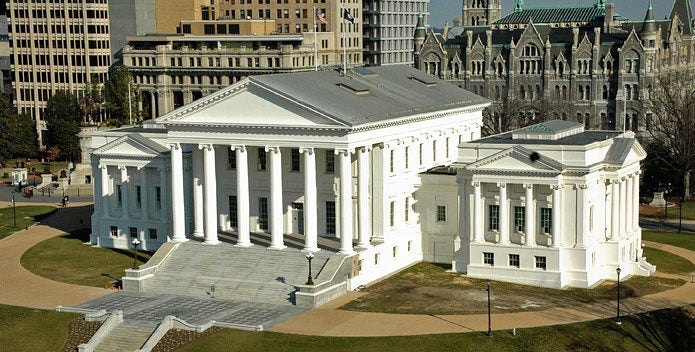
Virginians will see new protections against “forever chemicals,” bolstered climate resilience, and new funding for efforts like flood prevention—but still await a final budget—after lawmakers this week formally acted on Governor Abigail Spanberger’s proposed amendments to and vetoes of legislation passed during the 2026 legislative session..
Governor Spanberger this month signed into law a number of bills on topics ranging from chemical pollution to wetlands protection that the Chesapeake Bay Foundation supported during the 2026 session. Those include:
- PFAS. Measures the governor signed into law ahead of the reconvened session include bills that will require sewage sludge used in fertilizer to be tested for PFAS, or “forever chemicals,” and banned if they test positive for certain thresholds, will require wastewater treatment plants to monitor PFAS, and will allow localities to test for PFAS in biosolids.
It is now up to the Department of Environmental Quality (DEQ) and other agencies to implement and enforce measures like these.
Lawmakers and the general public also need to stay vigilant: the Virginia Department of Health just this month issued a fish consumption advisory for the Occoquan watershed due to elevated PFAS levels in certain fish species like largemouth bass and bluegill sunfish. - RGGI. The governor this month signed a measure that ensures a swift re-entry into the Regional Greenhouse Gas Initiative (RGGI), a regional carbon trading program for power plants that generates revenue used for priorities like flood preparedness that former Governor Glenn Youngkin exited in 2023.
Commonwealth officials are currently working to formally re-join the group in the coming months. Virginia could rejoin quarterly auctions, which generate proceeds from participating states from emissions allowances purchased by power plants, later this year.
RGGI has been a vital source of funding for priorities like flood preparedness and energy efficiency for low-income residents. CBF will closely monitor the Commonwealth’s return to the program after its unfortunate – and legally dubious – exit during the previous administration.
Unfortunately, the biennial budget process has been delayed, putting key investments into clean water priorities at risk. We are urging lawmakers to include sufficient funding for the following items, among others:
- Menhaden. CBF supports including funding for long-overdue research into the menhaden population in the Chesapeake Bay amid intensifying warning signs and the high amount of harvest from the industrial fishery. Virginia has put off this research for nearly three years amid industry delay tactics. Atlantic menhaden are a critical food source for a variety of species including striped bass, redfish, humpback whales, and birds like osprey and bald eagles. Their abundance directly affects commercial and recreational fisheries, tourism, and coastal communities.
- Wastewater treatment plant funding. These investments that have enabled ongoing modernization of wastewater treatment plants have greatly reduced pollution to the Chesapeake Bay.
- Virginia Conservation Assistance Program. VCAP helps private property owners and community groups install a host of conservation that cut stormwater pollution.
- Virginia Agricultural Cost-Share Program. The Virginia Agricultural Cost-Share Program helps farmers install projects that reduce pollution to local waterways and, ultimately, the Chesapeake Bay.
- Community forestry. CBF urges lawmakers to include funding for two community forestry positions within the Department of Forestry. Federal funding cuts have threatened Virginia’s Urban and Community Forestry program, which administers grants, provides expertise, and supports community efforts to plant and protect trees.
Chesapeake Bay Foundation Virginia Policy Manager Jay Ford issued the following statement:
“Virginia’s elected leaders notched major wins during the 2026 session on cutting down toxic pollution in our waterways and bolstering climate resilience, but now comes the heavy lifting.
“On PFAS, we must ensure that DEQ and other state agencies properly implement and enforce the new regulations on the books. Virginia must continue to strengthen the law to keep the harmful chemicals out of our fertilizer and waterways.
“On RGGI, Virginia must ensure that the Commonwealth is getting its fair share from quarterly allowance auctions – and that the proceeds are directed where they are needed most for efforts like making homes more energy efficient and steeling communities against flood risk.
“Lawmakers also have a tremendous opportunity, through the biennial budget, to include new investments in priorities like menhaden research, wastewater treatment, and conservation programs. Investing in these now will be good for the economy and our public health, and will help protect what we all love about the Commonwealth over the next two years and beyond.”
Virginia farmers will get a boost on implementing sustainable practices, like innovative virtual fence collars for livestock, that help their bottom line and support the health of farmland while improving rivers and streams, thanks to a recent grant to the Chesapeake Bay Foundation.
The grant is aimed at promoting regenerative agriculture, or resilient farming. This also includes practices like rotational grazing to improve plant health and enhance the ability of pasture soils to absorb heavy rainfall and store carbon. Other practices, like the creation of streamside grass or forested buffers, filter out nutrients and sediment that pollute downstream waters and, ultimately, the Chesapeake Bay.
“This grant will fund conservation solutions that can make farmers’ land more profitable, more resilient, and more Bay-friendly,” said Chesapeake Bay Foundation Virginia Watershed Restoration Scientist Matt Kowalski. “We’ll help farmers of all skill levels in Virginia and across the Bay watershed experiment with new sustainable practices like rotational grazing, buffers, and row crop conversion.”
Among the highlights is promoting the use of virtual fence collars, which allow farmers to use a phone app to draw boundaries and contain livestock without physical fences—essentially a higher-tech version of an invisible dog fence. When used with livestock, though, it can not only contain animals but also help implement rotational grazing and build soil health.
The roughly $1 million grant through the National Fish and Wildlife Foundation’s (NFWF) Chesapeake Small Watershed Grants Program was awarded earlier this year. NFWF manages the grant, with major funding coming from the U.S. Environmental Protection Agency (EPA).
CBF is partnering with the Virginia Forage and Grassland Council (VFGC) on parts of the grant, which will help fund:
- Educational materials for farmers including newsletters, schools, field days, and agricultural conferences focused on grazing management
- Virtual fence collars that make it easier for farmers to sub-divide larger fields and move livestock without the expense or hassle of physical fences
- Converting row crops and other acreage to permanent pasture managed with rotational grazing
- Planting five acres of trees along streams and rivers to stabilize banks, prevent erosion, filter polluted runoff before it enters local streams, provide habitat for wildlife, and improve stream health
It will also go toward grazing planners, which offer land management suggestions and tips for farmers based on the season. Also supported are grazing schools, which include field-based instruction and lessons on practices that improve soil health.
As part of the grant, VFGC and CBF will be hosting a grazing school in Madison County on May 12 and 13.
“With these schools and the planner, we’re really building a community of people who are knowledgeable about growing healthy food and are devoted to protecting the environment,” said Matt Booher, a grassland agronomist who works with the Virginia Forage and Grassland Council.
The grant is also funding similar sustainable farming efforts in Maryland, Pennsylvania, and West Virginia for a total of nearly 1,700 acres of farming conservation practices.
“Whether you’re a soybean farmer in the Shenandoah Valley or you’re managing livestock in Loudoun County, CBF and partners like the Virginia Forage and Grassland Council stand ready to help farmers develop sustainable practices that will benefit residents throughout the Commonwealth and beyond,” said Kowalski of CBF.
For more information on how to register for the May grazing school in Madison County, please visit www.vaforages.org.
This week, the U.S. Air Force’s Joint Base Andrews in Prince George’s County alerted state officials to the release of 22,000 gallons of jet fuel into Piscataway Creek, a tributary of the Potomac River. Officials suggested the leak began as early as January and continued through March.
Maryland Department of the Environment (MDE) says they were not given a full report of the spill until April 8. MDE is advising the public to avoid any areas of the Piscataway Creek that look or smell like petroleum could be present. The agency says there is no threat to drinking water. The Potomac River is the second largest tributary of the Chesapeake Bay and was just recently named America’s most endangered river by American Rivers.
The Chesapeake Bay Foundation (CBF) is most troubled by the delayed reporting of this incident and urges Joint Base Andrews to release records of the incident and plans for corrective action in the case of any future environmental incidents.
CBF Maryland Staff Scientist Gussie Maguire issued the following statement:
“Any fuel spill is alarming, but not reporting it immediately is inexcusable. Why was MDE not alerted to a toxic spill in a populated area weeks ago when it first happened? Jet fuel is acutely toxic to both people and aquatic species.
“Prince George’s County residents living near Piscataway Creek should be able to safely enjoy their local waterway. Unfortunately, this event undermines both public safety and confidence in Joint Base Andrews as a responsible neighbor.
“MDE had already advised that anglers entirely avoid eating bass, bluegill, and sunfish caught in the creek due to chemical contamination, and have issued further warnings since the fuel leak. MDE officials must ensure that the spill is cleaned up thoroughly and hold the base accountable. We encourage residents to check and follow all MDE guidelines related to this troublesome spill and will be closely monitoring MDE’s findings and cleanup efforts.”
Major Chesapeake Bay Tributary Needs State and Federal Support to Stop Sewage and Runoff Pollution
Red flags are flying for the Potomac River, which American Rivers this week named number one on its Most Endangered Rivers List of 2026. The Potomac River is the second largest tributary feeding into the Chesapeake Bay and touches parts of Maryland, Virginia, West Virginia, Pennsylvania, and D.C. It’s also the primary drinking source for over 6 million people who live in the Potomac River watershed.
American Rivers cited January’s 243-million-gallon sewage spill, as well as major data center sprawl in the region, as reasons for the designation. The Potomac River and its tributaries are also burdened by runoff from agricultural and stormwater pollution—which runs off roads, parking lots, and buildings when it rains. Runoff challenges are worsening from increased development and more intense rainfall from climate change.
These mounting pressures on the Potomac River demonstrate a clear need for infrastructure investments from the federal, state, and local levels. Wastewater systems like the Potomac Inceptor need constant maintenance to avoid catastrophe. Yet the Trump Administration proposed a 90 percent cut to the Clean Water State Revolving Fund and elimination of key grants for Clean Water Act work that help local communities fund wastewater infrastructure upgrades.
CBF Senior Vice President for Programs Alison Hooper Prost issued the following statement:
“The Potomac River is stressed out and signaling for help. It’s not too late to send a lifeline.
“The recent Potomac sewage spill drew long overdue attention to aging wastewater infrastructure that sends millions of gallons of raw sewage into rivers across our region each year. We’ve seen progress towards a healthier river through coordinated state and federal efforts. But new challenges threaten to upend those wins.
“The sewage spill and this ‘most endangered’ designation are a wake-up call that should spark action to fund the major, ongoing investments in infrastructure. Recent funding cuts proposed by the Trump Administration would leave the Potomac River even more wounded. Just a few months ago, Congress rejected similar cuts in a show of bipartisan support for the Chesapeake Bay. Now Congress must once again protect the work needed to fulfill the federal government’s promise to restore this national treasure.”
Chesapeake Bay Foundation Thanks Legislators for Preserving Investments in Clean Water and Air
Today, Maryland Governor Wes Moore signed a package of legislation finalizing next year’s state operating and capital budget. The budget package will support a healthy Chesapeake Bay and the many people, jobs, and wildlife that rely on it.
The Chesapeake Bay Foundation (CBF) appreciates Governor Moore, Speaker Joseline Peña-Melnyk, President Bill Ferguson, Budget Committee Chairs Guy Guzzone and Ben Barnes, and members of Maryland’s General Assembly for preserving our state’s environmental investments despite a challenging $1.5 billion deficit.
Throughout session, CBF offered testimony, rallied allies, and urged legislators to adequately fund the programs and state agencies that spearhead Bay restoration and protect people from the threats of climate change. Despite budget hurdles and uncertainty at the federal level, Maryland’s General Assembly ultimately decided that investments in clean water and air are worth protecting. In particular, CBF appreciates the leadership of capital budget subcommittee chairs Senator Craig Zucker and Delegate Malcolm Ruff, as well as environmental subcommittee chairs Senator Shelly Hettleman and Delegate Courtney Watson.
Maryland’s environmental programs and agencies are not just good for the Bay, they also support jobs, improve people’s health, and make strong financial sense. To preserve these assets, next year’s budget will:
- Maintain consistent funding and staffing within the Departments of the Environment, Natural Resources, and Agriculture, as well as the Maryland Energy Administration—the state agencies collectively tasked with protecting the environment, addressing climate change, and conserving our state’s natural resources. These budgets are supplemented by one-time federal funding allocations.
- Not divert funds from key programs and funding sources like the Chesapeake and Atlantic Coastal Bays 2010 Trust Fund, Clean Water Commerce fund, Bay Restoration Fund, and transfer tax revenues for land preservation. These dollars go directly to farmers, watermen, homeowners, and restoration practitioners who are on the ground improving Maryland’s waterways.
- Provide $400 million for climate-related programs funded out of the Strategic Energy Investment Fund this year, an increase of nearly $100 million compared to the budget as submitted by the Governor.
CBF Maryland Executive Director Allison Colden said:
“Investments in clean water and air are investments in Maryland’s future. Legislators came to the same conclusion we did: protecting our environment is not only a sound financial decision, but one that supports people’s health, jobs, and what makes Maryland such a great place to live.
“CBF thanks Governor Moore and the Maryland General Assembly for getting a Bay-friendly budget over the finish line, which will allow Maryland to continue its progress towards healthier communities and a cleaner Chesapeake Bay.”
Challenging the Trump Administration’s repeal of the landmark finding that climate change-fueling greenhouse gases pose a threat to the public, the Chesapeake Bay Foundation (CBF) today joined partners in suing the U.S. Environmental Protection Agency.
CBF, represented by Earthjustice, today joined a coalition of organizations from across the country filing litigation in the U.S. Court of Appeals for the D.C. Circuit.
Since it was issued in 2009, the endangerment finding has supported regulations that fight climate change and its harm to people and the environment.
The Chesapeake Bay is on the front lines of climate change threats. Those include:
Sea level rise and flooding from increasingly intense storms overwhelm marshes and wetlands and damage homes and businesses in Maryland, Virginia, Pennsylvania, and Washington, D.C.
Extreme heat exacerbated by climate change hurts people, plants, and animals across our region.
Stronger and more frequent storms due to climate change add pollution to the Bay. Heavy rains increase polluted runoff and sewer overflows and intensify erosion. This dumps more nitrogen, phosphorus, and sediment into rivers and the Bay, contributing to dead zones and algal blooms.
Warmer water holds less oxygen and stresses aquatic life, from brook trout to striped bass.
CBF has worked for years to address threats from climate change. That includes planting trees to cool city streets that bake during heat waves, installing living shorelines that use nature to protect waterfronts from storms, and working with farmers to build healthier soil that’s more resilient to droughts and flooding.
CBF Senior Vice President for Programs Alison Hooper Prost issued the following statement.
“Climate change is already harming people and the Chesapeake Bay, regardless of the Trump Administration’s ridiculous claims. This latest rollback is a threat to us all.
“Flooding and sea level rise are walloping communities up and down the Bay. Heat waves send people to hospitals from Baltimore to Richmond. Warmer waters are driving away striped bass, brook trout, and other wildlife. And increasingly intense storms are washing more pollution into rivers and the Chesapeake Bay.
“We’re proud to join our partners in fighting this rollback that endangers everyone’s future.”
A Milestone is Reached for Pleasure House Point
The Virginia Beach City Council on Tuesday voted to move forward on purchasing the Crab Creek lots at Pleasure House Point, a step that will shield the land from planned development and ensure that the area will be preserved for conservation and recreation.
The action will help protect a small set of parcels on the eastern end of Pleasure House Point near the public boat ramp—land that could have been developed into up to ten duplexes or five single-family homes.
The Chesapeake Bay Foundation (CBF) and other partner organizations have worked for years to protect undeveloped parcels adjacent to the site from further development. The purchase is an important milestone in safeguarding one of our community’s most ecologically valuable natural areas.
Though modest in size, this parcel is a critical piece of the puzzle in protecting Pleasure House Point, serving as an eastern entrance to the park, providing neighborhood access where people can run or walk their pets, and preventing development from splintering the park and waterfront. The land is also near classroom space CBF uses for its Environmental Studies Program at the Brock Environmental Center, offering a prime opportunity for hands-on study. For many years, conservation organizations recognized the importance of this land and sought opportunities to preserve it.
The majority of Pleasure House Point was acquired and preserved in July 2012 as a collaborative effort between the Trust for Public Land, the City of Virginia Beach, and CBF.
There remains another area on Pleasure House Point still at risk of development, but Tuesday’s action will go a long way toward helping preserve a set of parcels on the eastern end of the site.
We congratulate Councilman Joash Schulman, the entire Virginia Beach City Council, and City staff on this achievement and thank them for their vision and dedication to protecting Virginia Beach’s natural resources for current residents and future generations.
CBF Hampton Roads Director Christy Everett issued the following statement:
“Moving forward on purchasing the Crab Creek lots will ensure that the local community will be able to access this beautiful habitat and recreational area for years to come.
“Though small, this parcel is critical to preserving the area’s integrity and preventing development along this treasured waterfront.
“The Chesapeake Bay Foundation thanks the Virginia Beach City Council for its leadership in moving to protect this vital land.”
The Chesapeake Bay Foundation (CBF) and Maryland farmers will plant thousands of trees and improve hundreds of acres of grazing pastures for cleaner rivers and streams, and more resilient farm businesses, thanks to a recent grant.
The National Fish and Wildlife Foundation (NFWF)’s Chesapeake Bay Small Watershed Grant totaling $939,700, plus $267,800 in matching funds, will implement regenerative agricultural practices on nearly 1,700 acres, including managed livestock grazing and streamside forest buffers, across Maryland, Pennsylvania, West Virginia, and Virginia.
The grant from NFWF’s Chesapeake Bay Stewardship Fund is funded primarily by the U.S. Environmental Protection Agency through the Chesapeake Bay Program Office. Additional funding for this project is provided by the U.S. Department of Agriculture Natural Resources Conservation Service. The Fund helps farmers reduce their pollution ‘footprint’ by implementing farm conservation plans that reduce agricultural runoff, the largest contributor of nutrient pollution in Maryland.
In Maryland, CBF and farmers will use this funding to implement regenerative agriculture practices on farms across the state, including:
- Adding 500 acres of rotational grazing of livestock, which diversifies pastures to restore the soils’ “sponge,” resulting in better water infiltration and retention and making farms more resilient to droughts and intense weather associated with climate change;
- Creating 26 acres of silvopasture—adding trees throughout livestock grazing pastures to keep animals cool with shade, which is critical for animal health and reproductive success;
- Planting an additional 10 acres of forested streamside buffers, which are an effective way to absorb water, prevent flooding, and reduce pollution from running off of farms into local waterways.
The grant will also fund two economic studies on Maryland farms to assess how regenerative farming can improve a farm’s resilience and profitability. The studies will compare grazing dairy operations to more conventional, corn-based confinement dairy farms, as well as row crop farms (corn and soybean) that use regenerative farming versus those that do not.
Additionally, the grant will support several on-farm educational events that will equip farmers with tools to improve farm resiliency and soil health. By using less fertilizer, farmers can improve profitability and the community benefits of cool, clean local streams and Chesapeake Bay.
Grant funds awarded to CBF for the project will also support work on farms in Pennsylvania, Virginia, and West Virginia.
CBF Maryland Watershed Restoration Scientist Rob Schnabel issued the following statement:
“Regenerative agriculture works with nature, leading to healthier streams and increased biodiversity, and helping Maryland farmers reduce costly fertilizer use. Currently only half of Maryland farms are profitable, and challenges with extreme weather, droughts, and floods are continuing to erode farmers’ bottom line. This NFWF funding will allow us to demonstrate the economic, ecosystem, and community benefits of regenerative farming as we implement these systems on farms across the state.”
Throwing new obstacles at Chesapeake Bay restoration, the Trump Administration rolled out a top-line budget proposal today that undermines the science and programs needed for a healthy Chesapeake Bay.
Restoring the Bay relies on support from many federal efforts that would be slashed or eliminated in the latest budget request. Last year, Trump’s budget proposed similar cuts to investments in programs needed for a healthy Bay. In recent months leaders in the House and Senate rejected those reckless cuts and funded Bay restoration efforts.
Proposals related to Chesapeake Bay restoration in the Trump Administration’s budget proposal include:
- A cut to the U.S. Environmental Protection Agency’s Chesapeake Bay Program’s budget from its current level of $93 million down to $91 million. The Chesapeake Bay Program is the lead federal partner in restoring the Bay and coordinates across federal and state partners. The majority of the Bay Program funding goes directly to work in communities that leads to healthier waterways, including grants for tree plantings, oyster restoration, and other community projects. The overall EPA budget was slashed by 52 percent.
- NOAA’s environmental and climate education grants would be eliminated. That includes the Bay Watershed Education and Training program (BWET), which jump-starts hands on learning outside for students and teachers around the Chesapeake Bay.
- Reduced investment in NOAA climate science research programs. More frequent and more intense storms due to climate change wash more pollution into the Chesapeake Bay, and warmer water temperatures harm fish and wildlife. This threatens coastal communities, fisheries, and our ability to restore the Bay. Cutting this research at NOAA would hamper our understanding and adaptation to these threats.
- Major cuts to the U.S. Geological Survey (USGS), including elimination of the USGS Ecosystems Missions Area. This includes programs that provide the critical science necessary for restoration and conservation in the Chesapeake Bay region and that help manage invasive species, such the invasive blue catfish.
- A 90 percent cut to the Clean Water State Revolving Fund and elimination of key grants for Clean Water Act work. These programs provide communities across the watershed with financial support to put in place practices that reduce pollution in rivers and streams. That includes upgrades to wastewater and sewage systems needed to prevent disasters like the recent Potomac River sewage spill.
- The elimination of the National Park Service Chesapeake Gateways and Trails Network, which connects visitors to the natural and cultural heritage of the region.
- The elimination of the EPA’s environmental justice programs, which aim to protect the health of people in communities where they are at risk from pollution.
Congress will now aim to pass a budget before the end of the fiscal year on September 30. The Chesapeake Bay Foundation (CBF) urges lawmakers to reject the steep cuts for Chesapeake Bay work in the Trump Administration’s budget request.
Chesapeake Bay Foundation Senior Vice President for Programs Alison Hooper Prost issued the following statement:
“The Chesapeake Bay must be feeling a bad case of déjà vu. President Trump is once again swinging a wrecking ball at the very work that keeps the Bay alive.
“This budget pulls the rug out from under one of America’s greatest environmental success stories: the Chesapeake Bay. If the Trump budget becomes reality, kids will lose hands-on outdoor learning, science needed to make waterways safe to swim and fish will be sidelined, and pollution will continue to threaten people’s health.
“The cuts proposed by the Trump Administration could leave cash-strapped states struggling to meet their commitments to reduce pollution to the region’s waterways. Just a few months ago, Congress rejected similar cuts in a show of bipartisan support for the Bay. Now Congress must once again protect the work needed to fulfill the federal government’s promise to restore the Chesapeake Bay.”
The Chesapeake Bay Foundation (CBF) will create cleaner rivers and streams in Pennsylvania, Maryland, Virginia, and West Virginia through regenerative farm practices like converting row crops to pasture, better livestock grazing, and streamside trees under a new National Fish and Wildlife Foundation (NFWF) grant.
The Chesapeake Bay Small Watershed Grant of $939,700, with $267,800 in matching funds, will implement nearly 1,700 acres of agricultural conservation practices, including managed grazing and planting trees along streams.
The grant is made from NFWF’s Chesapeake Bay Stewardship Fund, funded primarily by the U.S. Environmental Protection Agency through the Chesapeake Bay Program Office. Additional funding for this project is provided by the U.S. Department of Agriculture Natural Resources Conservation Service.
In Pennsylvania, CBF will collaborate with Capital Resource Conservation and Development Council, Inc. (Cap RC&D) to provide educational resources, peer-to-peer technical assistance, field days, and pasture walks in Lancaster, York, Adams, Cumberland, Lebanon, Dauphin, and Franklin counties.
With Cap RC&D, field days will focus on improving pasture conditions, soil health, and converting row crops to grazing. This produces less polluted runoff, healthier soils, and reductions in fertilizer use and farm costs, all of which leads to cleaner water in local streams and the Chesapeake Bay.
Pastures with deep-rooted forage plants are more resilient to extreme weather, like prolonged droughts or torrential rains. Veterinary expenses and cull rates may drop because of fewer foot ailments and other herd health problems, since the livestock are more active and outside with less exposure to pathogens.
Grant funds awarded to CBF for the project will also go toward economic case studies on farms in Pennsylvania, Maryland, and Virginia, looking at the costs and benefits of shifting to regenerative production systems like grazing.
Kelly O’Neill, Agriculture Policy Analyst with the Chesapeake Bay Foundation in Pennsylvania said:
“For Pennsylvania, this grant means that more farmers will improve their grazing efforts by learning from other farmers.
“Federal and state investments in regenerative agriculture are good for farm productivity and the health of local streams by keeping soil and nitrogen on the land instead of running into local waters.
“Regenerative grazing has helped many farmers to balance expenses and income, while improving the quality of farm life by reducing labor and costs. Livestock move frequently through a series of paddocks, allowing the forage plants to recover while the animals are grazing elsewhere.
“Grazing operations generally have lower start-up and maintenance costs than the alternative. Many livestock farmers shifting to grazing can spend more time managing pastures and monitoring herd performance, and less on a tractor.”
