Press Statement
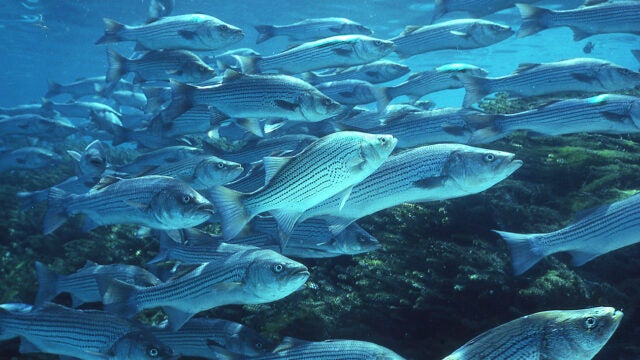
New Regulations Starting This Week Will Better Protect Rockfish During Hot Summer
This week, Maryland’s Department of Natural Resources (DNR) will implement new fishing seasons for striped bass starting on Wednesday, April 1 after a short legislative delay. The Chesapeake Bay Foundation (CBF) welcomes these new regulations, which are intended to protect the Chesapeake Bay’s struggling striped bass population. CBF and its members submitted hundreds of public comments in support of the new seasons during the state’s public comment period.
For six consecutive years, Maryland’s young striped bass have struggled to survive early life, leading to fewer harvestable adult fish sought by anglers. DNR’s new regulations are a step in the right direction to help the species recover and rebuild in the Chesapeake Bay.
The new seasons will include a full August fishing closure, which will better protect striped bass in the hot summer when fish are under environmental stress and many die after being caught and released. Maryland will also open a few additional weeks of catch-and-release fishing in April when mortality rates are much lower.
These changes will greatly simplify Maryland’s striped bass fishing season calendar, making regulations easier for anglers to follow. This is especially important since fishery managers assume that rules are being followed when making conservation decisions.
Maryland anglers who want to help protect striped bass must use circle hooks and artificial lures, limit fish’s air exposure, and consult DNR’s striped bass forecast as temperatures warm up this summer. Other species like cobia and red drum are also much more common in Maryland waters during summer and can offer additional fishing opportunities. Anglers can always target invasive species like blue catfish, which have no catch limits.
CBF Maryland Executive Director Allison Colden issued the following statement:
“Striped bass desperately need our help, and Maryland’s new regulations are a strong step to rebuilding rockfish numbers. By closing August fishing and simplifying its seasons, Maryland is giving striped bass a fighting chance. We applaud DNR’s collaborative approach to protecting this beloved fishery.”
Virginia Delegate Betsy Carr, a champion of conservation, climate, and environmental issues, has been appointed to the Chesapeake Bay Commission.
The Commission is a tri-state partnership that seeks to provide coordination and leadership of state legislative and policy actions to restore the Chesapeake Bay and its tributaries. The commission also provides key input to Congress on Bay budget and policy issues.
Delegate Carr (D-Richmond) joins Senator Jeremy McPike (D-Prince William), the commission’s vice chair, Senator Richard Stuart (R-King William), Delegate Rob Bloxom (R-Accomack), and Delegate Alex Askew (D-Virginia Beach) as Virginia lawmakers on the commission.
Secretary of Natural and Historic Resources David Bulova, a former delegate, is also a commission member, as is former First Lady of Virginia Pamela Northam.
Chesapeake Bay Foundation Virginia Policy Manager Jay Ford issued the following statement:
“Delegate Carr has been a steadfast advocate for conservation, climate resilience, and clean water policies that benefit the Chesapeake Bay throughout her time in the General Assembly.
“Her leadership on issues like menhaden and environmental education and her senior position on the appropriations committee will ensure Virginia’s priorities are well-represented on the Chesapeake Bay Commission, whose bipartisan work is critical to advancing Bay restoration and preservation goals.
“We congratulate Delegate Carr on joining Secretary Bulova, Senator McPike, Senator Stuart, Delegate Askew, Delegate Bloxom, and former First Lady Northam to help serve as the Commonwealth’s collective voice on the commission.”
Becky Gwynn, executive deputy director of the Virginia Department of Wildlife Resources, received a prestigious environmental award on Thursday at the 2026 Environment Virginia Symposium in Lexington for her longtime work in the field, which includes promoting conservation efforts and developing innovative wildlife management solutions throughout the Commonwealth.
The Erchul Environmental Leadership Award recognizes a Virginian who has made significant individual efforts to improve the environment. The Commonwealth’s environmental community nominates candidates, who are judged on their vision, expertise, commitment, integrity, communication skills, accomplishments, and diplomacy.
“Becky has been a major friend to the Chesapeake Bay through her invaluable work on conservation efforts and wildlife preservation over her decades of distinguished service to the Commonwealth,” said Chesapeake Bay Foundation Virginia Executive Director Chris Moore.
“It’s been a privilege to work with her and we at the Chesapeake Bay Foundation congratulate her for receiving this much-deserved award. Becky’s hard work has been instrumental to conserving a wide range of habitats and native species throughout the Commonwealth.”
The award is named for the late VMI professor Capt. Ronald A. Erchul, Ph.D., founder of the Environment Virginia Symposium.
Gwynn was presented with the award at the 2026 symposium, which took place this week at VMI in Lexington. It attracted hundreds of attendees, including from environmental nonprofit and conservation groups, to discuss environmental topics of concern for the Commonwealth.
Gwynn has supported CBF’s work on Libby’s Garden, a special pollinator garden and seed library at our Brock Environmental Center in Virginia Beach, and helped spearhead a massive, first-of-its-kind project to relocate a major seabird colony during construction on the Hampton Roads Bridge-Tunnel.
In her experience at DWR, Gwynn has also been involved in the acquisition of more than 20,000 acres included in DWR’s Wildlife Management Area system.
“Becky Gwynn is a true giant of wildlife conservation in Virginia and our region,” said Ryan Brown, Executive Director of the Virginia Department of Wildlife Resources. “Her lifetime of contributions to our natural resources will leave a legacy for generations to come, and it is gratifying to see her receive this richly deserved recognition.”
Gwynn graduated from William & Mary with a Bachelor of Science degree in Biology and received a Master of Science degree in Fisheries and Wildlife Science from Virginia Tech.
Critical Funding at Stake as Lawmakers Prepare for Special Session
After legislative proposals to study a controversial fish failed three years in a row, Virginia House Speaker Don Scott (D-Portsmouth) this week threw his support behind researching menhaden in the Chesapeake Bay.
Scott’s comments are a positive step toward helping secure much-needed funding to study the small forage fish important to a healthy Chesapeake Bay. Menhaden serve as highly nutritious food to some of the most iconic and important commercial and recreational species in the Bay, including striped bass, osprey, red drum, and marine mammals. These fish are the target of several fisheries including the largest industrial fishery on the East Coast, which harvests more than 100 million pounds of menhaden from the Bay annually. Troubling signs are growing around menhaden in the Bay.
Scott told the Virginia Mercury that even as he and other legislators look to cut back on the number of state-approved studies and commissions, research into topics like how menhaden are faring in the Bay is beneficial.
“These studies are important because they inform the legislation, and you can’t make good legislation if you don’t understand it,” Scott said.
The Chesapeake Bay Foundation strongly supports the $2 million for research into menhaden that House lawmakers included in their two-year budget proposal.
Estimates from Maine to Florida show that there are far fewer menhaden up and down the East Coast than previously thought. Menhaden catches by small-scale watermen in the Bay have declined more than 80 percent in recent years. Osprey chicks are starving at unprecedented levels in parts of the Bay where they traditionally feed on menhaden.
Existing research focuses on the entire menhaden population up and down the East Coast and does not specifically consider whether menhaden are struggling in the Chesapeake Bay, where the fishery is concentrated.
The Virginia Institute of Marine Science has stated that data on menhaden in the Bay remains “woefully inadequate,” and has developed a plan for a menhaden study in 2023 together with the industry and other groups.
The coming special session on the budget next month will give lawmakers an opportunity to invest in this science. Unfortunately, time and time again the industry has worked to undermine Virginia menhaden research with delay tactics.
Recent polling shows that 80 percent of Virginia voters support state funding for a study to improve management of the menhaden fishery and answer longstanding concerns.
The General Assembly did not advance several promising pieces of legislation during the 2026 session that would have protected menhaden in the Bay—making it all the more important that lawmakers send money for research to Governor Spanberger’s desk.
Chesapeake Bay Foundation Forage Campaign Manager Will Poston issued the following statement:
“We appreciate Speaker Scott’s highlighting the importance of studying the menhaden population in the Bay. We agree—research on menhaden in the Bay is long overdue amid growing ecosystem alarm bells.
“Menhaden catches by Chesapeake Bay watermen are plummeting and osprey chicks are starving to death at unprecedented levels. There’s no denying that something is wrong. Virginia can’t keep putting off action.
“Menhaden science would inform sustainable Chesapeake Bay management and improve our understanding of the ecological impacts of this highly concentrated factory fishing operation.
“The industry has consistently blocked science and conservation, but bipartisan public opinion polling is clear: 92 percent of Virginia voters think the Commonwealth should leave more menhaden in the Bay.
“As lawmakers head back to their districts ahead of the special session on the budget, we urge them to listen to these constituents and support funding for menhaden research.”
In another step to address threats from invasive blue catfish in the Chesapeake Bay, the House of Representatives passed bipartisan legislation today that will help watermen catch and sell more Chesapeake blue catfish.
The Mitigation Action & Watermen Support (MAWS) Act, co-sponsored by Reps. Sarah Elfreth of Maryland and Rob Wittman of Virginia, aims to set up a new market for blue catfish as pet and animal food. Efforts to expand catfish processing around the Chesapeake Bay have faced hurdles from U.S. Department of Agriculture inspection requirements that don’t apply to any other fishery.
The bill would launch a two-year pilot program in National Oceanic and Atmospheric Administration’s Chesapeake Bay Office to provide grants to pet and animal food manufacturers to purchase blue catfish from watermen or processors. The program would also gather data on how the fishery benefits the Bay’s fish and crabs.
Blue catfish are native to the Mississippi River drainage but have become ubiquitous in the Bay’s rivers after being introduced decades ago. These invasive fish comprise up to 75 percent of the total fish weight in some Chesapeake rivers. Blue catfish have voracious appetites and feed on struggling native species like menhaden, striped bass, shad, and blue crabs.
CBF Senior Policy Director Keisha Sedlacek issued the following statement.
“Blue catfish are a major threat to the Bay and the fish, crabs, and other species that call it home. This bill provides a resourceful solution to address this threat.
“The more blue catfish watermen catch, the better for the Bay. Standing up a new market for invasive blue catfish as pet food will complement the growing demand for delicious wild-caught Chesapeake catfish that people are already enjoying.
“We’re grateful for the leadership of Congresswoman Elfreth and Congressman Wittman in finding creative ways to fight the Bay’s blue catfish problem.”
Continued Progress is Under Threat by Proposed Legislation and Budget Cuts
Juvenile oysters, called spat, have reached their second highest numbers in Maryland since 1985, according to the results of the Department of Natural Resources’ 2025 Fall Oyster Survey released today. This is the sixth consecutive year oyster reproduction has been above average in the state.
This success comes just as Maryland legislators debate potential cuts to oyster restoration funding and a proposed bill that would threaten thriving oyster sanctuaries.
The survey, which measures oysters’ reproductive success and potential population growth, recorded approximately 250 oyster spat per bushel across a wide range of sampled oyster reefs. This successful reproduction comes after years of targeted investment and strategic restoration in Maryland’s oyster sanctuaries. According to the latest assessment, the number of adult oysters in Maryland has increased three-fold, with the greatest increases in sanctuaries that were targeting for restoration under the 2014 Chesapeake Bay Watershed Agreement.
Protected sanctuary reefs provide abundant fish habitat and offer great opportunities for recreational angling. They also allow larger oyster growth, which increases reproduction both in sanctuaries and in areas open to harvest. Before this year’s oyster market collapse, harvests over the past five years rivaled numbers not seen since the late 1980s.
But despite proven success, oyster sanctuaries and restoration in Maryland are at risk this General Assembly session. Governor Moore’s proposed budget includes a 41% reduction for oyster restoration in DNR’s capital budget, which funds reef construction and oyster plantings in sanctuary areas.
Legislators are also considering a bill (HB1388/SB0875) that could open more than 56,000 acres of protected oyster sanctuaries to harvest. Destructive harvesting techniques like dredging have been shown to damage oyster reef habitat. This bill would counteract long-time investments in oyster reefs and strip sanctuaries of their protected status at a time when Maryland recently recommitted to an additional 1,100 acres of reef restoration in the new 2025 Chesapeake Bay Watershed Agreement.
Chesapeake Bay Foundation Maryland Coastal Resource Scientist Julie Luecke issued the following statement:
“Oyster restoration in the Bay is working, and these strong survey results show it.
“Maryland cannot backslide on decades of progress and investment. Legislators must reject destructive proposals to dredge sanctuary oyster reefs and cut the oyster restoration budget. When Maryland leaders protect oysters, they also protect clean water, coastal communities, and local economies. Not doing so would undermine decades of progress and investment.”
On Friday, Maryland’s Joint Committee on Administrative, Executive, and Legislative Review delayed striped bass regulation changes that could better protect the struggling species.
The Committee, which has been reviewing the Maryland Department of Natural Resource (DNR)’s proposed striped bass seasonal adjustment, has delayed implementation of the new regulations to conduct additional research.
The Committee can enforce its delay until May 1, placing the proposed April changes at risk. Maryland’s striped bass seasons are a complex patchwork of fishing days, no harvest days, and no target days. DNR’s proposed adjustment would simplify that. A delay will only further angler confusion and challenge proper enforcement in the coming months.
The proposed adjustment would also establish a no target fishing closure for the entire month of August. This closure would protect striped bass in the hottest part of the summer when they experience the highest rates of catch-and-release mortality.
At the same time, Maryland legislators are considering a proposed bill (SB0755) that would counteract DNR’s authority to update striped bass fishing regulations. It’s vital that legislators reject this bill and move forward with DNR’s seasonal adjustment as proposed, which over 250 Chesapeake Bay Foundation members supported.
Chesapeake Bay Foundation Maryland Executive Director Allison Colden issued the following statement:
“Maryland’s decision to delay striped bass protections is disappointing, especially while lawmakers consider troublesome legislation that would strip away DNR’s authority to implement striped bass protections.
“We know this species has been struggling for years. Young striped bass aren’t surviving early life, and mature fish are dying at high rates during the hot summer months. Maryland must address these challenges before it’s too late. That’s why we urge legislators to reject SB0755 and adopt DNR’s seasonal adjustments to give striped bass a fighting chance.”
A large number of dead menhaden washed up along the Chesapeake Bay shore in Virginia Beach this week—once again highlighting the need for Virginia lawmakers to approve funding this month to better understand the menhaden population in the Chesapeake Bay.
The cause of the most recent incident was not immediately known, but it underscores the need to better understand why they occur and what the long-term effects on the menhaden population in the Bay could be. It also once again raises the question on whether today’s Chesapeake Bay can continue supporting a major industrial fishery.
The Chesapeake Bay Foundation supports investing in much-needed research into the menhaden population in the Bay that could go a long way in helping explain these types of events and other population dynamics.
The Virginia House-passed version of the two-year budget that starts July 1 currently includes $2 million for these efforts. Lawmakers are expected to approve a new budget before they’re scheduled to adjourn on March 14.
Menhaden are foundational to a healthy Chesapeake Bay. They serve as highly nutritious food to some of the most iconic and important species in the Bay, including striped bass, osprey, red drum, and marine mammals.
Menhaden travel in large schools, so they are prone to mortality events like these even if natural factors, like a sudden temperature change, drop in tide, or predators, are possible causes.
Chesapeake Bay Foundation Forage Campaign Manager Will Poston issued the following statement:
“This incident, which is still unfolding, illustrates how important it is to get a better understanding of our Chesapeake Bay menhaden population. Unfortunately, this effort has been needlessly delayed by Omega Protein and their McGuireWoods lobbyists in Richmond.
“Continuing the delay of this important research only raises more questions about the health of the Bay’s menhaden population.
“This is happening just as the General Assembly is considering funding research that would help us understand menhaden in the Bay, how natural kills happen, and whether the Bay can support a major industrial fishery.
“We urge lawmakers to include that money in the coming two-year budget. We will continue to monitor this situation.”
Major Potomac River Spill Brought National Attention to Region’s Wastewater Shortfalls, But Many Maryland Communities Endure Pollution Threats Daily
Multiple Maryland communities have experienced harmful wastewater overflows in recent weeks, right on the tail of a historic sewage spill in the Potomac River that made national headlines.
In February, wastewater and stormwater overflows affected the Patapsco River in Linthicum Heights and the Choptank River in Cambridge. While smaller in scale, many of these spills are chronic incidents that occur regularly due to aging infrastructure, which can be exacerbated by heavier rainfall from climate change. These spills lead to pollution, algal blooms, and fish kills in the Chesapeake Bay. They also pose a major health risk to people, particularly in communities that rely on local fish for food.
Since the Bay’s Clean Water Blueprint was implemented in 2009, Maryland has made major improvements to reduce pollution from wastewater treatment plants. Those initial improvements have contributed more than 50% to Maryland’s overall pollution reduction to date. But the pipes that carry sewage to the plants remain vulnerable.
Recurring overflows undermine the progress that’s been made. Without sustained investment in pipes, maintenance, and workforce training, Maryland risks losing ground.
Maryland legislators are currently working hard to develop next year’s state budget. The Chesapeake Bay Foundation urges lawmakers to support wastewater infrastructure upgrades and maintenance, not just this year but for the long haul. For example, the Bay Restoration Fund, which has paid for many initial wastewater treatment upgrades, is set to see major rollbacks in 2030. Maryland cannot adequately protect its people and clean water if these programs are not fully funded.
Chesapeake Bay Foundation Maryland Executive Director Allison Colden issued the following statement:
“Sewage spills have become commonplace and it’s unacceptable. Maryland needs a long-term solution to this problem, and the funding to back it up.
“We recognize Maryland legislators are battling federal uncertainty and a looming $1.4 billion budget deficit. But the longer Maryland waits to upgrade this infrastructure, the higher constructions costs will become, and the higher the risks for communities will be.”
Amid challenging weather conditions and steep market competition, Governor Wes Moore and Maryland’s Congressional Delegation requested federal disaster relief funding for Maryland’s oyster fishery late last week.
The National Oceanic and Atmospheric Administration (NOAA)’s Fishery Resource Disaster Assistance program can aid local fishing communities that have experienced unexpected losses. Maryland oystermen have battled an exceptionally challenging season due to extreme cold, icy conditions, and market competition. These issues have been compounded by the recent Potomac River sewage spill and consumer concerns, although oysters remain safe to eat in parts of the Bay open to harvest.
These challenges have severely limited oyster harvests despite a robust oyster population, as estimated by Maryland’s 2025 oyster stock assessment. Prior to 2025, oyster harvests had been steadily on the rise, reaching levels in 2024 not seen since the 1980s.
Chesapeake Bay Foundation Maryland Executive Director Allison Colden issued the following statement:
“Despite a growing oyster population, Maryland’s watermen are feeling the pinch of extreme weather and market competition. We urge NOAA to approve these relief funds that will support working waterfront communities and invest in the future of clean water in the Chesapeake Bay.
“Between the public fishery and a growing aquaculture industry, people can enjoy Maryland oysters year-round. Oyster lovers should keep eating local and recycle your oyster shells—which we use to grow more oysters and restore the Bay.”
