Oyster Restoration
In support of re-establishing this keystone species, CBF has established facilities and programs in Maryland and Virginia devoted to restoration of the Eastern oyster, Crassostrea virginica.
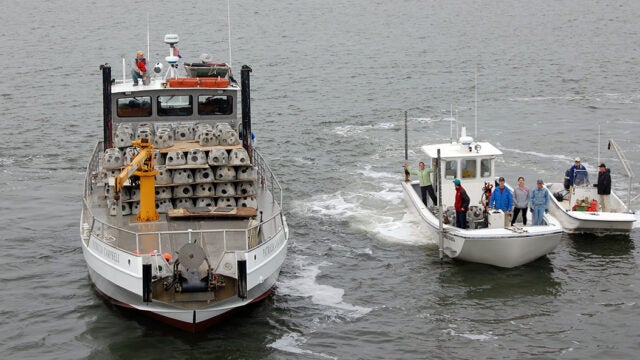
The Chesapeake Bay Foundation recognizes that saving the Bay is uniquely tied to restoring the native oyster, Crassostrea virginica. Historically, Chesapeake oysters were the Bay’s most valuable fishery. Ecologically, native oysters are equally important: they filter algae, sediment, and other pollutants. Oyster reefs also provide habitat for fish, crabs, and other Bay organisms. Restoring the Bay’s native oyster population is critical to help improve the Bay’s water quality, economic viability, resilience, and biodiversity.
Our oyster restoration program’s mission is to:
- Leverage greater public and private investment in the Baywide oyster restoration effort.
- Engage citizens, students and decision makers in hands-on oyster restoration activities.
- Create public awareness of the critical need to restore oysters.
- Develop partnerships with community groups, institutions, agencies and organizations.
- Serve as a platform for education and scientific research.
- Produce oysters for local reef restoration projects.
- Promote commercial oyster aquaculture.
- Work with oyster processors, growers and watermen to develop innovative ways to sustain the industry.
Download our latest Maryland Oyster Restoration Annual Report.
Download our latest Virginia Oyster Restoration Annual Report.
 Wyatt Young
Oyster Gardening
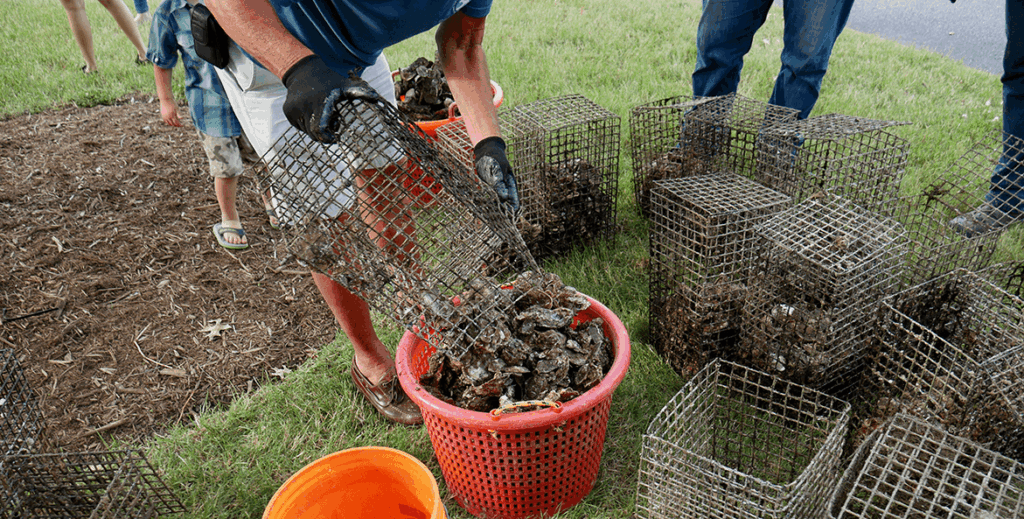
Help rebuild the Chesapeake Bay’s oyster population by becoming an oyster gardener. Hundreds of community members in Maryland and Virginia grow oysters alongside their docks and then help CBF plant them on sanctuary reefs. Find out more about oyster gardening and how you can become a gardener in Virginia, Baltimore, and other parts of Maryland.
 CBF Staff
Oyster Shell Recycling
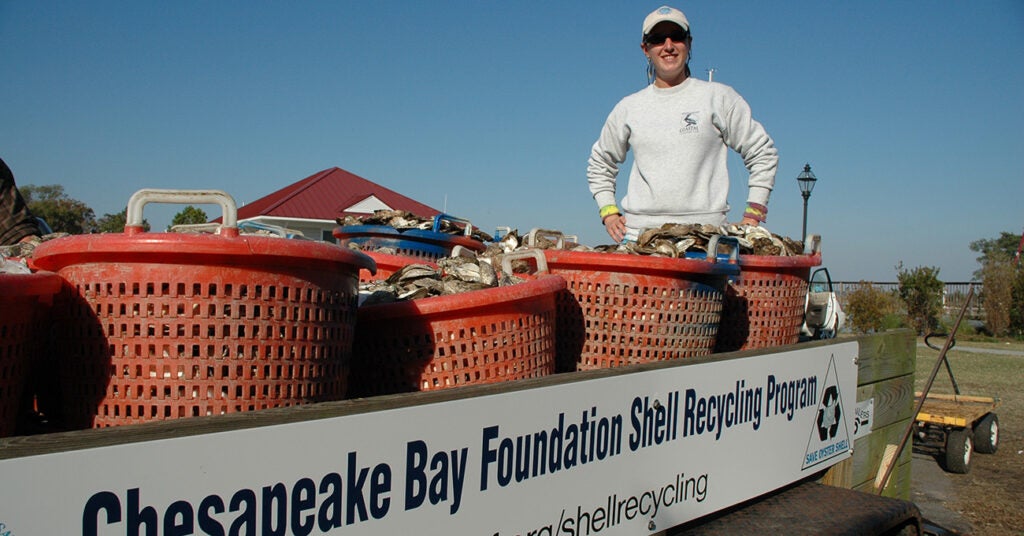
Oyster shells are literally the foundation of our reef restoration efforts, but they are becoming increasingly scarce. Through CBF’s Save Oyster Shell recycling program, individuals and restaurants donate empty shells to be used in a variety of oyster restoration projects.
We turn 4,000 bushels of recycled oyster shells each year into habitat for millions of oysters planted in the Bay and its rivers. Once the recycled shells are cleaned and cured, CBF places them in huge water tanks containing millions of microscopic oyster larvae, which then attach to the shells. On average, each recycled shell can become home to around 10 of those baby oysters, called spat. CBF provides the spat-on-shell to its oyster gardeners and plants them in rivers and the Bay to grow and expand oyster reefs.
For information on local shell recycling locations and participating restaurants, please visit our Save Oyster Shells web page.
 Erika Nortemann Photography
Reef Ball Construction
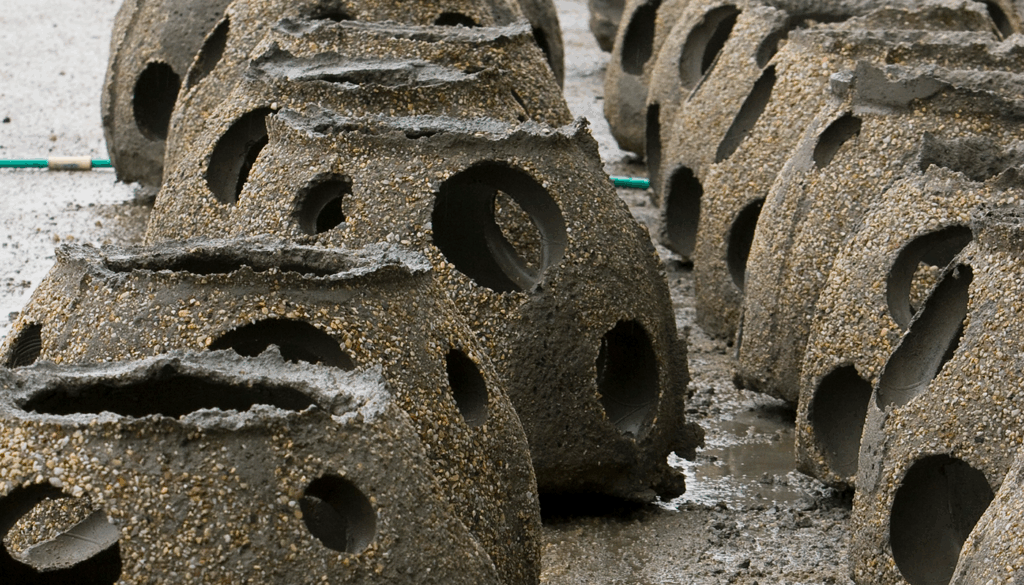
Reef balls provide hard substrate for the settlement and growth of oysters. They emulate the structure of an undisturbed oyster reef that builds higher in the water column over time through generations of oyster spawning and growing. The reef balls also create instant habitat for fish, crabs, and other Bay organisms.
Sometimes CBF will set the reef balls with oyster larvae, just like we do with recycled oyster shells. CBF depends on volunteers to help us build and deploy reef balls all across the watershed.
Large-Scale Oyster Restoration Baywide
Recognizing the importance of oysters to a healthy Bay, the 2014 Chesapeake Bay Watershed Agreement included an ambitious goal for the large-scale restoration and protection of native oyster populations in 10 rivers. CBF has been a partner in these efforts.
Oyster Restoration Sites
This map displays all of the Chesapeake Bay Foundation’s oyster restoration sites. Double-click on the map or use your mouse scroll wheel to zoom into a location. Click on a blue dot to view additional information on that particular site. (Map may be slow to load.)
Difficulty viewing map? Open it in a separate window.
Where We Work in Maryland
Truman T. Semans Center for Oyster Restoration and Innovation (Galesville)
The Truman T. Semans Center for Oyster Restoration and Innovation, anticipated to begin operation in 2027, will serve as the heart of oyster restoration advancement for the entire watershed region.
Oyster Gardening in the Inner Harbor (Baltimore)
In September 2014, CBF and the Waterfront Partnership expanded their oyster restoration program, formally kicking off The Greater Baltimore Oyster Partnership.
Where We Work in Virginia
Brock Environmental Center (Virginia Beach)
CBF’s Brock Environmental Center, located at Pleasure House Point in Virginia Beach, Virginia, serves as a main hub for mobilizing oyster restoration work. We utilize the Brock Environmental Center campus, as well as many others across Virginia, for numerous oyster restoration volunteer activities.
Prudence H. & Louis F. Ryan Mobile Oyster Restoration Center (Virginia Beach)
CBF’s cutting-edge vessel has changed how we bring back the Chesapeake Bay’s native oyster population. This innovative oyster barge holds six 850-gallon tanks for setting oyster larvae on recycled shells and reef balls. The barge travels from one river to the next, allowing CBF to restore local oyster populations more efficiently than ever before. The Mobile Oyster Center is currently located at the Brock Environmental Center. Find out more about the mobile oyster restoration center.
Related Programs
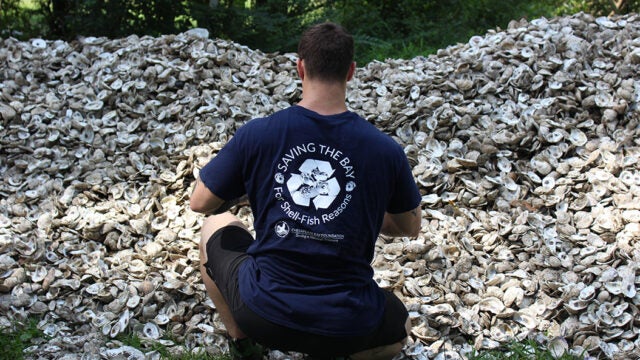
Find out about oyster shell recycling then get involved. Drop off your empty oyster shells, volunteer to pickup shells and deliver them to CBF, host a recycling pickup, or encourage your local seafood restaurant to participate.
