A River Runs Through It. A Data Center Rises Beside It.
Recently, 22 environmental groups came together to call for a moratorium on new data centers in Virginia. What does that mean for the rivers we love?
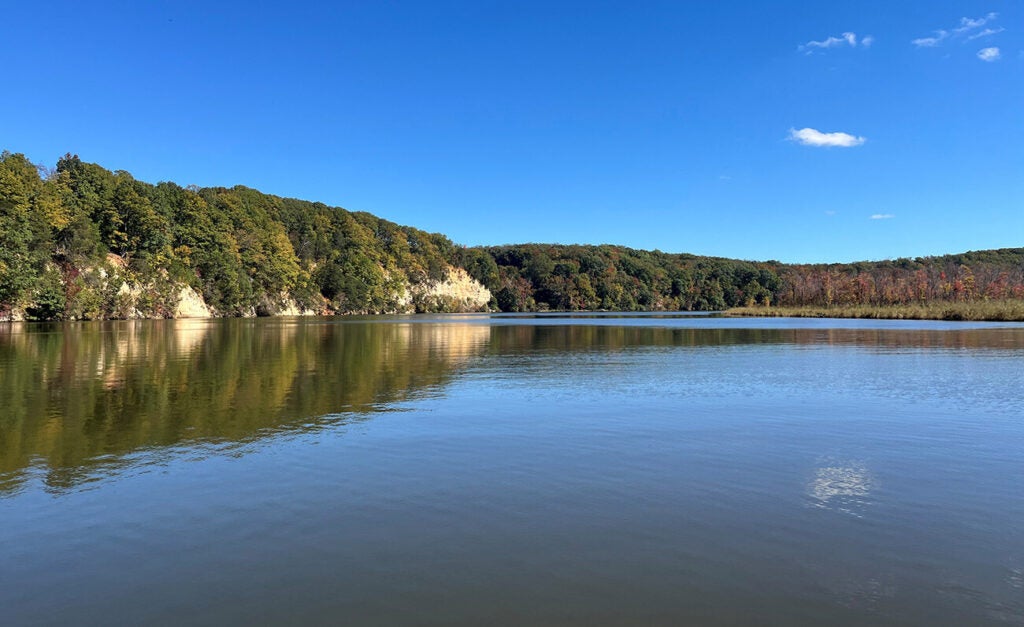
Three weeks ago, I found myself on a boat alongside my father on the quietest, most pristine stretch of the Rappahannock I’d ever experienced. Just southeast of Port Royal, where the bald eagles act like osprey—soaring and diving dramatically in search of prey—we motored. The tulip poplars, pin oaks, and red maples that lined the river were on full display with bright reds and oranges bursting under the bluest blue autumn sky.
 Emmy Nicklin/CBF Staff
The river itself was strange and beautiful. At once shallow and deep, curved and straight. Though we’d both been on (and in) this river countless times, this stretch almost seemed foreign to us—plunged back in time, as we passed the now-lifeless Saunders Wharf—the last remaining steamboat wharf on the Rappahannock. There were no sounds of highways or airplanes; just water flowing, Carolina wrens chatting, and the occasional wind whipping.
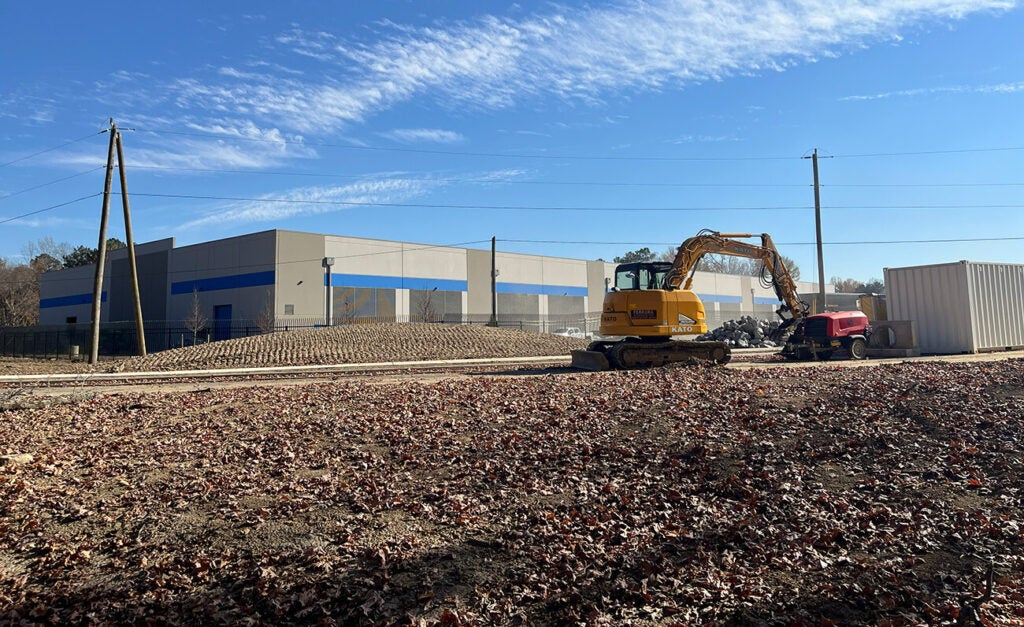
Several weeks later and 30 some miles to the southwest, I stood in Ashland, Virginia, underneath a pocket of trees on an equally bright day. While the trees were still in their fall prime, it was unseasonably warm outside. Even more unnatural, however, was the sight just through the woods: A very large, non-descript building under construction. The sound of persistently beeping bulldozers competed with the traffic from neighboring Route 1 North.
 Emmy Nicklin/CBF Staff
The soon-to-be operating data center belonged to Oppidan Investment Company, which is creating a network of data centers across the country as far away as Santa Clara, California, Albuquerque, New Mexico, El Paso, Texas, and now Ashland, Virginia. The location where they’ve chosen to build is right next to the Hanover Humane Society. The woods that connect them is where Humane Society volunteers walk rescued dogs—often distressed and particularly sensitive to noise. Notably, the data center project initially moved forward without any public engagement—or any information on its environmental and community impact.
The wealthiest companies in human history think Virginians should shoulder higher energy bills, breathe dirtier air, and accept new threats to the Chesapeake Bay and its rivers so these same companies can build data centers
Jay Ford, Chesapeake Bay Foundation Virginia Policy Manager
But on this November day, CBF and 13 other environmental groups (that number would quickly grow to 22 following the event), came together to call for a moratorium on new data center construction in Virginia until robust local transparency and environmental protections are in place.
“The wealthiest companies in human history think Virginians should shoulder higher energy bills, breathe dirtier air, and accept new threats to the Chesapeake Bay and its rivers so these same companies can build data centers,” said CBF’s Virginia Policy Manager Jay Ford at the event.
The Pause to Protect Coalition comes on the heels of Gov. Abigail Spanberger’s Data Center Accountability Framework, announced in September. The framework calls for guardrails on data centers but does not include a moratorium. And while it remains one of the most comprehensive policy frameworks in the country, the sheer pace and scale of data center development in the state makes clear that lawmakers need to do more—and now.
What are the impacts of data center development?
Virginia (particularly Northern Virginia, known as “Data Center Alley”) has historically been home to the largest concentration of data centers in the world. And that growth shows no signs of slowing down. In just one example of the potential impact, Dominion Energy expects that 51 percent of its electricity will be sold to data centers by 2035. That means most of the electricity from Virginia’s largest utility would not go to residential households, small businesses, or schools—it would go to a single, energy-hungry industry.
When it comes to how all this growth impacts the Chesapeake Bay, what’s most disturbing of all is that we simply don’t know how much of a problem data centers are. There is shockingly little public information available about them. Without it, it’s hard to fully understand the risks. But what we do know is concerning, explains CBF’s Virginia Science Manager Mike Gerel. For example, we know that they use a lot of energy and water; they contribute to air and water pollution; and they take up a lot of land.
For the Bay specifically, “the biggest impact we can estimate is nitrogen pollution from using fossil fuels to power [data centers],” says Gerel. “About 13 percent of nitrogen to the Bay comes from fossil fuels used to create electricity in the region, a reduction from the past due to improved technology and regulation. However, if we build more data centers fueled by coal, oil, or natural gas, this nitrogen pollution will surely increase—erasing gains.”
What’s more, a recent study in the journal Nature Sustainability, showed that the largest data centers in the U.S. collectively release 25.7 million metric tons of carbon emissions every single year, roughly equating to the emissions of some entire countries, like Jordan and Denmark. Of that 25.7 million metric tons, Virginia alone contributes 7.0 million metric tons of carbon dioxide—the most of any state in the country. It’s worth noting the painstaking work that went into understanding the impact of data centers, which the study’s author told the New York Times, “tells you something about the lack of transparency itself in the industry… communities shouldn’t need a team of Harvard researchers to analyze satellite images to understand [data centers’] environmental impact.”
Big tech swoops in, pulls the wool over our eyes, and breaks ground before we’re able to fight back. We’re here to say enough is enough.
Blair St. Ledger-Olson, Virginia League of Conservation Voters
Let us not forget what excessive carbon emissions mean: dirtier air, a warming planet, and far-reaching consequences for people and nature alike. By trapping heat in the atmosphere, these emissions intensify extreme weather, damage ecosystems, and threaten the health and well-being of communities across Virginia and beyond.
And it’s not just energy. “Data centers are incredible users of water—mostly clean drinking water,” says CBF’s Jay Ford. “At a time when we’re seeing historically low levels in the Potomac and the Rappahannock and the York Rivers, we’re seeing data centers increasingly taking more of our water resources.”
Add to that the loss of farms, forests, and wetlands, proximity to residential communities, local air pollution from back-up generators, noise and viewshed disturbances, disposal of e-waste, and polluted runoff to streams, and more. Taken together, CBF believes the evidence points to a legitimate threat to the natural resources and people of our region without further safeguards. In Virginia, that starts with pushing pause.
“No one knew this was coming, until it was here,” said Virginia LCV’s Blair St. Ledger-Olson at the announcement in Ashland last Wednesday. “No public hearings. No community meetings or information sessions. No way for those most impacted to make their voices heard in the process or to hold their elected representatives accountable. And it’s a scenario playing out all over the Commonwealth… Big tech swoops in, pulls the wool over our eyes, and breaks ground before we’re able to fight back. We’re here to say enough is enough. Our governor and our legislature need to pause data center construction to protect the Virginia we know and love.”
As I think back about that day on the river with my dad, I can’t help it—I worry about that stretch of Rappahannock and what will happen if no safeguards are put in place. While the Ashland data center is closest to the Chickahominy River, which then flows to the James, there are many other centers just like it that could have far-reaching consequences for the Rappahannock.
For 81 years my father, a native of its headwaters and the rolling foothills of the Blue Ridge, has known this river, and for more than half of those years he has shared his love for it with me. But what will become of our Rappahannock—the longest free-flowing river in the eastern United States? Will it get sucked dry—its waters used to cool thousands upon thousands of hot computer servers? Will the sounds from the riverbanks, the wrens and woodpeckers, be replaced by the constant, whirring hum of a data center? Will the river that has shaped the lives of so many Virginians, my father and I included, all but disappear?
Tell VA Legislators: No Data Centers Without Strong Safeguards!
Virginia’s data center industry is driving unprecedented demands for electricity, water, and supporting infrastructure. Without stronger safeguards, these impacts threaten our communities, raise costs for residents and businesses, contribute to air pollution, and put increasing pressure on our water supplies, land, and other natural resources. Tell your Virginia legislators: No new data centers until strong safeguards are in place!
