Measuring Menhaden on the Rappahannock
Crabber Tyree Smith hunts for bunker amid rising prices and worries about the long-term sustainability of this critical fish.
Tyree Smith knows crabbing—he’s a 14-year veteran waterman in Virginia. He knows local fish—he was born and raised in Tappahannock and grew up catching croaker and other Bay watershed species.
And he knows there’s something wrong with the Chesapeake Bay’s population of menhaden, which Smith and other crabbers frequently use for bait.
“There’s been a big decline—a big increase in the price, too. The bait’s doubled since I started working,” he said, noting he spent upwards of $36,000 on bait alone last year.
“It’s making it less lucrative for people actually working the river.”
On a hot July day on the Rappahannock River, Smith carefully pulled in traps and re-baited them with menhaden, the small, oily fish that’s a major food source for larger fish and other animals.
But they weren’t from Virginia waters—or anywhere near the Chesapeake Bay.
“Those fish aren’t from here,” he said, gesturing toward his bait box and lamenting how menhaden that size aren’t available locally anymore.
Our resource is being taken from here and being sent somewhere else so someone else can benefit.
Tyree Smith
As menhaden catches have plummeted in the Bay and broader watershed, Smith sometimes uses catfish to lure crabs—though he says their smell can be less attractive to crabs than the distinct scent of menhaden.
“Right now catfish will work, but it takes a day or so before it catches,” he explained on his boat.
Led by foreign-owned Omega Protein and their partner Ocean Harvesters, the reduction fishery industry harvests more than 100 million pounds of menhaden annually from Virginia’s portion of the Chesapeake Bay. Much of the byproduct is used in fish oil products or fish meal that is then shipped abroad.
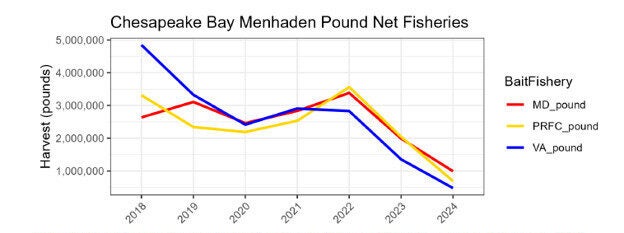 Atlantic States Marine Fisheries Commission
“Our resource is being taken from here and being sent somewhere else so someone else can benefit,” said Smith, lamenting that the industrial fishery’s chokehold on the market has helped push some older commercial fishermen out of the business entirely.
Smith, who is typically out on the water at least six days a week, has been looking to start up a catfish processing plant in Tappahannock and plans to apply again for grant funding to do so through the Virginia Institute of Marine Science (VIMS).
“I do this to try to supply food to my community,” he said. “We know who the big dog is in the race and it’s not here in the United States. It’s a foreign-owned company, no matter how they try to say it’s based out of Reedville.”
He acknowledged the $2 million in funding for research on menhaden in the Bay that the Virginia legislature approved just this year after years of trying—but wondered how effective studies documenting the population will be if the reduction industry continues at its current pace.
“It’s going to be hard to do that research if they catch every fish that comes into the Bay,” he said.
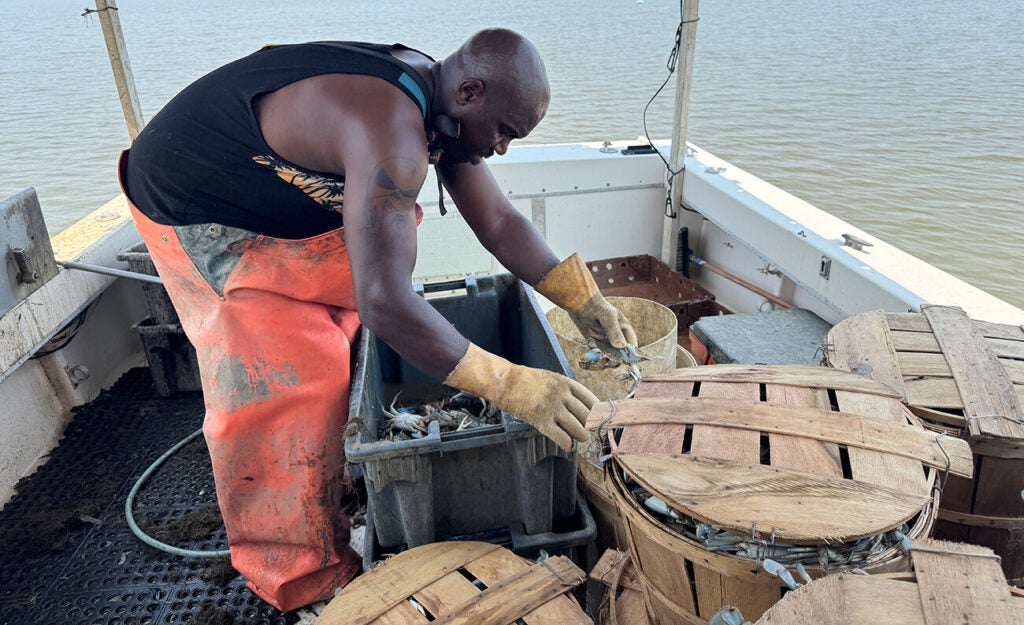 David Sherfinski/CBF Staff
Smith said for now, the small menhaden, also known as peanut bunker, that he sees in the river means the population is hanging on and could potentially replenish down the road—but that time is running out to reverse recent trends.
“Even if they stopped all industrial menhaden fishing altogether, it would still take a good portion of our lifetime before we’d see them replenished,” he said.
“There are enough babies to replenish from what I’m seeing on the Rappahannock. When we stop seeing that up here, that’s when it’s going to be too far gone.”
Right now, the Atlantic States Marine Fisheries Commission (ASMFC) is considering public comment on a provision known as Draft Addendum II, which would change menhaden management in the Chesapeake Bay.
The Chesapeake Bay Foundation supports cutting the menhaden Reduction Fishery Bay Cap by 50 percent to protect the Bay ecosystem. Get more information, including details on how to take action!
Related Stories
-
 Blog Story
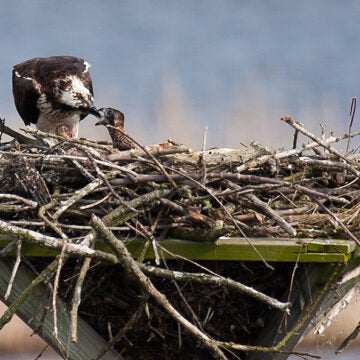
How Many More Osprey Chicks Must Starve to Death?
Some of the Chesapeake Bay’s best fishermen—osprey—are sending a loud warning: There aren’t enough fish in the Bay. It’s time to act.
-
 Blog Story
Coming Up Empty: Commercial Watermen in Maryland are Finding Fewer Menhaden
Commercial bait fishermen, who supply menhaden to other fisheries like blue crabs, are stretched thin as it gets harder to find fish.
