Our Bay, the Perfect Classroom
As Virginia teacher Tonya Humphrey knows first-hand, environmental education is critically important to her students and their futures.
My name is Tonya Humphrey, and I am a thirty-year veteran of Virginia’s Prince George County Public Schools. I began my career as a sixth grade science teacher and am currently the gifted resource teacher for JEJ Moore Middle School. For the past 20 years or so, I’ve utilized the programming from the Chesapeake Bay Foundation to give my students hands-on environmental education opportunities. From their boat trips on the James River to canoe trips on the Appomattox to overnight experiences on their island classrooms on Port Isobel or Smith Island, the students I take on these field trips are gaining tangible, real world experiences. JEJ Moore also has the unique opportunity to serve as the middle school for Fort Gregg-Adams. Many of our students leave our school system for new ones all over the country—carrying those valuable experiences with them.
Our children are inheriting a world where environmental challenges are becoming increasingly urgent. Habitat destruction and pollution are present realities not just in the Chesapeake Bay region but all over the world. With education, we can empower our students to become problem solvers, advocates, and stewards of our natural world. Environmental education is not just about learning facts; it’s about fostering a deep connection to nature and inspiring action.
They see the impact of human activity on the Bay, and more importantly, they recognize their own ability to make a difference.
The Chesapeake Bay, one of our nation’s most vital ecosystems, serves as a perfect classroom. When students engage in hands-on learning—whether through water quality testing, a walk on our school’s nature trail, or joining a Chesapeake Bay island classroom— they don’t just read about environmental issues, they experience them firsthand.
In particular, on CBF’s island education programs, students learn about the importance of oysters, practice how to bait crab pots, and get down and dirty in the marshland to learn the importance of wetlands. When students become a part of the waterman’s community on Smith Island they see personally the connection humankind has with the environment. They see the impact of human activity on the Bay, and more importantly, they recognize their own ability to make a difference. These experiences ignite passion, cultivate critical thinking, and encourage students to take ownership of their role in protecting the environment.
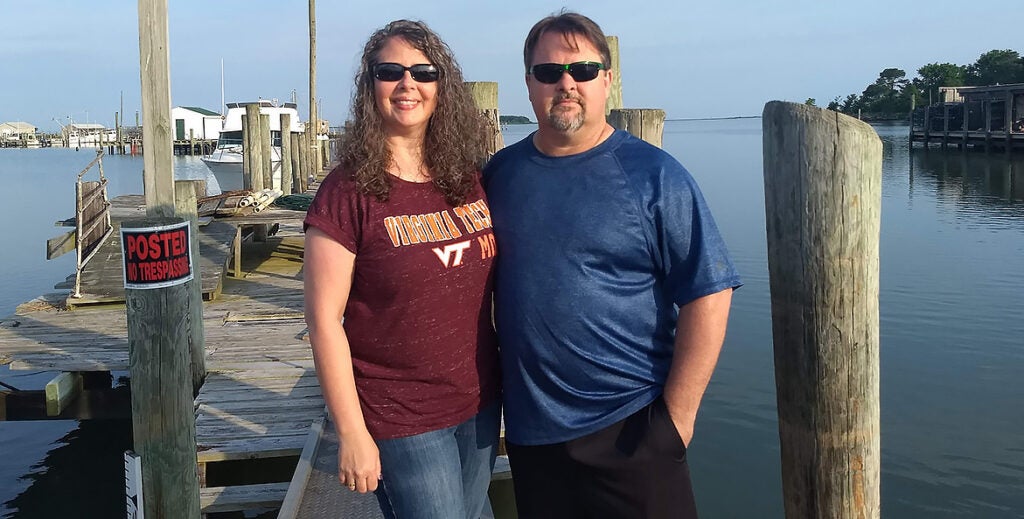 Tonya Humphrey
By incorporating environmental education into our curriculum, we are not just teaching science—we are fostering a generation of environmentally literate citizens who will carry these lessons forward into their careers and communities.
However, this cannot happen without support. We need strong partnerships between schools, local and state governments, and environmental organizations like the Chesapeake Bay Foundation to provide the resources and opportunities that make this kind of learning possible. We need policies that prioritize environmental literacy in our schools. And most importantly, we need the collective commitment of educators, parents, and community members to ensure that every student has access to meaningful environmental education. After all as Jacques-Yves Cousteau said: “We only love what we understand, and we only understand what we are taught.”
Did you know 79 percent of Bay watershed residents surveyed believe increasing environmental literacy is key to helping the Bay? Find out more about what’s important to people living around the Chesapeake Bay by checking out CBF’s new polling results here.
Related Stories
-
 Blog Story
Like Mother, Like Daughter
When teacher Karen Earp first joined one of CBF’s professional learning courses on Smith Island, she had recently learned she was pregnant. Nearly 30 years later, she and her daughter—now a teacher herself—returned together.
-
 Blog Story
The Karen Noonan Center, 30 Years Strong
A victim of the Pan Am Flight 103 terrorist bombing over Lockerbie, 20-year-old Karen Noonan was a college student devoted to education and the outdoors. For more than 30 years, her legacy has lived on through this CBF education program.
