Testifying on Behalf of Living Shorelines
Maryland student Kate Johnson recently spoke on behalf of critical legislation in front of the state General Assembly.
One of the most intimidating, but incredibly impactful, forms of advocacy is to testify in a public hearing. But that did not discourage 16-year-old Kate Johnson from speaking up on behalf of an important living shorelines bill during the 2024 Maryland General Assembly session.
Living shorelines—shoreline stabilization techniques that include natural gradients and living elements like marshes, oyster reefs, and underwater grasses—connect land to water, stabilize soil, and provide valuable habitat in ways that costly bulkheads and stone revetments do not. Despite the clear directive established by Maryland’s 2008 living shorelines law, a significant number of waivers to this requirement continued to be granted, resulting in nearly 2,000 miles of armoring, representing more than 25 percent of all of the state’s shoreline.
CBF and partners are supporting legislation (Senate Bill 546 and House Bill 655) that would build on the landmark 2008 law to clarify a portion of the waiver provision related to the replacement of existing hardened shoreline and expand the uses of waterway impact fee revenues to include grants for replacing armored shorelines with living shorelines. But first, we have to get the bills passed.
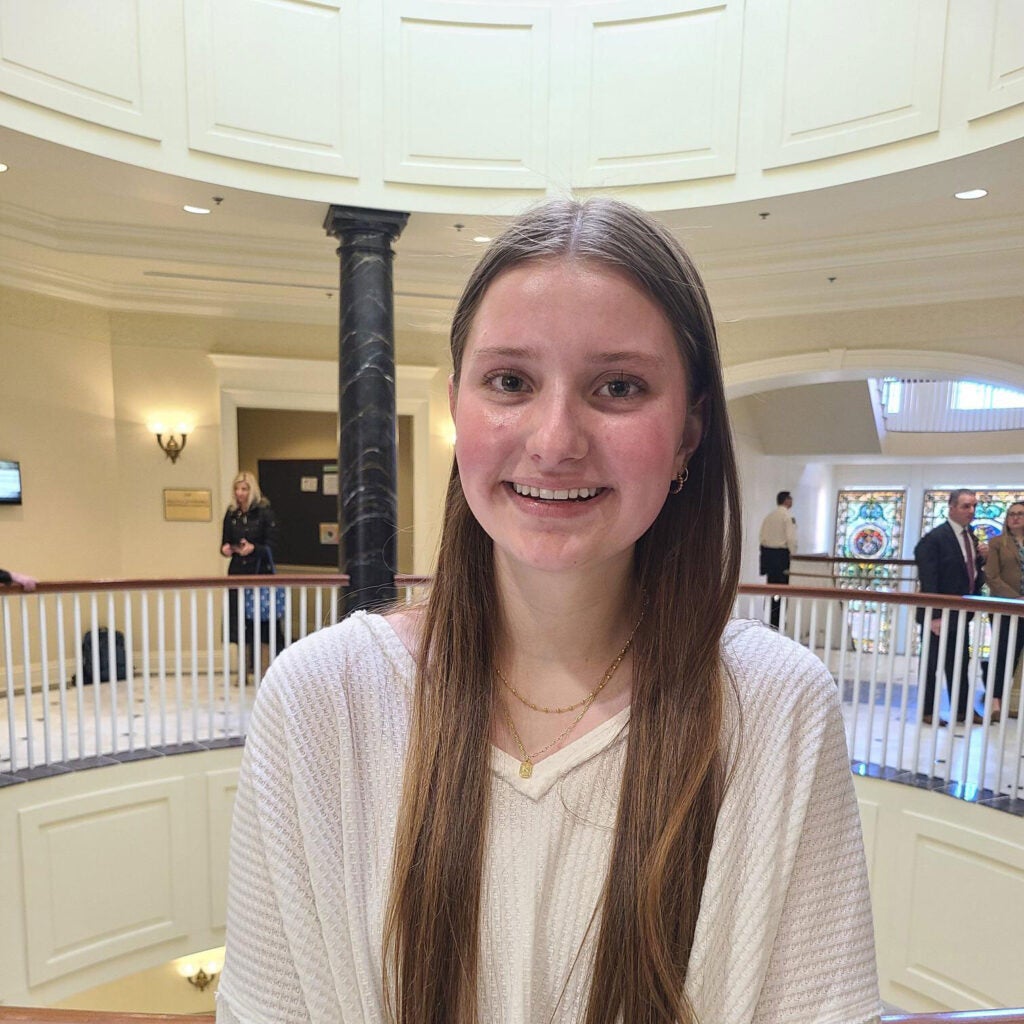 Valerie DiMarzio/CBF Staff
On February 21, Kate spoke before the House Environment and Transportation Committee on the importance of HB655 and urged Maryland legislators to support its passage. Here is a written copy of her testimony from the hearing:
Good afternoon. My name is Kate Johnson, and I am currently in high school. I am testifying in support of HB655, a bill that enforces requirements, such as prohibiting the exemption of shoreline stabilization requirements. This bill would also protect the current living shorelines from being replaced and encourage more shorelines to be created.
Living shorelines are important because they bring habitat, biodiversity, and aesthetics to our community.
First of all, the economy is positively affected by living shorelines since we sell seafood—many [Maryland] restaurants sell oysters, fish, crabs, and much more. If the supply of native species is stable, businesses will flourish and vice versa.
Fishermen would also be impacted if the population of seafood continues to decrease. However, living shorelines can support the aquatic population by rejuvenating their habitat and cleansing the water.
Next, the materials living shorelines are made from—such as Bay grasses, rocks, and oyster shells—aid in reducing coastal erosion since they can absorb wave energy and, in return, minimize flooding. As we all know, Annapolis floods easily.
Overall, HB655 will hold MDE and landowners responsible [for replacing hardened shorelines with living shorelines]. We need living shorelines to provide habitat, support native species, stabilize shorelines, and create a healthier Bay.
Thank you.
Related Stories
-
 Blog Story
“My Voice Was Really Heard”
Advocating for strong environmental legislation is an important part of protecting water quality and saving the Bay. Maryland student leaders took time to talk to their local legislators and encourage them to vote favorably on some of this year’s key environmental bills.
-
 Blog Story
Knocking on Virginia Lawmakers’ Doors
Clean Water Lobby Day in Virginia returns with new faces of a younger generation of Bay stewards fighting for living shorelines, trees, wetlands, and so much more...
