What We’re Watching: Maryland’s Whole Watershed Act Pilot Program
Antietam Creek in western Maryland is one of five watersheds selected for the program.
Maryland’s Appalachia region is home to some of our state’s most stunning forests, tranquil freshwater streams, and rolling farmlands.
That’s probably why thousands of nature lovers travel to Washington and Frederick counties each year to hike and fish. It’s also likely why the population of Frederick County alone grew by 7.5 percent between 2020 and 2023—more than any other Maryland county.
But the streams and rivers here are suffering from too much pollution, which runs off of farmland and new development. Water temperatures are getting too warm, threatening native brook trout, and contributing to fish kills, algal blooms, and dead zones in the Chesapeake Bay. Historically, restoration efforts in Maryland have not effectively reduced pollution at the source. As people continue flocking to this region, we need to take a holistic watershed approach to restoration in western Maryland.
Most notably, the Whole Watershed Act program was designed to focus on restoration where we’ll get the most bang for our buck.
That is why many conservation partners, including the Chesapeake Bay Foundation (CBF), Catoctin Land Trust, and Antietam-Conococheague Watershed Alliance (ACWA) were ecstatic when the Antietam Creek watershed in Washington County was selected as one of Maryland’s Whole Watershed Act pilot projects.
What’s the Whole Watershed Act?
The Whole Watershed Act was introduced and passed in Maryland’s 2024 General Assembly. Sponsored by current Maryland Senator Sara Love and current U.S. Representative Sarah Elfreth, this legislation was a direct response to recommendations made in the 2023 Comprehensive Evaluation of System Response (CESR) report—an evaluation done by dozens of scientists to test water quality progress for the Chesapeake Bay.
CESR recommended targeting key watersheds for restoration to accelerate water quality and habitat benefits, particularly in shallow waters like creeks and streams. Most notably, the Whole Watershed Act program was designed to focus on restoration where we’ll get the most bang for our buck. The ultimate goal is to de-list key streams from the federal impaired waterways list once they meet water quality goals.
“We used to just do restoration wherever the projects and funding were available,” said Susan Simonson, AWCA board member who has been doing water quality monitoring in the Antietam Creek watershed since 2015. “But with the Whole Watershed Act, it allows us to look at where we actually need work done throughout the watershed.”
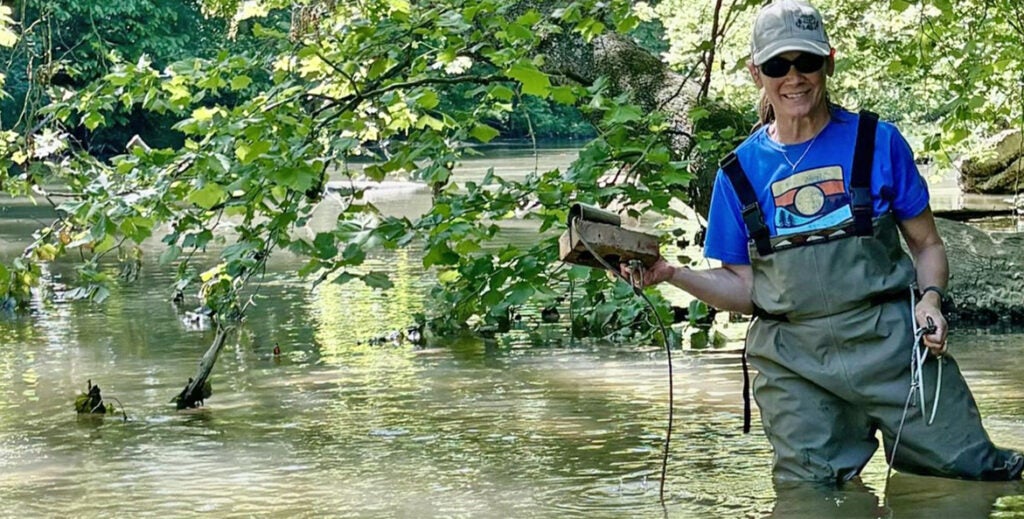 Susan Simonson
Antietam Creek was one of five watersheds selected for this pilot initiative. Others include Baltimore Harbor, Newport Bay near Ocean City, the Severn River in Anne Arundel County, and the Upper Choptank River on the Eastern Shore. Each project will receive an initial $2 million investment, which the groups can then use to leverage private matching funds.
Investing in local solutions
For the Antietam Creek community, that $2 million will go a long way.
Most of the money will go towards initiatives the partnership already had in mind, but didn’t have the funding to implement effectively. Their goal is to clean up streams in Antietam’s three sub-watersheds: Hamilton Run, Beaver Creek, and North Little Antietam.
“We felt like this program was made for us,” said Matt Fleischer, deputy director at Catoctin Land Trust and leader of the Heart of Maryland Collaborative—a collaborative group focused on restoration in Washington and Frederick counties. “When the Whole Watershed Act passed, we thought ‘this is exactly what we want to do: take a full watershed approach to restoring and protecting the land.'”
Fleischer explained that Frederick and Washington counties have done a great job protecting land from development through land preservation and easements. However, implementing holistic farm conservation practices and restoration has been a missed opportunity. Their regional plan, which the Whole Watershed Act will help achieve, will take conservation to the next level by improving water quality monitoring, planting trees on farms and in the urban areas, and implementing regenerative farming practices. These practices help maintain plant cover all year round to restore the soil’s sponge—or ability to retain water—which will, in turn, reduce flooding and polluted runoff.
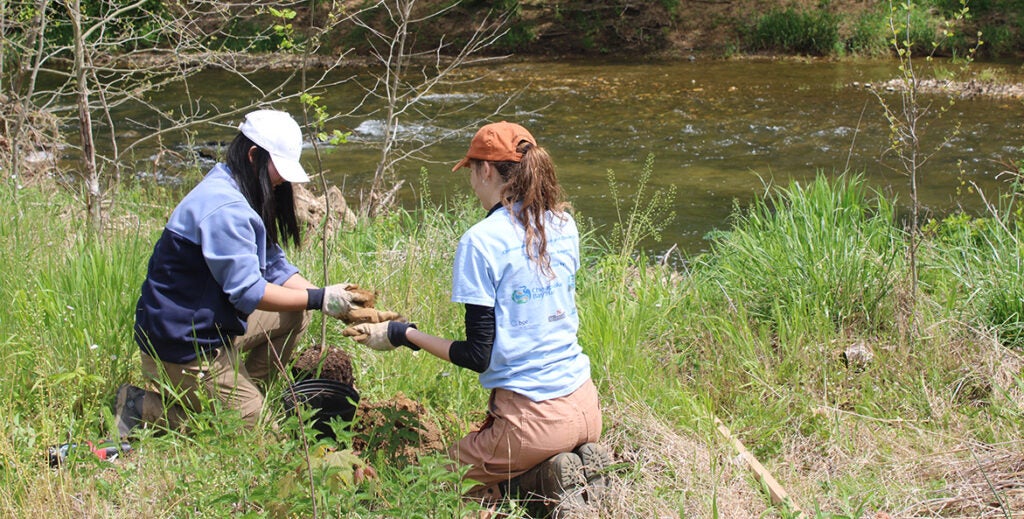 Valerie DiMarzio/CBF Staff
Hamilton Run, which runs right through Hagerstown, is the first target. While the stream’s urban surroundings make full delisting an ambitious goal, focused and coordinated interventions can result in meaningful improvements.
The Antietam Creek partnership is excited to bring Whole Watershed Act funding to Hagerstown, which has been historically underserved and has immense restoration potential. Initial funding will help partners plant more urban trees there, which will provide critical shade for the stream and sidewalks. New trees will also help mitigate flooding downtown and absorb polluted runoff that flows from the streets and into the waterway.
This is just the beginning
In the long term, we hope that future Whole Watershed Act funding will address additional pollution upland at the source. For example, there’s ripe opportunity in Hagerstown to remove unused impervious surfaces like old roads and parking lots. This would restore the land’s ability to absorb water, reduce flooding, and limit stormwater pollution that runs into the stream. It would also address overbearing heat, which can harm the health of both streams and people.
“We’re using this opportunity to look at the entire connected landscape over Frederick and Washington counties,” Fleischer added. “There are green corridors across the Appalachians where we want to implement reforestation plans, both upland and riparian buffers, stream restoration projects, and other best management practices that we can implement throughout Antietam Creek and eventually, other nearby watersheds.”
Not only could the Whole Watershed Act catalyze healthier waterways for the local community and wildlife, but it could attract more trout anglers, more tree planting volunteers, and more regenerative farmers who care about the health of Chesapeake Bay.
Antietam Creek, while impaired, is a renowned trout stream. Cold ground water and tree buffers around the streams help keep trout cool to their liking. ACWA’s annual report card is already considering trout habitat and helping inform what solutions will best support them.
“These are very sensitive habitats,” Simonson said. “This year’s report card said we need to focus on our tree canopy, especially in urban setting with overburdened and underserved communities. It also highlighted a large fish kill that happened a few years ago in Beaver Creek, which we are trying to better understand and prevent in the future.”
Antietam Creek made an exceptionally good candidate for Whole Watershed Act funding because it included a critical element that the state was looking for: the watershed borders another state, Pennsylvania. Because of this, and the importance of reducing pollution in the Chesapeake Bay’s northwestern tributaries, Rob Schnabel, CBF Maryland restoration specialist, encouraged them to apply.
So what’s next?
“Our goal for these pilot projects is to hit pollution at the source,” said Schnabel. “The Antietam Creek watershed is 65 percent agricultural, and 10 percent urban. We must look at what’s going on upriver before diving right into the stream for restoration. True restoration addresses the source of the problem first. If we get more water to infiltrate in upland areas it will be a win-win-win: less streambank erosion and flooding, with more resilient communities and farms recharging groundwater and providing cool, clean water to our streams.”
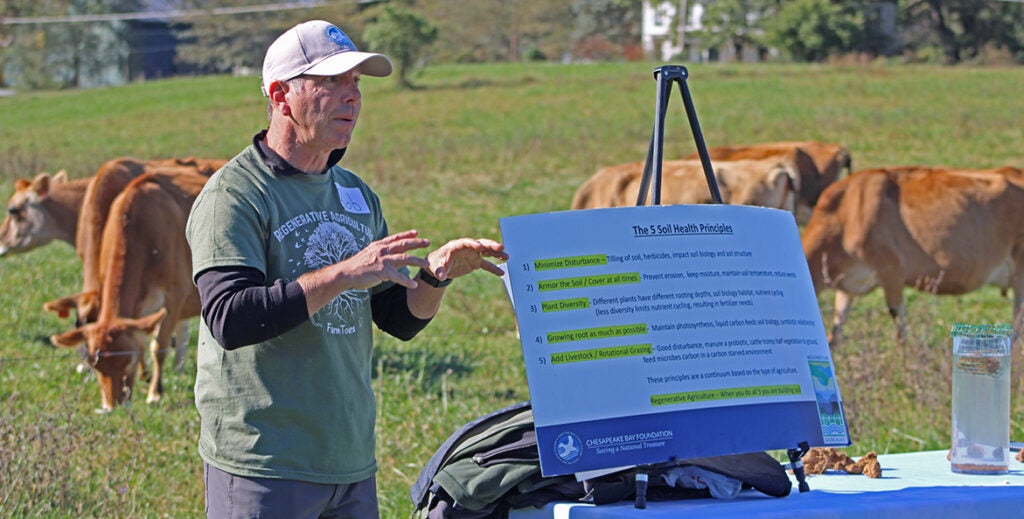 Valerie DiMarzio/CBF Staff
Today, the Antietam Creek partners are waiting for an official signed agreement from the state to move forward on their plan. They’re also working hard to connect with critical stakeholders at the Department of Natural Resources (DNR), Washington County Commissioners, the City of Hagerstown, and more.
These areas heavily rely on recreational tourism and healthy natural resources to thrive. According to DNR, “Cleaner waterways bolster tourism in Maryland, which generates about $3.2 billion a year in economic activity.”
Not only could the Whole Watershed Act catalyze healthier waterways for the local community and wildlife, but it could attract more trout anglers, more tree planting volunteers, and more regenerative farmers who care about the health of Chesapeake Bay.
“For a whole watershed solution, we need the whole watershed’s excitement and commitment,” said Schnabel. “Luckily, this is just the beginning, and we have the next five years to get this right.”
Stay tuned as we continue our support of the Whole Watershed Act projects over the next several years. For more information about the watersheds selected and what they hope to achieve, please visit DNR’s website.
