You can achieve an attractive lawn and garden without excessive fertilizer, water, or labor. If you care about protecting water quality here are some of the best ways to make small changes in your lawn- and garden-care routine to reduce pollution in your local streams and the Chesapeake Bay.
How Does Lawn Care Impact Our Waters?
Lawns and turf grass is now the largest crop grown in the Chesapeake Bay watershed according to research conducted by the Chesapeake Stormwater Network—accounting for more than 3.8 million acres. Poorly managed and over fertilized lawns result in nitrogen, phosphorus, and sediment runoff into local streams and rivers, ultimately adding pollution to the Chesapeake Bay.
What Is Eco-friendly Landscaping?
Eco-friendly or Bay-friendly landscaping is a way to create and maintain your yard in ways that benefit the environment, are self-sustaining, and as free of chemicals and additional fertilizer as possible.
Benefits of Eco-friendly Landscaping
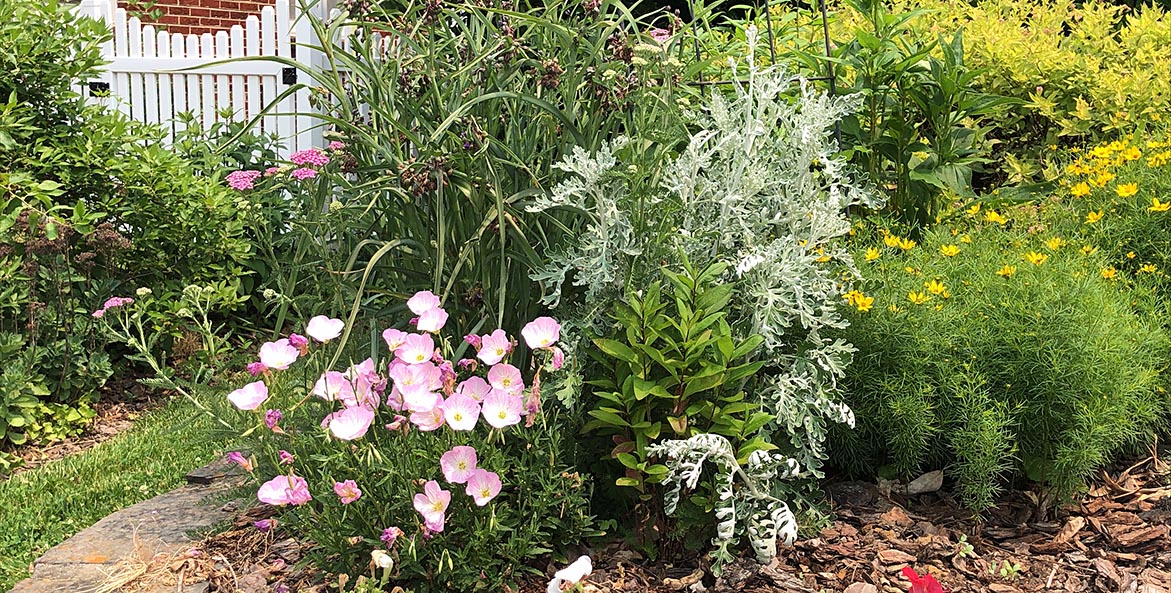
Eco-friendly landscapes result in healthier yards that are often easier to maintain because they use plants native to your region, which are more likely to thrive. Increasing native plant diversity provides food, cover, and nesting areas for native wildlife. Eco-friendly practices also restore your yard’s natural filters and reduce the stormwater runoff that dumps sediment and pollutants like nitrogen and phosphorus into storm drains and nearby rivers and streams.
Eight Eco-friendly Landscaping Tips
Googling “eco-friendly landscaping” will give you a plethora of ideas for updating your yard. Here are a few of our favorites.
1. Reduce your lawn. A lush green lawn is as American as apple pie, but it comes with a huge environmental cost and public health cost. Some ways to reduce your lawn include
- enlarging flower and shrub beds, planting a vegetable garden, or planting wildflowers;
- not growing grass under trees (it competes with the trees for moisture and nutrients), lay down mulch or chopped leaves instead;
- extending mulched areas around trees to create tree “islands”;
- planting shrubs or no-mow native grasses such as switchgrass on slopes to hold soil and reduce runoff;
- planting grass substitutes and native groundcovers that are resilient and require little to no mowing, like Allegheny pachysandra, Pennsylvania sedge, or purple lovegrass.
2. Reduce or avoid chemicals and fertilizers. Before throwing fertilizer on your lawn or garden, test soil samples to determine exactly what your soil needs.
- Ask for recommendations for organic, natural, slow-release fertilizers.
- If your soil test indicates you need fertilizer, make sure to sweep/blow it off sidewalks and driveways back into your lawn so it doesn’t end up in the Bay.
- Fertilize your lawn in the fall when fertilizer can do the most good to promote root growth, making lawns more drought resistant the following year and to avoid heavy spring rains that can drain fertilizer into the Bay.
- Don’t apply fertilizer before heavy rain is forecast.
- Applying lime or sulfur to adjust the pH will often take care of many lawn problems, including sparse growth or weeds. Again, test your soil first.
- Ask for recommendations for natural pest control products.
- Consider composting.
3. Deal with lawn problems safely. Weeds can be removed by hand, or with natural products like corn gluten or vinegar. Most insects and "nuisance" animals, like moles, aerate the soil and are actually good for your lawn!
- Use a weed-popper or trowel to remove individual weeds.
- Spray full strength vinegar on young leaves (works especially well on a hot day).
- Burn weeds with a propane torch.
- Pour boiling water over weeds.
- Feed lawn with compost or organic fertilizers, so grasses outcompete the weeds.
- Learn to live with a dandelion or two.
4. Feed the soil to feed the lawn. Proper use of fertilizers and compost is critical. Choose natural, organic fertilizers, or create your own organic compost to give your lawn the nutrients—and only those nutrients—it needs. The best alternative to water-soluble chemical fertilizers for your lawn and garden is compost. You can make your own from food waste, grass clippings, yard waste, and other natural ingredients, or purchase it from garden centers.
A compost "bin" can be as simple as a pile of leaves left to decompose in a corner of your yard or it can be a purchased container made to speed up the decomposition process. Nutrient and mineral-rich compost:
- Improves the productivity and health of the soil,
- Increases rainfall and runoff absorption, and helps the soil soak up rain, reducing runoff and increases drought resistance,
- Slowly releases nitrogen to your plants (and not the Bay) where it is needed the most.
5. Minimize pollution from lawn equipment. Gas-engine lawn mowers, trimmers, edgers, and weed whackers are often overlooked as sources of air pollution. Evaluate the size of your lawn and adjust your equipment and usage to your needs.
- Consider using a manual mower or rechargeable electric mower.
- Keep mower blades sharp to reduce stress on grass blades, which can increase susceptibility to insects and diseases.
- Don’t forget simple tools that work well and don’t pollute. Consider shears and manual edgers. Bamboo rakes are perfectly designed for gathering up leaves.
6. Mow high and leave the grass clippings on the lawn. Raise the blade on your mower so that you cut the grass 2-1/2 to 3-1/2 inches high. Cutting too close to the ground can stress and damage lawns. A general rule of thumb is to never cut more than one third of the blade. Taller grasses
- shade out weeds and help prevent their germination;
- allow roots to reach deeper, improve water infiltration, and reduce runoff;
- stay green longer during drought.
After mowing, leave the grass clippings on the lawn. These cuttings provide up to half of the nitrogen your lawn needs each year.
7. Water responsibly. When considering native plants, look for those that are drought tolerant. When it comes to your lawn, consider letting your lawn go dormant during the summer. (Dormant grass will begin to brown at the top but will retain healthy roots.) Once the rain and cooler temperatures return in the fall, your lawn will regain its green luster. When you do water
- water in the morning to reduce evaporation and the spread of disease;
- water slowly and deeply—drip hoses work well for gardens;
- if you use automatic sprinkler irrigation, make sure it has sensors to turn off automatically when moisture levels are adequate;
- consider using a rain barrel to gather rainwater for watering your garden.
8. Use native plants and trees. A diversity of native plants will help your yard have fewer pests, disease, and weed problems. Plants that are natural to your region are more likely to thrive and provide food and habitat for native wildlife.
Planting the right trees in the right places can reduce soil erosion and poor drainage, as well as reduce annual heating and cooling costs and increase property values. See our webpage 17 Native Trees for Your Yard for ideas and to help determine what types of trees are best for your property. Learn how to plant a tree with our video.
Native plants are adapted to local rainfall, soil, and temperatures. As a result they often need much less water, fertilizer, and care than non-native plants. If possible, purchase plants from local native plant suppliers or ask your local nursery to provide you with a list of native trees, shrubs, and plants they offer. You can also find advice from your state’s cooperative extension service. For more resources on selecting and finding native plants, see our Native Plants webpage.
More Bay-friendly Landscaping Resources
- Become a Bay-Wise gardener. The University of Maryland Extension Bay-Wise Program is a homeowner education program conducted by Maryland Master Gardeners in several counties. Get information about the Bay-Wise program here or read more about it in this article from Chesapeake Bay Magazine. Your efforts might even help your county meet its TMDL [Total Maximum Daily Load of Pollutants] and WIP [Watershed Implementation Plan], water pollution reduction plans that are required by the state as part of the Chesapeake Clean Water Blueprint.
- If you live in the District of Columbia, check out the D.C. Department of Energy & Environment's RiverSmart programs for property owners, communities, and schools. These programs provide information and financial incentives for projects that keep polluted stormwater out of local waterways.
- Search for "stormwater credit programs" in your state on the Internet. If your state has a stormwater fee you might be able to receive a reduction by reducing stormwater runoff from your property.
- If you live on the water, build a living shoreline to prevent erosion, allow wildlife access, and beautify your waterfront. Read our Living Shorelines brochure (pdf) or check out Six Steps to Create Your Living Shoreline.
- In your landscaping, use native grasses or other plants that don't require watering or fertilizing. Reduce or eliminate use of chemical herbicides and pesticides. Learn to live with a dandelion or two. Lawn fertilizers and chemicals are a big source of nitrogen and phosphorus pollution and toxic runoff.
- Avoid pouring toxic substances down storm drains. Don't dump hazardous materials like solvents, paints, and preservatives. They go directly into streams and waterways to pollute the Bay. Use your county's hazardous waste collection program instead.
- For more ideas for your own yard:
- Read our blog post, "Saving Songbirds, and Waterways, One Yard at a Time," written by CBF Virginia Outreach & Advocacy Manager Ann Jurczyk, who is also a Chesapeake Bay Landscape Professional Level 2 Certified for Design and Installation.
- Watch our video, Ask an Expert: What's the Buzz About Bee Balm?
- Check out our webinars, Creating a Backyard Buffet for Birds, Bees, and Butterflies and Green Practices for Clean Water.
- Learn how to plant a tree with our video.. Besides providing oxygen to the atmosphere, trees hold soil in place with their roots, preventing erosion that runs into the Bay. They soak up fertilizers and other chemicals before they seep into waterways. And by shading your home in summer, they even reduce energy costs.
- Get more information and resources about trees at TenMillionTrees.org.