Press Release
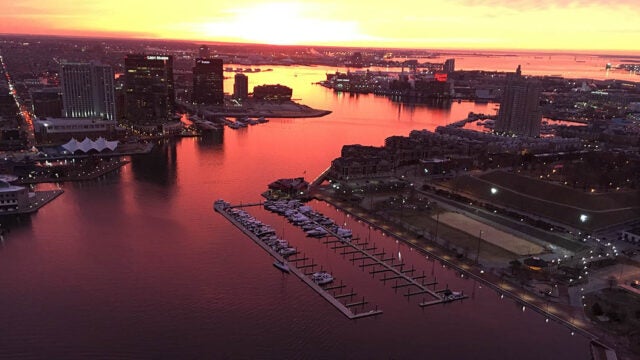
In the fight for environmental justice and cleaner air and water, advocates from South Baltimore have filed a civil rights complaint with the Environmental Protection Agency (EPA) on behalf of people suffering from pollution from Maryland’s largest trash incinerator.
South Baltimore Community Land Trust (SBCLT), represented by the Chesapeake Bay Foundation (CBF) and Environmental Integrity Project (EIP), filed a Title VI administration complaint on May 28 regarding the Baltimore City Department of Public Works’ (DPW) 10-year solid waste management plan.
The complaint states that DPW failed to adequately plan a transition away from reliance on the highly polluting municipal waste incinerator called the Baltimore Refuse Energy Systems Company (BRESCO), formerly known as the Wheelabrator. This contributes to the unequal health risks faced by people living in the Mt. Winans, Westport, Cherry Hill, Lakeland, Brooklyn and Curtis Bay neighborhoods.
“As someone raised in Cherry Hill who now suffers from an incurable lung disease as a result of air pollution, I am hopeful that our call for a just transition away from burning trash in our communities is finally heard and acted upon. I don’t want another generation to have to grow up worried about the air they breathe,” said Cherry Hill resident Cleo Walker.
Shashawnda Campbell, Environmental Justice Director for SBCLT said, “We’ve already seen our three former neighboring communities of Fairfield, Wagner’s and Hawkins Point be involuntarily displaced because of city planning decisions to concentrate more and more polluting waste infrastructure in South Baltimore.”
“Residents tireless organizing over the past decade has led to our officials promising they’ll do everything they can to end trash incineration and build new zero waste infrastructure, but we still aren’t seeing it where it counts—in policy and budgets,” Campbell said. “We are taking this action now because residents of South Baltimore have a right to finally live free from air polluted by burning trash.”
Located in one of Baltimore’s most disadvantaged communities, BRESCO is the largest stationary source of industrial air pollution in Baltimore. People living nearby face health risks from the facility’s air emissions, which include mercury, carbon monoxide, nitrogen oxides, and fine particulate matter. These emissions contribute to respiratory issues, heart conditions, and other serious health problems.
“Way too many of my family members and classmates at Ben Franklin High School suffer from asthma and other respiratory problems made worse by air pollution,” said Carlos Sanchez-Gonzalez of SBCLT. “I’m proud to be able to commit my life to solving this problem of how to get our city to break its addiction to funding trash incineration because it will mean a better future for my community of Lakeland and all my friends and neighbors from across South Baltimore.”
BRESCO’s emissions cost Maryland and neighboring states $55 million in human health problems annually, according to a 2017 study commissioned by CBF. The study concludes that living near the incinerator is similar to living with a smoker, at least for some children, senior citizens, and others with sensitive lungs.
Residents also describe heavy truck traffic carrying trash into the incinerator and waste ash out to the Quarantine Road Landfill, which is a large emitter of methane, a pollutant driving climate change, and has a history of water quality violations.
“Even though our youth and community members have literally created a zero-waste plan and started businesses to prove we can do it, our city gave us another 10-year solid waste plan that will keep putting the same environmental injustice on us here in South Baltimore,” said lifelong Mt. Winans resident Angela Smothers. “I won’t continue to sit by while my friends and neighbors suffer from so many health issues worsened by having that giant white smoke stack standing over us spitting out toxins into the places we love the most.”
The air pollution eventually falls down and pollutes waterways. Based on 2011 emissions data, BRESCO’s NOx emissions deposited an average of 6,570 pounds per year of nitrogen pollution directly into the Chesapeake Bay. Excess nitrogen in the Bay fuels harmful algal blooms that can lead to low-oxygen dead zones. These emissions make it harder for Maryland to meet requirements to reduce pollution to the Bay, putting the burden on taxpayers rather than the polluting facility.
Members of SCBLT have led zero-waste initiatives to reduce the amount of trash that must be burned or sent to landfills. Their work includes advocating for a city compost facility and challenging a new incinerator in Fairfield in 2009, which would have been the largest incinerator in the nation. The group holds the City of Baltimore accountable for its zero-waste commitments, which are not currently prioritized in DPW’s solid waste plan.
After DPW announced its intent to develop a 10-year solid waste plan in 2023, the agency held a multi-phase public comment process and received over 700 comments. SBCLT and many others cited the need for specific, measurable strategies that would effectively transition the city away from incineration at BRESCO.
However, DPW’s waste plan, which went into effect in early 2024, fails to chart a clear path away from the incinerator.
The Title VI complaint addresses the unequal risks experienced in the neighborhoods of Cherry Hill, Brooklyn, Curtis Bay, Lakeland, Westport, and Mt. Winans. Each of these communities is categorized as disadvantaged by the White House Council on Environmental Quality’s Climate and Economic Justice Screening Tool, indicating they’re above the 90th percentile for environmental burdens.
The Title VI complaint is intended to halt federal funding for entities engaged in discriminatory practices—in this case, Baltimore DPW. EPA’s External Civil Rights Compliance Office may choose to either reject or accept the complaint for further investigation.
CBF was one of two organizations representing SBCLT in the complaint.
“Baltimore’s 10-year solid waste management plan completely disregards the pervasive environmental injustices suffered by the people of South Baltimore. EPA must investigate,” said Taylor Lilley, CBF Environmental Justice Staff Attorney. “South Baltimore’s environmental justice status reflects the high concentration of harmful activities in the area—not only BRESCO’s waste incineration, but landfill operations, wastewater treatment, coal transfer activities, and more.”
EIP is also representing SBCLT.
“Trash incinerators and landfills produce unacceptable levels of toxic and climate-harming pollution and they are often sited in marginalized communities,” said Leah Kelly, a Senior Attorney with EIP. “We cannot continue relying on these facilities as our primary waste disposal options, as Baltimore City has in this plan. We must plan a transition to better alternatives; that is part of what South Baltimore residents are seeking in this complaint.”
Chesapeake Bay Foundation Highlights Need for Protection
The Chesapeake Bay blue crab population showed some signs of improvement from a previous 33-year low in survey results released today, but concerns remain about their overall decline.
The Virginia Marine Resources Commission and Maryland Department of Natural Resources released results from the annual blue crab winter dredge survey, an estimate of the population of blue crabs in the Chesapeake Bay and its tributaries.
The 2024 survey estimated total crab abundance at 317 million blue crabs. This is a slight reduction from the last year’s survey, which estimated the population at 323 million blue crabs. This year’s numbers were still above the 2022 record low estimate of 227 million crabs.
In 2024, the adult female crab population decreased to 133 million compared with 152 million last year. This figure falls far below the target of 215 million adult female crabs needed for a healthy population and sustainable harvest in the Chesapeake Bay.
Juvenile crab numbers improved slightly when compared to 2022, but the juvenile population remained below average for the fourth year in a row. Male crab numbers decreased from 55 million in 2023 to 46 million in 2024 despite male harvest limits instituted last year.
The Virginia Institute of Marine Science and Maryland Department of Natural Resources conduct this annual survey of the population of blue crabs in the Chesapeake Bay and its tributaries. Watch a video of how the survey is conducted.
Covering more than 1,500 locations, the winter dredge survey is one of the most comprehensive studies of any species in the Bay, dating back to 1990. It is conducted jointly by Maryland and Virginia from December through March.
Chesapeake Bay Foundation Virginia Executive Director Chris Moore issued this statement:
“The results of this year’s survey are less than hoped for given the importance of blue crabs in the Chesapeake Bay region. The continued low numbers of adult females and males underscores the need to protect these segments of the population.
“Given the lackluster results of this year’s survey, states should proceed with caution when considering regulatory changes for the upcoming seasons and avoid changes that would increase harvest.
“While juvenile population estimates can vary greatly from year to year, it is encouraging to see a slight increase in this segment of the population. However, given the population estimates from this year’s survey, there remains a significant need to continue to protect adult females and critical nursery habitats, like underwater grasses, in order help ensure better numbers in the future.
“CBF looks forward to the March 2026 results of the ongoing blue crab stock assessment, which we hope will identify the key ecosystem factors influencing blue crab recruitment and survival so that they can be mitigated to secure a healthy blue crab population.”
Chesapeake Bay Foundation Supports Virginia’s Return to Regional Greenhouse Gas Initiative
In a press conference Tuesday, Virginia Democratic leaders underscored environmental accomplishments from the 2024 General Assembly session and expressed support for returning Virginia to the Regional Greenhouse Gas Initiative (RGGI).
The state’s two-year budget includes support for flood protection, conserving the state’s disappearing trees, continued investments in beloved species like oysters, and reducing pollution to critical waterways.
In addition, thanks to new legislation from this year’s General Assembly session, Virginians will be protected from toxic pavement sealants, local leaders can conserve more trees, and homes and businesses will enjoy more state coordination to safeguard against flooding and sea level rise.
The budget agreement did not include a provision to reinstate Virginia’s into the carbon emission reduction program known as RGGI, which ended in 2023 after two years of Virginia’s participation. Lawmakers said Tuesday that they were committed to return Virginia to RGGI.
These decisions come at a pivotal time for the Chesapeake Bay and the communities that live and depend on the watershed. The General Assembly session comes to a close as Virginia and other states are expected to miss many of the 2025 deadlines for Chesapeake Bay restoration goals.
Highlights of this year’s General Assembly session included:
Pollution Reduction
- Toxic Pavement Sealant Ban
- In a significant victory for water quality protection and Virginians’ health, Virginia will ban a harmful toxic sealant commonly used to coat driveways. House Bill 985, patroned by Delegate Kathy Tran, D-Fairfax, prohibits any pavement sealant with a PAH concentration greater than one percent by weight. These products contain high levels of polycyclic aromatic hydrocarbons (PAHs), which are toxic and carcinogenic chemicals that can harm people, birds, amphibians, fish, mammals, and plants.
- Building off last year’s historic investment in farmers, the budget slates $231 million for Virginia’s agricultural cost-share program. The program supports practices like fencing cattle out of streams, and planting streamside trees, among the most cost-effective steps Virginia can take to restore the Chesapeake Bay and improve water quality.
- A $20 million investment for a pilot Pay for Outcomes Program, where pollution reduction projects with verified, successful results are compensated.
- Legislators recommended $400 million in bond funding for upgrades at wastewater treatment plants, which are essential to continuing progress in reducing nitrogen, phosphorus, and sediment pollution.
Tree Conservation
- With the state losing tree canopy at an alarming rate, the budget includes $1.16 million in funding to study the Commonwealth’s loss of trees and ways to expand tree canopy. In addition, approved bills (HB 459, SB 121, HB 309, SB 461) give localities the ability to preserve trees before they’re cut down, or restore them after they’ve been lost to construction.
Climate Resiliency
- The budget maintains the $100 million that the Governor proposed for the Community Flood Preparedness Fund (CFPF). Communities from Southwest Virginia to Fairfax to the Eastern Shore have used the CFPF for projects that protect homes and businesses from flooding.
- The budget also includes $1 million over the biennium to create the Office of Commonwealth Resilience, which will help coordinate climate adaptation efforts across Virginia government as we build towards a Climate Ready Commonwealth.
Tackling Invasive Species & Rebuilding Keystone Species
- The budget proposes $11 million over the biennium for oyster restoration and replenishment activities. This funding is vital to thriving waterways and local economies that until recently had long suffered from overharvesting, pollution, and disease.
- Strengthening the blue catfish industry also received support from lawmakers. The final budget for this initiative includes $500,000 over the biennium. A robust commercial fishery for blue catfish will help reduce their predatory pressure on other commercial and recreationally important fishery species.
Chesapeake Bay Foundation Virginia Policy Manager Jay Ford issued the following statement:
“The victories for the environment were many in this year’s General Assembly session. Expanding and protecting tree canopy, continuing the progress of wastewater treatment plant upgrades, and supporting practices in farms and wastewater treatment plants that reduce harmful pollution flowing into our waterways are all key steps to healthier and more sustainable Virginia communities.”
“While we are deeply disappointed that Virginia’s budget excluded a mandate to return the state to the Regional Greenhouse Gas Initiative, we are heartened by legislators’ commitment to Virginia’s future RGGI participation. Sea level rise and flooding isn’t going anywhere. The program not only reduced carbon emissions, but helped shift Virginia to becoming a Commonwealth resilient to the realities of climate change. Getting Virginia back into RGGI will complement the critical climate resiliency investments in this year’s budget.”
There is still time for Maryland residents seeking local, healthy produce this summer to sign up for Clagett Farm’s Community Supported Agriculture (CSA) program.
CSA members can secure seasonal produce between May and November at convenient pick-up locations in Prince George’s and Anne Arundel Counties. Seasonal harvests can include salad greens, green beans, peppers, tomatoes, and other varieties.
“Eating locally grown food is one of the most effective ways people can support local farmers and minimize their carbon footprint,” said Jared Planz, program manager at Clagett Farm. “It is also delicious and healthier than what you’ll find at the grocery store.”
Clagett Farm, owned and operated by the Chesapeake Bay Foundation, is a sustainable, regenerative farm that uses best management practices to improve soil health and water quality. The farm grows produce year-round and harvests 100 percent certified organic vegetables.
Through its CSA program, Clagett Farm offers local Maryland residents a chance to pre-purchase shares of their seasonal harvest each week. CSA sales are now open for the main season.
“We’ve really enjoyed being a part of the CSA,” said Shelby Johnson, shareholder since 2019. “It makes nourishing our family with seasonal produce super easy, but also we know and can trust where our food is coming from.”
CSA members can choose from three pick-up locations where they’ll retrieve their bounties each week. Locations include Clagett Farm in Upper Marlboro, the Chesapeake Bay Foundation’s Philip Merrill Center headquarters in Annapolis, and the Vineyards at Dodon in Davidsonville. An exciting addition to this year’s program is the ability for shareholders to pre-order and pick up Clagett’s grass-fed beef and lamb, in addition to their weekly produce.
Prices vary based on pick-up location and duration, but range from $415 for 13 weeks to $825 for the full 26 weeks. Roughly 70 percent of Clagett Farm’s harvest will go to CSA shareholders, and the other 30 percent is donated to local food banks and pantries.
The Chesapeake Bay Foundation is the largest nonprofit dedicated solely to saving the Chesapeake Bay. Part of that mission includes working with farmers and demonstrating regenerative agriculture practices, which are key to addressing climate change and reducing pollution by minimizing nutrient runoff, reducing greenhouse gases, and mitigating flooding caused by more intense storms.
Participants Are Invited to Raise Baby Oysters for Clean Water
The Chesapeake Bay Foundation (CBF) is calling all interested oyster foster parents to join more than 700 other oyster gardeners across the state in raising oysters that help clean and restore tidal waterways.
Registration for new oyster gardeners opened this month, with workshops scheduled throughout coastal Virginia this summer. CBF’s volunteer oyster gardeners support the Chesapeake Oyster Alliance goal of adding 10 billion new oysters to the Bay by 2025.
“Dogs may be man’s best friend, but oysters are some of the most rewarding pets you’ll ever own. Oyster gardening is a hands-on experience and allows you to interact with the Bay environment in such a positive way,” said CBF Virginia Oyster Restoration Specialist Jessica Lutzow.
CBF’s oyster gardeners, as shown in this video, raise oysters in cages suspended from a dock. But oyster gardening isn’t limited to a private dock. For those who don’t live on the water, CBF can place gardeners at public growing spaces such as nearby marinas or parks that partner with our program.
The oyster parent journey begins with one of nine oyster gardening workshops hosted by CBF this summer. These workshops provide everything oyster gardeners will need to grow oysters for eventual planting on sanctuary oyster reefs. The events will take place across Hampton Roads, the Eastern Shore, the Middle Peninsula, and the Northern Neck.
Over the course of a year, gardeners tend to these oysters, which filter water and provide habitat for aquatic life. After a year, the gardeners return full-grown oysters to CBF, which places them on one of many local sanctuary reefs. CBF’s more than 700 oyster gardeners raise hundreds of thousands of oysters each year at locations across Virginia’s tidal waterways.
“Our gardeners often develop a connection with their baby oysters as they watch them grow into adults, filtering water and attracting underwater life as they mature,” said CBF Virginia Oyster Restoration Specialist Jessica Lutzow. “Sending them off to a sanctuary reef after their year of care is a fulfilling experience for our oyster parents of all ages because they know they’ve contributed to a healthier Chesapeake Bay.”
CBF will hold seminars for the following locations and dates this summer:
- Virginia Beach Oyster Gardening Seminar I
- Saturday, June 8, 2024, 9:00-11:00 a.m.
- Norfolk Oyster Gardening Seminar
- Thursday, June 13, 2024, 6:00-8:00 p.m.
- VA Eastern Shore Oyster Gardening Seminar
- Saturday, June 15, 2024, 9:00-11:00 a.m.
- Hampton Oyster Gardening Seminar
- Thursday, June 20, 2024, 6:00-8:00 p.m.
- Irvington Oyster Gardening Seminar
- Saturday, June 22, 2024, 9:00-11:00 a.m.
- Newport News Oyster Gardening Seminar
- Tuesday, July 23, 2024, 6:00-8:00 p.m.
- Gloucester Point Oyster Gardening Seminar
- Thursday, July 25, 2024, 6:00-8:00 p.m.
- Portsmouth Oyster Gardening Seminar
- Thursday, August 1, 2024, 6:00-8:00 p.m.
- Virginia Beach Oyster Gardening Seminar II
- Saturday, August 3, 2024, 9:00-11:00 a.m.
Registration is required, and a $35 fee helps offset the cost of the program. Participants can register online at www.cbf.org/vaoystergardening or call 757-644-4125 or e-mail OysterGardener@cbf.org.
ODU-ICAR Forum Bridged Knowledge Gaps in Innovative Solutions to Sea Level Rise
As Virginia confronts increasing climate change risks, Old Dominion University’s Institute for Coastal Adaptation & Resilience (ODU-ICAR), in partnership with the Chesapeake Bay Foundation, convened experts from diverse backgrounds May 7 to help shape the future of nature-based resilience design solutions.
Engineers, landscape architects, stormwater officials, resilience officers, planners, and consultants fostered a rich dialogue on nature-based design solutions implemented beyond Virginia’s borders, bridging the gap between science and practice. The forum drew more than 175 participants.
“Nature-based solutions are an essential tool to build community resilience in the face of rising seas while reducing pollution and enhancing natural resources. ODU-ICAR’s forum helped inspire how we will construct the sustainable cities of tomorrow here in the Commonwealth, enabling us to build on our successes and become more proactive in the face of climate change,” Chesapeake Bay Foundation Policy Advisor Jay Ford said.
The effects of climate change are evident in the Chesapeake Bay region, with repeated flooding in coastal areas contributing to septic system failures, battered businesses and infrastructure, as well as increased pollution washing into local waterways.
Hampton Roads has among the highest rate of sea level rise on the East Coast, experiencing a foot and a half of relative sea level rise over the last century. Rates are projected to more than double in the years to come.
Rather than relying on materials such as concrete or asphalt, nature-based solutions depend on natural elements to prevent erosion. Large scale shoreline protection techniques such as living shorelines, which use native plants and grasses, or living breakwaters and oyster reefs, all stabilize the waterfront against the force of waves and storms. These solutions provide benefits beyond flood control, such as creating public recreational spaces, critical habitat for wildlife, and reducing pollution.
Smaller scale techniques, like rain gardens, tree boxes, vegetated swales, permeable pavers, rain barrels, and downspout disconnections, hold and filter rainwater into the ground rather than letting it wash off hard streets and buildings and into creeks and rivers. This relieves pressure on overwhelmed city systems that struggle with the regular deluge of polluted runoff.
“As Virginia’s communities develop their visions to adapt to climate change, nature-based designs are a key instrument in the tool box,” said Jessica Whitehead, the Executive Director of ICAR. “Today’s symposium brought together leading research in nature-based design from across the United States, and allowed us to discuss the opportunities and dual benefits of working with nature in coastal Virginia.”
ODU’s Institute for Coastal Adaptation & Resilience (ODU-ICAR) advances the practice of coastal resilience and adaptation by engaging with communities, organizations and businesses to develop and deploy solutions based on integrated, innovative and applied research. The institute operates in partnership with the Chesapeake Bay Foundation (CBF).
‘Without Getting Striped Bass Management Back on Track, There Might Not Be a Fishery in the Future’
As concerns about low striped bass numbers continue, the Atlantic States Marine Fisheries Commission (ASMFC) on May 1 took additional steps to address the number of striped bass dying after being caught and released, as well as unsustainable commercial fishing rates.
The ASMFC’s Striped Bass Management Board voted to establish a workgroup to explore options to reduce the significant number of striped bass that die after being caught and released. The workgroup will explore the effectiveness of season closures, the impacts of different types of fishing tackle, and the reduction in fishing effort needed to reduce striped bass losses. Following the workgroup’s report, which is expected in October this year, further action on catch and release mortality will likely follow.
The Board also approved plans by Maryland and the Potomac River Fisheries Commission to reduce their commercial harvest. At the ASMFC’s January meeting these plans were found to be inconsistent with the requirements of the Striped Bass Management Plan.
This week’s actions are intended to get efforts to rebuild this iconic species back on track.
“We must all face the hard truth that striped bass are struggling,” said CBF Maryland Executive Director Allison Colden. “We’re seeing continued low juvenile striped bass numbers, dwindling commercial catch, and a trend of fewer large citation-sized fish caught by anglers. Without getting striped bass management back on track across all sectors – commercial and recreational – there might not be a striped bass fishery in the future.”
Recreational fishing harvest of striped bass increased in 2022 along the Atlantic Coast even as managers implemented new harvest regulations. This significantly decreased the possibility of the striped bass population recovering to sustainable levels by a 2029 goal. Compounded with low numbers of young striped bass, this rang alarm bells for anglers, watermen, and fisheries managers.
New Striped Bass Limits for Recreational Anglers and Commercial Fishermen
To meet an ASMFC requirement with a May 1 deadline, earlier this year all Atlantic Coast states including Maryland, Potomac River Fisheries Commission, and Virginia implemented a one-fish limit for recreational anglers. In the Chesapeake Bay, fish kept must measure between 19 inches and 24 inches, while along the Atlantic Coast they must be between 28 inches and 31 inches.
The limits on bigger fish are especially important to rebuild the population as a recent Maryland DNR study shows that older, larger female striped bass produce far more eggs.
Maryland this year also implemented emergency regulations to prohibit fishing for striped bass during crucial spring spawning times between April 1 and May 15. The state has also closed fishing for striped bass during two weeks in late July, when stressed striped bass are most likely to die after being released. In Virginia, striped bass fishing is off-limits to anglers during spawning periods and between June 15 and October 4.
States also implemented a 7 percent reduction in the commercial harvest. Despite the commercial fishery comprising a smaller percentage of the total harvest, the dire status of striped bass requires conservation actions from all sectors who benefit from this shared resource. Commercial fishery reductions were necessary to ensure the greatest chance of achieving sustainable fishing rates.
Avoiding a Repeat of the 1980s Striped Bass Crisis
Forty years ago, striped bass numbers reached a crisis point. Fishery regulators implemented a moratorium that shut down Maryland’s striped bass fishery from 1985 to 1989 and Virginia’s for one year in 1989. Striped bass numbers rebounded through the 1990s, and the 1980s moratorium is considered a major success story for fisheries management.
This year, the new striped bass limits intend to rebuild the striped bass stock before a moratorium becomes necessary.
There are many factors challenging the current recovery of striped bass, including overfishing, pollution and loss of habitat, climate change, and fish that die after being caught and released. New fishing limits are one of the most immediate, effective actions that can be taken to rebuild striped bass numbers.
Low Chesapeake Bay Striped Bass Numbers Reverberate from Maine to Carolinas
Because the majority of East Coast striped bass hatch in the Chesapeake Bay and its tributaries, striped bass numbers here affect anglers from Maine to the Carolinas. Multiple news stories on the striped bass decline have run from the Chesapeake Bay to New York to Boston.
Concerns for striped bass include below average numbers for the last five years in Maryland’s juvenile striped bass survey, an annual count of the number of young striped bass in Chesapeake tributaries. The 2023 count was dismal—the second-lowest since the survey began in 1957.
Last year also showed below-average numbers in Virginia’s juvenile survey, and a nearly all-time low for a similar survey in the Hudson River, another key striped bass nursery area.
In Virginia, anglers are also registering fewer large citation-sized striped bass in recent years on average. Virginia striped bass citations per year averaged 873 per year from 2000 to 2012, and just 363 per year from 2013 to 2023. The Virginia Marine Resources Commission issues these citations to fisherman who catch and release a striped bass over 44 inches in length, or prior to 2023 kept a fish over 40 pounds.
The Bay’s commercial striped bass catch has also seen a decline of about 40 percent when comparing 2012 to 2022. Maryland and Virginia’s commercial harvest totaled 4.5 million pounds in 2012 and just 2.7 million pounds in 2022, according to data from the National Oceanic and Atmospheric Administration.
‘Leave Big Fish in the Water to Reproduce and Rebuild’
“What has everyone worried is that there are hardly any smaller striped bass growing up for anglers to catch in future years,” said CBF Virginia Executive Director Chris Moore. “The last time the Chesapeake saw a strong group of young striped bass was back in 2015. Some of those have now grown into large fish that anglers are catching today. But we must leave big fish in the water to reproduce and rebuild the striped bass population so that they’ll be around in the future.”
A major concern has been the number of striped bass that die after they are caught and released, especially when the water is warm and holds less oxygen. When air temperatures are above 95 degrees, about 17 percent of shallow hooked striped bass died after being caught and released, according to a Maryland Department of Natural Resources study.
At its meeting this week, the ASMFC voted to form a recreational release mortality workgroup to develop possible solutions, including additional seasonal closures.
Anglers in Maryland and Virginia who care about the future of striped bass can take the following steps to ensure the future of Chesapeake striped bass:
- Avoid targeting striped bass during late June, July, and August, when high water temperatures stress fish and make them less likely to survive being caught. In Maryland, anglers can reference Maryland DNR’s Striped Bass Advisory Forecast to determine if it if air and water temperatures are safe to catch and release striped bass.
- Practice careful catch and release tactics to ensure fish survive, such as using barbless circle hooks, keeping fish in the water, and supporting fish with two hands if you must handle them.
- Fish for other species while striped bass stocks are low. The invasive blue catfish fishery is booming in Maryland and Virginia, as well as snakehead. The upper Bay and its tributaries are also prime for targeting pickerel, white perch, and yellow perch. In higher salinity areas, anglers can target cobia, red drum, speckled trout, Spanish mackerel, and many other species.
Leaders of the congressional agriculture committees today unveiled separate versions of legislation to reauthorize the Farm Bill, the largest and most influential agricultural legislation in the nation.
The Farm Bill, which is renegotiated about every five years, has far-reaching outcomes for the way food is grown, the livelihood of farmers, and the health of rivers, streams, and the Chesapeake Bay.
House Agriculture Committee Chairman Glenn “GT” Thompson, (R-Pa.), released an overview of his panel’s version of the Farm Bill on Wednesday. Senate Agriculture Committee Chairwoman Debbie Stabenow (D-Mich.) rolled out a detailed summary of the Rural Prosperity and Food Security Act.
Farmers play a critical role in keeping waterways clean. Agriculture is the second largest land use in the Chesapeake Bay watershed, behind only forests. The large number of acres in ag production is one of the reasons that nutrient runoff from farms is the largest source of pollution in our waters. Working with our agricultural communities is our greatest opportunity to create meaningful and lasting change for clean water.
The Chesapeake Bay Foundation (CBF) advocates for programs that help farmers install conservation projects that reduce pollution to waterways. CBF urges Congress pass a final version of the Farm Bill that:
- Invests in and makes updates to key conservation programs that provide technical support to farmers and incentivize regenerative agriculture. Those include the Conservation Reserve Program, the Conservation Reserve Enhancement Program, the Environmental Quality Incentives Program (EQIP);
- Authorizes the Chesapeake Bay States’ Partnership Initiative to direct additional federal resources to Chesapeake Bay watershed farms, particularly in Pennsylvania;
- Develops and maintains a robust workforce of agricultural conservation professionals to help install local conservation programs and practices on the ground; and,
- Preserves the $20 billion investment from the 2022 Inflation Reduction Act that Congress devoted specifically to Farm Bill conservation programs.
We applaud Chairwoman Stabenow for including these priorities in the initial Senate version of the bill. For the House version, full details on these programs are not yet available.
CBF Federal Director Keisha Sedlacek issued the following statement.
“The Farm Bill is an unparalleled opportunity for the Chesapeake Bay and our region’s farmers. This legislation can focus federal resources on conservation programs that lead to cleaner waterways and more resilient farms, address climate change, and benefit local economies.
“We thank Chairwoman Stabenow for her leadership on including key conservation elements in the Senate legislation. We’re grateful to Chairman Thompson for his hard work on moving the Farm Bill forward and look forward to learning more details about the House version.”
The Chesapeake Bay Foundation (CBF) this month earned a spot on the Baltimore Business Journal’s 2024 Best Places to Work list.
CBF is one of 50 organizations to receive this year’s award. Winners were selected based on an employee survey that measured engagement, leadership, culture, benefits, diversity, equity and inclusion, and more. During the survey process, employees were able to highlight why they value working at CBF—including benefits like the nonprofit’s unique waterfront facilities and flexible 36-hour work week.
CBF is a regional nonprofit with many employees living and working in the Baltimore metro area and across Maryland. CBF’s Annapolis headquarters, the Philip Merrill Center, is one of the world’s most energy-efficient buildings with Bayfront beach and river access available to staff.
Watershed Restoration Scientist, Rob Schnabel, has worked out of the organization’s headquarters in Annapolis for nearly 25 years. “The Chesapeake Bay Foundation is an excellent place to have a career,” Schnabel said. “Our office is filled with inspiring staff, meaningful work, and exceptional flexibility and organizational benefits.”
Karrie Frostbutter, Maryland Operations and Finance Manager started working at CBF in 2016. “The regenerative flextime offered at CBF is such a gift,” Frostbutter said. “It allows me to really balance my work and my life. CBF recognizes that everyone has different needs and adapts to them.”
CBF currently has several job openings in Maryland and across the Chesapeake Bay region. Information about CBF’s employee benefits can be found here.
The organization has a robust breadth of work in Baltimore, including its Baltimore Harbor Environmental Education Program and Baltimore Oyster Gardening Program. It also has a long history of community-driven environmental advocacy, fighting for cleaner water and air for the people of Baltimore.
Baltimore Business Journal will present the Best Places to Work awards and rankings at a ceremony on May 16 at Camden Yards.
Today, in celebration of Arbor Day, the Chesapeake Bay Foundation (CBF) hosted roughly 40 members of the Chesapeake Bay Trust’s Chesapeake Conservation and Climate Corps to plant 400 trees along Catoctin Creek at Summer’s Hill Farm in Jefferson, Maryland.
Planting trees around waterways like Catoctin Creek can help slow down and absorb runoff from storms, supporting the health of our streams, rivers, and ultimately the Chesapeake Bay. Trees also provide critical habitat and cool water temperatures for aquatic life. Catoctin Creek supports cold-water fisheries, including rainbow trout and brown trout, which prefer cool, clear streams. However, climate change and rising water temperatures have made these ideal habitats scarce.
“Restoring forested buffers along streams on agricultural lands is one of the most effective methods to reduce pollution entering waterways and improve fish and wildlife habitat,” said Rob Schnabel, Watershed Restoration Scientist at CBF. “Our goal is to plant roughly 19 acres of forestland at Summer’s Hill Farm. The Corps members participating in today’s event represent the future of Chesapeake Bay restoration. We’re grateful for their dedication, not just today but in their careers.”
The Chesapeake Bay Trust’s Chesapeake Conservation and Climate Corps program increases access and opportunities for young environmentalists seeking green careers in the Chesapeake Bay watershed. The Corps places individuals between the ages of 18 and 25 with nonprofit or government agencies for a one-year term of service.
“The Chesapeake Conservation and Climate Corps is a huge part of our movement to grow the next generation of Bay stewards,” shared Jana Davis, Ph.D., president of the Chesapeake Bay Trust. “By connecting aspiring environmentalists to hands-on experience, leadership training, and networking in green careers, we ensure more conservation and climate advocates enter the workforce committed to the health of our natural resources and communities for years beyond their Corps service.”
Kayla Brennan is a member of the Corps and has spent her term supporting the Chesapeake Bay Foundation through science and agriculture stewardship.
“My time in the Corps and working with CBF has given me hands-on experience restoring and protecting our natural resources,” Brennan said. “My goal is to pursue a career in agriculture or a related field focused on environmental restoration.”
This was one of several CBF-led tree planting events at Summer’s Hill Farm this spring. The farm has over two miles of Catoctin Creek frontage. There will be a public tree planting event the following day on Saturday, April 27, which will complete the 19-acre forested stream buffer goal.
With funding from the Maryland Department of Agriculture Conservation Buffer Initiative, the farm will gain 19 acres of new forestland, creating a 100-foot buffer around Catoctin Creek. The program also provides maintenance support for the buffer five years after it’s been planted, as well as financial support for the landowners. The landowners are working with Frederick County’s Office of Agriculture to put the farm in a permanent agriculture easement for future generations and to protect it from development.
The native trees for this project were provided by CBF’s Clagett Farm, a working farm in Prince George’s County that uses regenerative agriculture practices to improve soil health and water quality.
This project is made possible through a grant from the National Fish and Wildlife Foundation.
