Press Statement
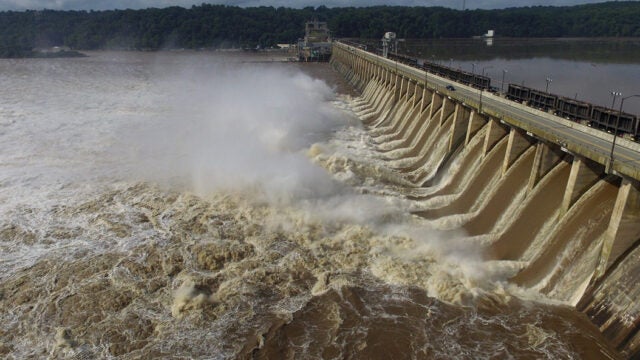
Today, in a long-awaited win for water quality, Governor Wes Moore announced a $341 million settlement with Constellation Energy, the owner of Conowingo Dam. The settlement will support water quality and debris removal in the Susquehanna River and Chesapeake Bay.
For decades, Conowingo Dam has inadequately managed pollution accumulating from the Susquehanna River, which is the source of about half of the Chesapeake Bay’s fresh water. The dam alters when and how pollution reaches the Bay. However, the reservoir that traps sediment and nutrient pollution has been at capacity for years. Large storms, which are getting more severe and frequent from climate change, cause overflows that scour pollutants from behind the dam right into the Bay, fueling algal blooms and threatening marine life.
After immense public concern and multiple legal challenges, a $200 million settlement was reached in 2019 between the dam’s operator and Maryland Department of the Environment (MDE) in which the state attempted to waive the water quality certification for the dam. Environmental groups and concerned citizens believed the agreement was insufficient and did little to prevent pollution, since it allowed Constellation to avoid most water quality improvements required by the state.
In response to these concerns, in 2021, Chesapeake Bay Foundation (CBF), Waterkeepers Chesapeake, Lower Susquehanna Riverkeeper, and ShoreRivers challenged a 50-year permit for the dam to operate. The groups believed Maryland could not waive the dam’s water quality certification, and that Constellation’s license should require them to mitigate the water quality impacts of the dam. The U.S. Court of Appeals for the D.C. Circuit agreed, and the Waterkeepers, Riverkeeper, MDE, and Constellation returned to the negotiating table.
The updated settlement will require tangible investments in Susquehanna River water quality such as restoring mussel populations via a new hatchery, combatting invasive species, improving fish passage, and studying the viability of dredging sediment trapped by the dam.
CBF President & CEO Hilary Harp Falk issued the following statement:
“This is a keystone moment for the Susquehanna River and Chesapeake Bay. Accountability is what got us here and will be key to carrying out the terms of the settlement and ensuring its tangible water quality benefits. This was a decades long fight, and there’s still work to be done.
“Pennsylvania holds a key role in a healthier Bay. Their continued leadership alongside Governor Moore will be crucial. Pollution doesn’t respect state lines. That’s why everyone must work together to see real progress.
“We are thankful to the Waterkeepers, Riverkeeper, and the Moore-Miller Administration for their leadership in Bay clean up and for holding Constellation accountable with this settlement. Those who rely on a clean Bay for their work, enjoyment, and health will be better off because of it.”
Scientific Warnings Compounded by Overwhelming Public Support for Ending Large-Scale Menhaden Fishing in the Bay
New research released this week by the Center for Conservation Biology (CCB) at William & Mary warns of a widespread osprey population decline in the Bay, providing evidence that reduced food availability is placing significant stress on the Chesapeake Bay’s osprey population.
The report confirms a critical environmental reality: osprey aren’t successfully reproducing in saltier waters around the Chesapeake, reflecting a severe lack of food in the Bay’s waters. Menhaden are an important food for osprey in the Bay’s saltier waters.
- Unsustainable Productivity: In the vast majority of the Bay—waters with a salinity greater than 5 ppt (covering over 80% of the tidal surface)—ospreys produced an average of only 0.33 young per pair. This rate is significantly below the minimum threshold of 0.8 young per pair required to sustain the population.
- Food Stress is Primary Cause: Direct observations during nest visits point to the loss of young, primarily due to starvation and subsequent brood reduction, as the major contributing factor to nest failure. This outcome strongly indicates insufficient local food availability in areas where the osprey diet relies on forage fish like menhaden.
- Bay-Wide Decline Predicted: The level of reproduction around the Bay’s tributaries isn’t enough to make up for the crisis along saltier waters where the majority of nests are located. With 7.5 times more nesting pairs located in the high-salinity deficit areas, the Bay-wide osprey population is not self-sustaining and is predicted to decline sharply if these trends continue.
These scientific warnings are compounded by other escalating signs, including a decline in menhaden catches by local watermen who harvest them for bait. The Virginia reported menhaden bait harvest dropped from 5.4 million pounds in 2019 to less than 1 million pounds in 2024, according to data from the Virginia Marine Resources Commission. The sustained operations of the industrial menhaden reduction fishery of Omega Protein harvest more than 100 million pounds of menhaden annually in Virginia’s portion of the Bay.
A recent, bipartisan poll of Virginia voters, commissioned by CBF, confirms overwhelming public support for regulatory reform:
- 92 percent of Virginia voters believe the state should leave more menhaden in the Chesapeake Bay to support the ecosystem.
- 79 percent support ending large-scale commercial menhaden fishing in the Bay until science can demonstrate that the harvest level is compatible with a healthy ecosystem.
This level of consensus across party lines, age, and geography signals a clear public mandate for change.
Chesapeake Bay Foundation Forage Campaign Manager Will Poston issued the following statement:
“Alarm bells are still ringing up and down the Chesapeake Bay. Unfortunately, 2025 was another year during which scientists saw osprey chicks starving in nests along the saltier waters where they traditionally depend on menhaden for food.
“An overwhelming majority of Virginians want action to leave more menhaden in the Chesapeake Bay. The Chesapeake Bay is changing, and the science remains woefully inadequate. Virginia should pause industrial menhaden fishing in the Chesapeake Bay until science can show whether this fishery is sustainable. At the same time, the Atlantic States Marine Fisheries Commission should heed the results of the latest menhaden stock assessment to help ensure there are enough menhaden to fulfill their role in the ecosystem.”
Analysis Shows Dominion Can Meet Customer Needs Without Building Gas Plant
The proposed Dominion gas plant in Chesterfield is a threat to the health of people and the environment in the surrounding community, according to testimony filed by the Chesapeake Bay Foundation and Southern Environmental Law Center before the Virginia State Corporation Commission (SCC) during a September 23 hearing.
One of Dominion’s first steps toward securing the necessary approvals to construct and operate the proposed facility has been to apply for a Certificate of Public Convenience and Necessity (CPCN) from the SCC. Before granting a CPCN, the SCC must consider two things: whether the proposal will have an adverse effect on rates paid by customers or on the reliability of electric service. They must also consider whether the project would be otherwise contrary to the public interest.
The Chesapeake Bay Foundation filed expert testimony before the SCC demonstrating that Dominion Energy’s proposed 944-megawatt Chesterfield gas plant is unnecessary and a threat to the health and safety of nearby residents and surrounding environment.
The maximum health burdens are concentrated southeast of the facility where existing industry and minority populations create environmental justice concerns, according to the testimony.
The new facility, which would sit just north of the Dutch Gap Conservation Area, has the potential to emit 353 tons per year of nitrogen oxides (NOx) and 153 tons per year of fine particulate matter (PM2.5).
Exposure to the plant’s continued emissions could potentially cost local residents $88.5 million annually in healthcare costs.
The analysis also challenges Dominion’s argument that the plant should be exempt from Virginia law due to a purported threat to system reliability.
Virginia law prohibits the construction of new carbon-emitting facilities unless a demonstrated “threat to system reliability” exists. The project is projected to cost ratepayers over $8 billion over its lifetime.
Dominion claims that the facility is necessary to meet increasing energy demands in the Commonwealth of Virginia, but CBF argues that Dominion’s analysis employs unreasonable, misleading assumptions and a failure to consider alternative solutions to meet load growth, such as grid scale batteries that wouldn’t pollute communities.
Taylor Lilley, Environmental Justice Staff Attorney with the Chesapeake Bay Foundation, issued the following statement:
“It’s important for the record to reflect the full scale of environmental and public health realities that residents will face if this facility is allowed to be constructed. The commission must consider these threats to people and environmental health. If constructed, this facility would exacerbate the burdens of a community that has already endured decades of emissions.
“Using misleading assumptions and faulty analysis, Dominion has tried to obscure this project for what it really is: an avoidable threat to a community’s right to clean air and a healthy future.”
Marylanders can join Sept. 22 and 23 meetings and submit comments by Oct. 3
After years of alarming red flags for striped bass in the Chesapeake Bay, the Atlantic States Marine Fisheries Commission (ASMFC) is currently considering new harvest restrictions for the iconic fish. Maryland residents can learn more and voice their concerns at several upcoming in-person or virtual hearing options and submit comments to ASMFC by Oct. 3.
The draft plan, known as Addendum III, is a response to the 2024 striped bass stock assessment and recommendations made by ASMFC’s Technical Committee. The analysis determined that, without additional restrictions for striped bass, it’s unlikely the species will rebuild to their target numbers by 2029. The addendum includes over 40 regulatory options for both recreational and commercial fisheries across the entire Atlantic Coast intended to promote striped bass recovery.
The striped bass population is currently classified as overfished. ASMFC, which manages the striped bass fishery, has enacted numerous regulatory changes since 2019 to help the stock rebuild. However, rebuilding by the ten-year goal is in jeopardy. Fisheries regulators are seeking public input as they consider additional changes.
Considering the Chesapeake Bay has historically produced 70% to 90% of the coast’s striped bass and has experienced six consecutive years of poor spawning success, there’s an immediate need for additional conservation. Striped bass are not only an iconic species in the Bay, but they support beloved and robust recreational and commercial fishing industries.
In order for striped bass to meet at least a 50% probability of rebuilding by 2029, we must prioritize the species’ protection. That includes limiting harvest pressure in the Bay and along the coast via ASMFC action, as well as addressing other environmental factors affecting striped bass such as warming water temperatures from climate change, habitat loss, invasive blue catfish, and forage fish availability.
CBF encourages members of the public to speak up for striped bass during this period. Key dates from ASMFC include:
- Maryland in-person hearing: Monday, Sept. 22 at 6 pm in Wye Mills at Chesapeake College
- Maryland in-person hearing: Tuesday, Sept. 23 at 5:30 pm in Annapolis at the Michael E. Busch Public Library
- DC and Potomac River virtual hearing: Thursday, Sept. 25 at 6 pm
- General Virtual Hearing: Monday, Sept. 29 at 6 pm
- ASMFC public comment deadline: Friday, Oct. 3
More details can be found here.
Chesapeake Bay Foundation Maryland Executive Director Allison Colden issued the following statement:
“We’ve relied on half-measures to address striped bass red flags for long enough. All the science we have available is telling us to take action now or risk the long-term viability of this fishery. We must all do our part today if we want striped bass to sustain future generations.”
Today at a celebratory event in Annapolis, dozens of environmental partners marked a major milestone for oyster restoration in Chesapeake Bay. Totaling roughly 2,000 acres of habitat restored, this effort is considered the largest oyster restoration initiative in the world.
The 2014 Chesapeake Bay Agreement—a joint federal and state plan to restore the Bay—outlined a key goal for partners to fully restore 10 Bay tributaries for oyster habitat by the end of 2025. That goal was officially exceeded earlier this summer.
The now-restored tributaries include Maryland’s Manokin, Harris Creek, Little Choptank, Tred Avon, St. Mary’s rivers, and Virginia’s Lynnhaven, Lafayette, Piankatank, Great Wicomico, Lower York, and Eastern Branch of the Elizabeth rivers. The Eastern Branch of the Elizabeth River is considered Virginia’s sixth ‘bonus’ tributary, bringing the total to 11 rivers restored, exceeding the initial goal.
Most of these reefs are meeting or greatly exceeding goals for oyster abundance. Not only are oysters a keystone species in the Bay, but they create habitat for other animals and naturally filter the water. A single adult oyster can filter up to 50 gallons a day.
To continue this exciting momentum, Maryland DNR has already committed to fully restoring an additional three tributaries for oyster restoration in Maryland. Governor Wes Moore is chair of the Chesapeake Executive Council—the bipartisan federal-state Chesapeake Bay restoration partnership. The council includes Governors from all six Chesapeake Bay watershed states including Maryland, Virginia, and Pennsylvania, and federal partners including the Environmental Protection Agency and National Oceanic and Atmospheric Administration (NOAA).
This summer, members of the community had the opportunity to submit feedback on an updated Chesapeake Bay Agreement, which the Council is currently reviewing. CBF urges the updated agreement to accelerate the scale and pace of oyster restoration, including an additional 2,400 acres of oyster sanctuary reef by 2035.
CBF also urges Congress to fully fund the oyster restoration work of key federal partners like NOAA and the U.S. Army Corps of Engineers, and reject provisions in the House Appropriations Committee’s bill for NOAA, which could open oyster sanctuaries to commercial fishing and cut off funding to restore underperforming sanctuaries.
These bipartisan, partner-driven efforts will be key for the continued success of oyster restoration in the Bay.
CBF Maryland Executive Director, Allison Colden, issued the following statement:
“Chesapeake Bay oyster restoration is a shining success story. In Maryland alone, the oyster population has tripled since 2005. Building on that success, Maryland DNR has already started its work toward the next oyster restoration goal.
“As we move forward, we know that this large-scale effort has created a strong foundation for the oyster’s comeback. It also shows us there is hope for the Bay to bounce back in ways no one thought was possible. We must continue to use this model of collaborative, targeted restoration across the Bay’s vast, bipartisan partnership.
“We applaud the leadership of Governor Wes Moore and DNR Secretary Josh Kurtz as we continue defining the future of Bay saving. And we are eager to continue work with our federal partners and neighboring states so all can benefit from the power of oysters.”
Funding for the National Oceanic and Atmospheric Administration’s (NOAA) work to restore the Bay and its waterways, fisheries, and wildlife would take a serious hit in the fiscal year 2026 funding bill the House Appropriations Committee adopted yesterday by a vote of 34-28.
Troubling provisions in the bill also would open restored oyster sanctuaries to commercial fishing and cut off restoration funds for sanctuaries where oyster numbers have been struggling to rebound.
The first provision would only allow oyster restoration funds to be used “if oysters planted using such funds are made eligible for managed commercial harvest by licensed watermen after a period of three years from the date of planting.”
The second would prevent funds to be spent “at any site that has been designated as underperforming for five or more years following initial federal investment, unless the Secretary of Commerce certifies in writing that the site has a new, independently conducted and peer-reviewed restoration plan that demonstrates a high likelihood of meeting significant ecological or economic outcomes within 2 years of enactment of this legislation.”
The bill sets fiscal 2026 funding levels for the Department of Commerce and several federal science agencies. NOAA is part of the Commerce Department.
The House Appropriations Committee bill would allocate $15 million for NOAA’s oyster restoration nationwide. It does not specify how much would fund work in the Bay region. In contrast, the Senate Appropriations Committee’s version would increase funding to restore oysters in the Bay to $4.5 million next year from the current level of $3 million.
The House committee’s bill also calls for slashing spending on NOAA Fisheries’ habitat conservation and restoration work nationwide to $35 million in fiscal 2026, cutting $21.2 million from the current level of $56.2 million. The majority of the NOAA Chesapeake Bay Office’s work is funded by the NOAA Fisheries habitat restoration and conservation budget.
The Chesapeake Bay Office leads conservation and restoration work and conducts research that helps protect native species like oysters, blue crabs, and striped bass; improves climate resilience in the region; and funds hands-on environmental education of the next generation of Bay stewards.
The Senate Appropriations Committee bill, approved in July, would bump funding for NOAA Fisheries habitat conservation and restoration funding up $1.5 million to $57.7 million next year. That’s $22.7 million, or nearly 40 percent, more than what the House Appropriations Committee would provide.
The Trump administration fiscal 2026 budget would eliminate the NOAA Fisheries habitat conservation and restoration budget altogether.
NOAA also funds the Bay Watershed Education and Training (B-WET) environmental education grant program. B-WET operates in seven regions of the country, including the Chesapeake Bay. Chesapeake B-WET grants provide financial support for elementary and secondary school students in the Bay region to study environmental issues facing their communities and how they affect the Bay and its local rivers and streams.
Like its Senate counterpart, the House Appropriations Committee would hold funding for all regional B-WET grant programs, including Chesapeake B-WET, constant at $8.7 million in fiscal 2026. The committee also joined its Senate counterpart in rejecting the White House proposal to zero out funding for all NOAA education programs, including Chesapeake B-WET.
Chesapeake Bay Foundation Senior Policy Director Keisha Sedlacek issued the following statement:
“This bill could be a disaster for the Chesapeake Bay and its world renown fisheries.
“The massive cut to NOAA’s habitat research and restoration work could devastate efforts to protect economically important species like oysters, blue crabs, and striped bass. Provisions to open restored oyster sanctuaries to commercial fishing and choke off funding for those struggling to recover would undermine one of the cleanup’s greatest successes so far—the large-scale restoration of oyster reefs in 10 Bay tributaries.
“At least the bill rejects the Trump administration’s senseless proposal to end funding environmental education. But that’s not enough to salvage it.
“We urge House members to reject this bill and call on congressional leaders to adopt the Senate Appropriations Committee’s more responsible funding numbers in the final NOAA budget instead.”
Pennsylvania’s Susquehanna River a Bright Spot
While there is slightly less pollution flowing into the Chesapeake Bay from major rivers in recent years, water quality in the Bay has remained steady, according to an analysis released yesterday by the EPA’s Chesapeake Bay Program.
The analysis compared both data from monitoring stations along major rivers that flow into the Bay, as well as the results of computer modeling of pollution trends. It also considered progress towards pollution reduction commitments the states are legally required to meet under the Chesapeake Clean Water Blueprint, which aims to stem nitrogen, sediment, and phosphorus pollution.
The analysis shows lackluster progress as state and federal leaders around the region update the major agreement guiding Chesapeake Bay restoration. Last December, Bay restoration partners committed to revising the Chesapeake Bay Watershed Agreement by the end of 2025. These partners have worked toward a more effective agreement in recent months. But the draft agreement still falls short.
This month the Chesapeake Bay Foundation (CBF) submitted feedback on the draft agreement. CBF is urging leaders from states across the region to commit to a strong Bay Agreement that applies the latest science, implements innovative environmental and economic strategies, and increases accountability. The agreement must:
- Set one uniform deadline of 2035 across all goals to provide accountability, with regular check-ins every two years;
- Clearly define targets, including for conserving plants and animals, habitat restoration, and pollution reduction;
- Ensure that pollution reduction targets are tied to water quality improvements that are directly measured, rather than modeled. Additional water quality monitoring stations will be vital to this;
- Address challenges from climate change across the agreement; and,
- Affirm commitments to meeting the pollution reductions the federal government and states are legally required to meet under the Clean Water Act, despite missing the 2025 deadline.
In a bright spot, according to the latest analysis water quality monitoring shows that conditions in the Susquehanna River are improving across all indicators. This is notable because about half of the Chesapeake Bay’s fresh water comes from the Susquehanna. Improving conditions in Pennsylvania is vital to a healthier Bay.
Chesapeake Bay Foundation Senior Policy Director Keisha Sedlacek issued the following statement.
“While it is encouraging to see some progress, efforts to reduce pollution to the Bay are moving far too slowly. At the current rate, it would take 350 years to fully attain clean water standards for the Chesapeake Bay.
“All states across the region must commit to a strong Chesapeake Bay agreement this year thatreaffirms commitments to pollution reductions the federal government and states are legally required to meet under the Clean Water Act.
“The Bay Program’s recent analysis underscores the importance of long-term water quality monitoring stations to paint an accurate picture in real-time of the health of the Bay. The new agreement should commit to tying targets to cleaner water that is directly measured, not just modeled by a computer.
“The improvements in the Susquehanna River demonstrate that renewed efforts in Pennsylvania are working to reduce pollution. Leadership in Pennsylvania and across the region can turn the tide.
“Pollution doesn’t respect state lines. That’s why everyone must work together to see real progress. Now is not the time to step back, but to dig in and build on the foundation laid so far.”
New MDOT State Highway Administration stormwater permit does not adequately address climate change, experts say
Maryland has missed a critical opportunity to reduce stormwater pollution running off the state’s highways, roads, and bridges and into local waterways, according to experts from the Chesapeake Bay Foundation (CBF), Chesapeake Legal Alliance (CLA), and Maryland League of Conservation Voters (LCV). A new precedent-setting permit misses the mark on addressing climate change at the same time that Marylanders are enduring exceptionally heavy rainfall and flash flooding this summer.
This week, the Maryland Department of the Environment (MDE) issued an updated Municipal Separate Storm Sewer System (MS4) permit to the Maryland Department of Transportation (MDOT) State Highway Administration (SHA). This five-year permit is designed to mitigate the harmful effects of oil, gas, toxins, and other pollutants that run off of roadways and into the Chesapeake Bay when it rains—otherwise known as stormwater pollution. Research has long shown that stormwater runoff from roads contain higher concentrations of pollutants than almost any other sources.
The renewal of SHA’s MS4 permit—which only occurs every five years—was a critical opportunity. SHA’s permit covers an immense scale of surface area, including nearly 15,000 lane miles and roughly 2,600 bridges. Maryland’s section of the Capital Beltway (I-495) and Baltimore Beltway (I-695) alone see volumes of over 220,000 vehicles per day, according to MDOT data.
On average, Maryland is seeing more intense storms and flooding. Maryland received 7.81 inches of rainfall in May—the highest in the past 131 years—according to the National Oceanic and Atmospheric Administration. A study commissioned by Pew Charitable Trusts estimated that inadequate stormwater management contributed to roadway flooding that cost Maryland more than $230 million between 2006 and 2020. An estimated 480,000 drivers are impacted by roadway flooding annually.
Yet in many cases, Maryland’s MS4 permits have not kept pace with climate change and have fallen short for water quality improvements. The permit fails to address significant deficiencies that were identified by experts in the draft permit last year, including continued use of out-of-date data, emphasis on stormwater practices that do not address the root cause of pollution, and lack of information on emerging contaminants like per- and polyfluoroalkyl substances (PFAS).
Stormwater pollution is the fastest growing source of pollution in the Chesapeake Bay watershed, according to the U.S. Environmental Protection Agency’s latest two-year progress report. While other pollution sources like agriculture have trended down in recent years, stormwater pollution has only increased. This is likely due to rapid development in the region, as well as more extreme weather and heavier rainfall from climate change.
Polluted runoff doesn’t only harm waterways, but people too. Urban and suburban communities are enduring repeated flooding, property damage, and exposure to harmful chemicals. It is often underserved and overburdened communities that bear the brunt of stormwater damage due to a long history of discriminatory disinvestments in infrastructure. Research has consistently shown that Baltimoreans feel more vulnerable to climate impacts than most other communities in the U.S.
MDE’s latest MS4 permit for MDOT SHA makes some minor improvements but fails to incorporate key provisions that advocates and citizens had called for during the permit’s public comment period. Suggested improvements that will not be implemented include:
- Ensuring the permit accounts for increased storm intensity and other impacts of climate change;
- Requiring a range of effective practices to mitigate stormwater pollution, such as riparian plantings, “green infrastructure” infiltration structures, and removal of unused impervious surfaces (such as roads, parking lots, etc.), to reduce reliance on in-stream projects;
- Expanding monitoring requirements to include temperature changes and impacts to wildlife and their habitats from polluted runoff; and,
- Tracking and addressing pollutants like polychlorinated biphenyls (PCBs) and ‘forever chemicals’ such as PFAS.
CBF, CLA, and LCV are disappointed with MDOT SHA’s final permit, but will continue urging MDE to reduce stormwater pollution whenever and wherever possible.
CBF Maryland Executive Director Allison Colden issued the following statement:
“Maryland’s current stormwater regulations are no match for nightly thunderstorms and daily floods. We are disappointed the State did not capitalize on this opportunity to lead by example and demand effective stormwater improvements with tangible benefits. Because of this, one of Maryland’s largest pollution-reducing permits will not adequately reflect current climate impacts for at least another five years.
“The health and safety of Marylanders and the vitality of our economy cannot wait. We urge MDE and Governor Moore’s Administration to take additional actions to meet Maryland’s stormwater challenges and set an example for other jurisdictions in the Bay region.”
Maryland LCV Executive Director Kim Coble issued the following statement:
“Maryland should be leading the efforts to restore and protect the health of the Chesapeake Bay, starting with an effective and equitable stormwater management permit. Unfortunately, this permit takes a minimalistic approach that fails to prioritize projects addressing climate resilience and water quality in communities most burdened by pollution. We cannot afford to continue doing the bare minimum while frontline communities bear the brunt of environmental degradation. Stronger, more inclusive action is urgently needed.”
CLA Senior Attorney Evan Isaacson issued the following statement:
“On its face, this permit is not strong enough to help protect communities and streams from highly polluted roadway runoff and will not do enough to meet our Bay goals. However, we know from several decades of experience that what matters more than the contents of a permit is how it is implemented. Maryland has an opportunity to change how it spends its scarce resources and invest in the most effective and efficient stormwater and flood risk projects. The good news is that some of the very cheapest means of protecting our water and safeguarding Marylanders from storm-induced flooding are also some of the most effective, notably planting trees near roadways and along streams, and restoring wetlands in flood prone areas.”
Renaming honors Frank and Jane Batten’s philanthropic legacy
Virginia Wesleyan University (VWU) will be renamed Batten University, university officials announced August 20. The renaming is aimed at honoring Frank and Jane Batten’s philanthropic legacy.
Located near the mouth of the Bay, Virginia Wesleyan University has emphasized expanding environmental education within the watershed. VWU uses the waterways around Hampton Roads as living classrooms.
For example, students across disciplines conduct fieldwork on the Ocean Explorer, a 45-foot research vessel jointly owned by VWU and the Virginia Aquarium and Marine Science Center. Onboard the boat they collect data on marine organisms, collect and test water samples, and undertake other research.
Over the years, the Chesapeake Bay Foundation (CBF) has worked with VWU on a number of initiatives, including scientific data collection, oyster restoration, and invasive species removal. CBF has also partnered closely with VWU on environmental education efforts including teacher training and summer programs for underserved youth.
Chesapeake Bay Foundation President and CEO Hilary Harp Falk issued the following statement:
“We’re celebrating the renaming of Virginia Wesleyan University to Batten University, honoring the incredible legacy of Frank and Jane Batten. Their visionary leadership and commitment to the environment and education have been transformational.
“Jane Batten is passionate about building the next generation of leaders working toward solutions to climate change. The Batten family’s philanthropy to CBF, VWU and others has made the Hampton Roads area a center for environmental literacy in the state and the region.
“Jane Batten’s dedication to protecting the Chesapeake Bay is unparalleled. Her generous support has helped inspire thousands of students to become lifelong advocates for clean water. The Batten family’s impact extends far beyond philanthropy; they are true partners in efforts to save the Bay. We are grateful for the Batten Family’s ongoing legacy.”
To address growing warning signs around the Chesapeake Bay, the Atlantic States Marine Fisheries Commission’s (ASMFC) Menhaden Management Board voted 14 to 2 in favor of further refining specific management changes to Virginia’s industrial reduction fishery in the Bay. Virginia and New Jersey were the only states to oppose the action.
While advocates had hoped for more immediate action this week by the ASMFC, the new options for the menhaden fishery are now expected to be presented at ASMFC’s Winter 2026 meeting.
Menhaden are a small, nutrient-rich fish that is a key food for osprey, striped bass, whales, and many other larger animals. A major industrial menhaden fishery based in Virginia, known as a reduction fishery, harvests more than 100 million pounds of menhaden from the Bay each year.
The vote comes after a group of 12 conservation and angling organizations last week urged the ASMFC to take action on menhaden. In addition, numerous citizens have raised their voices about menhaden in the Bay and the many species that depend on them for food.
The Bay is showing red flags linked to menhaden, including precipitously declining commercial menhaden catch rates in Maryland and Virginia from smaller bait fisheries and young of the year osprey starving in their nests in portions of the Chesapeake Bay. Nearly one year ago, the Menhaden Management Board voted to establish a work group to address these ongoing ecological warning signs in the Chesapeake Bay.
The ASMFC’s Chesapeake Bay Precautionary Management work group presented its report in May. It showed industrial menhaden fishing effort increasing in the summer in recent years in the Chesapeake, while Maryland menhaden catches declined. This new timing of intense fishing pressure may be contributing to the problems facing the Chesapeake Bay.
This week’s action requires the Commission to form a Plan Development Team that would provide the board with options to distribute reduction fishing effort throughout the season. This would mitigate broader ecosystem concerns and impacts to Maryland’s smaller menhaden bait fishery.
Chesapeake Bay Foundation (CBF) Virginia Executive Director Chris Moore released the following statement:
“There are clear signs of peril in the Chesapeake, and menhaden are one of the connecting threads. It’s been a year since the Commission first took notice of these concerns, yet any potential for further action has been delayed again.”
“The Chesapeake’s fisheries and predators can’t wait. Menhaden are key to a thriving Chesapeake Bay, and a healthy, productive Chesapeake is vital to the entire Atlantic coast. We appreciate the efforts of those on the ASMFC menhaden management board who have worked to keep this important issue at the forefront.”
“One foreign-owned company consistently prevents progress in Virginia, and now coastwide at the ASMFC. While it’s encouraging that the ASMFC will continue working on this important issue over the coming months, the Chesapeake Bay is running out of time.”
