Press Statement
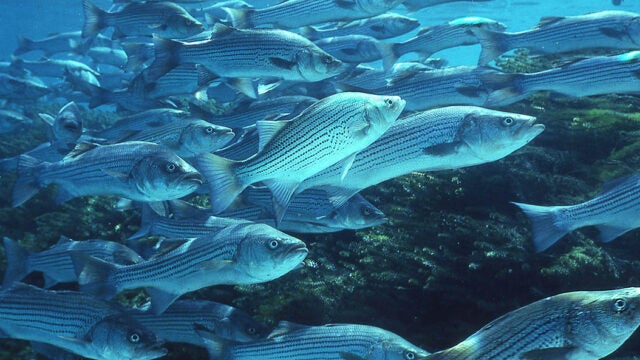
Plan Greatest Opportunity to Rebuild Striped Bass Population
As low striped bass numbers in the Chesapeake Bay cause widespread concern, the Atlantic States Marine Fisheries Commission (ASMFC) yesterday released for public comment a fisheries management plan update that seeks to help rebuild the striped bass population.
Last week’s release of results of annual surveys of juvenile striped bass in the Chesapeake Bay showed numbers far below average in Maryland for the fifth year in a row, as well as below average numbers this year in Virginia. Low numbers of young fish now mean in the future there will be fewer of the large fish prized by anglers and important for reproduction of the species. The Chesapeake Bay serves as a critical nursery area for striped bass, contributing significantly to the coastwide striped bass population and the region’s economy.
The striped bass population is suffering from a variety of factors, including fishing pressure due to the species popularity, low reproduction, water quality challenges, and climate change. Recreational fishing pressure on striped bass along the Atlantic Coast in 2022 was nearly double that of previous years. While the population has not reached the low point of the 1980s that led to a fishery moratorium, strong action is needed now to ensure a more abundant population in the future.
With yesterday’s action, ASMFC initiated an update to its striped bass fisheries management plan, known as Addendum II, which intends to reduce mortality in striped bass fisheries by considering changes to both recreational and commercial fisheries. At its previous meeting, ASMFC extended an emergency action to decrease the maximum size limit to 31 inches.
Chesapeake Bay Foundation (CBF) Senior Regional Ecosystem Scientist Chris Moore issued the following statement:
“Striped bass are continuing to face significant challenges, and we can’t ensure their comeback without a strong plan from the ASMFC and the cooperation of states up and down the Atlantic Coast. Without conservation measures across all fishery sectors, the hope of bringing back this iconic species will be lost.
“Unfortunately, the ASMFC’s Striped Bass Management Board missed an important opportunity to consider longer seasonal closures, which protect striped bass during critical life stages and during periods of low oxygen and high-water temperatures that increase striped bass mortality. It now falls to the states to take further actions to address striped bass mortality during these challenging times of the year.
“Draft Addendum II includes a number of options that will help reduce fishing pressure, allowing more fish to reach spawning age so that they can reproduce and get that population moving back in the right direction. The ASMFC’s fishery plan update is a critical opportunity to give feedback. Anyone who cares about striped bass should weigh in.”
(WASHINGTON, D.C.)—Chesapeake Bay Foundation (CBF) Maryland Executive Director Allison Colden today urged the House Natural Resources Committee’s Water, Wildlife and Fisheries Subcommittee to act on bipartisan legislation to support the critical scientific and educational work of the National Oceanic and Atmospheric Administration’s Chesapeake Bay Office.
Colden testified in support of the Chesapeake Bay Science, Education, and Ecosystem Enhancement (SEEE) Act. The legislation, H.R. 4770, was introduced in July by Reps. John Sarbanes (D-Md.), Bobby Scott (D-Va.), and Rob Wittman (R-Va.), the three co-chairs of the House Chesapeake Bay Task Force, and Rep. Jen Kiggans (R-Va.), who serves as the subcommittee vice-chair.
The bipartisan bill would reauthorize the National Oceanic and Atmospheric Administration’s (NOAA) Chesapeake Bay Office, strengthen the Office’s fisheries research and restoration programs, and authorize the Chesapeake Bay Watershed Education and Training (B-WET) program. The bill would also fund the Office through fiscal year 2027. NOAA is part of the Commerce Department.
A Senate companion bill co-sponsored by Sens. Mark Warner (D-Va.) Chris Van Hollen (D-Md.), Ben Cardin (D-Md.), Tim Kaine (D-Va.), Bob Casey (D-Pa.), John Fetterman (D-Pa.), and Joe Manchin (D-W.Va.) was also introduced in July. The bill number is S. 2534.
NOAA’s Chesapeake Bay Office is an essential member of the federal-state partnership to reduce water pollution, restore habitat, and enhance ecosystem functions in the Bay watershed.
The Office leads ten large-scale oyster restoration projects that offer the best chance of reversing the precipitous decline of native oyster populations and restoring important ecosystem services, like water filtration, that oysters provide. NOAA is currently on track to complete the oyster restoration by the 2025 deadline set in the 2014 Chesapeake Bay Watershed Agreement.
The Office manages a critical ocean observation network that tracks meteorological and oceanographic conditions, fish movement, and environmental conditions in the Bay ecosystem. Its scientists are working to better understand how climate change and impacts like warming water temperature affect the Bay, its fish species, and the habitats those species depend on.
The Office also is the federal lead for the Chesapeake B-WET program, which offers students in grades K through 12 the opportunity to learn about the watershed’s diverse habitats through hands-on outdoor education. Chesapeake B-WET has directly reached more than 730,000 students and nearly 30,000 educators since 2002, according to the Chesapeake Bay Program.
CBF Maryland Executive Director Allison Colden issued the following statement about her testimony:
“The NOAA Chesapeake Bay Office is essential to restoring the Bay and its waterways, fisheries, and wildlife habitat. It also uses cutting-edge science to advance our understanding of climate change and provides resources and support to educate the next generation of stewards about the wonders of the Bay ecosystem.
“The bipartisan SEEE Act will ensure that the Office continues this vital role. With Bay restoration deadlines approaching and climate change impacts worsening, its work has never been more necessary.
“CBF is proud to support this important bill. We urge the subcommittee to act swiftly to pass it.”
Striped Bass Index Second Lowest Since 1957 in Maryland, Below Average in Virginia
For the fifth consecutive year, juvenile striped bass numbers remained far below average in Maryland with the 2023 index of 1.0 strikingly low compared to the long-term average of 11.3. Virginia’s results were also significantly lower this year, with a mean value of 4.25 fish, which is well below the average of 7.77, according to Maryland and Virginia results released today.
The Virginia Institute of Marine Science and the Maryland Department of Natural Resources conduct annual surveys of the juvenile striped bass population in the Chesapeake Bay that estimate recruitment, which refers to the number of surviving fish that were spawned in the spring. A video showing how the survey is conducted is available at this link.
Striped bass populations on the East Coast are struggling to recover from a dramatic decline in recent years. Compounding the issue, recreational harvest pressure on striped bass along the Atlantic Coast in 2022 was estimated to be nearly double that of previous years. This led the Atlantic States Marine Fisheries Commission in May to institute an emergency action for the striped bass fishery, which decreased the maximum size limit for most striped bass fisheries to 31 inches.
Chesapeake Bay Foundation Senior Regional Ecosystem Scientist Chris Moore issued the following statement:
“This disturbing trend makes clear that rebuilding the striped bass population is not guaranteed. With five years of poor recruitment on the books, there will be fewer spawning adult fish left to help the population recover. As managers consider next steps, we urge ASMFC and state agencies to take immediate conservation actions to address increased harvest mortality, reduce the removals of large spawning fish, and to protect fish during the times of year when they are most vulnerable.
“In the summer, warm water temperatures and low oxygen levels dramatically increase stress on striped bass, rendering shallow, estuarine nursery habitats, like Chesapeake Bay less hospitable. Climate change is making this problem worse.
“To increase survival, states must work with all fishery sectors to limit striped bass mortality through quota modifications, summer season closures, and addressing fisheries that target fish before they spawn. Anglers should also use careful catch and release techniques that keep released fish alive or target other species when available to reduce stress on striped bass populations.”
Following the Talbot County Circuit Court’s dismissal of the Chesapeake Bay Foundation’s (CBF) challenge to Maryland Department of the Environment’s (MDE) wastewater treatment permit for the Lakeside at Trappe development, CBF today filed an appeal to the Appellate Court of Maryland.
MDE’s Discharge Permit for the Trappe East Wastewater Facility allows the use of spray irrigation to discharge 100,000 gallons of treated wastewater per day onto Talbot County farm fields. Generally, treated wastewater is discharged from sewage treatment plants into a local waterway. The Trappe plant, which uses out-of-date technologies to reduce nitrogen and phosphorus pollution, is currently at its maximum discharge limits and cannot discharge the additional wastewater from the new development into La Trappe Creek. The creek flows into the Choptank River, both already listed by MDE as impaired due to excess nitrogen and phosphorus.
MDE contends that spray irrigation of effluent from the Trappe development will effectively result in “zero net discharge” of nitrogen and phosphorus pollution to local waterways. However, CBF asserts that MDE has not effectively proven that this discharge won’t increase pollution from the development and change in land use.
Nitrogen and phosphorus from treated wastewater can fuel harmful algal blooms in local rivers, streams, and the Chesapeake Bay, creating oxygen-deprived dead zones inhospitable to marine life.
As a result, the permit fails to ensure that the requirements to prohibit increases in pollution under the Chesapeake Clean Water Blueprint, also known as the Chesapeake Bay Total Maximum Daily Load, will be met.
Following the filing, Paul Smail, CBF Vice President for Litigation, issued this statement.
“The law is unequivocal. MDE must ensure there is no additional pollution from this development. Science does not support MDE’s assumption that there will be 100 percent vegetative uptake of nutrients from discharges from systems such as this one. If the legal requirement of no additional pollution cannot be guaranteed, under all circumstances, then this system simply should not be permitted.”
The Chesapeake Bay Foundation (CBF) urged the White House not to limit the guidance it is drafting on valuing the benefits of healthy ecosystems just to regulatory decisions in comments CBF recently submitted to the Office of Management and Budget.
OMB published draft guidance on August 2 to improve and standardize how federal agencies evaluate the “ecosystem services” that nature provides when analyzing the costs and benefits of proposed regulations.
CBF expressed its support of the guidance and recommended that federal agencies apply it to other government decisions besides regulations, such as funding for major infrastructure projects that affect ecosystems and grant programs that support ecosystem development or restoration.
CBF also applauded the guidance for directing agencies to consider how regulatory decisions affect ecosystem services for historically underserved communities, as well as past inequities that have disadvantaged these communities, and how to prevent further disproportionate harm.
Based on its experience evaluating the ecosystem services provided by the Bay, CBF recommended specific analytical tools and resources OMB could include to strengthen the section on ways agencies can quantify or monetize ecosystem services.
CBF also drew on its regenerative agriculture and oyster restoration work to caution OMB against undervaluing the ancillary benefits of ecosystem services. CBF noted that the healthier soil produced by regenerative agricultural practices offers multiple ecosystem benefits, such as drought resilience, carbon sequestration, and water quality improvements, that are completely separate from crop production.
Similarly, CBF pointed out that its work restoring reefs in Maryland and Virginia oyster sanctuaries goes beyond rebuilding oyster stocks to include increasing biodiversity and water filtration, and providing larvae to support wild oyster populations outside the sanctuaries where CBF works.
CBF Maryland Senior Scientist Doug Myers issued the following statement on the guidance:
“From water quality that supports abundant fisheries to wetlands that reduce storm impacts, healthy ecosystems provide our communities numerous benefits. CBF applauds the White House for recognizing the importance of properly valuing ecosystem services in federal decision making.
“As OMB refines this guidance, we recommend it lean on science-based organizations such as CBF that have decades of experience valuing the complex effects of government decisions on ecosystem services. CBF looks forward to supporting more robust accounting for ecosystem services and stands ready to help advance this effort.”
Striped bass face growing challenges from habitat loss, low oxygen levels, and climate change as they struggle to recover from a significant decline on the East Coast, fisheries experts said this week at the Chesapeake Bay Program’s Sustainable Fisheries Goal Implementation Team fall meeting.
The availability of suitable habitat for striped bass in Chesapeake Bay is shrinking, driven primarily by higher Bay water temperatures and low oxygen levels due to climate change. Despite these substantial challenges to striped bass, a presentation from the Maryland Department of Natural Resources noted that nutrient pollution reductions made to date in the Chesapeake Bay watershed have prevented more severe degradation of striped bass habitat than would have happened without those actions.
This conclusion underscores that continued work to reduce nutrient pollution to the Bay is critical for the health of the striped bass population in Chesapeake Bay. Other experts outlined climate-induced shifts in the Chesapeake Bay fish community, with significant shifts occurring in the late 2000s.
CBF Senior Regional Ecosystem Scientist Chris Moore issued the following statement.
“Striped bass in the Chesapeake Bay face substantial threats from warmer waters and lower dissolved oxygen levels due to climate change. In the face of these challenges, it is more important than ever that state and federal partners accelerate efforts to reduce pollution to the Bay to help mitigate these impacts. Reducing pollution, improving habitat, and continuing careful management of the striped bass fishery are key to ensuring recovery of this iconic game fish.”
In a budget agreement reached this week, legislators in Virginia’s General Assembly agreed to amendments for the second year of Virginia’s two-year state budget for fiscal years 2023 and 2024.
Building on proposals made by Governor Youngkin, the General Assembly’s budget agreement would provide significant additional investment in state programs that reduce pollution to the Chesapeake Bay and rivers and streams across the Commonwealth.
Legislators reached the agreement following months of negotiations after the end of Virginia’s General Assembly legislative session in February. To become law, this budget agreement must now pass the Virginia Senate and House of Delegates in a special session and be signed by Governor Youngkin.
The General Assembly budget includes the following levels of funding for clean water programs:
- Virginia’s Agricultural Cost-Share (VACS) and related programs would receive an additional $286 million for cost-share grants to farmers who adopt important conservation practices that keep soil and fertilizer out of waterways. This amount would be in addition to the appropriation of more than $350 million over two years for these programs by the General Assembly in early 2022.
- Wastewater Treatment Plant Upgrades: Under the budget, $151 million in additional funds would be provided to sewage treatmentplants to continue upgrades that reduce nitrogen, phosphorus, and sediment pollution. This amount would be in addition to the more than $70 million appropriated in early 2022 for the two-year budget period.
- Stormwater Management: The budget includes an additional $30 million for the Stormwater Local Assistance Fund (SLAF), whichprovides grants to localities for projects that reduce polluted runoff. These amounts would be in addition to the $25 million appropriated for SLAF in 2022.
- Resiliency to Storms, Flooding, and Climate Change: The budget dedicates $100 million to the Resilient Virginia Revolving Loan Fund, which provides funding and loans to local governments to help property owners finance flood resilience projects.
Chesapeake Bay Foundation Acting Virginia Executive Director Christy Everett issued the following statement.
“We’re thrilled that legislators worked together to reach an agreement that commits unprecedented levels of investment in farm conservation practices and other programs that reduce pollution to Virginia’s waterways.
“Accelerating funding for these projects is the only way Virginia will make progress toward longstanding goals to reduce pollution under the Chesapeake Clean Water Blueprint. This is even more important given growing challenges to Bay restoration from climate change, inflation, development, and other factors.”
“About 90 percent of Virginia’s remaining pollution reductions to the Bay must come from agriculture, making investment in Virginia’s successful agricultural cost-share program is critical. Strong investment in resiliency projects is also urgent, particularly in nature-based practices that both help communities adapt to climate change while reducing pollution and creating habitat.
“We’re grateful for the commitment and support of Virginia legislators for these programs that will lead to healthier rivers and streams and a restored Chesapeake Bay.”
(ANNAPOLIS, MD)—A recent report from the Chesapeake Bay Program highlighted the loss of trees in the Chesapeake Bay watershed. Across the region, while 8,307 acres of trees were planted between 2013-14 and 2017-18, more than 25,000 acres of tree canopy was lost in community areas, which the report defines as municipalities, cities, towns, and villages.
Following the release of the report, Chesapeake Bay Foundation (CBF) Maryland Office Staff Attorney Matt Stegman issued this statement:
“This report demonstrates that in Maryland’s fastest-growing counties we are losing forest cover. Trees and forests provide immense benefits to local communities, including reducing pollution to local waterways, sequestering carbon to help mitigate the effects of climate change, and providing shade to cool urban and suburban areas.
“CBF successfully pushed for recent updates to Maryland’s Forest Conservation Act, and we hope this report will be a wake-up call for local jurisdictions to target reforestation projects and policy solutions in places most rapidly losing canopy.”
###
Editor’s note: the Bay Program release with links to the report can be found at:
Tree cover declines throughout watershed while impervious surfaces increase (chesapeakebay.net)
The Senate Appropriations Committee has finished work on a fiscal year 2024 spending bill with encouraging increases for important Bay programs and none of the devastating cuts and controversial policy riders in the House committee version. Senators voted unanimously, 28-0, to approve the fiscal 2024 Interior-Environment Appropriations bill yesterday.
The bill would fund the federal Chesapeake Bay Program at $93.5 million in fiscal 2024, a $1.5 million boost over its current budget of $92 million. It also includes the additional $46.7 million Program annual allocation authorized by the 2021 infrastructure law.
The EPA-led Bay Program coordinates the federal-state-local partnership to restore and protect the Bay and its waterways. More than two-thirds of Program dollars go directly to the six watershed states and the District of Columbia for grants to fund on-the-ground cleanup initiatives across the 64,000 square-mile watershed.
Within the Interior Department budget, the Senate Appropriations Committee measure would bump up spending on the Chesapeake Watershed Investment Landscape Defense (WILD) to $8.5 million from this year’s $8 million spending level.
The Chesapeake WILD grant program helps finance local habitat recovery projects such as restoring freshwater mussel habitat in Virginia, removing barriers to brook trout migration in western Pennsylvania, and creating new habitat for shallow water fish species on Maryland’s Kent Island.
After the bill cleared the committee, Chesapeake Bay Foundation (CBF) Federal Director Keisha Sedlacek issued this statement:
“The Senate Appropriations Committee’s bipartisan consensus fiscal 2024 spending bill is a welcome change from the dangerous legislation the House committee produced.
“Senate appropriators wisely recognized that even when spending is tight, investing in the future of the Chesapeake Bay and its waterways will pay rich dividends for the region’s environment, economy, and more than 18 million residents.
“CBF urges the House to follow the Senate Appropriations Committee’s lead. Invest more in the Bay cleanup and drop contentious riders that will needlessly delay much-needed funds.”
A federal ocean justice strategy should identify and empower groups that work directly with disadvantaged communities and provide under-invested communities the tools to secure long-term funding in the event federal funding lapses, the Chesapeake Bay Foundation (CBF) advised the Biden administration in recent comments.
CBF also called for the administration to do more research into the socio-economic impacts of climate change on marine resources and environments, and coastal communities. And CBF endorsed using federal and state environmental justice screening tools to identify coastal communities overburdened by pollution.
CBF submitted its comments to the White House Council on Environmental Quality July 24 in response to a request for information to help the administration develop “equitable and just practices to advance safety, health, and prosperity” for ocean and coastal communities around the country.
The strategy should focus on ensuring prior informed consent of Indigenous peoples and communities of color when designing and implementing resource management policies, CBF said.
It must also acknowledge that federal actions directly affect communities that depend on fishing and other ocean industries. And it must recognize the value of local and traditional knowledge of places, conservation practices, and community livelihoods and draw on that wisdom in making ocean management decisions.
Federal Director Keisha Sedlacek made the following statement about CBF’s comments:
“Too many of our region’s communities, including Black and Indigenous communities with centuries-old economic and cultural connections to the Bay and its tributaries, have borne the brunt of rapid development and discriminatory policies in fishing and other ocean industries.
“It is long past time we addressed the injustices that have devastated their livelihoods and nearly destroyed their way of life.
“CBF appreciates the opportunity to contribute to this important initiative. We look forward to continuing to work with the administration to advance equity, inclusion, and justice in coastal communities in the Bay watershed and around the country.”
