Press Statement
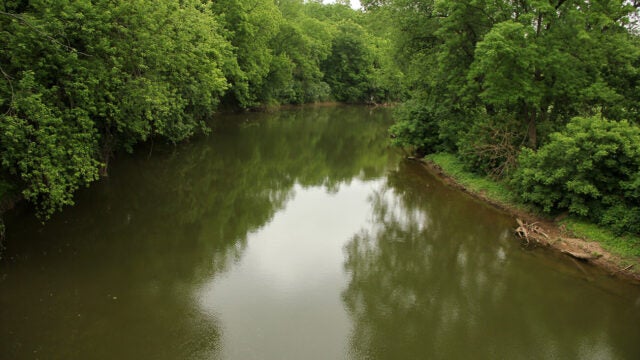
The river, once associated with pollution and degradation, has become a pillar for community enjoyment and recreation
Officials honored the Conestoga River as Pennsylvania’s River of the Year for 2026 today at a ceremony in Lancaster County Central Park, marking a significant milestone in the river’s comeback.
The event is a part of Lancaster Water Week, an annual celebration of the 1,400 miles of streams and rivers in Lancaster County, hosted by Lancaster Conservancy. This week of events encourages people to enjoy, learn, volunteer, and take action to clean and protect the waterways throughout the county.
Historically, the Conestoga River was highly polluted, and many tributaries are still considered impaired. However, the river has become a source of increased recreation and enjoyment for local communities. It received 2,510 votes for river of the year, demonstrating a local source of pride and engagement.
Chesapeake Bay Foundation (CBF) Senior Watershed Planner Brian Gish is a Lancaster native, and led a multi-year effort, to develop a comprehensive plan to improve the headwaters of the Conestoga River.
Gish issued the following statement:
“How Lancaster has rallied around the Conestoga River has been nothing short of inspiring. My entire life, I’ve encountered negative perceptions of this waterway, but recently I’ve seen attitudes pivot. In my conversations with the watershed’s farmers, residents, and leaders, indifference is transforming into passion and action.”
“Countless projects are undoing centuries of damage, driven by a community—my community—reconsidering its relationship with this river. The Conestoga’s future is our future, and we’re taking steps to secure both. I’m seeing our river heal. If we stay the course, it will be healthy in our lifetimes.”
Ashley Spotts, CBF’s Lancaster Restoration Biologist, has spent more than two decades working on projects along the Conestoga as well. She specializes in planting riparian buffers, groups of trees along waterways to filter out pollutants.
Spotts issued the following statement:
“I’ve always had a passion for native plants, and I’ve worked 20 years with many farmers and landowners along the Conestoga River and its tributaries to plant trees in an effort to raise water quality. It feels so good to return to a planting years later and see a small forest, with fruiting persimmons and oaks branches weighted down with acorns. Not only will this provide resources for the plants and animals on land, but I know these trees mean healthier water as well.”
CBF, led by Spotts, is planning an event to be held in August, that will bring together landowners, farmers, and partners to launch a watershed improvement plan developed by Gish for the Upper Conestoga watershed. Developing quality plans in priority watershed areas, with support from partners and landowners, is central to CBF’s water improvement work throughout Pennsylvania.
As CBF celebrates forty years of protecting and restoring Pennsylvania’s environment, we want to celebrate all of the hard work of our people, partners, and communities. We are deeply thankful to be able to carry out the work we do, and we look forward to improving the rivers and streams of Pennsylvania together.
Report Adds Urgency for Pausing Menhaden Reduction Fishery in the Bay
A new peer-reviewed study links unprecedented levels of starving osprey chicks in the Chesapeake Bay to concerns around menhaden, a nutrient-packed fish that is a key food source for osprey and many other species.
While several factors influence osprey productivity, reduced availability of Atlantic menhaden is likely the primary driver of poor osprey reproduction in saltier parts of the Chesapeake Bay, according to the study. The new report is based on data from the 2024 nesting season and published this week in Frontiers in Marine Science by researchers at the College of William & Mary’s Center for Conservation Biology, the U.S. Geological Survey, the Maryland National-Capital Park and Planning Commission, and the Virginia Aquarium & Marine Science Center.
Research in recent years has documented osprey chicks starving in nests across portions of the Chesapeake Bay where osprey primarily rely on menhaden for food. Osprey in many parts of the region are reproducing at rates well below what’s needed to sustain the population.
Virginia is the only state along the Atlantic coast that still allows industrial menhaden fishing in state waters. That lone remaining industrial operation—Omega Protein and their fishing partner Ocean Harvesters—extracts over 100 million pounds of menhaden from Chesapeake Bay waters each year, with no scientific understanding of the impacts to the Bay’s ecology or coastal communities.
Widespread osprey nesting failures are among several warning signs that the menhaden population is struggling in the Bay, including plummeting catches by small-scale watermen who catch menhaden for bait for local crab fisheries.
In a 2025 letter to state fishery regulators, the Virginia Institute of Marine Science suggested the Virginia Marine Resources Commission give “serious consideration to reducing purse seine fishing in Chesapeake Bay,” given that data to understand impacts of concentrating the industrial menhaden fishery in Virginia waters remains “woefully inadequate.”
The new study notes that “a large degree of uncertainty remains about the status of adult menhaden within the Chesapeake Bay.” It adds, “To more fully resolve this uncertainty, assessments of menhaden abundance could enhance understanding of their role within the ecosystem and support management of consumers that depend on them.”
As part of the budget process that will wrap up later this month, Virginia legislators are considering investing in Chesapeake Bay menhaden research. These data are crucial to understanding the impacts of highly concentrated industrial harvests and how many menhaden a healthy Chesapeake Bay requires.
Recent polling shows that 80 percent of Virginia voters support state funding for a menhaden study.
Chesapeake Bay Foundation Forage Campaign Manager Will Poston issued the following statement:
“Ospreys continue to tell us something is wrong. The science clearly demonstrates that declining menhaden numbers are driving this crisis. Virginia needs to listen.”
“Ultimately, decisionmakers must pause reduction fishing inside the Bay until menhaden research is completed. Pausing reduction fishing in the Bay is the safest option to protect current and future jobs, promote healthy and productive Bay wildlife and fisheries, allow more menhaden to mature, and safeguard this struggling estuary.”
The annual dead zone that threatens underwater life in the Chesapeake Bay is expected to be smaller than average this summer, according to a forecast issued today by the Chesapeake Bay Program and partners.
The dead zone forecast comes as much of the Chesapeake Bay region is experiencing a drought. Dead zone fluctuations from year to year are connected to weather, as well as efforts to keep nitrogen and phosphorus pollution out of waterways.
Runoff from rainstorms washes pollutants into the Bay. This pollution, together with wastewater treatment plant discharges, fuels algal blooms. When these algal blooms die and decompose, they use oxygen in the water and create dead zones. These are areas in the Bay and its rivers that don’t contain enough oxygen to support culturally and economically important animals such as fish, crabs, and oysters.
Chesapeake Bay Foundation (CBF) Senior Vice President for Programs Alison Hooper Prost issued the following statement.
“A smaller dead zone forecast this summer is welcome news, but dry weather won’t save the Chesapeake Bay. We’re currently in a drought that could have devastating consequences for farmers. But the long-term trend for our region is wetter weather and more intense storms, which equals more polluted runoff and dirtier water.
“Federal and states leaders from across the region just signed an updated Chesapeake Bay Watershed Agreement. Now it’s time to put the plan into action with policies and investments needed to restore the Bay for generations to come. That includes funding for USGS monitoring efforts that support the dead zone forecast and help more efficiently and effectively restore the Bay.”
Number of Chesapeake Bay Blue Crabs Increased This Year, But Still Remain Below Average
Blue crabs in the Chesapeake Bay received both good news and bad news in the results released today from the annual blue crab winter dredge survey, conducted jointly by Virginia and Maryland.
The survey estimates a total of 349 million blue crabs in the Chesapeake Bay in 2026, slightly lower than the long-term average of 400 million crabs. This is a 46% increase from last year’s estimate of 238 million crabs, which was the second lowest number recorded since the survey began in 1990.
Juvenile blue crabs saw a significant increase after six consecutive years of below-average numbers. Adult male numbers are also up.
However, adult female crabs continued their decline and remain well below average. Female crab numbers are now just above the overfished “threshold” that Chesapeake Bay fisheries scientists and managers use to help determine both the health of the population and the need for appropriate conservation efforts.
While the increased numbers of juveniles and males are encouraging, the downward trend in the Bay’s adult female blue crab population is still concerning. Because females can bear millions of eggs, they are key to increasing the overall population.
As these annual results are released, scientists are also finalizing a multi-year draft stock assessment of the species that shows a troubling decline in the Bay’s blue crab population since 2011. While the assessment hasn’t determined one clear culprit for blue crabs’ decline, it will equip Maryland and Virginia with more data to make informed decisions on blue crab harvest moving forward.
Chesapeake Bay Foundation Virginia Executive Director Chris Moore issued the following statement:
“Despite a concerning long-term trend, this year’s winter dredge survey results fortunately show a promising bump in the number of both juvenile and male blue crabs. This could be a preview for bountiful crabbing businesses and crab feasts this summer.
“However, the Bay’s important adult female crabs experienced another year of decline. And there’s still immense uncertainty surrounding the health of blue crabs in the Chesapeake Bay.
“To support a strong blue crab population, the focus needs to remain on three fronts: preventing pollution, restoring important blue crab habitats such as underwater grasses and oyster reefs, and tackling the growing threat of blue catfish.
“We will work with fisheries managers and jurisdictions around the region to chart a brighter course for the Bay’s most iconic species, as called for in the latest update to the Chesapeake Bay Agreement. The results of this year’s winter dredge survey, along with the soon-to-be-released blue crab stock assessment, will be key.”
Provisions in the Bill Would Strip Funding and Allow Harvest on Restored Oyster Reefs
In a potentially devastating blow for protected Chesapeake Bay oyster reefs, the House Appropriations Committee today passed a funding bill for the National Oceanic and Atmospheric Administration (NOAA) that excludes protections and funds for oyster restoration in the Bay. The bill passed Committee 32-28 and will head to the House floor in the coming weeks.
Two harmful provisions in this bill (Sec. 586 and 587) would allow commercial fishing on protected oyster reefs and cut off restoration funds for oyster sanctuaries most in need of investment. Oyster sanctuaries in the Chesapeake Bay provide immense ecologic and economic benefits, and have received strong private, state, and federal investments under the promise that they will remain protected from harvest. These bill provisions completely undermine that promise and would be a huge setback in the region’s nonpartisan efforts to clean the Chesapeake Bay.
Oyster restoration has been one of the Bay’s greatest success stories. In fact, Maryland recently celebrated its highest year of oyster reproduction in decades. Since oyster sanctuaries were put in place, Maryland oyster harvests have rebounded to levels not seen since the 1980s.
Protected oyster reefs filter the water and create habitat for crabs and fish. They also support oyster harvest areas by producing baby oysters that spread and populate other reefs. But any harvest activity on protected reefs would severely damage those benefits. A recent study by Wade et al determined that harvesting oysters via dredging damages oyster habitat and fails to help oysters naturally reproduce in the Bay. Harvest prevents oysters from creating complex reef habitat, developing disease resistance to oyster pathogens, and limits oyster productivity by removing the largest oysters from the reef.
Despite proven success of oyster restoration, the first bill provision would restrict oyster restoration funds to only be used “if oysters planted using such funds are made eligible for managed commercial harvest by licensed watermen after a period of three years from the date of planting.”
The second would prevent funds to be spent “at any site that has been designated as underperforming for five or more years following initial federal investment.” While there is no clear definition of “underperforming,” this provision would block additional restoration funds for oyster reefs that may be struggling or that received less initial investment. These federal proposals mirror troublesome efforts at the state-level in Maryland to allow commercial harvest on protected sanctuary reefs.
Oysters are not the only resource taking a hit in this bill. NOAA’s Bay Watershed Education and Training (B-WET) environmental education grant program is funded at $7.7 million — down $1 million from last year. NOAA Fisheries’ habitat conservation and restoration work (nationwide) is funded at $35 million — down from $57 million from last year.
These proposed cuts would be detrimental to conservation and restoration work and research that helps protect native species like oysters, blue crabs, and striped bass; improves climate resilience in the region; and funds hands-on environmental education of the next generation of Bay stewards.
Chesapeake Bay Foundation Senior Policy Director Keisha Sedlacek issued the following statement:
“This bill is a fast track to wrecking protected oyster reefs in the Bay. These provisions would derail decades of investment in the Chesapeake Bay’s thriving oyster sanctuaries, ignoring the promise that these reefs would be kept off-limits to harvest.
“It’s no coincidence that Maryland’s oyster population has tripled in the past few decades. Oyster restoration is working, and NOAA’s leadership in that effort is instrumental.
“We urge the House to reject these devasting provisions for oyster restoration. And we urge the Senate to stand firm for oysters in the Chesapeake Bay. This would be a horrific blow to decades of successful restoration and bi-partisan partnership.”
Baltimore’s waterways continue to suffer from harmful pollution, according to Blue Water Baltimore’s annual report card. The report provides overall ecosystem health scores across several Baltimore-area waterways. According to this year’s report, much of the Inner Harbor and Patapsco River have experienced moderate to significant health declines in the last 15 years.
While this cannot be attributed to a single source, scientists have identified the following trends in recent years:
- Stormwater runoff, which washes toxic pollutants off roads and sidewalks into our waterways when it rains, remains a big problem and is only worsening from increased development and more intense storms from climate change.
- Maryland has made significant progress reducing wastewater pollution from going directly into the Chesapeake Bay. However, consistent sewage overflows remain a huge issue in Baltimore and the city’s current efforts via consent decree are long overdue.
- Baltimore’s water quality has slowly declined and will continue to do so if jurisdictions stick to the status quo.
Chesapeake Bay Foundation Maryland Staff Scientist Gussie Maguire issued the following statement:
“Baltimore’s in a race against climate change, and clean water is the prize. Unfortunately, pollution got a head start, and more intense precipitation is widening the gap. The investments and improvements made to date have kept us from falling behind, but are simply not enough to see real water quality gains. And it’s the people in Baltimore who lose.
“Sewage overflows are far too commonplace. Stormwater runoff remains the fastest growing pollution source in the entire Chesapeake Bay watershed.
“But the solutions are clear. Baltimore must repair its outdated sewage infrastructure and tighten stormwater pollution regulations swiftly and aggressively. It’s not easy or flashy, but it is the only way we’ll get a leg up in this race.”
Virginia Governor Abigail Spanberger on Wednesday ceremoniously signed into law a number of measures that will improve the environment by cutting wastewater pollution, shoring up wetlands, and promoting climate resilience and environmental justice.
Governor Spanberger signed the bills at Widewater State Park in Stafford, flanked by lawmakers who helped carry them during the 2026 legislative session and partners who had advocated for them.
Those include:
PFAS
Several bills are aimed at helping reduce the prevalence of PFAS, or “forever chemicals,” in fertilizer, waterways, and elsewhere, with the ultimate goal of cutting their presence in the Bay watershed.
- One bill, carried by Senator Richard Stuart (R-King George) in the Senate and Delegate Alfonso Lopez (D-Arlington) in the House, will require sewage sludge used in fertilizer to be tested for PFAS and for the use of such materials to be prohibited if they test positive for certain thresholds of PFAS.
- Another bill from Delegate Nadarius Clark (D-Chesapeake) and Senator Jeremy McPike (D-Prince William) requires wastewater treatment plants to monitor PFAS and report it to DEQ if it is detected.
Wetlands
- One bill from Delegate Phil Hernandez (D-Norfolk) seeks to maintain wetland areas during the permitting process and another from Delegate Lopez updates a state resilience policy to identify potential wetland migration corridors.
- Another bill from Delegate Alex Askew (D-Virginia Beach) establishes a Habitat Policy Oversight Committee within the Virginia Marine Resources Commission, which will be important for supporting the Commonwealth’s coastal resilience efforts and protecting and enhancing essential marine ecosystems.
Environmental Justice
- A bill from Delegate Kathy Tran (D-Fairfax) directs the Department of Environmental Quality (DEQ) to move forward for public comment a proposal that would assess cumulative impacts on environmental justice communities for certain permits.
Resilience
- A bill from Delegate Michael Feggans (D-Virginia Beach) directs the Department of Conservation and Recreation to give added weight to projects in low-income areas and those that incorporate nature-based solutions when distributing loans or grants from the Resilient Virginia Revolving Fund.
Chesapeake Bay Foundation Virginia Policy Manager Jay Ford issued the following statement:
“Virginians will see less pollution, more climate resilience, and ultimately a healthier Chesapeake Bay thanks to these bills.
“Lawmakers in the Commonwealth have taken significant steps to cut down on the prevalence of PFAS in the Bay watershed, shore up wetlands that help promote Bay health, and position Virginia to be a leader on promoting climate-smart solutions during the development of new projects and permitting.
“Thanks to Governor Spanberger and the legislators for supporting these initiatives and making Bay restoration a top priority during this year’s session.
“It is now time for legislators to come together on a budget plan that provides sufficient funding for wastewater treatment, menhaden research, and pollution reduction, among other items that will continue to help make Virginia a great place in which to live, work, and play.”
The Atlantic States Marine Fisheries Commission (ASMFC) on Tuesday delayed action on potential new protections for menhaden in the Chesapeake Bay amid dire warning signs.
The Commission has been weighing Draft Addendum II to the Interstate Fishery Management Plan for Atlantic menhaden. The addendum defines options to address Chesapeake Bay menhaden concerns. Those include starving osprey chicks and plummeting bait catches for Bay watermen.
The Commission had been expected to advance the measure for public comment at this meeting.
Instead, after extensive discussions around spreading out the menhaden harvest throughout the year, the Commission unanimously voted to delay consideration and set up a work group to further develop the proposal.
Specifically, Draft Addendum II considers reforms that could cut the Chesapeake Bay reduction fishery cap by up to 50 percent. It could also implement new rules that spread out the industrial menhaden harvest across the season to avoid harming iconic Bay predators like osprey and protect the livelihoods of small-scale menhaden fishermen who catch menhaden for blue crab bait.
Unfortunately, the public comment period that would have occurred throughout the summer is now delayed. ASMFC’s next opportunity to take up the measure will be at its August meeting.
Chesapeake Bay Foundation Forage Campaign Manager Will Poston issued the following statement:
“This is a frustrating delay. Despite this setback, if the ASMFC acts in August it could still put new measures in place by 2027 to protect menhaden. Both ASMFC and Virginia must act without further delay to protect this sensitive estuary, or risk further damage to an ecosystem that so many livelihoods depend on.”
The Supreme Court affirmed a decision by the Commonwealth Court in 2023 that the Borough of West Chester’s stormwater charge applied to West Chester University of Pennsylvania property within the borough is to be considered a tax, not a fee.
The decision could open the door to allowing all Commonwealth properties to be exempt from any stormwater utility fees. These unpaid fees would then eventually fall on private citizen ratepayers, leaving everyday Pennsylvanians on the hook to make up the difference.
As heavy rainfall flows over hard surfaces like roads and parking lots, it picks up oil, grease, dirt, and nutrients like nitrogen and phosphorus and washes it into nearby rivers and streams. Stormwater fees pay for projects that reduce pollution and flooding by better controlling this dangerous runoff.
Threats from outdated, undersized, and dilapidated stormwater infrastructure go beyond stream pollution. It can worsen flooding in roads and basements, sweep away property, and even endanger public safety. That damage will only increase as precipitation continues to intensify due to climate change.
Chesapeake Bay Foundation Vice President for Litigation and General Counsel Paul Smail issued the following statement:
“This is a gut punch to everyone working for cleaner rivers and streams in Pennsylvania. Every resident in the Commonwealth deserves clean streams and a clean environment, and thousands of Pennsylvanians pay stormwater utility fees to help manage polluted runoff.
“It’s unacceptable that institutions benefiting from work to prevent pollution and flooding do not want to pay their fair share. We look forward to working with the General Assembly and Administration to make sure that they do just that.”
In July of 2023, CBF filed an amicus brief asking the Supreme Court to reverse the lower court’s decision.
The brief stated that “the State’s properties discharge large quantities of polluted stormwater, not just in West Chester Borough. The Commonwealth’s opposition to paying any stormwater utility fees while simultaneously administering a stormwater compliance system admonishing the public to pay its fair share is an unjust double standard.”
A law signed by then Governor Corbett in 2013 allowed certain local governments to form stormwater authorities. Those entities can collect fees from residents for the management, maintenance, and improvement of stormwater infrastructure.
CBF Pennsylvania Staff Attorney Trisha Salvia added the following statement.
“Simply put, Pennsylvania needs to pay its fair share of stormwater costs for state-owned properties. Public and private landowners, including businesses, churches, and the federal government, are already paying to support stormwater improvements in their local communities.”
A major Maryland stormwater pollution permit is violating state and federal clean water laws and threatening people and waterways, according to environmental groups that argued their case today in the Circuit Court for Baltimore County.
For several years while Marylanders have experienced more frequent severe weather and flooding due to climate change, environmental advocates have insisted that Maryland Department of the Environment (MDE)’s 20-SW general industrial stormwater permit is not adequately protecting communities or the Chesapeake Bay.
Today in court, the Chesapeake Legal Alliance (representing Blue Water Baltimore and Gunpowder Riverkeeper), Environmental Integrity Project (representing Waterkeepers Chesapeake and Potomac Riverkeeper Network), and the Chesapeake Bay Foundation (representing itself) argued that the permit fails to address climate change, allows toxic pollutants to reach waterways, and threatens the most vulnerable Marylanders.
Stormwater pollution—the fastest growing source of pollution in Maryland—occurs when rain washes toxic chemicals, oil, grease, and waste that were left on Maryland’s roads, parking lots, and industrial sites into local waterways. When not managed properly, stormwater can cause flooding, safety concerns, and major damage to homes and businesses.
Maryland’s 20-SW general industrial stormwater permit is responsible for reducing pollution at over a thousand sites across the entire state—including manufacturing sites, scrap yards, auto yards, coal handling facilities, and landfills. Yet it fails to:
- Consider the growing threats from climate change despite updated rainfall data demonstrating that storms are more frequent and intense;
- Address environmental justice concerns and protect communities most at risk;
- Require the removal of excess impervious surfaces like roads, parking lots, and sidewalks, and restore them to natural landscapes that better absorb rainfall;
- Create an effective permit limit to restore impaired waterways throughout Maryland, including the Chesapeake Bay.
MDE issued their initial 20-SW permit in Nov. 2022 after a public comment period and extensive concerns from environmental partners. In Dec. 2022, the groups filed an initial challenge and began negotiations with MDE. Several years later, MDE released an updated permit in Feb. 2025 which included little to no improvements. Environmental groups again challenged the legality of the permit in July 2025 and submitted separate briefs in the case. Official arguments were submitted in Dec. 2025 and heard in the Circuit Court for Baltimore County today. The judge is expected to announce a decision in the next several months.
The environmental groups challenging the permit issued the following statements.
Chesapeake Bay Foundation Litigation Staff Attorney Sheronda Rose said:
“This permit is unlawful and leaves Maryland communities and waterways vulnerable to toxic pollutants that threaten public health and harm aquatic life. It relies on decades old precipitation data that does not reflect today’s intense storms. MDE must require permittees to control runoff from these industrial facilities to better protect environmental justice communities and the Chesapeake Bay.”
Chesapeake Legal Alliance Senior Attorney Evan Isaacson said:
“This may be the single most important pollution permit issued by the State of Maryland, given the nature of the pollution on these sites and the total lack of pollution control there compared to most regulated facilities. It is too important for the health of Maryland families and their waterways to let this unlawfully weak permit go unaddressed.”
Abel Russ, Acting Director of Law and Policy for the Environmental Integrity Project, said:
“Industrial stormwater has high concentrations of toxic metals, organic chemicals, and other pollutants, yet Maryland’s permit is very hands-off: Virtually no wastewater treatment is required, and there is very little monitoring, which severely limits transparency and accountability. Maryland has done better with other sectors and can do so here.”
Alice Volpitta, Baltimore Harbor Waterkeeper with Blue Water Baltimore said:
“This one permit covers nearly 300 facilities in the Baltimore region, where communities and waterways are already hit hardest by climate change, chronic disinvestment, and toxic pollution. The consequences of weak standards will have ripple effects, spreading across Maryland with every storm.”
Gunpowder Riverkeeper Theaux Le Gardeur said:
“I am concerned that over the past five years in the Gunpowder, Bush, and Middle River areas, only 26 of the 119 facilities with industrial stormwater permits have been visited by a state inspector. This gap in inspections is akin to a ‘see no evil’ stance by MDE and fails to provide a clear picture to the public as to whether these sites are actually in compliance with permit conditions put in place to protect water quality and communities downstream.”
Robin Broder, Acting Executive Director of Waterkeepers Chesapeake said:
“It’s baffling why Maryland would release a permit that will harm some of our most vulnerable community members. We know that increased rainfall volumes due to climate change super-charges stormwater runoff, leading to serious health impacts in nearby communities. It’s urgent that Maryland’s permit protects public health.”
Betsy Nicholas, President of Potomac Riverkeeper Network said:
“Maryland and federal law require enforceable limits in pollution permits to protect water quality. This permit should not be an exception. If we’ve learned anything over decades, aspiring to address pollution on a case-by-case basis is not practical and has failed the effort to protect Maryland communities and restore the Bay.”
