All Resources

Explore our educational videos, fact sheets, tips and tools for saving the Bay, directions to our facilities, and more!

Joseph Urban

Filters

  • Chesapeake Almanac Podcast

    The Chesapeake has a healthy population of otters. In fact, every river system has at least one family. Otters are perhaps the wildest, most elusive mammals on the Chesapeake. They certainly see more of us than we do of them. However, if you are lucky enough to spot one, watching ano tter play on the ice if February is sure to be one of the highlights of your year! In this episode, John Page introduces us to these playful Chesapeake residents and dives into what makes these semi-aquatic mammals so otterly unique.

  • Chesapeake Almanac Podcast

    Did you know it's likely that most members of every population of bald eagles on the East Coast visit the Chesapeake at some point in their lives? In this episode, John Page Williams shares information about bald eagles in the Bay, where you can find them, and tips for identifying them, even if they are immature or too far away to distinguish their telltale white head.

  • Video

    A close-up look at the benefits of rotational grazing.

  • Chesapeake Almanac Podcast

    Fossils put Bay time into perspective. Features of today's region were already recognizable when the Atlantic Ocean flooded the mouth of the Susquehanna River system 15,000 years ago. In this episode, John Page takes us back to the Bay during the Miocene Epoch and points out spots where fossils from that time can still be found, as well as resources for learning more.

  • Chesapeake Almanac Podcast

    In this episode, John Page introduces us to the Chesapeake's most abundant aquatic mammal and one of the few that are active in winter--muskrats. Curious how a warm-blooded mammal can live in an aquatic habitat in the dead of a Chesapeake winter? Learn that and more.

  • Chesapeake Almanac Podcast

    When the cold fronts push into the Chesapeake region you can expect to see (and hear) large flocks of tundra swans sweeping in after them. These are creatures of habit, or some may say tradition, flying more than 1,000 miles to the same wintering grounds each year. In this episode, John Page shares some of the reasons these birds select the Chesapeake, as well as what changing conditions in the Bay may mean for their future.

  • Chesapeake Almanac Podcast

    We all know the iconic Chesapeake oyster. But studying less well known members of the Bay community is often a good window into understanding it better. Softshell clams, hard clams, brackish-water clams, hooked mussels, ribbed mussels, and the stout razor clam each have their own niche and specialty--and guidance for eating. In this episode, John Page shares the stories of the "other" Chesapeake mollusks--including one that can dig faster than you can!

  • Chesapeake Almanac Podcast

    Sometimes it can be easy to forget that oysters share the basic processes of life with us--like eating. In this episode of "Chesapeake Almanac," John Page Williams explains the intricate system of how oysters eat and what makes them so plump in November and December (prime time for oyster stuffing and oyster stew!).

  • Chesapeake Almanac Podcast

    In Edwardian England, those interested in natural history made a hobby of collecting diatoms, looking at them under a microscope and marveling at their complex shapes, which have been referred to as "intricately carved glass jewel boxes." But those intricate designs are more than stunning to look at. They play an important role in the organism's survival. Listen now and learn more with John Page.
  • Chesapeake Almanac Podcast

    Loons are as well loved in summer by people on North Country lakes as ospreys are by us here. But at this time of year, they descend on the Chesapeake Bay in the thousands. In this episode, John Page shares his personal introduction to the Chesapeake's fall loons and their extraordinary "banquets" of menhaden.

  • Video

    Visit this fascinating walking path of interpretive signs on the grounds of CBF’s Brock Environmental Center or take the video tour below.

  • Chesapeake Almanac Podcast

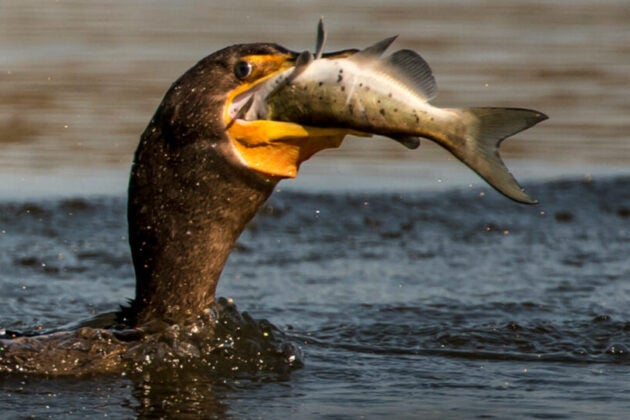
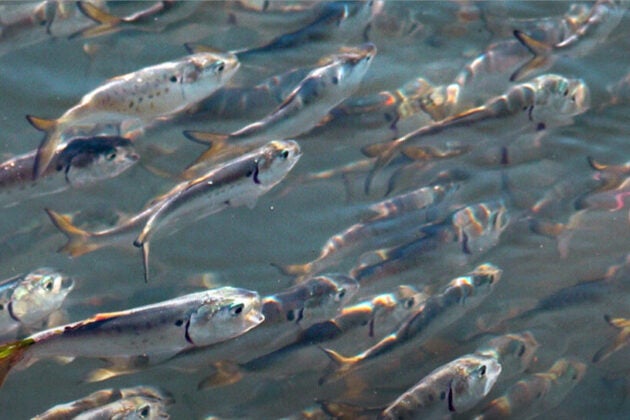
    Where do the menhaden go as they get older? And how do we know? Tagging fish that are caught by the tens of thousands requires an ingenious system. What about winter migrations? In this episode, John Page shares observations of scientists and watermen about the most important fish in the sea.

Sign Up for Email Updates!

Be the first to know the latest Chesapeake Bay issues and how you can help in the fight to save the Bay and its rivers and streams.

Sign Up
Atlantic Blue Crab