Amid Trump Attacks on Chesapeake Bay, Maryland Must Lead the Way. Let’s Start with Stormwater.
Recently President Trump took aim at the Chesapeake Bay. Perhaps just as concerning, he urged states to backtrack on one of Maryland’s fastest growing challenges: flooding and pollution from stormwater.
In an unexpected executive order, President Trump rescinded a 2009 executive action that laid the groundwork for today’s Chesapeake Bay restoration partnership. This order from President Trump puts the role of our federal agencies and the future of the Bay partnership in question.
It also resurrected the inflammatory and misleading concept of a “rain tax,” urging states and counties to repeal their local stormwater management fees. These fees fund infrastructure that protects people from harmful flooding and reduces pollution washing into local streams and the Chesapeake Bay.
Because the truth is, stormwater issues are only getting worse.
Stormwater management is not sexy. It’s the type of work that you only notice when something goes wrong. And if something goes wrong, it’s Marylanders who pay the price. It’s flooded basements, traffic jams, insurance claims, and even exposure to toxic pollution and health risks.
Stormwater fees have a long and winding history in Maryland, which the Baltimore Sun recently summarized well. The article also clarified that, despite the President’s directive, Maryland has no intention of getting rid of its stormwater fees.
This is reassuring news. Because the truth is, stormwater issues are only getting worse.
Other pollution sources like wastewater and agriculture have been decreasing in recent years; but stormwater pollution is on the rise. Stormwater carries things like oil, grease, and other contaminants that wash off Maryland’s roads, sidewalks, and parking lots and into our streams and rivers when it rains. Unchecked, it leads to damaging flash flooding, erosion, and property damage in cities like Baltimore and across the region.
As we face more frequent and intense rainstorms and other effects of climate change, now is not the time to cut back on our investments in stormwater infrastructure.
To be clear, stormwater fees are not “taxing the rain.” This has been a political misnomer meant to obscure what these fees are actually for: a stable, dedicated revenue source for cities and counties to invest in vital infrastructure like upgrading storm drains, building stormwater ponds, planting trees, and restoring eroding shorelines. These projects reduce flooding in local communities and make coastlines more resilient to storm surge.
Inland flooding in Maryland is projected to increase 50 percent by 2050.
To be even more clear, Maryland does not require local jurisdictions to have these fees. It’s up to each county to decide how to fund and implement stormwater management practices for their residents and local waterways.
For example, these fees have contributed to major stormwater improvements in Ellicott City, which endured two catastrophic, hundred-year flood events just within the last 10 years.
While Maryland has taken significant steps to better manage its stormwater, our progress is being outpaced by climate change, more intense and frequent storms, coastal flooding, and increased development pressure. Inland flooding in Maryland is projected to increase 50 percent by 2050. The number of minor flood days in coastal areas like Annapolis have quadrupled since 2007.
Pollution doesn’t care about state lines or political labels. Even just recently, plans were announced to source some of Baltimore’s drinking water from the Susquehanna River, which flows from New York and through Pennsylvania before finally reaching Maryland. What’s running off one state’s roads could end up in another state’s streams. Or even in your drinking glass.
That is why federal partnership and oversight have been so critical to the Chesapeake Bay cleanup effort.
President Trump’s executive order is consistent with other actions from his administration that prioritize political grievances and short-term “savings” over proven, long-term investments.
Yet we know that stormwater solutions are a sound investment. We also know that deferring or ignoring them won’t solve the problem and will cost more money in the long run. With federal leaders stepping back, Maryland leaders must step up.
Maryland has a chance to show the region what strong stormwater management looks like in the wake of federal uncertainty, climate change, and increased development pressure. Not only is it good for Maryland’s people, wildlife, and waters, but it will set an example for the entire Chesapeake Bay movement.
Tell Congress: Stand Up for the Chesapeake Bay!
Join us in urging Congress to provide strong funding for federal agencies in fiscal year 2027, ensuring they can uphold their commitments to restore and protect the Bay and its waterways, habitats, fisheries, and wildlife.

Related Stories
-
 Blog Story
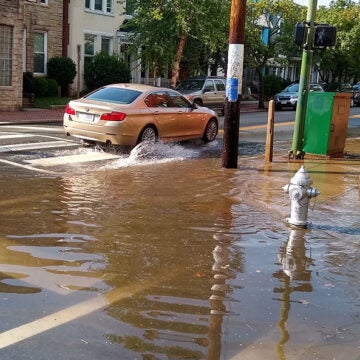
Pennsylvania Should Stand up for Stormwater
Pennsylvania has long rallied communities to protect our rivers and streams, which is why the President’s recent executive order aimed at reversing clean water protections is so hard to understand.
-
 Blog Story
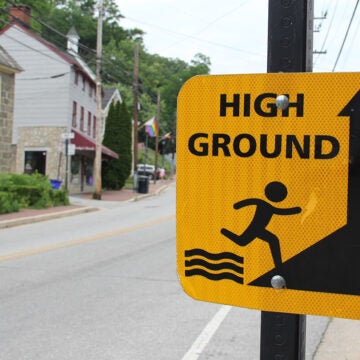
The Higher Stakes of a Summer Storm
It was July 30, 2016, when Howard County, Maryland got hit with over six inches of rain in less than two hours. Intense flash flooding followed, decimating the historic streets of Ellicott City, destroying buildings and businesses, and tragically taking two lives.
